

Motmot

Little Stint vs Semipalmated Sandpiper

Calidris minuta versus Calidris pusilla

Play a quiz with Little Stint and Semipalmated Sandpiper
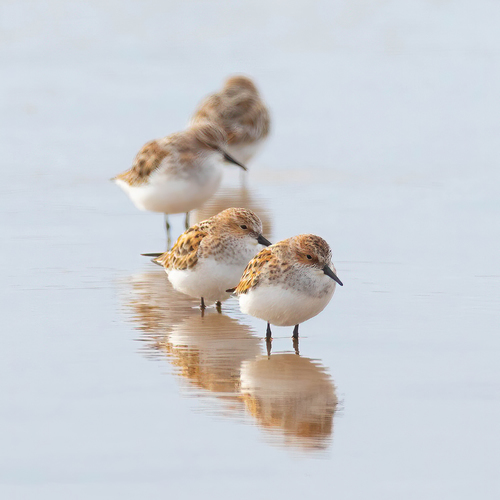
Little Stint (Calidris minuta) Little Stint
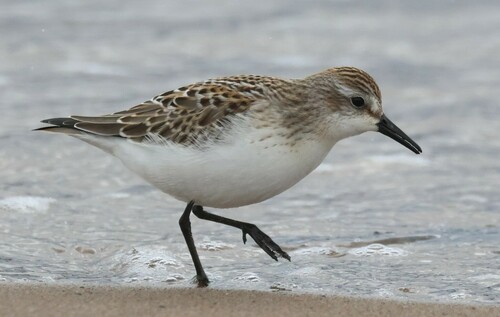
Semipalmated Sandpiper (Calidris pusilla) Semipalmated Sandpiper

Media

Loading…

In short

The most reliable field mark to separate Little Stint from Semipalmated Sandpiper is the presence of unwebbed toes and a longer primary projection in Little Stint, versus the partial webbing between toes in Semipalmated Sandpiper. Juvenile Little Stints also show pale crown stripes and a pinkish breast, while Semipalmated juveniles lack these head and breast marks. Structurally, Little Stint is daintier with a finer, more pointed bill, and moves more quickly and nimbly. In all plumages, careful scrutiny of bill shape, toe webbing, and primary projection is essential, especially in mixed flocks. Both species are small, dark-legged shorebirds, but subtle differences in structure and behavior are key for confident identification.

Identification tips

  1. Toe webbing: Little Stint has unwebbed toes, while Semipalmated Sandpiper shows partial webbing between the outer toes. This is subtle but diagnostic if seen well (all ages).
  2. Primary projection: Little Stint shows a longer projection of the primaries beyond the tertials, giving it a more attenuated rear end compared to the shorter projection in Semipalmated Sandpiper (all ages, especially when perched or at rest).
  3. Bill shape: Little Stint has a fine, slender, and more pointed bill with a delicate tip, while Semipalmated Sandpiper's bill is short, straight, and stouter (all ages; beware overlap with small-billed Semipalmated individuals).
  4. Leg color: Both have dark legs, so this is not useful for separation.
  5. Juvenile head and breast: Juvenile Little Stint shows pale crown stripes and a pinkish breast, lacking in Semipalmated Sandpiper juveniles, which have a more uniform head and breast (juvenile/first-autumn birds).
  6. Back pattern (breeding adult): Little Stint in breeding plumage shows a strong white V on the back and an orange wash to the breast, while Semipalmated Sandpiper is more uniformly grey-brown above and lacks orange tones (breeding adults).
  7. Throat color: Little Stint has a white throat in breeding plumage, which can contrast with the orange breast; Semipalmated is more uniform (breeding adults).
  8. Behavior/jizz: Little Stint is more active and moves more rapidly, often appearing more delicate and agile than Semipalmated Sandpiper (all ages; best judged in direct comparison).
  9. Size: Both are very small, with considerable overlap; do not rely on size alone.
  10. Migration context: In Europe, Little Stint is the expected species; in North America, Semipalmated Sandpiper is far more likely. Vagrancy does occur, so always check structure and plumage.
  11. Flock composition: Both may join mixed 'peep' flocks, but Little Stint is more likely to be found with Dunlin in Eurasia, while Semipalmated Sandpiper forms massive flocks in North America.
  12. Voice: Listen for the sharp 'stit' of Little Stint; Semipalmated's call is not described here, so use voice as a supporting mark.
  13. Plumage seasonality: In winter, both species become duller and harder to separate; rely more on structure (bill, toes, primary projection) and behavior.
  14. Pitfalls: Beware of overlap in bill length and shape, especially with female Semipalmated Sandpipers, and of dull juvenile Little Stints lacking strong crown stripes.
  15. Direct comparison: If both species are present, compare bill fineness, toe webbing, and primary projection side-by-side for best results.

Size

Both species are very small shorebirds, but Little Stint averages around 25.5g in body mass [wikidata], while Semipalmated Sandpiper has a broader range (18–51.5g) [wikipedia]. In practice, size overlap is considerable, and direct comparison in the field is unreliable. Both are among the smallest 'peeps', so use structure and plumage over size for separation.

Plumage

Juvenile Little Stints show pale crown stripes and a pinkish breast, which are absent in Semipalmated Sandpiper juveniles. Adult breeding Little Stints have an orange wash to the breast, a white throat, and a strong white V on the back, while Semipalmated Sandpipers are more uniformly grey-brown above with a white underside and lack the orange tones or strong upperpart contrasts. In non-breeding (winter) plumage, both species become plainer and more difficult to separate, but Little Stint retains a finer bill and longer primary projection. No distinctive upperwing flight pattern differences are noted in the sources for these two species, so focus on head, breast, and back pattern in juveniles and breeding adults.

Behaviour

Little Stint is noted for its quicker, more frenetic movements compared to Semipalmated Sandpiper, which tends to move in a steadier, less hurried manner. Both species are gregarious and often join mixed flocks of small calidrids, but Little Stint may appear more active and agile when foraging. Both species pick invertebrates from mud, but behavioral differences are subtle and best used in conjunction with structural and plumage clues.

Habitat

Little Stint breeds in arctic Europe and Asia, wintering in Africa and southern Asia, and is a rare vagrant to North America and Australia. Semipalmated Sandpiper breeds in the southern tundra of Canada and Alaska, wintering in coastal South America, the southern U.S., and the Caribbean, and is a rare vagrant to western Europe. Both use coastal mudflats and pool edges on migration and in winter, so habitat is not reliably diagnostic where ranges overlap, but the likelihood of encountering each species depends heavily on geography.

Voice

Little Stint gives a sharp 'stit' call. No distinctive vocalization is described for Semipalmated Sandpiper in the provided notes, so voice is only a supporting mark for Little Stint.

Submit a better description

Use the same sections as the comparison. Your text is published immediately.

The most reliable field mark to separate Little Stint from Semipalmated Sandpiper is the presence of unwebbed toes and a longer primary projection in Little Stint, versus the partial webbing between toes in Semipalmated Sandpiper. Juvenile Little Stints also show pale crown stripes and a pinkish breast, while Semipalmated juveniles lack these head and breast marks. Structurally, Little Stint is daintier with a finer, more pointed bill, and moves more quickly and nimbly. In all plumages, careful scrutiny of bill shape, toe webbing, and primary projection is essential, especially in mixed flocks. Both species are small, dark-legged shorebirds, but subtle differences in structure and behavior are key for confident identification.

  1. Toe webbing: Little Stint has unwebbed toes, while Semipalmated Sandpiper shows partial webbing between the outer toes. This is subtle but diagnostic if seen well (all ages).
  2. Primary projection: Little Stint shows a longer projection of the primaries beyond the tertials, giving it a more attenuated rear end compared to the shorter projection in Semipalmated Sandpiper (all ages, especially when perched or at rest).
  3. Bill shape: Little Stint has a fine, slender, and more pointed bill with a delicate tip, while Semipalmated Sandpiper's bill is short, straight, and stouter (all ages; beware overlap with small-billed Semipalmated individuals).
  4. Leg color: Both have dark legs, so this is not useful for separation.
  5. Juvenile head and breast: Juvenile Little Stint shows pale crown stripes and a pinkish breast, lacking in Semipalmated Sandpiper juveniles, which have a more uniform head and breast (juvenile/first-autumn birds).
  6. Back pattern (breeding adult): Little Stint in breeding plumage shows a strong white V on the back and an orange wash to the breast, while Semipalmated Sandpiper is more uniformly grey-brown above and lacks orange tones (breeding adults).
  7. Throat color: Little Stint has a white throat in breeding plumage, which can contrast with the orange breast; Semipalmated is more uniform (breeding adults).
  8. Behavior/jizz: Little Stint is more active and moves more rapidly, often appearing more delicate and agile than Semipalmated Sandpiper (all ages; best judged in direct comparison).
  9. Size: Both are very small, with considerable overlap; do not rely on size alone.
  10. Migration context: In Europe, Little Stint is the expected species; in North America, Semipalmated Sandpiper is far more likely. Vagrancy does occur, so always check structure and plumage.
  11. Flock composition: Both may join mixed 'peep' flocks, but Little Stint is more likely to be found with Dunlin in Eurasia, while Semipalmated Sandpiper forms massive flocks in North America.
  12. Voice: Listen for the sharp 'stit' of Little Stint; Semipalmated's call is not described here, so use voice as a supporting mark.
  13. Plumage seasonality: In winter, both species become duller and harder to separate; rely more on structure (bill, toes, primary projection) and behavior.
  14. Pitfalls: Beware of overlap in bill length and shape, especially with female Semipalmated Sandpipers, and of dull juvenile Little Stints lacking strong crown stripes.
  15. Direct comparison: If both species are present, compare bill fineness, toe webbing, and primary projection side-by-side for best results.

Both species are very small shorebirds, but Little Stint averages around 25.5g in body mass [wikidata], while Semipalmated Sandpiper has a broader range (18–51.5g) [wikipedia]. In practice, size overlap is considerable, and direct comparison in the field is unreliable. Both are among the smallest 'peeps', so use structure and plumage over size for separation.

Juvenile Little Stints show pale crown stripes and a pinkish breast, which are absent in Semipalmated Sandpiper juveniles. Adult breeding Little Stints have an orange wash to the breast, a white throat, and a strong white V on the back, while Semipalmated Sandpipers are more uniformly grey-brown above with a white underside and lack the orange tones or strong upperpart contrasts. In non-breeding (winter) plumage, both species become plainer and more difficult to separate, but Little Stint retains a finer bill and longer primary projection. No distinctive upperwing flight pattern differences are noted in the sources for these two species, so focus on head, breast, and back pattern in juveniles and breeding adults.

Little Stint is noted for its quicker, more frenetic movements compared to Semipalmated Sandpiper, which tends to move in a steadier, less hurried manner. Both species are gregarious and often join mixed flocks of small calidrids, but Little Stint may appear more active and agile when foraging. Both species pick invertebrates from mud, but behavioral differences are subtle and best used in conjunction with structural and plumage clues.

Little Stint breeds in arctic Europe and Asia, wintering in Africa and southern Asia, and is a rare vagrant to North America and Australia. Semipalmated Sandpiper breeds in the southern tundra of Canada and Alaska, wintering in coastal South America, the southern U.S., and the Caribbean, and is a rare vagrant to western Europe. Both use coastal mudflats and pool edges on migration and in winter, so habitat is not reliably diagnostic where ranges overlap, but the likelihood of encountering each species depends heavily on geography.

Little Stint gives a sharp 'stit' call. No distinctive vocalization is described for Semipalmated Sandpiper in the provided notes, so voice is only a supporting mark for Little Stint.

Discard your changes?

You have unsaved edits. If you leave now, those changes will be lost.

Little Stint · Semipalmated Sandpiper · My Tricky Birds