

Motmot

ヨーロッパトウネン 対 ヒレアシトウネン

Calidris minuta 対 Calidris pusilla

ヨーロッパトウネンとヒレアシトウネンのクイズ
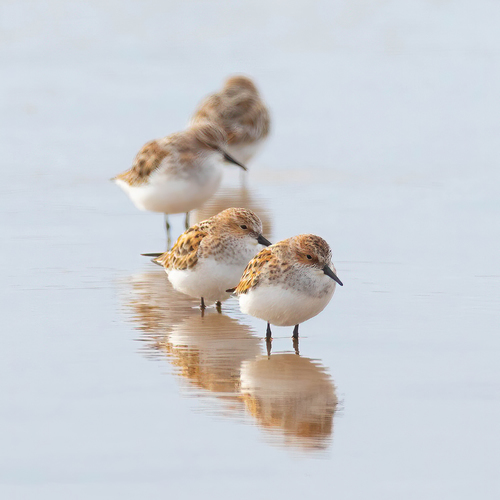
ヨーロッパトウネン (Calidris minuta) ヨーロッパトウネン
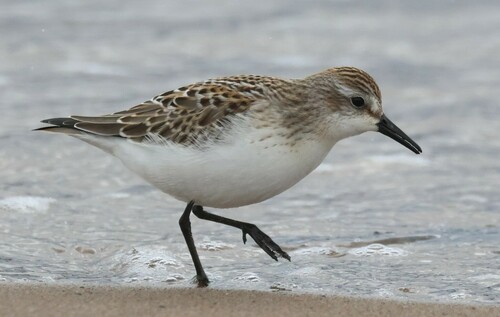
ヒレアシトウネン (Calidris pusilla) ヒレアシトウネン

メディア

読み込み中…

要点

リトルスティントとセミパルメイテッドサンドパイパーを区別する最も信頼できるフィールドマークは、リトルスティントの無膜の足指とより長い一次羽の突出部の存在であり、セミパルメイテッドサンドパイパーでは足指の間に部分的な膜があります。幼鳥のリトルスティントは淡い冠の縞模様とピンクがかった胸を示しますが、セミパルメイテッドの幼鳥にはこれらの頭部と胸のマークが欠けています。構造的には、リトルスティントはより繊細で、より細く尖ったくちばしを持ち、より速く機敏に動きます。すべての羽色において、くちばしの形、足指の膜、一次羽の突出部を注意深く観察することが重要であり、特に混合群れではそうです。両種は小さく、暗い脚を持つ海岸鳥ですが、構造と行動の微妙な違いが自信を持った同定の鍵となります。

識別のコツ

  1. 足指の膜: リトルスティントは無膜の足指を持ち、セミパルメイテッドサンドパイパーは外側の足指の間に部分的な膜を示します。これは微妙ですが、よく見れば診断的です(すべての年齢)。
  2. 一次羽の突出部: リトルスティントは、テリシャルを超えて一次羽のより長い突出部を示し、セミパルメイテッドサンドパイパーの短い突出部と比較して、より細長い後部を持ちます(すべての年齢、特に止まっている時や休んでいる時)。
  3. くちばしの形: リトルスティントは、繊細な先端を持つ細く、スレンダーで、より尖ったくちばしを持ち、セミパルメイテッドサンドパイパーのくちばしは短く、まっすぐで、より太いです(すべての年齢;小さなくちばしのセミパルメイテッド個体との重複に注意)。
  4. 脚の色: 両方とも暗い脚を持っているため、これでは区別できません。
  5. 幼鳥の頭部と胸: 幼鳥のリトルスティントは淡い冠の縞模様とピンクがかった胸を示し、セミパルメイテッドサンドパイパーの幼鳥にはこれが欠けており、より均一な頭部と胸を持っています(幼鳥/初秋の鳥)。
  6. 背中の模様(繁殖成鳥): 繁殖羽色のリトルスティントは背中に強い白いVを示し、胸にはオレンジ色の洗いがかかっていますが、セミパルメイテッドサンドパイパーは上面がより均一に灰褐色で、オレンジ色のトーンが欠けています(繁殖成鳥)。
  7. 喉の色: 繁殖羽色のリトルスティントは白い喉を持ち、オレンジ色の胸と対比しますが、セミパルメイテッドはより均一です(繁殖成鳥)。
  8. 行動/ジズ: リトルスティントはより活発で、より速く動き、しばしばセミパルメイテッドサンドパイパーよりも繊細で機敏に見えます(すべての年齢;直接比較で最もよく判断されます)。
  9. サイズ: 両方とも非常に小さく、かなりの重複があります;サイズだけに頼らないでください。
  10. 移動の文脈: ヨーロッパではリトルスティントが期待される種ですが、北アメリカではセミパルメイテッドサンドパイパーの方がはるかに可能性が高いです。迷子になることもあるので、常に構造と羽色を確認してください。
  11. 群れの構成: 両方とも混合の「ピープ」群れに参加することがありますが、リトルスティントはユーラシアでハマシギと一緒に見つかる可能性が高く、セミパルメイテッドサンドパイパーは北アメリカで大規模な群れを形成します。
  12. 声: リトルスティントの鋭い「スティット」を聞いてください;セミパルメイテッドの鳴き声はここでは説明されていないので、声はリトルスティントの補助的なマークとして使用してください。
  13. 羽色の季節性: 冬には両種ともに鈍くなり、区別が難しくなります;構造(くちばし、足指、一次羽の突出部)と行動にもっと頼ってください。
  14. 落とし穴: 特に雌のセミパルメイテッドサンドパイパーとのくちばしの長さと形の重複に注意し、強い冠の縞模様が欠けた鈍い幼鳥のリトルスティントにも注意してください。
  15. 直接比較: 両種が存在する場合は、くちばしの細さ、足指の膜、一次羽の突出部を並べて比較して、最良の結果を得てください。

大きさ

両種は非常に小さな海岸鳥ですが、リトルスティントは体重が約25.5gで平均され、セミパルメイテッドサンドパイパーはより広い範囲(18–51.5g)を持っています。実際には、サイズの重複はかなりあり、フィールドでの直接比較は信頼できません。両方とも最小の「ピープ」の中に含まれるので、区別にはサイズよりも構造と羽色を使用してください。

羽色

幼鳥のリトルスティントは淡い冠の縞模様とピンクがかった胸を示し、これはセミパルメイテッドサンドパイパーの幼鳥には欠けています。繁殖期の成鳥のリトルスティントは胸にオレンジ色の洗いがかかり、白い喉と背中に強い白いVを持っていますが、セミパルメイテッドサンドパイパーは上面がより均一に灰褐色で、白い腹部を持ち、オレンジ色のトーンや強い上面のコントラストが欠けています。非繁殖(冬)羽色では、両種ともにより地味になり、区別が難しくなりますが、リトルスティントはより細いくちばしと長い一次羽の突出部を保持します。これらの2種のための上翼の飛行パターンの違いは、情報源には記載されていないため、幼鳥と繁殖成鳥の頭部、胸、背中の模様に焦点を当ててください。

行動

リトルスティントは、セミパルメイテッドサンドパイパーと比較して、より速く、より狂乱的な動きが注目されます。セミパルメイテッドサンドパイパーは、より安定した、急がない動きをする傾向があります。両種は群れを成し、しばしば小型のカリドリッドの混合群れに参加しますが、リトルスティントは採餌時により活発で機敏に見えることがあります。両種は泥から無脊椎動物をついばみますが、行動の違いは微妙で、構造や羽色の手がかりと組み合わせて使用するのが最適です。

生息環境

リトルスティントは北極のヨーロッパとアジアで繁殖し、アフリカと南アジアで越冬し、北アメリカとオーストラリアにはまれに迷子になります。セミパルメイテッドサンドパイパーはカナダとアラスカの南部ツンドラで繁殖し、南アメリカの沿岸、南部アメリカ、カリブ海で越冬し、西ヨーロッパにはまれに迷子になります。両種は移動中や冬に沿岸の泥干潟やプールの縁を利用しますので、範囲が重なる場所では生息地は信頼できる診断にはなりませんが、各種に出会う可能性は地理に大きく依存します。

声

リトルスティントは鋭い「スティット」という鳴き声を出します。提供されたメモにはセミパルメイテッドサンドパイパーの特徴的な鳴き声は記載されていないため、声はリトルスティントの補助的なマークとしてのみ使用されます。

より良い説明を送る

比較と同じ項目を使ってください。文章はすぐに公開されます。

The most reliable field mark to separate Little Stint from Semipalmated Sandpiper is the presence of unwebbed toes and a longer primary projection in Little Stint, versus the partial webbing between toes in Semipalmated Sandpiper. Juvenile Little Stints also show pale crown stripes and a pinkish breast, while Semipalmated juveniles lack these head and breast marks. Structurally, Little Stint is daintier with a finer, more pointed bill, and moves more quickly and nimbly. In all plumages, careful scrutiny of bill shape, toe webbing, and primary projection is essential, especially in mixed flocks. Both species are small, dark-legged shorebirds, but subtle differences in structure and behavior are key for confident identification.

  1. Toe webbing: Little Stint has unwebbed toes, while Semipalmated Sandpiper shows partial webbing between the outer toes. This is subtle but diagnostic if seen well (all ages).
  2. Primary projection: Little Stint shows a longer projection of the primaries beyond the tertials, giving it a more attenuated rear end compared to the shorter projection in Semipalmated Sandpiper (all ages, especially when perched or at rest).
  3. Bill shape: Little Stint has a fine, slender, and more pointed bill with a delicate tip, while Semipalmated Sandpiper's bill is short, straight, and stouter (all ages; beware overlap with small-billed Semipalmated individuals).
  4. Leg color: Both have dark legs, so this is not useful for separation.
  5. Juvenile head and breast: Juvenile Little Stint shows pale crown stripes and a pinkish breast, lacking in Semipalmated Sandpiper juveniles, which have a more uniform head and breast (juvenile/first-autumn birds).
  6. Back pattern (breeding adult): Little Stint in breeding plumage shows a strong white V on the back and an orange wash to the breast, while Semipalmated Sandpiper is more uniformly grey-brown above and lacks orange tones (breeding adults).
  7. Throat color: Little Stint has a white throat in breeding plumage, which can contrast with the orange breast; Semipalmated is more uniform (breeding adults).
  8. Behavior/jizz: Little Stint is more active and moves more rapidly, often appearing more delicate and agile than Semipalmated Sandpiper (all ages; best judged in direct comparison).
  9. Size: Both are very small, with considerable overlap; do not rely on size alone.
  10. Migration context: In Europe, Little Stint is the expected species; in North America, Semipalmated Sandpiper is far more likely. Vagrancy does occur, so always check structure and plumage.
  11. Flock composition: Both may join mixed 'peep' flocks, but Little Stint is more likely to be found with Dunlin in Eurasia, while Semipalmated Sandpiper forms massive flocks in North America.
  12. Voice: Listen for the sharp 'stit' of Little Stint; Semipalmated's call is not described here, so use voice as a supporting mark.
  13. Plumage seasonality: In winter, both species become duller and harder to separate; rely more on structure (bill, toes, primary projection) and behavior.
  14. Pitfalls: Beware of overlap in bill length and shape, especially with female Semipalmated Sandpipers, and of dull juvenile Little Stints lacking strong crown stripes.
  15. Direct comparison: If both species are present, compare bill fineness, toe webbing, and primary projection side-by-side for best results.

Both species are very small shorebirds, but Little Stint averages around 25.5g in body mass [wikidata], while Semipalmated Sandpiper has a broader range (18–51.5g) [wikipedia]. In practice, size overlap is considerable, and direct comparison in the field is unreliable. Both are among the smallest 'peeps', so use structure and plumage over size for separation.

Juvenile Little Stints show pale crown stripes and a pinkish breast, which are absent in Semipalmated Sandpiper juveniles. Adult breeding Little Stints have an orange wash to the breast, a white throat, and a strong white V on the back, while Semipalmated Sandpipers are more uniformly grey-brown above with a white underside and lack the orange tones or strong upperpart contrasts. In non-breeding (winter) plumage, both species become plainer and more difficult to separate, but Little Stint retains a finer bill and longer primary projection. No distinctive upperwing flight pattern differences are noted in the sources for these two species, so focus on head, breast, and back pattern in juveniles and breeding adults.

Little Stint is noted for its quicker, more frenetic movements compared to Semipalmated Sandpiper, which tends to move in a steadier, less hurried manner. Both species are gregarious and often join mixed flocks of small calidrids, but Little Stint may appear more active and agile when foraging. Both species pick invertebrates from mud, but behavioral differences are subtle and best used in conjunction with structural and plumage clues.

Little Stint breeds in arctic Europe and Asia, wintering in Africa and southern Asia, and is a rare vagrant to North America and Australia. Semipalmated Sandpiper breeds in the southern tundra of Canada and Alaska, wintering in coastal South America, the southern U.S., and the Caribbean, and is a rare vagrant to western Europe. Both use coastal mudflats and pool edges on migration and in winter, so habitat is not reliably diagnostic where ranges overlap, but the likelihood of encountering each species depends heavily on geography.

Little Stint gives a sharp 'stit' call. No distinctive vocalization is described for Semipalmated Sandpiper in the provided notes, so voice is only a supporting mark for Little Stint.

変更を破棄しますか?

保存していない編集があります。今離れると失われます。

ヨーロッパトウネン · ヒレアシトウネン · 苦手な鳥