

Motmot

Little Gull vs Sabine's Gull

Hydrocoloeus minutus versus Xema sabini

Play a quiz with Little Gull and Sabine's Gull
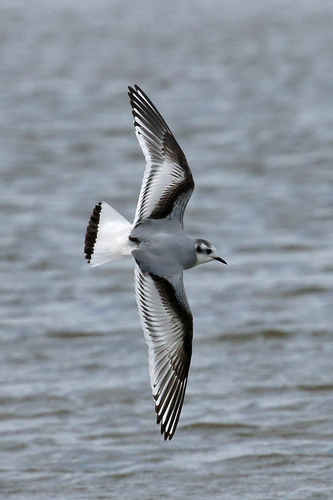
Little Gull (Hydrocoloeus minutus) Little Gull
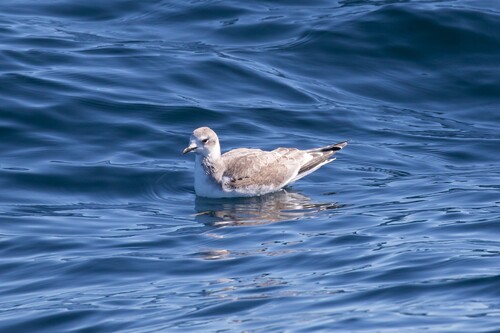
Sabine's Gull (Xema sabini) Sabine's Gull

Media

Loading…

In short

The most reliable field mark between Little Gull and Sabine's Gull, especially in flight, is the upperwing pattern of juveniles and immatures: Little Gull shows a bold dark 'W' across the upperwings, while Sabine's Gull juvenile has a tricolored upperwing with brown (not grey) replacing adult grey, and a black terminal tail band. Adults are best separated by underwing color (Little Gull: dark grey underwing; Sabine's: pale), bill color (Sabine's: black with yellow tip), and tail shape (Sabine's: slightly forked). Little Gull is much smaller and daintier, with a shorter bill and rounder wings. Both can appear in similar habitats during migration, but Little Gull is the smallest gull in the world and often appears more buoyant and tern-like in flight.

Identification tips

  1. Juvenile/first-winter upperwing pattern: Little Gull shows a bold black 'W' across the upperwings (juvenile and first-winter), unique among gulls; Sabine's Gull juvenile has a tricolored upperwing with brown tones and no 'W', plus a black tail band.
  2. Underwing color (all ages): Little Gull has very dark grey underwings, visible in flight and unique among gulls; Sabine's Gull underwing is pale.
  3. Tail shape: Sabine's Gull has a slightly forked white tail (all ages, especially obvious in adults and juveniles); Little Gull's tail is square or slightly rounded, never forked.
  4. Bill color and shape: Sabine's Gull adult has a black bill with a yellow tip; Little Gull's bill is dark red (breeding) or black (non-breeding), shorter and finer.
  5. Leg color: Little Gull has bright red legs in breeding plumage (duller in non-breeding); Sabine's Gull's leg color is not specified in the notes, but is not bright red.
  6. Adult hood: Little Gull (breeding) has a full black hood; Sabine's (breeding) has a dark grey hood with a narrow black collar at the base. In non-breeding, Little Gull reduces to a black cap and ear spot, while Sabine's loses the hood entirely.
  7. Adult upperwing pattern: Sabine's Gull (adult) has a striking tricolored upperwing: black outer primaries, white inner primaries/secondaries, pale grey coverts; Little Gull adult upperwing is pale grey with white primaries, lacking the bold tricolor contrast.
  8. Size and structure: Little Gull is much smaller, more compact, with shorter bill and rounder wings; Sabine's is larger, longer-winged, and more robust.
  9. Flight style: Little Gull is buoyant, tern-like, with rapid, shallow wingbeats; Sabine's is steadier, with long, pointed wings and a more direct flight.
  10. Habitat context: Little Gull is more likely inland or at sheltered waters; Sabine's is more often seen offshore or along open coasts during migration.
  11. Juvenile tail band: Sabine's Gull juvenile has a black terminal tail band, lacking in Little Gull.
  12. Plumage transition: Little Gull juveniles retain the 'W' upperwing pattern into first winter; Sabine's juveniles keep their tricolored wing and tail band until second year.
  13. Voice: If heard, Sabine's Gull gives a very high-pitched, squeaking call; Little Gull's call is not described here.
  14. Bill tip: Only Sabine's Gull shows a yellow-tipped bill (adult), a key mark at close range.
  15. Plumage pitfalls: Both species have pale grey backs and can show dark hoods in breeding, but only Little Gull is truly tiny and only Sabine's has the tricolored wing and forked tail.

Size

Little Gull is the smallest gull globally, with a body mass around 98 g and a wingspan of 62–69 cm. Sabine's Gull is nearly twice as heavy (185 g), longer (27–33 cm vs. 24–28 cm), and with a much broader wingspan (81–87 cm). In the field, Sabine's appears noticeably larger, longer-winged, and more robust, while Little Gull is petite, compact, and delicate.

Plumage

Juvenile and first-winter birds are most easily separated in flight: Little Gull (juvenile/first-winter) shows a striking black 'W' across the upperwings, with white underwings and a dark head/back; Sabine's Gull juvenile has a tricolored upperwing (brown replaces adult grey), a black tail band, and lacks the 'W' pattern. By first winter, Little Gull's head and body resemble adults but the 'W' on the upperwing remains, while Sabine's retains the tricolored wing and tail band. Adults in breeding plumage: Little Gull has a full black hood, dark red bill, and bright red legs; Sabine's has a dark grey hood with a narrow black collar, a black bill with yellow tip, and a slightly forked white tail. In non-breeding plumage, Little Gull's hood reduces to a black cap and ear spot, while Sabine's loses the hood but retains the distinctive wing pattern and tail shape. Underwing: Little Gull (all ages) shows very dark grey underwings, unique among gulls; Sabine's underwing is pale. Adult Sabine's upperwing is tricolored: black outer primaries, white inner primaries/secondaries, and pale grey coverts.

Behaviour

Little Gull often feeds by picking insects off the water surface or catching them in flight, with a buoyant, tern-like flight style and rapid, shallow wingbeats. Sabine's Gull, especially during migration, is more often seen offshore or over open water, with a more direct, purposeful flight and longer, pointed wings. Sabine's may appear more robust and less fluttery than the delicate Little Gull.

Habitat

Both species can be seen at sea or along coasts during migration, but Little Gull breeds on freshwater lakes and marshes, and is more likely to be found inland or at smaller bodies of water. Sabine's Gull is an Arctic breeder, usually seen offshore during migration, and is less likely to be found far inland except as a rare migrant. In North America and Europe, Little Gull is more often found at lakes, marshes, or sheltered coasts, while Sabine's is typically encountered at sea or along open coasts during passage.

Voice

Sabine's Gull has a very high-pitched, squeaking call, which is distinctive if heard. Little Gull's vocalizations are not described in the provided notes, so voice is only diagnostic if Sabine's is heard giving its unique call.

Submit a better description

Use the same sections as the comparison. Your text is published immediately.

The most reliable field mark between Little Gull and Sabine's Gull, especially in flight, is the upperwing pattern of juveniles and immatures: Little Gull shows a bold dark 'W' across the upperwings, while Sabine's Gull juvenile has a tricolored upperwing with brown (not grey) replacing adult grey, and a black terminal tail band. Adults are best separated by underwing color (Little Gull: dark grey underwing; Sabine's: pale), bill color (Sabine's: black with yellow tip), and tail shape (Sabine's: slightly forked). Little Gull is much smaller and daintier, with a shorter bill and rounder wings. Both can appear in similar habitats during migration, but Little Gull is the smallest gull in the world and often appears more buoyant and tern-like in flight.

  1. Juvenile/first-winter upperwing pattern: Little Gull shows a bold black 'W' across the upperwings (juvenile and first-winter), unique among gulls; Sabine's Gull juvenile has a tricolored upperwing with brown tones and no 'W', plus a black tail band.
  2. Underwing color (all ages): Little Gull has very dark grey underwings, visible in flight and unique among gulls; Sabine's Gull underwing is pale.
  3. Tail shape: Sabine's Gull has a slightly forked white tail (all ages, especially obvious in adults and juveniles); Little Gull's tail is square or slightly rounded, never forked.
  4. Bill color and shape: Sabine's Gull adult has a black bill with a yellow tip; Little Gull's bill is dark red (breeding) or black (non-breeding), shorter and finer.
  5. Leg color: Little Gull has bright red legs in breeding plumage (duller in non-breeding); Sabine's Gull's leg color is not specified in the notes, but is not bright red.
  6. Adult hood: Little Gull (breeding) has a full black hood; Sabine's (breeding) has a dark grey hood with a narrow black collar at the base. In non-breeding, Little Gull reduces to a black cap and ear spot, while Sabine's loses the hood entirely.
  7. Adult upperwing pattern: Sabine's Gull (adult) has a striking tricolored upperwing: black outer primaries, white inner primaries/secondaries, pale grey coverts; Little Gull adult upperwing is pale grey with white primaries, lacking the bold tricolor contrast.
  8. Size and structure: Little Gull is much smaller, more compact, with shorter bill and rounder wings; Sabine's is larger, longer-winged, and more robust.
  9. Flight style: Little Gull is buoyant, tern-like, with rapid, shallow wingbeats; Sabine's is steadier, with long, pointed wings and a more direct flight.
  10. Habitat context: Little Gull is more likely inland or at sheltered waters; Sabine's is more often seen offshore or along open coasts during migration.
  11. Juvenile tail band: Sabine's Gull juvenile has a black terminal tail band, lacking in Little Gull.
  12. Plumage transition: Little Gull juveniles retain the 'W' upperwing pattern into first winter; Sabine's juveniles keep their tricolored wing and tail band until second year.
  13. Voice: If heard, Sabine's Gull gives a very high-pitched, squeaking call; Little Gull's call is not described here.
  14. Bill tip: Only Sabine's Gull shows a yellow-tipped bill (adult), a key mark at close range.
  15. Plumage pitfalls: Both species have pale grey backs and can show dark hoods in breeding, but only Little Gull is truly tiny and only Sabine's has the tricolored wing and forked tail.

Little Gull is the smallest gull globally, with a body mass around 98 g and a wingspan of 62–69 cm. Sabine's Gull is nearly twice as heavy (185 g), longer (27–33 cm vs. 24–28 cm), and with a much broader wingspan (81–87 cm). In the field, Sabine's appears noticeably larger, longer-winged, and more robust, while Little Gull is petite, compact, and delicate.

Juvenile and first-winter birds are most easily separated in flight: Little Gull (juvenile/first-winter) shows a striking black 'W' across the upperwings, with white underwings and a dark head/back; Sabine's Gull juvenile has a tricolored upperwing (brown replaces adult grey), a black tail band, and lacks the 'W' pattern. By first winter, Little Gull's head and body resemble adults but the 'W' on the upperwing remains, while Sabine's retains the tricolored wing and tail band. Adults in breeding plumage: Little Gull has a full black hood, dark red bill, and bright red legs; Sabine's has a dark grey hood with a narrow black collar, a black bill with yellow tip, and a slightly forked white tail. In non-breeding plumage, Little Gull's hood reduces to a black cap and ear spot, while Sabine's loses the hood but retains the distinctive wing pattern and tail shape. Underwing: Little Gull (all ages) shows very dark grey underwings, unique among gulls; Sabine's underwing is pale. Adult Sabine's upperwing is tricolored: black outer primaries, white inner primaries/secondaries, and pale grey coverts.

Little Gull often feeds by picking insects off the water surface or catching them in flight, with a buoyant, tern-like flight style and rapid, shallow wingbeats. Sabine's Gull, especially during migration, is more often seen offshore or over open water, with a more direct, purposeful flight and longer, pointed wings. Sabine's may appear more robust and less fluttery than the delicate Little Gull.

Both species can be seen at sea or along coasts during migration, but Little Gull breeds on freshwater lakes and marshes, and is more likely to be found inland or at smaller bodies of water. Sabine's Gull is an Arctic breeder, usually seen offshore during migration, and is less likely to be found far inland except as a rare migrant. In North America and Europe, Little Gull is more often found at lakes, marshes, or sheltered coasts, while Sabine's is typically encountered at sea or along open coasts during passage.

Sabine's Gull has a very high-pitched, squeaking call, which is distinctive if heard. Little Gull's vocalizations are not described in the provided notes, so voice is only diagnostic if Sabine's is heard giving its unique call.

Discard your changes?

You have unsaved edits. If you leave now, those changes will be lost.

Little Gull · Sabine's Gull · My Tricky Birds