

Little Gull vs Mediterranean Gull
Hydrocoloeus minutus versus Ichthyaetus melanocephalus
Play a quiz with Little Gull and Mediterranean Gull
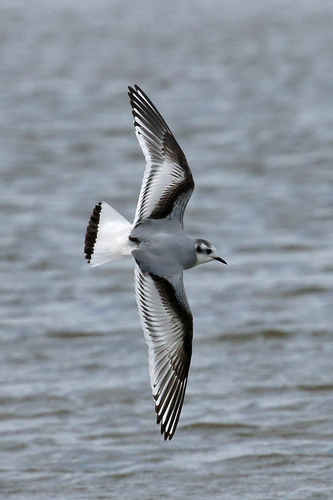 Little Gull
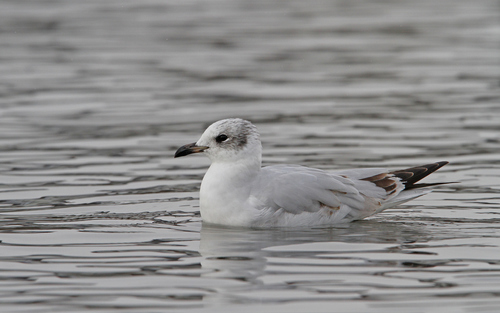 Mediterranean Gull
In short
The most reliable way to separate Little Gull from Mediterranean Gull is by focusing on age-specific wing and flight patterns: juvenile and first-winter Little Gulls show a striking black 'W' across the upperwings and white underwings, while Mediterranean Gulls of the same age have more black in the upperwings but lack the 'W' pattern and have a black terminal tail band. Adult Little Gulls are much smaller, with a dark underwing and white primaries, while Mediterranean Gulls are bulkier with a very pale grey mantle and all-white primaries. Bill shape, leg color, and head pattern also differ, especially in breeding plumage. Size is a strong clue, but the best field marks are in the wing and head patterns, especially in flight and for immature birds.
Identification tips
- Juvenile/first-winter upperwing pattern: Look for the black 'W' across the upperwings in flight—unique to juvenile and first-winter Little Gull. Mediterranean Gull juveniles have more diffuse black in the wing and a black tail band, but never a 'W'.
- Underwing color: Little Gull of all ages shows very dark grey underwings, especially striking in flight. Mediterranean Gull has pale underwings, even in immatures.
- Tail pattern in immatures: Mediterranean Gull first-years show a black terminal tail band; Little Gull lacks this feature.
- Size and jizz: Little Gull is tiny, delicate, and short-legged, with a small, fine bill. Mediterranean Gull is bulkier, longer-legged, and has a heavier, parallel-sided bill.
- Bill color and shape: Little Gull in breeding plumage has a dark red, slender bill; Mediterranean Gull has a heavier, dark red bill with a black subterminal band (especially in breeding plumage).
- Leg color: Both species have red legs in breeding plumage, but Mediterranean Gull's are longer and darker; Little Gull's are bright red but short and dainty.
- Head pattern (breeding): Little Gull has a neat black hood; Mediterranean Gull's hood is more extensive, reaching down the nape, and shows distinct white eye crescents.
- Head pattern (non-breeding): Little Gull shows a black cap and ear spot; Mediterranean Gull has a dusky 'bandit' mask through the eye.
- Mantle and upperwing color: Little Gull has a pale grey back and upperwings with white primaries; Mediterranean Gull has a very pale grey mantle and all-white primaries (no black tips).
- Primary pattern: Both adults have white primaries, but Mediterranean Gull's are all-white without black tips, while Little Gull's white primaries contrast with the pale grey upperwing.
- Flight style: Little Gull is buoyant and agile, often picking insects from the air; Mediterranean Gull is steadier and less aerial.
- Habitat context: In summer, a tiny gull on an inland lake or marsh is likely Little Gull; a larger gull on a coastal flat is likely Mediterranean.
- Rosy flush: Breeding Little Gulls can show a rosy flush to the underparts, not seen in Mediterranean Gull.
- White eye crescents: Only Mediterranean Gull shows distinct white crescents around the eye in breeding plumage.
- Confusion risk: If you see a small gull with a black hood and red bill, check wing and underwing pattern, size, and bill shape carefully—these are the most reliable separation points.
Size
Little Gull is the smallest gull in the world, with a body mass around 98g and a length of 24–28 cm. Mediterranean Gull is noticeably larger and bulkier, with a heavier, longer bill and longer, darker legs. Even at a distance, Little Gull appears petite and delicate, while Mediterranean Gull has a more robust, thickset look. Size alone is often enough to rule out Little Gull if you see a bird approaching the size of a Black-headed Gull.
Plumage
- Juvenile/First-winter: Little Gull juveniles and first-winters show a diagnostic black 'W' pattern across the upperwings in flight, with white underwings and large blackish areas on the back and head. Mediterranean Gull first-years have more black in the upperwings but lack the 'W', and show a black terminal tail band and pale underwings.
- Second-year: Little Gull second-years resemble adults but may retain some black in the primaries. Mediterranean Gull takes two years to reach maturity, and second-years are closer to adult but may show some dark in the wings or tail.
- Adult breeding: Little Gull adults have a black hood, dark red bill, and bright red legs, with a pale grey back and upperwings, white primaries, and a very dark grey underwing. Mediterranean Gull adults in breeding plumage have a more extensive black hood that extends down the nape, distinct white eye crescents, a very pale grey mantle, and all-white primaries (no black tips). The bill is heavier, dark red with a black subterminal band, and the legs are longer and darker red.
- Adult non-breeding: Little Gull adults lose the full hood, showing a black cap and ear spot, while Mediterranean Gull adults show a dusky 'bandit' mask through the eye rather than a cap.
Behaviour
Little Gulls are agile, buoyant fliers, often seen picking insects from the water surface or in the air, especially during breeding season. Mediterranean Gulls have a more direct, steady flight and are less aerially agile. When perched, Little Gulls look dainty and short-legged, while Mediterranean Gulls stand taller and appear more robust.
Habitat
Little Gull breeds on freshwater lakes and marshes, often inland, and winters at sea. Mediterranean Gull is more coastal, though it can be found inland during migration. If you see a very small gull on a freshwater marsh in summer, Little Gull is more likely; a larger, pale-mantled gull on a coastal flat is more likely Mediterranean.