

Motmot

Lesser Whitethroat vs Eastern Orphean Warbler

Curruca curruca versus Curruca crassirostris

Play a quiz with Lesser Whitethroat and Eastern Orphean Warbler
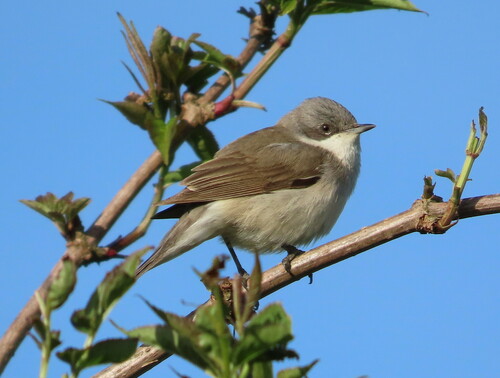
Lesser Whitethroat (Curruca curruca) Lesser Whitethroat
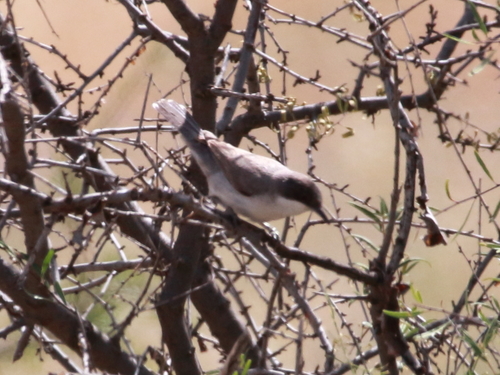
Eastern Orphean Warbler (Curruca crassirostris) Eastern Orphean Warbler

Media

Loading…

In short

The most reliable field mark between Lesser Whitethroat and Eastern Orphean Warbler is size: the Orphean is much larger, with a noticeably longer, heavier bill and a bulkier build, while Lesser Whitethroat is distinctly small and neat. In adults, both can show a grey head and white throat, but Lesser Whitethroat has a sharper dark 'bandit mask' and lacks the reddish underparts seen in female and immature Orphean. Juvenile and immature wing patterns are not described as diagnostic for either species, so focus on structure and overall color. In the field, Lesser Whitethroat is quick and active in bushes, while Orphean Warbler is slower, often in taller woodland. Vocalizations are very different: Lesser Whitethroat gives a fast, rattling call, while Orphean Warbler sings a rich, Nightingale-like warble.

Identification tips

  1. Size is the first check: Orphean is much larger and bulkier than Lesser Whitethroat. If the bird looks small and neat, it's likely a Lesser Whitethroat.
  2. Bill shape: Orphean has a noticeably longer, thicker, and more pointed bill; Lesser Whitethroat's bill is short and fine.
  3. Head pattern: Both can show a dark mask and grey head, but Lesser Whitethroat's mask is sharper and more defined, while Orphean's is broader and the head is bulkier.
  4. Throat color: Both have white throats, but Lesser Whitethroat's is more sharply set off from the grey head and upperparts.
  5. Back color: Lesser Whitethroat is plain grey above; Orphean males are also grey but larger and heavier, while females and immatures have a brownish tinge.
  6. Underparts: Lesser Whitethroat always has whitish underparts; female and immature Orphean often show reddish or buffy tones below, which Lesser Whitethroat never shows.
  7. Iris color: Adult male Orphean has a white iris, a striking mark at close range; Lesser Whitethroat's iris is always dark. Young Orphean also have dark eyes, so use this only for adult males.
  8. Sex differences: Lesser Whitethroat sexes are almost identical; Orphean shows more sexual dimorphism, with males darker-headed and white-eyed.
  9. Behavior: Lesser Whitethroat is quick, restless, and sticks to dense cover; Orphean is slower, often perching higher and more openly in trees.
  10. Habitat: Dense hedgerows and thickets favor Lesser Whitethroat; open woodland and Mediterranean scrub are Orphean territory.
  11. Song: Rattling, mechanical song points to Lesser Whitethroat; rich, warbling, Nightingale-like song is Orphean.
  12. Geographic context: In northern and central Europe, Lesser Whitethroat is common; Orphean is restricted to the Mediterranean, Balkans, and eastwards.
  13. Season: Both are migratory, but Lesser Whitethroat is more widespread in temperate zones during breeding; Orphean is more southerly.
  14. Plumage pitfalls: Do not confuse the brownish or reddish underparts of female/immature Orphean for Lesser Whitethroat—this is never shown by the latter.
  15. No distinctive juvenile wing pattern: Neither species is described as having a unique juvenile or immature upperwing pattern, so rely on structure and overall color.

Size

Eastern Orphean Warbler is one of the largest typical warblers, measuring 15–16 cm in length, and is noticeably bigger than Lesser Whitethroat, which is a small warbler (smaller than Common Whitethroat). Orphean has a longer, thicker bill and a bulkier body, while Lesser Whitethroat is compact and fine-billed. If you see both species in the same area, the size difference is striking, but beware of lone birds—compare to local warblers for context.

Plumage

No age-specific upperwing or flight pattern differences are described for these species, so focus on body and head plumage. Adult Lesser Whitethroat is uniform grey above with a contrasting white throat and a distinct dark mask through the eye; sexes are nearly identical. Eastern Orphean Warbler adult males have a plain grey back, dark grey head, black eye mask, and white throat, but are much larger and heavier-billed. Females and immatures Orphean are paler-headed, with a brownish tinge to the back and reddish underparts, and lack the sharply defined mask of Lesser Whitethroat. Lesser Whitethroat never shows reddish underparts or a brownish back. Eye color is also useful: adult male Orphean has a white iris, while Lesser Whitethroat's is dark; young Orphean have dark eyes, so this mark is only reliable in adult males.

Behaviour

Lesser Whitethroat is typically active, flitting quickly through dense bushes and hedges, often keeping low and moving restlessly. Eastern Orphean Warbler is more deliberate, often foraging in taller trees or open woodland, and appears bulkier and less frenetic. The Orphean may perch more openly and higher up than the more skulking Lesser Whitethroat.

Habitat

Lesser Whitethroat favors dense shrubs, hedgerows, and thickets in temperate Europe and western/central Palearctic, avoiding open woodland. Eastern Orphean Warbler is found in open deciduous woodland, often in Mediterranean regions, the Balkans, and into Central Asia. If you are in thick, low scrub in northern or central Europe, Lesser Whitethroat is far more likely; in open woods around the Mediterranean or southeast Europe, Orphean is the expected species.

Voice

Lesser Whitethroat has a fast, rattling sequence of 'tet' or 'che' calls, quite unlike the Orphean. Eastern Orphean Warbler's song is a rich, varied warble with 'liroo-liroo' notes and scolding phrases, approaching Nightingale in complexity. If you hear a rattling, mechanical song, think Lesser Whitethroat; a melodious, complex warble points to Orphean.

Submit a better description

Use the same sections as the comparison. Your text is published immediately.

The most reliable field mark between Lesser Whitethroat and Eastern Orphean Warbler is size: the Orphean is much larger, with a noticeably longer, heavier bill and a bulkier build, while Lesser Whitethroat is distinctly small and neat. In adults, both can show a grey head and white throat, but Lesser Whitethroat has a sharper dark 'bandit mask' and lacks the reddish underparts seen in female and immature Orphean. Juvenile and immature wing patterns are not described as diagnostic for either species, so focus on structure and overall color. In the field, Lesser Whitethroat is quick and active in bushes, while Orphean Warbler is slower, often in taller woodland. Vocalizations are very different: Lesser Whitethroat gives a fast, rattling call, while Orphean Warbler sings a rich, Nightingale-like warble.

  1. Size is the first check: Orphean is much larger and bulkier than Lesser Whitethroat. If the bird looks small and neat, it's likely a Lesser Whitethroat.
  2. Bill shape: Orphean has a noticeably longer, thicker, and more pointed bill; Lesser Whitethroat's bill is short and fine.
  3. Head pattern: Both can show a dark mask and grey head, but Lesser Whitethroat's mask is sharper and more defined, while Orphean's is broader and the head is bulkier.
  4. Throat color: Both have white throats, but Lesser Whitethroat's is more sharply set off from the grey head and upperparts.
  5. Back color: Lesser Whitethroat is plain grey above; Orphean males are also grey but larger and heavier, while females and immatures have a brownish tinge.
  6. Underparts: Lesser Whitethroat always has whitish underparts; female and immature Orphean often show reddish or buffy tones below, which Lesser Whitethroat never shows.
  7. Iris color: Adult male Orphean has a white iris, a striking mark at close range; Lesser Whitethroat's iris is always dark. Young Orphean also have dark eyes, so use this only for adult males.
  8. Sex differences: Lesser Whitethroat sexes are almost identical; Orphean shows more sexual dimorphism, with males darker-headed and white-eyed.
  9. Behavior: Lesser Whitethroat is quick, restless, and sticks to dense cover; Orphean is slower, often perching higher and more openly in trees.
  10. Habitat: Dense hedgerows and thickets favor Lesser Whitethroat; open woodland and Mediterranean scrub are Orphean territory.
  11. Song: Rattling, mechanical song points to Lesser Whitethroat; rich, warbling, Nightingale-like song is Orphean.
  12. Geographic context: In northern and central Europe, Lesser Whitethroat is common; Orphean is restricted to the Mediterranean, Balkans, and eastwards.
  13. Season: Both are migratory, but Lesser Whitethroat is more widespread in temperate zones during breeding; Orphean is more southerly.
  14. Plumage pitfalls: Do not confuse the brownish or reddish underparts of female/immature Orphean for Lesser Whitethroat—this is never shown by the latter.
  15. No distinctive juvenile wing pattern: Neither species is described as having a unique juvenile or immature upperwing pattern, so rely on structure and overall color.

Eastern Orphean Warbler is one of the largest typical warblers, measuring 15–16 cm in length, and is noticeably bigger than Lesser Whitethroat, which is a small warbler (smaller than Common Whitethroat). Orphean has a longer, thicker bill and a bulkier body, while Lesser Whitethroat is compact and fine-billed. If you see both species in the same area, the size difference is striking, but beware of lone birds—compare to local warblers for context.

No age-specific upperwing or flight pattern differences are described for these species, so focus on body and head plumage. Adult Lesser Whitethroat is uniform grey above with a contrasting white throat and a distinct dark mask through the eye; sexes are nearly identical. Eastern Orphean Warbler adult males have a plain grey back, dark grey head, black eye mask, and white throat, but are much larger and heavier-billed. Females and immatures Orphean are paler-headed, with a brownish tinge to the back and reddish underparts, and lack the sharply defined mask of Lesser Whitethroat. Lesser Whitethroat never shows reddish underparts or a brownish back. Eye color is also useful: adult male Orphean has a white iris, while Lesser Whitethroat's is dark; young Orphean have dark eyes, so this mark is only reliable in adult males.

Lesser Whitethroat is typically active, flitting quickly through dense bushes and hedges, often keeping low and moving restlessly. Eastern Orphean Warbler is more deliberate, often foraging in taller trees or open woodland, and appears bulkier and less frenetic. The Orphean may perch more openly and higher up than the more skulking Lesser Whitethroat.

Lesser Whitethroat favors dense shrubs, hedgerows, and thickets in temperate Europe and western/central Palearctic, avoiding open woodland. Eastern Orphean Warbler is found in open deciduous woodland, often in Mediterranean regions, the Balkans, and into Central Asia. If you are in thick, low scrub in northern or central Europe, Lesser Whitethroat is far more likely; in open woods around the Mediterranean or southeast Europe, Orphean is the expected species.

Lesser Whitethroat has a fast, rattling sequence of 'tet' or 'che' calls, quite unlike the Orphean. Eastern Orphean Warbler's song is a rich, varied warble with 'liroo-liroo' notes and scolding phrases, approaching Nightingale in complexity. If you hear a rattling, mechanical song, think Lesser Whitethroat; a melodious, complex warble points to Orphean.

Discard your changes?

You have unsaved edits. If you leave now, those changes will be lost.

Lesser Whitethroat · Eastern Orphean Warbler · My Tricky Birds