

Bigiarella vs Bigia grossa orientale
Curruca curruca contro Curruca crassirostris
Fai un quiz con Bigiarella e Bigia grossa orientale
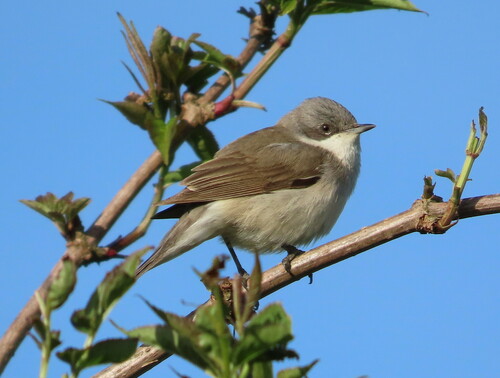 Bigiarella
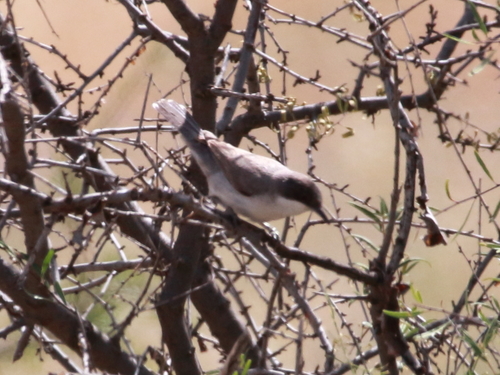 Bigia grossa orientale
In breve
Il segno distintivo più affidabile tra Bigiarella e Bigia grossa orientale è la dimensione: la Bigia grossa è molto più grande, con un becco notevolmente più lungo e pesante e una corporatura più robusta, mentre la Bigiarella è decisamente piccola e ordinata. Negli adulti, entrambi possono mostrare una testa grigia e una gola bianca, ma la Bigiarella ha una 'maschera da bandito' scura più netta e manca delle parti inferiori rossicce visibili nelle Bigie grosse femmine e immature. I motivi delle ali giovanili e immature non sono descritti come diagnostici per nessuna delle due specie, quindi concentrati sulla struttura e sul colore generale. Sul campo, la Bigiarella è veloce e attiva nei cespugli, mentre la Bigia grossa è più lenta, spesso in boschi più alti. Le vocalizzazioni sono molto diverse: la Bigiarella emette un richiamo veloce e ronzante, mentre la Bigia grossa canta un canto ricco, simile a quello di un usignolo.
Consigli di identificazione
- Size is the first check: La Bigia grossa è molto più grande e robusta della Bigiarella. Se l'uccello sembra piccolo e ordinato, è probabile che sia una Bigiarella.
- Bill shape: La Bigia grossa ha un becco notevolmente più lungo, spesso e appuntito; il becco della Bigiarella è corto e fine.
- Head pattern: Entrambi possono mostrare una maschera scura e una testa grigia, ma la maschera della Bigiarella è più netta e definita, mentre quella della Bigia grossa è più ampia e la testa è più robusta.
- Throat color: Entrambi hanno gole bianche, ma quella della Bigiarella è più nettamente distinta dalla testa grigia e dalle parti superiori.
- Back color: La Bigiarella è grigia uniforme sopra; i maschi di Bigia grossa sono anch'essi grigi ma più grandi e pesanti, mentre le femmine e gli immaturi hanno una sfumatura marrone.
- Underparts: La Bigiarella ha sempre parti inferiori biancastre; le femmine e gli immaturi di Bigia grossa mostrano spesso toni rossicci o beige sotto, cosa che la Bigiarella non mostra mai.
- Iris color: Il maschio adulto di Bigia grossa ha un'iride bianca, un segno distintivo a distanza ravvicinata; l'iride della Bigiarella è sempre scura. I giovani di Bigia grossa hanno anche occhi scuri, quindi usa questo solo per i maschi adulti.
- Sex differences: I sessi della Bigiarella sono quasi identici; la Bigia grossa mostra più dimorfismo sessuale, con maschi dalla testa più scura e occhi bianchi.
- Behavior: La Bigiarella è veloce, irrequieta e si attacca a coperture dense; la Bigia grossa è più lenta, spesso posandosi più in alto e più apertamente sugli alberi.
- Habitat: Cespugli densi e siepi favoriscono la Bigiarella; boschi aperti e macchia mediterranea sono territorio della Bigia grossa.
- Song: Un canto ronzante e meccanico indica la Bigiarella; un canto ricco e gorgheggiante, simile a quello di un usignolo, è della Bigia grossa.
- Geographic context: Nell'Europa settentrionale e centrale, la Bigiarella è comune; la Bigia grossa è limitata al Mediterraneo, ai Balcani e verso est.
- Season: Entrambi sono migratori, ma la Bigiarella è più diffusa nelle zone temperate durante la riproduzione; la Bigia grossa è più meridionale.
- Plumage pitfalls: Non confondere le parti inferiori marroni o rossicce delle femmine/immaturi di Bigia grossa con la Bigiarella—quest'ultima non mostra mai queste caratteristiche.
- No distinctive juvenile wing pattern: Nessuna delle due specie è descritta come avente un motivo di ala giovanile o immatura unico, quindi fai affidamento sulla struttura e sul colore generale.
Taglia
La Bigia grossa orientale è una delle più grandi tra i tipici usignoli, misurando 15–16 cm di lunghezza, ed è notevolmente più grande della Bigiarella, che è un piccolo usignolo (più piccolo della Sterpazzola). La Bigia grossa ha un becco più lungo e spesso e un corpo più robusto, mentre la Bigiarella è compatta e con un becco fine. Se vedi entrambe le specie nella stessa area, la differenza di dimensione è sorprendente, ma fai attenzione agli uccelli solitari—confronta con gli usignoli locali per il contesto.
Piumaggio
Nessuna differenza specifica per età nei motivi delle ali o nei modelli di volo è descritta per queste specie, quindi concentrati sulla piumaggio del corpo e della testa. La Bigiarella adulta è grigia uniforme sopra con una gola bianca contrastante e una maschera scura distintiva attorno all'occhio; i sessi sono quasi identici. I maschi adulti di Bigia grossa hanno un dorso grigio uniforme, testa grigia scura, maschera nera attorno agli occhi e gola bianca, ma sono molto più grandi e con un becco più pesante. Le femmine e gli immaturi di Bigia grossa hanno una testa più chiara, con una sfumatura marrone sul dorso e parti inferiori rossicce, e mancano della maschera nettamente definita della Bigiarella. La Bigiarella non mostra mai parti inferiori rossicce o un dorso marrone. Anche il colore degli occhi è utile: il maschio adulto di Bigia grossa ha un'iride bianca, mentre quella della Bigiarella è scura; i giovani di Bigia grossa hanno occhi scuri, quindi questo segno è affidabile solo nei maschi adulti.
Comportamento
La Bigiarella è tipicamente attiva, svolazzando rapidamente attraverso cespugli e siepi dense, spesso mantenendosi bassa e muovendosi irrequieta. La Bigia grossa orientale è più deliberata, spesso cercando cibo in alberi più alti o in boschi aperti, e appare più robusta e meno frenetica. La Bigia grossa può posarsi più apertamente e più in alto rispetto alla Bigiarella, che tende a nascondersi di più.
Habitat
La Bigiarella predilige arbusti densi, siepi e cespugli in Europa temperata e nel Palearctico occidentale/centrale, evitando boschi aperti. La Bigia grossa orientale si trova in boschi decidui aperti, spesso nelle regioni mediterranee, nei Balcani e fino all'Asia centrale. Se ti trovi in cespugli densi e bassi nell'Europa settentrionale o centrale, è molto più probabile che tu incontri una Bigiarella; in boschi aperti intorno al Mediterraneo o nel sud-est europeo, la Bigia grossa è la specie attesa.
Voce
La Bigiarella ha una sequenza veloce e ronzante di richiami 'tet' o 'che', molto diversa dalla Bigia grossa. Il canto della Bigia grossa orientale è un gorgheggio ricco e variegato con note 'liroo-liroo' e frasi di rimprovero, avvicinandosi alla complessità dell'usignolo. Se senti un canto ronzante e meccanico, pensa alla Bigiarella; un gorgheggio melodioso e complesso indica la Bigia grossa.
Bigiarella · Bigia grossa orientale · I miei uccelli difficili