

Motmot

Lesser Black-backed Gull vs Thekla's Lark

Larus fuscus versus Galerida theklae

Play a quiz with Lesser Black-backed Gull and Thekla's Lark
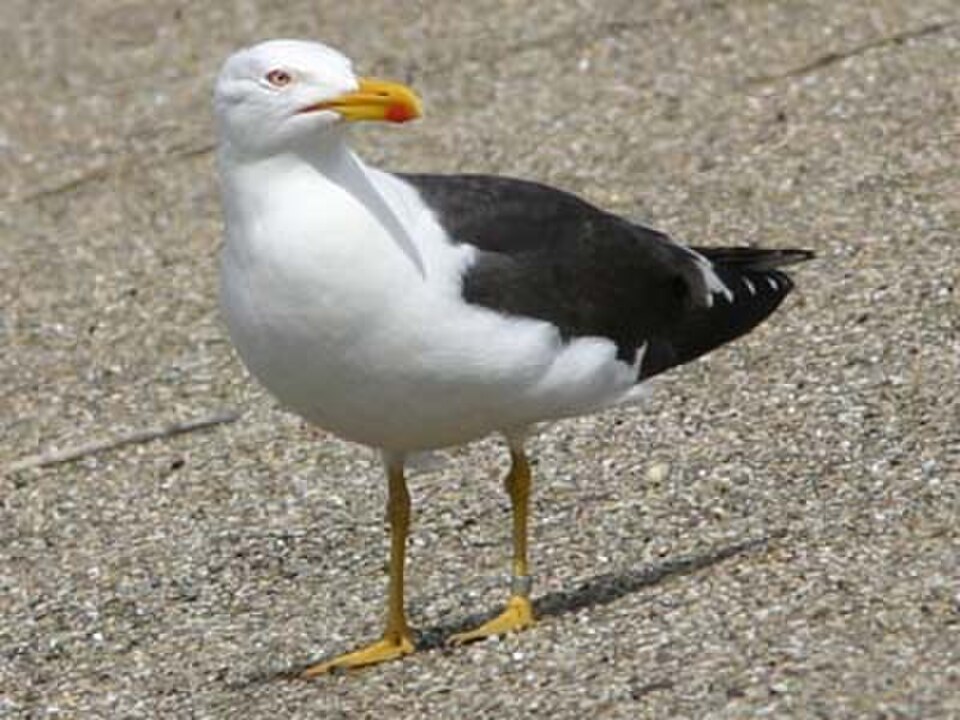
Lesser Black-backed Gull (Larus fuscus) Lesser Black-backed Gull
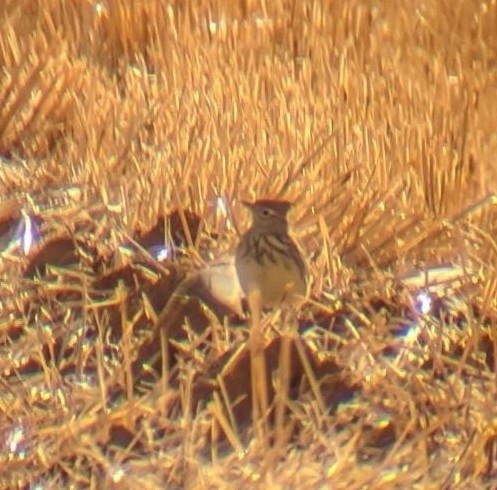
Thekla's Lark (Galerida theklae) Thekla's Lark

Media

Loading…

In short

The most reliable way to separate Lesser Black-backed Gull from Thekla's Lark is by overall structure and size: the gull is a massive, long-winged seabird, while Thekla's Lark is a small, compact songbird with a spiky crest. If you see a juvenile or immature bird in flight, check the upperwing pattern: young Lesser Black-backed Gulls have neat, scaly black-brown upperparts and solidly dark tertials, while Thekla's Lark never shows this pattern and instead has uniform, streaked grey-brown upperparts. Adult gulls show dark grey to black upperwings with white mirrors at the wingtips, contrasting with the lark's plain grey-brown wings. Bill color and leg color are also clear: yellow bill and legs (gull) versus short, dark bill and legs (lark). These birds differ so dramatically in size, shape, and habitat that confusion is only likely at extreme distance or in poor viewing conditions.

Identification tips

  1. Size is the quickest check: Lesser Black-backed Gull is enormous compared to Thekla's Lark. If you see a bird larger than a pigeon, it's not a lark. This is reliable at all ages and seasons.
  2. Juvenile/immature upperwing pattern: Young Lesser Black-backed Gulls have neat, scaly black-brown upperparts and solidly dark tertials, unlike the uniform streaked brown-grey of Thekla's Lark. Look for this in birds not yet in full adult plumage.
  3. Adult wing and back color: Adult gulls have dark grey to black upperwings and back, with white mirrors at the wingtips. Thekla's Lark is always brownish-grey above with streaks, never black or grey-black.
  4. Bill and leg color: Lesser Black-backed Gull adults have a yellow bill with a red spot and yellow legs. Thekla's Lark has a short, dark bill and legs. This is visible at close range in good light.
  5. Crest: Thekla's Lark has a long, spiky, erectile crest, often raised when alert. Gulls never show a crest.
  6. Head pattern in winter: In winter, adult gulls have a greyer head, while Thekla's Lark's head remains streaked and never becomes plain grey.
  7. Flight style: Gulls soar and glide with long, steady wingbeats and often fly high or over water. Larks fly with short, undulating, low flights, rarely sustained or high.
  8. Perching behavior: Gulls perch openly on buildings, piers, or beaches. Larks are almost always on the ground, rarely perching in the open for long.
  9. Underwing color in flight: Thekla's Lark shows grey underwings; gulls have pale underwings with black tips and white mirrors in adults.
  10. Tail shape: Thekla's Lark has a short, square tail; gulls have a longer, more wedge-shaped tail.
  11. Habitat context: If you are in dry, open country far from water, expect Thekla's Lark. If you are near water or in a city, expect Lesser Black-backed Gull.
  12. Group size: Gulls often gather in large flocks, especially near water. Thekla's Lark is usually solitary or in small groups.
  13. Voice: Not diagnostic with the information provided, but the lark's song is complex and musical, while the gull gives harsh, laughing calls.
  14. Seasonal movement: Lesser Black-backed Gull may be present only seasonally in some areas due to migration; Thekla's Lark is resident year-round.
  15. Sex differences: Both species are similar between sexes, so do not rely on sex for identification.

Size

Lesser Black-backed Gull is vastly larger, with an average adult mass of 817.5 g [wikidata], a length of 51–64 cm, and a wingspan of 124–150 cm [wikipedia]. Thekla's Lark is a small passerine, only slightly smaller than a Eurasian Skylark, with a much shorter and more compact body and wings. Even at a distance, the gull's bulk and long wings are unmistakable compared to the lark's petite, rounded form.

Plumage

Juvenile and immature Lesser Black-backed Gulls have scaly black-brown upperparts and solidly dark tertials, which are diagnostic compared to the more uniform, streaked grey-brown upperparts of Thekla's Lark. The gull's juveniles lack the barred tertials of juvenile herring gulls, making their tertials appear more solidly dark. Adult Lesser Black-backed Gulls show dark grey to black upperwings and back, with white 'mirrors' at the wing tips, and a yellow bill with a red spot. In winter, the gull's head becomes greyer. Thekla's Lark of all ages is brownish-grey above with dark streaks, paler below, and always shows a spiky, erectile crest. In flight, Thekla's Lark has grey underwings, while the gull's underwings are pale with black tips. The lark never shows white mirrors or the bold black-and-white contrast of the gull's wingtips.

Behaviour

Lesser Black-backed Gulls are powerful, direct fliers, often seen soaring or gliding over water or open land, sometimes in large flocks. They perch openly on beaches, piers, or rooftops. Thekla's Lark is a terrestrial, ground-dwelling bird, usually seen walking or running on dry, open ground, often pausing to raise its crest. Its flight is short, undulating, and low to the ground, rarely sustained or high. The lark is much more likely to be seen alone or in small groups, and rarely perches in the open for long.

Habitat

Lesser Black-backed Gull is typically found near coasts, large lakes, or rivers, and increasingly in urban areas, especially near water. It is migratory in much of its range. Thekla's Lark is a bird of dry, open country, often at some altitude, and is strictly non-migratory. It avoids water and is rarely seen far from arid or semi-arid grassland, scrub, or rocky fields. Encountering both species together is extremely unlikely.

Submit a better description

Use the same sections as the comparison. Your text is published immediately.

The most reliable way to separate Lesser Black-backed Gull from Thekla's Lark is by overall structure and size: the gull is a massive, long-winged seabird, while Thekla's Lark is a small, compact songbird with a spiky crest. If you see a juvenile or immature bird in flight, check the upperwing pattern: young Lesser Black-backed Gulls have neat, scaly black-brown upperparts and solidly dark tertials, while Thekla's Lark never shows this pattern and instead has uniform, streaked grey-brown upperparts. Adult gulls show dark grey to black upperwings with white mirrors at the wingtips, contrasting with the lark's plain grey-brown wings. Bill color and leg color are also clear: yellow bill and legs (gull) versus short, dark bill and legs (lark). These birds differ so dramatically in size, shape, and habitat that confusion is only likely at extreme distance or in poor viewing conditions.

  1. Size is the quickest check: Lesser Black-backed Gull is enormous compared to Thekla's Lark. If you see a bird larger than a pigeon, it's not a lark. This is reliable at all ages and seasons.
  2. Juvenile/immature upperwing pattern: Young Lesser Black-backed Gulls have neat, scaly black-brown upperparts and solidly dark tertials, unlike the uniform streaked brown-grey of Thekla's Lark. Look for this in birds not yet in full adult plumage.
  3. Adult wing and back color: Adult gulls have dark grey to black upperwings and back, with white mirrors at the wingtips. Thekla's Lark is always brownish-grey above with streaks, never black or grey-black.
  4. Bill and leg color: Lesser Black-backed Gull adults have a yellow bill with a red spot and yellow legs. Thekla's Lark has a short, dark bill and legs. This is visible at close range in good light.
  5. Crest: Thekla's Lark has a long, spiky, erectile crest, often raised when alert. Gulls never show a crest.
  6. Head pattern in winter: In winter, adult gulls have a greyer head, while Thekla's Lark's head remains streaked and never becomes plain grey.
  7. Flight style: Gulls soar and glide with long, steady wingbeats and often fly high or over water. Larks fly with short, undulating, low flights, rarely sustained or high.
  8. Perching behavior: Gulls perch openly on buildings, piers, or beaches. Larks are almost always on the ground, rarely perching in the open for long.
  9. Underwing color in flight: Thekla's Lark shows grey underwings; gulls have pale underwings with black tips and white mirrors in adults.
  10. Tail shape: Thekla's Lark has a short, square tail; gulls have a longer, more wedge-shaped tail.
  11. Habitat context: If you are in dry, open country far from water, expect Thekla's Lark. If you are near water or in a city, expect Lesser Black-backed Gull.
  12. Group size: Gulls often gather in large flocks, especially near water. Thekla's Lark is usually solitary or in small groups.
  13. Voice: Not diagnostic with the information provided, but the lark's song is complex and musical, while the gull gives harsh, laughing calls.
  14. Seasonal movement: Lesser Black-backed Gull may be present only seasonally in some areas due to migration; Thekla's Lark is resident year-round.
  15. Sex differences: Both species are similar between sexes, so do not rely on sex for identification.

Lesser Black-backed Gull is vastly larger, with an average adult mass of 817.5 g [wikidata], a length of 51–64 cm, and a wingspan of 124–150 cm [wikipedia]. Thekla's Lark is a small passerine, only slightly smaller than a Eurasian Skylark, with a much shorter and more compact body and wings. Even at a distance, the gull's bulk and long wings are unmistakable compared to the lark's petite, rounded form.

Juvenile and immature Lesser Black-backed Gulls have scaly black-brown upperparts and solidly dark tertials, which are diagnostic compared to the more uniform, streaked grey-brown upperparts of Thekla's Lark. The gull's juveniles lack the barred tertials of juvenile herring gulls, making their tertials appear more solidly dark. Adult Lesser Black-backed Gulls show dark grey to black upperwings and back, with white 'mirrors' at the wing tips, and a yellow bill with a red spot. In winter, the gull's head becomes greyer. Thekla's Lark of all ages is brownish-grey above with dark streaks, paler below, and always shows a spiky, erectile crest. In flight, Thekla's Lark has grey underwings, while the gull's underwings are pale with black tips. The lark never shows white mirrors or the bold black-and-white contrast of the gull's wingtips.

Lesser Black-backed Gulls are powerful, direct fliers, often seen soaring or gliding over water or open land, sometimes in large flocks. They perch openly on beaches, piers, or rooftops. Thekla's Lark is a terrestrial, ground-dwelling bird, usually seen walking or running on dry, open ground, often pausing to raise its crest. Its flight is short, undulating, and low to the ground, rarely sustained or high. The lark is much more likely to be seen alone or in small groups, and rarely perches in the open for long.

Lesser Black-backed Gull is typically found near coasts, large lakes, or rivers, and increasingly in urban areas, especially near water. It is migratory in much of its range. Thekla's Lark is a bird of dry, open country, often at some altitude, and is strictly non-migratory. It avoids water and is rarely seen far from arid or semi-arid grassland, scrub, or rocky fields. Encountering both species together is extremely unlikely.

Discard your changes?

You have unsaved edits. If you leave now, those changes will be lost.

Lesser Black-backed Gull · Thekla's Lark · My Tricky Birds