

Motmot

Least Bittern vs Black-crowned Night Heron

Botaurus exilis versus Nycticorax nycticorax

Play a quiz with Least Bittern and Black-crowned Night Heron
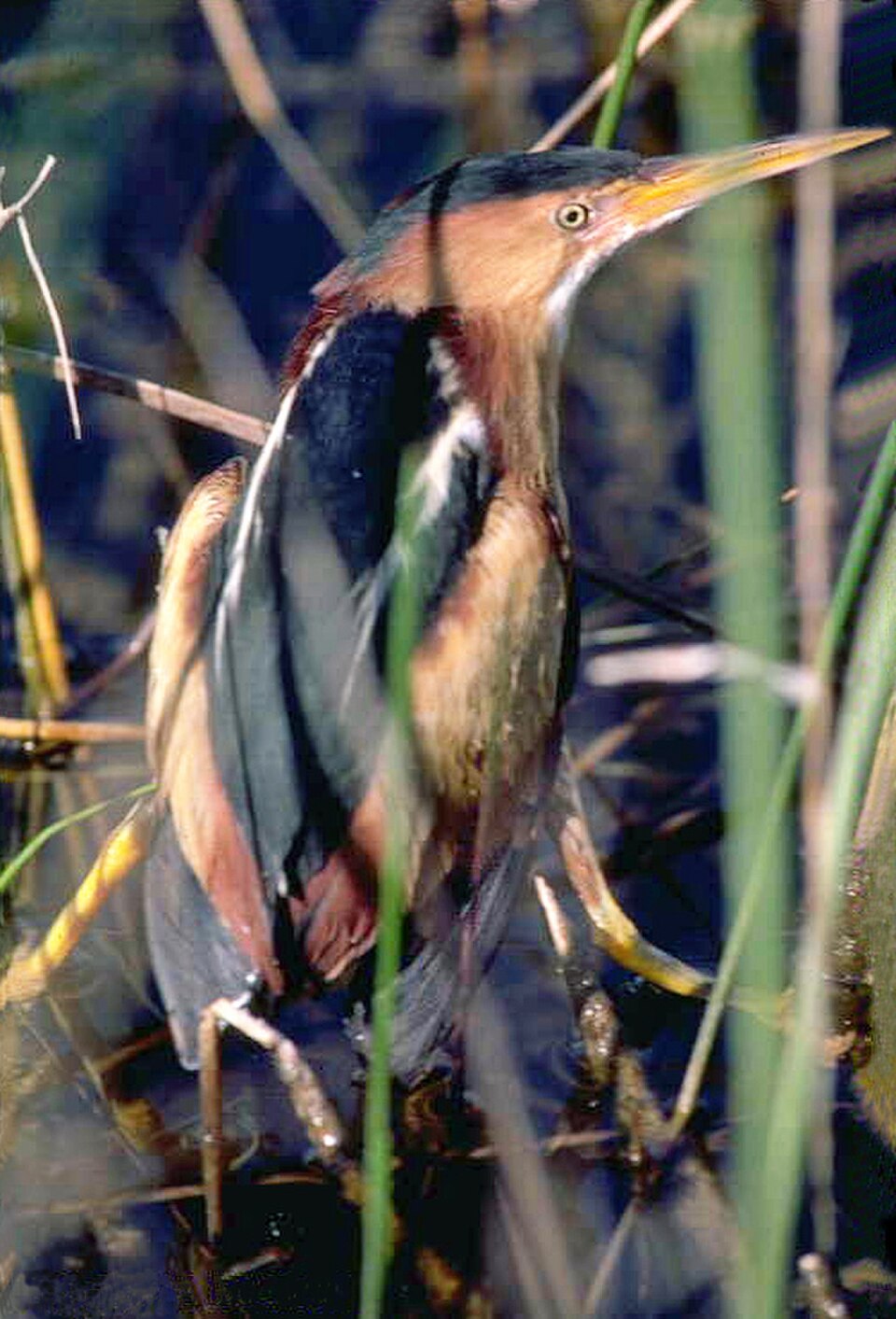
Least Bittern (Botaurus exilis) Least Bittern
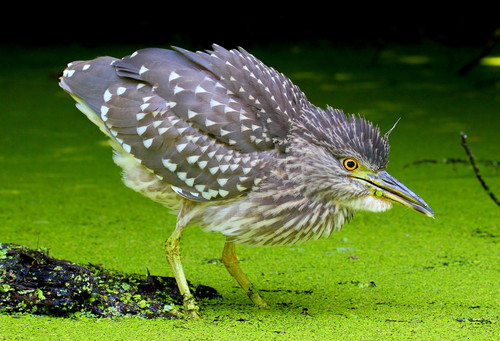
Black-crowned Night Heron (Nycticorax nycticorax) Black-crowned Night Heron

Media

Loading…

In short

The most reliable way to separate Least Bittern from Black-crowned Night Heron is size and structure: Least Bittern is tiny, extremely slim, and often seen clinging to reeds, while Black-crowned Night Heron is much larger, stockier, and perches more openly. In flight, Least Bittern shows light brown wing coverts and a compact, almost rail-like shape, whereas Black-crowned Night Heron (especially immatures) shows broad, pale grey wings and a heavy, short-necked profile. Juvenile night herons are brown and heavily spotted, unlike any Least Bittern. Both species may be secretive, but their posture, bulk, and flight style are strikingly different.

Identification tips

  1. Size is the first check: If the bird is tiny, barely larger than a rail or small grebe, it's a Least Bittern. If it looks like a typical heron or is nearly crow-sized, it's a Black-crowned Night Heron. This holds for all ages and sexes.
  2. Structure and posture: Least Bittern is extremely slim, with a long, narrow neck and bill, and often clings vertically to reeds. Night heron is stocky, with a short, thick neck and bill, and perches horizontally or hunched on branches or in open.
  3. Flight jizz: Least Bittern flies with rapid, shallow wingbeats, short neck, and compact body, often low over reeds. Black-crowned Night Heron is broad-winged, heavy-bodied, with slow, deep wingbeats and a short, retracted neck.
  4. Juvenile/immature plumage: Juvenile Black-crowned Night Herons are brown with heavy pale spots on wings and back, and streaked underparts—no Least Bittern ever shows this pattern. Young Least Bitterns look like adults but duller, never spangled.
  5. Adult plumage: Adult male Least Bittern has glossy greenish-black crown and back; female is glossy brown. Both have white lines on shoulders and light brown wing coverts. Adult night heron has black crown and back, pale grey wings, white underparts, and red eyes.
  6. Wing pattern in flight: Least Bittern shows light brown wing coverts contrasting with darker flight feathers; night heron's wings are evenly pale grey (adults) or spotted (juveniles).
  7. Bill color and shape: Least Bittern's bill is long, slender, and yellow. Night heron's bill is shorter, thicker, and dark.
  8. Eye color: Adult night heron has red eyes; juveniles orange. Least Bittern has yellow eyes at all ages.
  9. Leg color: Night heron has short yellow legs (adults), turning bright salmon-pink in courtship; Least Bittern's legs are not as brightly colored and are longer in proportion to body.
  10. Head plumes: Adult night heron may show long white head plumes in breeding season; Least Bittern never shows these.
  11. Behavior: Least Bittern is almost always in dense reeds, often climbing or straddling stems; night heron is more likely to be seen in the open, perched on branches or flying at dusk.
  12. Habitat context: If the bird is deep in cattails or reeds, especially if seen clinging to stems, it's likely a Least Bittern. If it's in a tree or on a bare branch, or at a colony, it's a night heron.
  13. Group size: Least Bitterns are solitary or in pairs; night herons often gather in noisy colonies.
  14. Voice: Not diagnostic from these notes, but night herons are much noisier at colonies.
  15. Seasonal context: Least Bitterns arrive later and leave earlier than night herons in shared breeding areas, but this is subtle and not always reliable.

Size

Size is a decisive field mark: Least Bittern is one of the smallest herons in the world, averaging only 80g in body mass, with a length of 28–36 cm and a wingspan of 41–46 cm. In contrast, Black-crowned Night Heron is much heavier (636g average), and is a medium-sized heron with a much bulkier, stockier build. Even at a distance, the night heron appears far more robust and broad-bodied, with a thick neck and relatively short legs compared to the Least Bittern's slender, elongated look. If both species are seen in the same marsh, the size difference is unmistakable.

Plumage

Juvenile and immature Black-crowned Night Herons are brownish with numerous pale teardrop-shaped spots on the wings, back, and head, and have streaked, pale underparts—this spangled look is never shown by Least Bittern of any age. Adult Black-crowned Night Herons have a black crown and back, pale grey wings, and white underparts, with red eyes and sometimes long white head plumes. Least Bittern adults are much more delicate in coloration: males have glossy greenish-black on the crown and back, females are glossy brown, both with white lines on the shoulders and light brown wing coverts that show in flight. Their underparts and throat are white with light brown streaks. In flight, the Least Bittern's light brown wing coverts contrast with the rest of the wing, while the night heron's wings are uniformly pale grey. The Least Bittern's bill is yellow and slender, while the night heron's is thicker and shorter. Eye color is also a clue: yellow in Least Bittern, red in adult night herons, orange in juveniles.

Behaviour

Least Bittern is highly secretive and often seen straddling or clinging to vertical reeds, sometimes compressing its body to slip between stems. When alarmed, it freezes with bill pointed up and sways to mimic marsh vegetation. It feeds by climbing through plants rather than wading. Black-crowned Night Heron is more likely to be seen perched openly on branches or in trees near water, often at dusk or night. Its posture is hunched when resting, but it extends its neck when hunting. Night herons are social at colonies and can be noisy, while Least Bittern is solitary and quiet.

Habitat

Both species use wetlands, but Least Bittern is tightly tied to dense, tall marsh vegetation (cattails, reeds) and is rarely seen away from thick cover. Black-crowned Night Heron is more flexible, using a range of wetlands, including open shores, ponds, and rivers, and often roosts in trees or on exposed branches. If you see a heron out in the open, especially in a tree or on a bare branch, it is far more likely to be a night heron than a Least Bittern.

Submit a better description

Use the same sections as the comparison. Your text is published immediately.

The most reliable way to separate Least Bittern from Black-crowned Night Heron is size and structure: Least Bittern is tiny, extremely slim, and often seen clinging to reeds, while Black-crowned Night Heron is much larger, stockier, and perches more openly. In flight, Least Bittern shows light brown wing coverts and a compact, almost rail-like shape, whereas Black-crowned Night Heron (especially immatures) shows broad, pale grey wings and a heavy, short-necked profile. Juvenile night herons are brown and heavily spotted, unlike any Least Bittern. Both species may be secretive, but their posture, bulk, and flight style are strikingly different.

  1. Size is the first check: If the bird is tiny, barely larger than a rail or small grebe, it's a Least Bittern. If it looks like a typical heron or is nearly crow-sized, it's a Black-crowned Night Heron. This holds for all ages and sexes.
  2. Structure and posture: Least Bittern is extremely slim, with a long, narrow neck and bill, and often clings vertically to reeds. Night heron is stocky, with a short, thick neck and bill, and perches horizontally or hunched on branches or in open.
  3. Flight jizz: Least Bittern flies with rapid, shallow wingbeats, short neck, and compact body, often low over reeds. Black-crowned Night Heron is broad-winged, heavy-bodied, with slow, deep wingbeats and a short, retracted neck.
  4. Juvenile/immature plumage: Juvenile Black-crowned Night Herons are brown with heavy pale spots on wings and back, and streaked underparts—no Least Bittern ever shows this pattern. Young Least Bitterns look like adults but duller, never spangled.
  5. Adult plumage: Adult male Least Bittern has glossy greenish-black crown and back; female is glossy brown. Both have white lines on shoulders and light brown wing coverts. Adult night heron has black crown and back, pale grey wings, white underparts, and red eyes.
  6. Wing pattern in flight: Least Bittern shows light brown wing coverts contrasting with darker flight feathers; night heron's wings are evenly pale grey (adults) or spotted (juveniles).
  7. Bill color and shape: Least Bittern's bill is long, slender, and yellow. Night heron's bill is shorter, thicker, and dark.
  8. Eye color: Adult night heron has red eyes; juveniles orange. Least Bittern has yellow eyes at all ages.
  9. Leg color: Night heron has short yellow legs (adults), turning bright salmon-pink in courtship; Least Bittern's legs are not as brightly colored and are longer in proportion to body.
  10. Head plumes: Adult night heron may show long white head plumes in breeding season; Least Bittern never shows these.
  11. Behavior: Least Bittern is almost always in dense reeds, often climbing or straddling stems; night heron is more likely to be seen in the open, perched on branches or flying at dusk.
  12. Habitat context: If the bird is deep in cattails or reeds, especially if seen clinging to stems, it's likely a Least Bittern. If it's in a tree or on a bare branch, or at a colony, it's a night heron.
  13. Group size: Least Bitterns are solitary or in pairs; night herons often gather in noisy colonies.
  14. Voice: Not diagnostic from these notes, but night herons are much noisier at colonies.
  15. Seasonal context: Least Bitterns arrive later and leave earlier than night herons in shared breeding areas, but this is subtle and not always reliable.

Size is a decisive field mark: Least Bittern is one of the smallest herons in the world, averaging only 80g in body mass, with a length of 28–36 cm and a wingspan of 41–46 cm. In contrast, Black-crowned Night Heron is much heavier (636g average), and is a medium-sized heron with a much bulkier, stockier build. Even at a distance, the night heron appears far more robust and broad-bodied, with a thick neck and relatively short legs compared to the Least Bittern's slender, elongated look. If both species are seen in the same marsh, the size difference is unmistakable.

Juvenile and immature Black-crowned Night Herons are brownish with numerous pale teardrop-shaped spots on the wings, back, and head, and have streaked, pale underparts—this spangled look is never shown by Least Bittern of any age. Adult Black-crowned Night Herons have a black crown and back, pale grey wings, and white underparts, with red eyes and sometimes long white head plumes. Least Bittern adults are much more delicate in coloration: males have glossy greenish-black on the crown and back, females are glossy brown, both with white lines on the shoulders and light brown wing coverts that show in flight. Their underparts and throat are white with light brown streaks. In flight, the Least Bittern's light brown wing coverts contrast with the rest of the wing, while the night heron's wings are uniformly pale grey. The Least Bittern's bill is yellow and slender, while the night heron's is thicker and shorter. Eye color is also a clue: yellow in Least Bittern, red in adult night herons, orange in juveniles.

Least Bittern is highly secretive and often seen straddling or clinging to vertical reeds, sometimes compressing its body to slip between stems. When alarmed, it freezes with bill pointed up and sways to mimic marsh vegetation. It feeds by climbing through plants rather than wading. Black-crowned Night Heron is more likely to be seen perched openly on branches or in trees near water, often at dusk or night. Its posture is hunched when resting, but it extends its neck when hunting. Night herons are social at colonies and can be noisy, while Least Bittern is solitary and quiet.

Both species use wetlands, but Least Bittern is tightly tied to dense, tall marsh vegetation (cattails, reeds) and is rarely seen away from thick cover. Black-crowned Night Heron is more flexible, using a range of wetlands, including open shores, ponds, and rivers, and often roosts in trees or on exposed branches. If you see a heron out in the open, especially in a tree or on a bare branch, it is far more likely to be a night heron than a Least Bittern.

Discard your changes?

You have unsaved edits. If you leave now, those changes will be lost.

Least Bittern · Black-crowned Night Heron · My Tricky Birds