

Motmot

Leach's Storm-Petrel vs Wedge-rumped Storm-Petrel

Hydrobates leucorhous versus Hydrobates tethys

Play a quiz with Leach's Storm-Petrel and Wedge-rumped Storm-Petrel
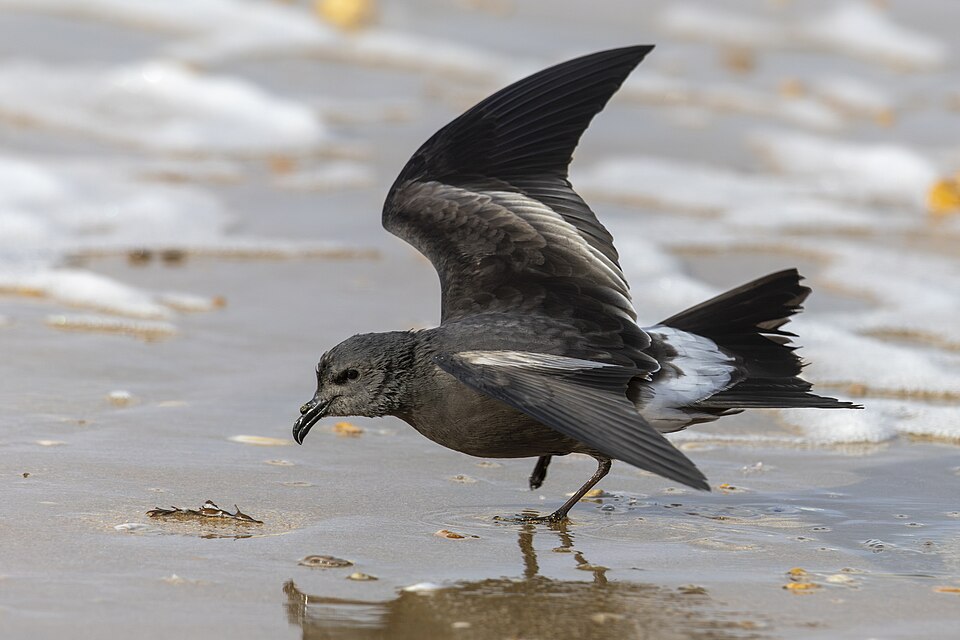
Leach's Storm-Petrel (Hydrobates leucorhous) Leach's Storm-Petrel
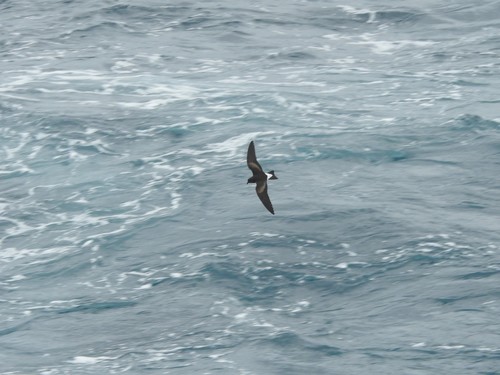
Wedge-rumped Storm-Petrel (Hydrobates tethys) Wedge-rumped Storm-Petrel

Media

Loading…

In short

The most reliable field mark between Leach's Storm-Petrel and Wedge-rumped Storm-Petrel is the rump pattern: Leach's typically shows a white rump with a possible dark central line, while Wedge-rumped Storm-Petrel has a distinctive wedge-shaped white rump that is sharply defined and usually lacks a central dark stripe. In flight, Leach's also has a more deeply forked tail and a fluttering, erratic flight style, compared to the more shallowly forked tail and steadier flight of Wedge-rumped. Size is similar, but Leach's is slightly larger and longer-winged. Both can be confusing, especially when Leach's dark-rumped morph is encountered, but careful attention to rump shape, tail fork, and flight style will usually separate them.

Identification tips

  1. Rump pattern is key: Leach's Storm-Petrel typically shows a white rump with a possible dark central stripe (especially Atlantic birds); Wedge-rumped Storm-Petrel has a clean, wedge-shaped white rump with sharp borders and usually no dark center. This is the single most reliable mark in good light.
  2. Beware dark-rumped Leach's: In the eastern Pacific, some Leach's Storm-Petrels lack the white rump entirely, closely resembling all-dark storm-petrels. These are rare north of southern California but common further south. If you see a dark-rumped bird, do not rely on rump color alone—use tail shape and flight style.
  3. Tail shape: Leach's has a distinctly deeper forked tail, often visible in flight when the tail is spread. Wedge-rumped's tail is less deeply forked, appearing more squared-off or only slightly notched.
  4. Flight style: Leach's Storm-Petrel has a fluttery, erratic, bat-like flight, often with frequent changes in direction and a tendency to patter on the water. Wedge-rumped is steadier and more direct, with less erratic movement.
  5. Upperwing bar: Leach's can show a pale grey-brown bar on the secondary coverts, especially in fresh plumage or younger birds. This is subtle and not always visible, but Wedge-rumped lacks this feature.
  6. Face color: Leach's may show a slightly paler face than Wedge-rumped, but this is a minor and unreliable mark in the field.
  7. Size: Leach's is slightly larger and longer-winged, but the difference is subtle and not diagnostic unless birds are side-by-side.
  8. Geographic context: If seen in the Galápagos or off coastal Peru, Wedge-rumped is far more likely. In the North Atlantic or North Pacific, Leach's is the default. However, both can wander, so always confirm with field marks.
  9. Perched views are rare: Both species are almost always seen in flight at sea. If seen on land, Leach's may shuffle awkwardly near burrows, but this is not a practical field mark for most observers.
  10. No useful vocal differences at sea: The notes do not provide vocalization differences useful for field separation.
  11. Sex and age: No significant sex-based differences are noted. Age-specific marks are mainly in the upperwing bar for Leach's, but rump and tail shape remain the best marks for all ages.
  12. Pitfalls: Immature Leach's may have fresher upperwing bars, but the rump pattern and tail fork are more reliable. Dark-rumped Leach's are the main confusion risk—use structure and flight style to separate.
  13. Do not confuse with Wilson's or Band-rumped: These two species are more similar to each other than to Wilson's or Band-rumped Storm-Petrels, which have different rump and tail patterns.
  14. Lighting and distance: At long range or in poor light, rump pattern and tail fork may be hard to judge. Try to observe multiple field marks before concluding.
  15. Summary: Focus first on the shape and color of the rump, then check tail fork and flight style. Use geography and subtle size differences as supporting evidence, not primary marks.

Size

Leach's Storm-Petrel is slightly larger, measuring 18–21 cm in length with a 43–48 cm wingspan [wikipedia]. Wedge-rumped Storm-Petrel is similar but marginally smaller overall (precise measurements not provided in the notes, but no evidence of a dramatic size difference). Both are small, delicate seabirds, but Leach's may appear a bit longer-winged and more robust in direct comparison. Size alone is rarely diagnostic at sea, but can support other field marks.

Plumage

For all ages, the key difference is the rump: Leach's Storm-Petrel usually shows a white rump with a possible dark central line (especially in Atlantic birds), while Wedge-rumped Storm-Petrel has a clean, wedge-shaped white rump that is sharply defined and generally lacks a dark center. Leach's can show a dark-rumped morph (mainly in the eastern Pacific), which is a major pitfall—these birds may lack the white rump entirely and are easily confused with all-dark storm-petrels, including some Wedge-rumped. On the upperwing, Leach's shows a pale grey-brown bar on the secondary coverts, most visible in fresh plumage and on younger birds, but this is subtle and not always obvious. Both species are otherwise dark overall, but Leach's may have a slightly paler face. Tail shape is also a clue: Leach's has a more deeply forked tail, while Wedge-rumped's fork is shallower. No age-specific upperwing pattern is described for Wedge-rumped in the notes, so focus on rump and tail for all ages.

Behaviour

Leach's Storm-Petrel has a distinctive, fluttering, and erratic flight, often described as bat-like, with frequent changes in direction and a tendency to patter on the water's surface while feeding. Its tail is often held open, accentuating the deep fork. Wedge-rumped Storm-Petrel, by contrast, tends to fly with steadier, more direct wingbeats and a less deeply forked tail, giving a slightly more purposeful impression. Both species feed by picking food from the surface, but Leach's is more likely to be seen shuffling awkwardly on land near its burrow, though this is rarely observed at sea.

Habitat

Leach's Storm-Petrel is widespread across the North Atlantic and North Pacific, breeding on remote islands and foraging far offshore. Wedge-rumped Storm-Petrel is more restricted, breeding in the Galápagos Islands and along the coast of Peru, and is generally encountered in the eastern tropical Pacific. Overlap is possible off western Central and South America, but most observers will encounter them in their respective core ranges. Habitat context can help, but is not always diagnostic due to pelagic wanderings.

Submit a better description

Use the same sections as the comparison. Your text is published immediately.

The most reliable field mark between Leach's Storm-Petrel and Wedge-rumped Storm-Petrel is the rump pattern: Leach's typically shows a white rump with a possible dark central line, while Wedge-rumped Storm-Petrel has a distinctive wedge-shaped white rump that is sharply defined and usually lacks a central dark stripe. In flight, Leach's also has a more deeply forked tail and a fluttering, erratic flight style, compared to the more shallowly forked tail and steadier flight of Wedge-rumped. Size is similar, but Leach's is slightly larger and longer-winged. Both can be confusing, especially when Leach's dark-rumped morph is encountered, but careful attention to rump shape, tail fork, and flight style will usually separate them.

  1. Rump pattern is key: Leach's Storm-Petrel typically shows a white rump with a possible dark central stripe (especially Atlantic birds); Wedge-rumped Storm-Petrel has a clean, wedge-shaped white rump with sharp borders and usually no dark center. This is the single most reliable mark in good light.
  2. Beware dark-rumped Leach's: In the eastern Pacific, some Leach's Storm-Petrels lack the white rump entirely, closely resembling all-dark storm-petrels. These are rare north of southern California but common further south. If you see a dark-rumped bird, do not rely on rump color alone—use tail shape and flight style.
  3. Tail shape: Leach's has a distinctly deeper forked tail, often visible in flight when the tail is spread. Wedge-rumped's tail is less deeply forked, appearing more squared-off or only slightly notched.
  4. Flight style: Leach's Storm-Petrel has a fluttery, erratic, bat-like flight, often with frequent changes in direction and a tendency to patter on the water. Wedge-rumped is steadier and more direct, with less erratic movement.
  5. Upperwing bar: Leach's can show a pale grey-brown bar on the secondary coverts, especially in fresh plumage or younger birds. This is subtle and not always visible, but Wedge-rumped lacks this feature.
  6. Face color: Leach's may show a slightly paler face than Wedge-rumped, but this is a minor and unreliable mark in the field.
  7. Size: Leach's is slightly larger and longer-winged, but the difference is subtle and not diagnostic unless birds are side-by-side.
  8. Geographic context: If seen in the Galápagos or off coastal Peru, Wedge-rumped is far more likely. In the North Atlantic or North Pacific, Leach's is the default. However, both can wander, so always confirm with field marks.
  9. Perched views are rare: Both species are almost always seen in flight at sea. If seen on land, Leach's may shuffle awkwardly near burrows, but this is not a practical field mark for most observers.
  10. No useful vocal differences at sea: The notes do not provide vocalization differences useful for field separation.
  11. Sex and age: No significant sex-based differences are noted. Age-specific marks are mainly in the upperwing bar for Leach's, but rump and tail shape remain the best marks for all ages.
  12. Pitfalls: Immature Leach's may have fresher upperwing bars, but the rump pattern and tail fork are more reliable. Dark-rumped Leach's are the main confusion risk—use structure and flight style to separate.
  13. Do not confuse with Wilson's or Band-rumped: These two species are more similar to each other than to Wilson's or Band-rumped Storm-Petrels, which have different rump and tail patterns.
  14. Lighting and distance: At long range or in poor light, rump pattern and tail fork may be hard to judge. Try to observe multiple field marks before concluding.
  15. Summary: Focus first on the shape and color of the rump, then check tail fork and flight style. Use geography and subtle size differences as supporting evidence, not primary marks.

Leach's Storm-Petrel is slightly larger, measuring 18–21 cm in length with a 43–48 cm wingspan [wikipedia]. Wedge-rumped Storm-Petrel is similar but marginally smaller overall (precise measurements not provided in the notes, but no evidence of a dramatic size difference). Both are small, delicate seabirds, but Leach's may appear a bit longer-winged and more robust in direct comparison. Size alone is rarely diagnostic at sea, but can support other field marks.

For all ages, the key difference is the rump: Leach's Storm-Petrel usually shows a white rump with a possible dark central line (especially in Atlantic birds), while Wedge-rumped Storm-Petrel has a clean, wedge-shaped white rump that is sharply defined and generally lacks a dark center. Leach's can show a dark-rumped morph (mainly in the eastern Pacific), which is a major pitfall—these birds may lack the white rump entirely and are easily confused with all-dark storm-petrels, including some Wedge-rumped. On the upperwing, Leach's shows a pale grey-brown bar on the secondary coverts, most visible in fresh plumage and on younger birds, but this is subtle and not always obvious. Both species are otherwise dark overall, but Leach's may have a slightly paler face. Tail shape is also a clue: Leach's has a more deeply forked tail, while Wedge-rumped's fork is shallower. No age-specific upperwing pattern is described for Wedge-rumped in the notes, so focus on rump and tail for all ages.

Leach's Storm-Petrel has a distinctive, fluttering, and erratic flight, often described as bat-like, with frequent changes in direction and a tendency to patter on the water's surface while feeding. Its tail is often held open, accentuating the deep fork. Wedge-rumped Storm-Petrel, by contrast, tends to fly with steadier, more direct wingbeats and a less deeply forked tail, giving a slightly more purposeful impression. Both species feed by picking food from the surface, but Leach's is more likely to be seen shuffling awkwardly on land near its burrow, though this is rarely observed at sea.

Leach's Storm-Petrel is widespread across the North Atlantic and North Pacific, breeding on remote islands and foraging far offshore. Wedge-rumped Storm-Petrel is more restricted, breeding in the Galápagos Islands and along the coast of Peru, and is generally encountered in the eastern tropical Pacific. Overlap is possible off western Central and South America, but most observers will encounter them in their respective core ranges. Habitat context can help, but is not always diagnostic due to pelagic wanderings.

Discard your changes?

You have unsaved edits. If you leave now, those changes will be lost.

Leach's Storm-Petrel · Wedge-rumped Storm-Petrel · My Tricky Birds