

Uccello delle tempeste codaforcuta vs Wedge-rumped Storm-Petrel
Hydrobates leucorhous contro Hydrobates tethys
Fai un quiz con Uccello delle tempeste codaforcuta e Wedge-rumped Storm-Petrel
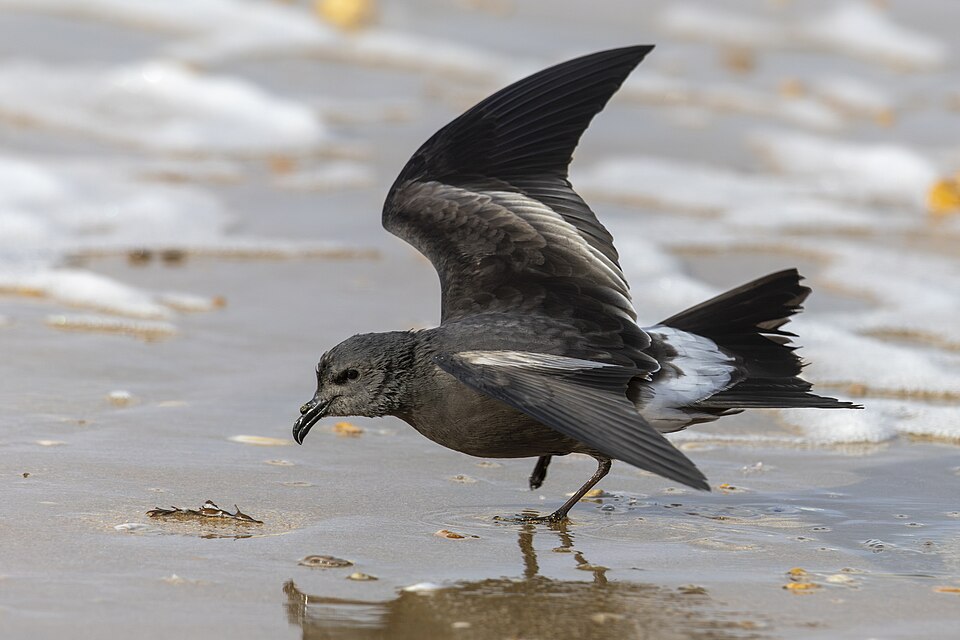 Uccello delle tempeste codaforcuta
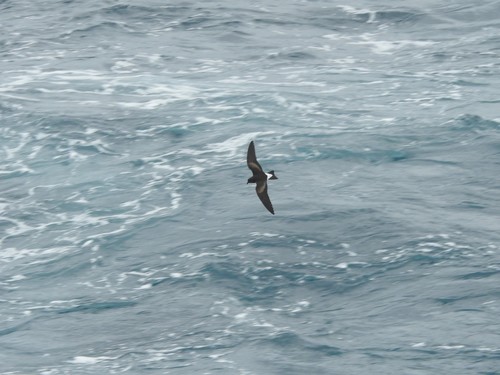 Wedge-rumped Storm-Petrel
In breve
Il segno distintivo più affidabile tra l'Uccello delle tempeste codaforcuta e il Band-rumped Storm-Petrel è il motivo del sopracciglio: l'Uccello delle tempeste codaforcuta mostra tipicamente un sopracciglio bianco con una possibile linea centrale scura, mentre il Band-rumped Storm-Petrel ha un sopracciglio bianco a forma di cuneo che è nettamente definito e di solito privo di una striscia scura centrale. In volo, l'Uccello delle tempeste codaforcuta ha anche una coda più profondamente biforcuta e uno stile di volo irregolare e fluttuante, rispetto alla coda meno biforcuta e al volo più stabile del Band-rumped. Le dimensioni sono simili, ma l'Uccello delle tempeste codaforcuta è leggermente più grande e con ali più lunghe. Entrambi possono essere confusi, specialmente quando si incontra la forma scura dell'Uccello delle tempeste codaforcuta, ma prestando attenzione alla forma del sopracciglio, alla biforcazione della coda e allo stile di volo si possono solitamente distinguere.
Consigli di identificazione
- Il motivo del sopracciglio è fondamentale: L'Uccello delle tempeste codaforcuta mostra tipicamente un sopracciglio bianco con una possibile striscia centrale scura (soprattutto gli uccelli atlantici); il Band-rumped Storm-Petrel ha un sopracciglio bianco a forma di cuneo con bordi netti e di solito senza centro scuro. Questo è il segno più affidabile in buona luce.
- Attenzione all'Uccello delle tempeste codaforcuta scuro: Nell'oceano Pacifico orientale, alcuni Uccelli delle tempeste codaforcuta mancano completamente del sopracciglio bianco, assomigliando da vicino a uccelli delle tempeste completamente scuri. Questi sono rari a nord della California meridionale ma comuni più a sud. Se vedi un uccello con il sopracciglio scuro, non fare affidamento solo sul colore del sopracciglio—usa la forma della coda e lo stile di volo.
- Forma della coda: L'Uccello delle tempeste codaforcuta ha una coda biforcuta più profonda, spesso visibile in volo quando la coda è aperta. La coda del Band-rumped è meno biforcuta, apparendo più squadrata o solo leggermente incisa.
- Stile di volo: L'Uccello delle tempeste codaforcuta ha un volo fluttuante e irregolare, spesso descritto come simile a un pipistrello, con frequenti cambi di direzione e una tendenza a battere sulla superficie dell'acqua. Il Band-rumped è più stabile e diretto, con movimenti meno irregolari.
- Barra dell'ala superiore: L'Uccello delle tempeste codaforcuta può mostrare una barra grigio-marrone chiara sulle copritrici secondarie, soprattutto in piumaggio fresco o in uccelli più giovani. Questo è sottile e non sempre visibile, ma il Band-rumped manca di questa caratteristica.
- Colore del viso: L'Uccello delle tempeste codaforcuta può mostrare un viso leggermente più chiaro rispetto al Band-rumped, ma questo è un segno minore e poco affidabile sul campo.
- Dimensioni: L'Uccello delle tempeste codaforcuta è leggermente più grande e con ali più lunghe, ma la differenza è sottile e non diagnostica a meno che gli uccelli non siano affiancati.
- Contesto geografico: Se visto nelle Galápagos o al largo della costa del Perù, il Band-rumped è molto più probabile. Nell'Atlantico settentrionale o nel Pacifico settentrionale, l'Uccello delle tempeste codaforcuta è il default. Tuttavia, entrambi possono vagare, quindi conferma sempre con i segni sul campo.
- Viste in perche rare: Entrambe le specie sono quasi sempre viste in volo in mare. Se viste sulla terra, l'Uccello delle tempeste codaforcuta può muoversi in modo goffo vicino ai nidi, ma questo non è un segno pratico per la maggior parte degli osservatori.
- Nessuna differenza vocale utile in mare: Le note non forniscono differenze di vocalizzazione utili per la separazione sul campo.
- Sesso e età: Non sono state notate differenze significative basate sul sesso. I segni specifici per l'età sono principalmente nella barra dell'ala superiore per l'Uccello delle tempeste codaforcuta, ma la forma del sopracciglio e della coda rimangono i migliori segni per tutte le età.
- Trappole: Gli Uccelli delle tempeste codaforcuta immaturi possono avere barre dell'ala superiore più fresche, ma il motivo del sopracciglio e la biforcazione della coda sono più affidabili. Gli Uccelli delle tempeste codaforcuta scuri sono il principale rischio di confusione—usa la struttura e lo stile di volo per separarli.
- Non confondere con Wilson's o Band-rumped: Queste due specie sono più simili tra loro che a Wilson's o al Band-rumped Storm-Petrel, che hanno motivi di sopracciglio e coda diversi.
- Illuminazione e distanza: A lunga distanza o in scarsa luce, il motivo del sopracciglio e la biforcazione della coda possono essere difficili da giudicare. Cerca di osservare più segni sul campo prima di concludere.
- Riepilogo: Concentrati prima sulla forma e sul colore del sopracciglio, poi controlla la biforcazione della coda e lo stile di volo. Usa la geografia e le sottili differenze di dimensioni come prove di supporto, non come segni primari.
Taglia
L'Uccello delle tempeste codaforcuta è leggermente più grande, misurando 18–21 cm di lunghezza con un'apertura alare di 43–48 cm [wikipedia]. Il Band-rumped Storm-Petrel è simile ma marginalmente più piccolo nel complesso (misurazioni precise non fornite nelle note, ma nessuna evidenza di una differenza di dimensioni drammatica). Entrambi sono uccelli marini piccoli e delicati, ma l'Uccello delle tempeste codaforcuta può apparire un po' più robusto e con ali più lunghe in confronto diretto. La dimensione da sola è raramente diagnostica in mare, ma può supportare altri segni sul campo.
Piumaggio
Per tutte le età, la differenza chiave è il sopracciglio: l'Uccello delle tempeste codaforcuta mostra solitamente un sopracciglio bianco con una possibile linea centrale scura (soprattutto negli uccelli atlantici), mentre il Band-rumped Storm-Petrel ha un sopracciglio bianco a forma di cuneo che è nettamente definito e generalmente privo di un centro scuro. L'Uccello delle tempeste codaforcuta può mostrare una forma scura del sopracciglio (principalmente nell'oceano Pacifico orientale), che è una trappola principale—questi uccelli possono mancare completamente del sopracciglio bianco e sono facilmente confusi con uccelli delle tempeste completamente scuri, inclusi alcuni Band-rumped. Sull'ala superiore, l'Uccello delle tempeste codaforcuta mostra una barra grigio-marrone chiara sulle copritrici secondarie, più visibile in piumaggio fresco e su uccelli più giovani, ma questo è sottile e non sempre ovvio. Entrambe le specie sono altrimenti scure nel complesso, ma l'Uccello delle tempeste codaforcuta può avere un viso leggermente più chiaro. La forma della coda è anche un indizio: l'Uccello delle tempeste codaforcuta ha una coda più profondamente biforcuta, mentre la biforcazione del Band-rumped è più superficiale. Nessun modello specifico per l'età dell'ala superiore è descritto per il Band-rumped nelle note, quindi concentrati sul sopracciglio e sulla coda per tutte le età.
Comportamento
L'Uccello delle tempeste codaforcuta ha un volo distintivo, fluttuante e irregolare, spesso descritto come simile a un pipistrello, con frequenti cambi di direzione e una tendenza a battere sulla superficie dell'acqua mentre si nutre. La sua coda è spesso tenuta aperta, accentuando la biforcazione profonda. Il Band-rumped Storm-Petrel, al contrario, tende a volare con battiti d'ala più stabili e diretti e una coda meno biforcuta, dando un'impressione leggermente più determinata. Entrambe le specie si nutrono raccogliendo cibo dalla superficie, ma l'Uccello delle tempeste codaforcuta è più probabile che venga visto muoversi goffamente sulla terra vicino al suo nido, anche se questo è raramente osservato in mare.
Habitat
L'Uccello delle tempeste codaforcuta è diffuso nell'Atlantico settentrionale e nel Pacifico settentrionale, nidificando su isole remote e foraggiando lontano dalla costa. Il Band-rumped Storm-Petrel è più ristretto, nidificando nelle Isole Galápagos e lungo la costa del Perù, ed è generalmente incontrato nel Pacifico tropicale orientale. È possibile un sovrapposizione al largo della costa occidentale dell'America Centrale e Meridionale, ma la maggior parte degli osservatori li incontrerà nei rispettivi areali principali. Il contesto dell'habitat può aiutare, ma non è sempre diagnostico a causa delle migrazioni pelagiche.
Uccello delle tempeste codaforcuta · Wedge-rumped Storm-Petrel · I miei uccelli difficili