

Motmot

King Penguin vs Adelie Penguin

Aptenodytes patagonicus versus Pygoscelis adeliae

Play a quiz with King Penguin and Adelie Penguin
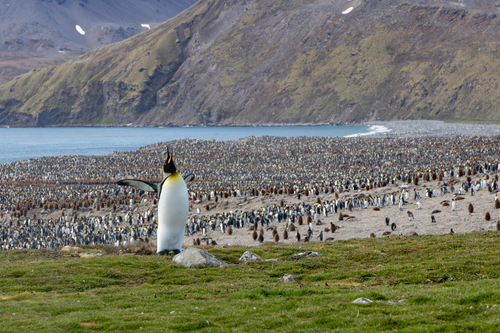
King Penguin (Aptenodytes patagonicus) King Penguin
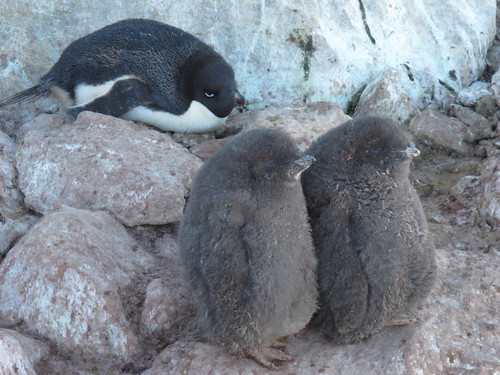
Adelie Penguin (Pygoscelis adeliae) Adelie Penguin

Media

Loading…

In short

The most reliable field mark to separate King Penguin from Adélie Penguin is the presence of bright orange cheek patches and upper chest on the King Penguin, versus the Adélie's entirely black head with a conspicuous white eye ring and white underparts. Immature Adélies can show a white chin and throat, but never the orange or yellow hues of a King. King Penguins are also much larger and bulkier, with a noticeably longer, heavier bill. In flight or on land, Adélies show a sharp black-and-white contrast and a white trailing edge to the upperwing, while Kings appear more uniformly dark above with their signature orange highlights. If you see a penguin with a white eye ring, it is not a King Penguin.

Identification tips

  1. Cheek patch color: King Penguins have a broad, solid bright orange cheek patch; Adélies have a plain black head with no colored patch. This is the single most reliable mark at all ages.
  2. Eye ring: Adélie adults have a conspicuous white eye ring; King Penguins never show a white eye ring at any age.
  3. Bill color and structure: King Penguins have a long, heavy bill with orange along the lower mandible; Adélies have a shorter, mostly black bill with only a faint reddish-brown tip, and much of the bill is covered by feathering.
  4. Upperwing pattern: Adélies show a white trailing edge to the upperwing (in flight or at rest), contrasting with the black upperwing; King Penguins have uniformly dark upperwings with no white trailing edge.
  5. Underwing pattern: Adélie underwings are white with a narrow black leading edge and black tip; King Penguin underwing is not distinctly patterned in this way.
  6. Chest color: King Penguins have an orange upper chest; Adélies have a clean white chest and belly.
  7. Head and throat: Adélies have a black head and throat (adults), or white chin and throat (immatures); King Penguins always have dark heads with orange cheek patches.
  8. Size and bulk: King Penguins are much larger and heavier than Adélies; if the bird looks massive, it is a King.
  9. Leg and foot color: Adélies have pinkish, mostly unfeathered legs and feet; King's legs are less visible and not a primary field mark.
  10. Habitat: Adélies breed on the Antarctic continent; Kings breed on subantarctic islands. Location is a strong clue.
  11. Behavior: Adélies are more active, social, and agile in colonies; Kings move more slowly and with a stately gait.
  12. Juvenile confusion: Immature Adélies may show a white chin and throat, but never orange or yellow on the head or chest. No age of Adélie ever resembles a King Penguin's orange highlights.
  13. Bill feathering: Adélie bills are mostly covered with black feathers except the tip; King bills are more exposed and show orange coloration.
  14. Sex differences: Both species are sexually monomorphic in plumage; size differences are subtle and not useful for field ID between species.
  15. Colony context: If you see a large group of penguins with white eye rings and no orange, you are looking at Adélies. If you see orange cheek patches and large size, it is a King Penguin colony.

Size

King Penguins are dramatically larger and heavier than Adélie Penguins. Adult King Penguins average around 12,150 g (12.2 kg), while Adélies average about 5,045 g (5.0 kg) [wikidata]. In length, King Penguins stand 70–100 cm tall, compared to the Adélie's 70–73 cm, but the King's much greater mass and bulk are immediately apparent. Even the largest Adélie never approaches the bulk or height of a well-fed King Penguin, and the King's long, thick bill and deep chest further accentuate its size.

Plumage

Immature Adélie Penguins (post-juvenile, before adult) have a white chin and throat and a bluer tinge to their upperparts, but never show any orange or yellow on the head or chest. Adults develop the signature white eye ring and entirely black head, throat, and upperparts, with clean white underparts. The upperwing in Adélie is black with a crisp white trailing edge (visible in flight or at rest), and the underwing is white with a narrow black leading edge and small black tip. King Penguins, both adult and immature, have a broad, solid bright orange cheek patch and orange upper chest, with dark upperparts and white underparts. The King never shows a white eye ring or the precise black-and-white contrast of the Adélie. The King's bill also features orange along the lower mandible, while the Adélie's bill is mostly black with only a hint of reddish-brown at the tip. No age of Adélie ever shows the King's orange or yellow hues.

Behaviour

King Penguins move with a stately, upright walk and may toboggan on their bellies, but their bulk makes them less agile than Adélies. Adélie Penguins are more active and agile, especially in large colonies, and often gather stones for nests. In the water, King Penguins are powerful divers, often porpoising and capable of very deep, prolonged dives, while Adélies are more typical shallow divers. Both are flightless, but Adélies may appear more energetic and social, especially at breeding sites.

Habitat

King Penguins breed on subantarctic islands, never on the Antarctic continent itself, and are typically found on beaches or flat, grassy areas near the sea. Adélie Penguins are strictly Antarctic, breeding on ice-free rocky ground along the Antarctic coast. If you are in the deep Antarctic, you are almost certainly seeing Adélie, not King. King Penguins do not occur in the same habitat as Adélie except as rare vagrants.

Voice

Both species are highly vocal in colonies, but their calls are not typically diagnostic at a distance for field separation. King Penguin males and females can be separated by call, but this is not a practical field mark for distinguishing them from Adélie Penguins.

Submit a better description

Use the same sections as the comparison. Your text is published immediately.

The most reliable field mark to separate King Penguin from Adélie Penguin is the presence of bright orange cheek patches and upper chest on the King Penguin, versus the Adélie's entirely black head with a conspicuous white eye ring and white underparts. Immature Adélies can show a white chin and throat, but never the orange or yellow hues of a King. King Penguins are also much larger and bulkier, with a noticeably longer, heavier bill. In flight or on land, Adélies show a sharp black-and-white contrast and a white trailing edge to the upperwing, while Kings appear more uniformly dark above with their signature orange highlights. If you see a penguin with a white eye ring, it is not a King Penguin.

  1. Cheek patch color: King Penguins have a broad, solid bright orange cheek patch; Adélies have a plain black head with no colored patch. This is the single most reliable mark at all ages.
  2. Eye ring: Adélie adults have a conspicuous white eye ring; King Penguins never show a white eye ring at any age.
  3. Bill color and structure: King Penguins have a long, heavy bill with orange along the lower mandible; Adélies have a shorter, mostly black bill with only a faint reddish-brown tip, and much of the bill is covered by feathering.
  4. Upperwing pattern: Adélies show a white trailing edge to the upperwing (in flight or at rest), contrasting with the black upperwing; King Penguins have uniformly dark upperwings with no white trailing edge.
  5. Underwing pattern: Adélie underwings are white with a narrow black leading edge and black tip; King Penguin underwing is not distinctly patterned in this way.
  6. Chest color: King Penguins have an orange upper chest; Adélies have a clean white chest and belly.
  7. Head and throat: Adélies have a black head and throat (adults), or white chin and throat (immatures); King Penguins always have dark heads with orange cheek patches.
  8. Size and bulk: King Penguins are much larger and heavier than Adélies; if the bird looks massive, it is a King.
  9. Leg and foot color: Adélies have pinkish, mostly unfeathered legs and feet; King's legs are less visible and not a primary field mark.
  10. Habitat: Adélies breed on the Antarctic continent; Kings breed on subantarctic islands. Location is a strong clue.
  11. Behavior: Adélies are more active, social, and agile in colonies; Kings move more slowly and with a stately gait.
  12. Juvenile confusion: Immature Adélies may show a white chin and throat, but never orange or yellow on the head or chest. No age of Adélie ever resembles a King Penguin's orange highlights.
  13. Bill feathering: Adélie bills are mostly covered with black feathers except the tip; King bills are more exposed and show orange coloration.
  14. Sex differences: Both species are sexually monomorphic in plumage; size differences are subtle and not useful for field ID between species.
  15. Colony context: If you see a large group of penguins with white eye rings and no orange, you are looking at Adélies. If you see orange cheek patches and large size, it is a King Penguin colony.

King Penguins are dramatically larger and heavier than Adélie Penguins. Adult King Penguins average around 12,150 g (12.2 kg), while Adélies average about 5,045 g (5.0 kg) [wikidata]. In length, King Penguins stand 70–100 cm tall, compared to the Adélie's 70–73 cm, but the King's much greater mass and bulk are immediately apparent. Even the largest Adélie never approaches the bulk or height of a well-fed King Penguin, and the King's long, thick bill and deep chest further accentuate its size.

Immature Adélie Penguins (post-juvenile, before adult) have a white chin and throat and a bluer tinge to their upperparts, but never show any orange or yellow on the head or chest. Adults develop the signature white eye ring and entirely black head, throat, and upperparts, with clean white underparts. The upperwing in Adélie is black with a crisp white trailing edge (visible in flight or at rest), and the underwing is white with a narrow black leading edge and small black tip. King Penguins, both adult and immature, have a broad, solid bright orange cheek patch and orange upper chest, with dark upperparts and white underparts. The King never shows a white eye ring or the precise black-and-white contrast of the Adélie. The King's bill also features orange along the lower mandible, while the Adélie's bill is mostly black with only a hint of reddish-brown at the tip. No age of Adélie ever shows the King's orange or yellow hues.

King Penguins move with a stately, upright walk and may toboggan on their bellies, but their bulk makes them less agile than Adélies. Adélie Penguins are more active and agile, especially in large colonies, and often gather stones for nests. In the water, King Penguins are powerful divers, often porpoising and capable of very deep, prolonged dives, while Adélies are more typical shallow divers. Both are flightless, but Adélies may appear more energetic and social, especially at breeding sites.

King Penguins breed on subantarctic islands, never on the Antarctic continent itself, and are typically found on beaches or flat, grassy areas near the sea. Adélie Penguins are strictly Antarctic, breeding on ice-free rocky ground along the Antarctic coast. If you are in the deep Antarctic, you are almost certainly seeing Adélie, not King. King Penguins do not occur in the same habitat as Adélie except as rare vagrants.

Both species are highly vocal in colonies, but their calls are not typically diagnostic at a distance for field separation. King Penguin males and females can be separated by call, but this is not a practical field mark for distinguishing them from Adélie Penguins.

Discard your changes?

You have unsaved edits. If you leave now, those changes will be lost.

King Penguin · Adelie Penguin · My Tricky Birds