

Motmot

Japanese Sparrowhawk vs Brahminy Kite

Tachyspiza gularis versus Haliastur indus

Play a quiz with Japanese Sparrowhawk and Brahminy Kite
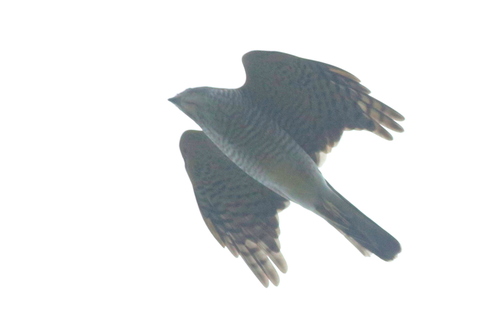
Japanese Sparrowhawk (Tachyspiza gularis) Japanese Sparrowhawk
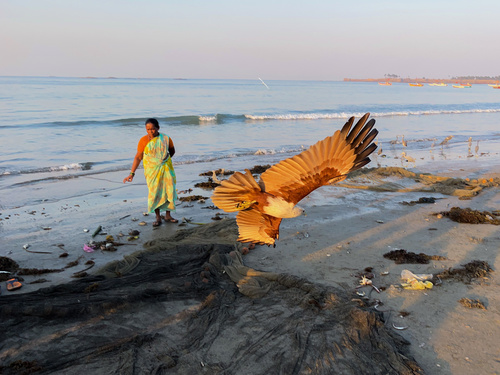
Brahminy Kite (Haliastur indus) Brahminy Kite

Media

Loading…

In short

The most reliable way to separate Japanese Sparrowhawk from Brahminy Kite is by overall structure and plumage contrast: Brahminy Kite adults are much larger, with striking white head and chestnut body, and fly with broad, angled wings and a rounded tail, while Japanese Sparrowhawk is a much smaller, compact raptor with a short tail and barred underparts. Juvenile Brahminy Kites are brown but still show a pale, squarish underwing patch and rounded tail, unlike the streaked, barred, and much smaller juvenile sparrowhawk. In flight or perched, the kite’s white head and chestnut body are unique, while the sparrowhawk always shows a barred underside and never a white head. Structure, size, and flight style are as important as plumage, especially at a distance.

Identification tips

  1. Size is a major clue: Brahminy Kite is more than twice the length and wingspan of Japanese Sparrowhawk. Even a distant Brahminy Kite will appear much larger and broader-winged than any sparrowhawk.
  2. Tail shape: Brahminy Kite always has a rounded tail, never notched or square. Japanese Sparrowhawk has a relatively short, squared-off tail with multiple dark bars (all ages). This is especially clear in flight.
  3. Head and underparts: Adult Brahminy Kite is unique with a pure white head and breast sharply contrasting with chestnut body and wings. No sparrowhawk of any age or sex shows this pattern; all have barred or streaked underparts and a dark head with a throat stripe.
  4. Juvenile contrast: Juvenile Brahminy Kite is brown overall with a pale, squarish underwing carpal patch and rounded tail, lacking the sharp streaking, barring, and white supercilium of juvenile sparrowhawk. Juvenile sparrowhawk is cream below with red-brown streaks and spots, dark brown above, and shows a white nape and supercilium.
  5. Wing pattern in flight: Japanese Sparrowhawk (all ages) shows barred underwings and tail; Brahminy Kite (all ages) shows uniform chestnut wings with black tips and a pale underwing carpal patch in juveniles. No sparrowhawk shows a pale carpal patch or solid chestnut wings.
  6. Flight style: Brahminy Kite soars and glides with wings held in a shallow 'V', often over water. Japanese Sparrowhawk flies with rapid, flickering wingbeats and short glides, usually in or near woodland.
  7. Bill and legs: Japanese Sparrowhawk has a small, sharply hooked bill and long, slim yellow legs. Brahminy Kite has a heavier bill and proportionally shorter legs, but this is rarely diagnostic at a distance.
  8. Eye color: Adult male sparrowhawks have red-orange eyes, females yellow, juveniles brown. Brahminy Kite eye color is not distinctive in the field.
  9. Perched posture: Brahminy Kite perches upright and bulky, often in exposed locations. Japanese Sparrowhawk perches more horizontally, often in cover.
  10. Habitat context: Brahminy Kite is almost always near water—coastlines, estuaries, or large lakes. Japanese Sparrowhawk is a woodland bird, rarely seen over open water.
  11. Voice: Japanese Sparrowhawk may give a chattering 'kiki-kik-kik...' but is usually silent. Brahminy Kite is mostly silent, with occasional mewing calls.
  12. Sexual dimorphism: Female sparrowhawks are larger and browner than males, but both sexes are much smaller than Brahminy Kite and never show a white head or chestnut body.
  13. Confusion risk: At a distance, a juvenile Brahminy Kite might be mistaken for a large accipiter, but the pale underwing patch, rounded tail, and lack of barring/streaking below are key. Japanese Sparrowhawk juveniles always show streaked underparts and a sharp, banded tail.
  14. Seasonal context: Both species may be present in migration, but habitat and size remain reliable. If unsure, use a combination of size, tail shape, and underpart pattern.
  15. When in doubt: If you see a small, compact raptor with barred underparts and a short, banded tail, it is a Japanese Sparrowhawk. If you see a large, broad-winged raptor with a white head and chestnut body, or a brown juvenile with a pale underwing patch and rounded tail, it is a Brahminy Kite.

Size

Brahminy Kite is substantially larger: 45–51 cm in length, wingspan 109–124 cm, and weight 320–673 g [wikipedia]. Japanese Sparrowhawk is much smaller: 23–30 cm long, wingspan 46–58 cm, and weight 92–193 g (females at the upper end) [wikipedia]. Even a female sparrowhawk is less than half the length and wingspan of a Brahminy Kite. In the field, Brahminy Kite appears broad-winged and heavy-bodied, while Japanese Sparrowhawk is compact, with a short tail and slim build.

Plumage

Juvenile Japanese Sparrowhawk is dark brown above, cream below with red-brown streaks on the breast, spots on the abdomen, and barring on the sides, plus a white supercilium and nape, and thin tail bars. Juvenile Brahminy Kite is overall brown, paler than black kites, with a paler underwing carpal patch, shorter wings, and a rounded tail; it lacks the sharp streaking and barring of the sparrowhawk and never shows a white supercilium or throat stripe. Adult Japanese Sparrowhawk males are dark above, whitish below with fine grey-brown and rufous barring, and a faint rufous wash on the chest; females are browner above, with heavier brown barring below. Both sexes have a throat stripe. Adult Brahminy Kite is unmistakable: white head and breast, deep chestnut body and wings, black wingtips, and rounded tail. No age or sex of sparrowhawk ever shows the kite’s white head or chestnut body. In flight, sparrowhawk shows barred underwings and tail, while Brahminy Kite shows uniform chestnut wings with black tips and a white head.

Behaviour

Brahminy Kite typically soars with wings held in a shallow 'V', gliding and circling over water or open areas, often scavenging. Its flight is buoyant and kite-like, with slow, deep wingbeats and frequent gliding. Japanese Sparrowhawk is much more agile and direct, with rapid, flickering wingbeats and short glides, often dashing through woodland or making quick, low flights. When perched, Brahminy Kite appears large and upright, while sparrowhawk is slim, with a more horizontal posture.

Habitat

Brahminy Kite is almost always found near coasts, estuaries, or large inland wetlands, rarely venturing far from water [wikipedia]. Japanese Sparrowhawk is a woodland and forest-edge species, breeding and hunting in wooded areas, and only rarely seen near large bodies of water. If you see a raptor soaring over a tidal flat or river mouth, it is almost certainly a Brahminy Kite; a small raptor dashing through trees is likely a sparrowhawk.

Voice

Japanese Sparrowhawk occasionally gives a chattering 'kiki-kik-kik...' call, especially in display or alarm [wikipedia]. Brahminy Kite is generally silent but may give a mewing or whistling call, though this is rarely diagnostic in the field.

Submit a better description

Use the same sections as the comparison. Your text is published immediately.

The most reliable way to separate Japanese Sparrowhawk from Brahminy Kite is by overall structure and plumage contrast: Brahminy Kite adults are much larger, with striking white head and chestnut body, and fly with broad, angled wings and a rounded tail, while Japanese Sparrowhawk is a much smaller, compact raptor with a short tail and barred underparts. Juvenile Brahminy Kites are brown but still show a pale, squarish underwing patch and rounded tail, unlike the streaked, barred, and much smaller juvenile sparrowhawk. In flight or perched, the kite’s white head and chestnut body are unique, while the sparrowhawk always shows a barred underside and never a white head. Structure, size, and flight style are as important as plumage, especially at a distance.

  1. Size is a major clue: Brahminy Kite is more than twice the length and wingspan of Japanese Sparrowhawk. Even a distant Brahminy Kite will appear much larger and broader-winged than any sparrowhawk.
  2. Tail shape: Brahminy Kite always has a rounded tail, never notched or square. Japanese Sparrowhawk has a relatively short, squared-off tail with multiple dark bars (all ages). This is especially clear in flight.
  3. Head and underparts: Adult Brahminy Kite is unique with a pure white head and breast sharply contrasting with chestnut body and wings. No sparrowhawk of any age or sex shows this pattern; all have barred or streaked underparts and a dark head with a throat stripe.
  4. Juvenile contrast: Juvenile Brahminy Kite is brown overall with a pale, squarish underwing carpal patch and rounded tail, lacking the sharp streaking, barring, and white supercilium of juvenile sparrowhawk. Juvenile sparrowhawk is cream below with red-brown streaks and spots, dark brown above, and shows a white nape and supercilium.
  5. Wing pattern in flight: Japanese Sparrowhawk (all ages) shows barred underwings and tail; Brahminy Kite (all ages) shows uniform chestnut wings with black tips and a pale underwing carpal patch in juveniles. No sparrowhawk shows a pale carpal patch or solid chestnut wings.
  6. Flight style: Brahminy Kite soars and glides with wings held in a shallow 'V', often over water. Japanese Sparrowhawk flies with rapid, flickering wingbeats and short glides, usually in or near woodland.
  7. Bill and legs: Japanese Sparrowhawk has a small, sharply hooked bill and long, slim yellow legs. Brahminy Kite has a heavier bill and proportionally shorter legs, but this is rarely diagnostic at a distance.
  8. Eye color: Adult male sparrowhawks have red-orange eyes, females yellow, juveniles brown. Brahminy Kite eye color is not distinctive in the field.
  9. Perched posture: Brahminy Kite perches upright and bulky, often in exposed locations. Japanese Sparrowhawk perches more horizontally, often in cover.
  10. Habitat context: Brahminy Kite is almost always near water—coastlines, estuaries, or large lakes. Japanese Sparrowhawk is a woodland bird, rarely seen over open water.
  11. Voice: Japanese Sparrowhawk may give a chattering 'kiki-kik-kik...' but is usually silent. Brahminy Kite is mostly silent, with occasional mewing calls.
  12. Sexual dimorphism: Female sparrowhawks are larger and browner than males, but both sexes are much smaller than Brahminy Kite and never show a white head or chestnut body.
  13. Confusion risk: At a distance, a juvenile Brahminy Kite might be mistaken for a large accipiter, but the pale underwing patch, rounded tail, and lack of barring/streaking below are key. Japanese Sparrowhawk juveniles always show streaked underparts and a sharp, banded tail.
  14. Seasonal context: Both species may be present in migration, but habitat and size remain reliable. If unsure, use a combination of size, tail shape, and underpart pattern.
  15. When in doubt: If you see a small, compact raptor with barred underparts and a short, banded tail, it is a Japanese Sparrowhawk. If you see a large, broad-winged raptor with a white head and chestnut body, or a brown juvenile with a pale underwing patch and rounded tail, it is a Brahminy Kite.

Brahminy Kite is substantially larger: 45–51 cm in length, wingspan 109–124 cm, and weight 320–673 g [wikipedia]. Japanese Sparrowhawk is much smaller: 23–30 cm long, wingspan 46–58 cm, and weight 92–193 g (females at the upper end) [wikipedia]. Even a female sparrowhawk is less than half the length and wingspan of a Brahminy Kite. In the field, Brahminy Kite appears broad-winged and heavy-bodied, while Japanese Sparrowhawk is compact, with a short tail and slim build.

Juvenile Japanese Sparrowhawk is dark brown above, cream below with red-brown streaks on the breast, spots on the abdomen, and barring on the sides, plus a white supercilium and nape, and thin tail bars. Juvenile Brahminy Kite is overall brown, paler than black kites, with a paler underwing carpal patch, shorter wings, and a rounded tail; it lacks the sharp streaking and barring of the sparrowhawk and never shows a white supercilium or throat stripe. Adult Japanese Sparrowhawk males are dark above, whitish below with fine grey-brown and rufous barring, and a faint rufous wash on the chest; females are browner above, with heavier brown barring below. Both sexes have a throat stripe. Adult Brahminy Kite is unmistakable: white head and breast, deep chestnut body and wings, black wingtips, and rounded tail. No age or sex of sparrowhawk ever shows the kite’s white head or chestnut body. In flight, sparrowhawk shows barred underwings and tail, while Brahminy Kite shows uniform chestnut wings with black tips and a white head.

Brahminy Kite typically soars with wings held in a shallow 'V', gliding and circling over water or open areas, often scavenging. Its flight is buoyant and kite-like, with slow, deep wingbeats and frequent gliding. Japanese Sparrowhawk is much more agile and direct, with rapid, flickering wingbeats and short glides, often dashing through woodland or making quick, low flights. When perched, Brahminy Kite appears large and upright, while sparrowhawk is slim, with a more horizontal posture.

Brahminy Kite is almost always found near coasts, estuaries, or large inland wetlands, rarely venturing far from water [wikipedia]. Japanese Sparrowhawk is a woodland and forest-edge species, breeding and hunting in wooded areas, and only rarely seen near large bodies of water. If you see a raptor soaring over a tidal flat or river mouth, it is almost certainly a Brahminy Kite; a small raptor dashing through trees is likely a sparrowhawk.

Japanese Sparrowhawk occasionally gives a chattering 'kiki-kik-kik...' call, especially in display or alarm [wikipedia]. Brahminy Kite is generally silent but may give a mewing or whistling call, though this is rarely diagnostic in the field.

Discard your changes?

You have unsaved edits. If you leave now, those changes will be lost.

Japanese Sparrowhawk · Brahminy Kite · My Tricky Birds