

Indian Pond Heron vs Tricoloured Munia
Ardeola grayii versus Lonchura malacca
Play a quiz with Indian Pond Heron and Tricoloured Munia
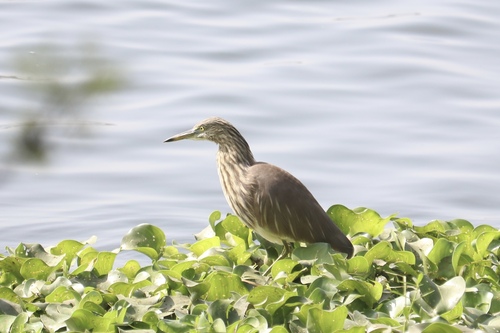 Indian Pond Heron
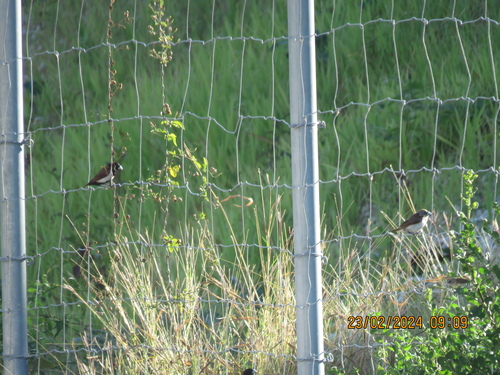 Tricoloured Munia
In short
The most reliable field mark between Indian Pond Heron and Tricoloured Munia is overall structure and size: the heron is a large, stocky waterbird with a thick bill, while the munia is a tiny, compact finch. In flight, Indian Pond Heron (of all ages) shows a dramatic transformation from cryptic brown to flashing white wings, whereas Tricoloured Munia remains dark with contrasting white underwing coverts and a distinctive tricoloured body. Juvenile Tricoloured Munias are warm brown and buff, lacking the sharp black-and-white contrasts of adults, but still appear as small, finch-like birds. If you see a streaky brown bird suddenly reveal all-white wings as it flushes from water’s edge, it is the heron; a tiny, seed-eating bird with a black head or plain brown (if juvenile) is the munia.
Identification tips
- Size and Structure: Indian Pond Heron is much larger and heavier, with a thick, pointed bill and longer legs and neck. Tricoloured Munia is tiny, round-bodied, with a short, conical bill and short tail. This is the most immediate and reliable distinction in the field.
- Flight Pattern and Wing Markings: When flushed, Indian Pond Heron of any age shows brilliant white wings, rump, and tail, transforming from cryptic brown to striking white. Tricoloured Munia, in contrast, remains dark in flight, with no white in the wings except for pale underwing coverts, and has a quick, fluttery flight.
- Perched Plumage (Adults): Adult herons are streaked brown and olive above, with a buff-brown back, and may have long neck plumes in breeding season. Adult munias have a black head, throat, and breast, white belly and flanks, and chestnut upperparts—a sharp, tricoloured pattern never matched by the heron.
- Juvenile Plumage: Juvenile herons are streaked brown and olive, matching adults when perched, but always show white wings in flight. Juvenile munias are warm brown above and buff below, lacking the black head and white belly of adults, but still appear as small, seed-eating finches and never show white in the wings or tail.
- Bill Shape and Color: Heron’s bill is thick, long, and pointed (dagger-like), yellowish to dark-tipped. Munia’s bill is short, thick, and conical, pale bluish-grey in adults, horn-grey in juveniles.
- Legs and Feet: Heron’s legs are relatively long and yellowish, sometimes reddish in rare breeding individuals. Munia’s legs and feet are short and grey, never long or brightly colored.
- Behavior: Herons stalk prey at water’s edge, often motionless, and flush only when closely approached. Munias are active, flocking, and feed on seeds in grassy areas, rarely near open water.
- Habitat: Herons are almost always at or near water (ponds, marshes, rice fields); munias prefer dry grasslands, reedbeds, and agricultural fields, sometimes near water but not at the edge.
- Voice: Heron may give a harsh croak if flushed; munia is generally quiet with soft calls, not a strong separator.
- Seasonal Marks: Breeding herons may have long neck plumes and, rarely, reddish legs, but these are not always present and should not be relied upon.
- Sex Differences: Munia males and females are similar, though females may have paler uppertail coverts; herons show little sexual dimorphism in field marks.
- Common Pitfalls: Immature munias can be confused with other munias but not with herons due to size and structure. Herons’ cryptic plumage when perched can make them seem inconspicuous, but size and white wings in flight are diagnostic.
- Context: If the bird is seen stalking in shallow water or mud, it is almost certainly a heron. If it is feeding in a flock on grass seeds, it is a munia.
- Approachability: Herons can be approached closely before flushing; munias are more wary and flush at greater distances, often as a group.
- Geographic Range: Both species overlap widely in South Asia, so range is not a separator.
Size
Indian Pond Heron is vastly larger and heavier (body mass ~255 g) than Tricoloured Munia (~12.6 g) [wikidata]. The heron is a medium-sized heron with a thick, dagger-like bill and relatively short neck for a heron, but still much longer-necked and longer-legged than any finch. Tricoloured Munia is a small, round-bodied finch with a short, conical bill and short tail. Even at a distance, the heron’s size and proportions are obvious, especially when standing or flying; the munia is sparrow-sized and never appears lanky or elongated.
Plumage
Juvenile and adult Indian Pond Herons are streaked brown and olive above when perched, blending into their surroundings, but all ages show bright white wings, rump, and tail in flight—a sudden, unmistakable contrast [wikipedia]. Tricoloured Munia adults are sharply patterned: black head, throat, and breast; white belly and flanks; chestnut upperparts; dark brown flight feathers; and white to cream underwing coverts. Juveniles lack the black head and white belly, being warm brown above and buff below, but still lack any white in the wings or tail. In flight, munias do not show the heron’s striking white wing panels; instead, their flight is quick and fluttery, with dark wings and a compact body. Breeding herons may show long neck plumes and, rarely, reddish legs, but these are not always present. Munias have a pale bluish-grey bill (adults) or horn-grey (juveniles), never the thick, pointed bill of a heron.
Behaviour
Indian Pond Herons are typically solitary or loosely associated, stalking slowly at the edge of water, often remaining motionless for long periods. They flush only when closely approached, revealing their white wings. Tricoloured Munias are gregarious, often seen in flocks, feeding on grass seeds or perched on reeds and grasses, rarely near open water. Their flight is fast and undulating, and they are much more active and restless than the heron.
Habitat
Indian Pond Heron is found at the edges of ponds, marshes, rice fields, and other small water bodies, often close to human habitation [wikipedia]. It is almost always associated with water. Tricoloured Munia prefers grassy fields, reedbeds, and agricultural areas, sometimes near water but usually not at the water’s edge. Munias are rarely seen stalking in shallow water or mud, unlike the heron.
Voice
Indian Pond Heron is usually silent but may give a harsh croak when alarmed or near the nest [wikipedia]. Tricoloured Munia is not noted for its song and is relatively quiet, with only soft calls; its lack of song is notable among finches [wikipedia]. Vocalizations are not a reliable field mark for separation.