

Motmot

Indian Pied Starling vs Oriental Magpie-Robin

Gracupica contra versus Copsychus saularis

Play a quiz with Indian Pied Starling and Oriental Magpie-Robin
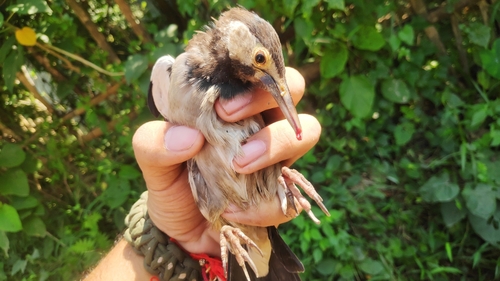
Indian Pied Starling (Gracupica contra) Indian Pied Starling
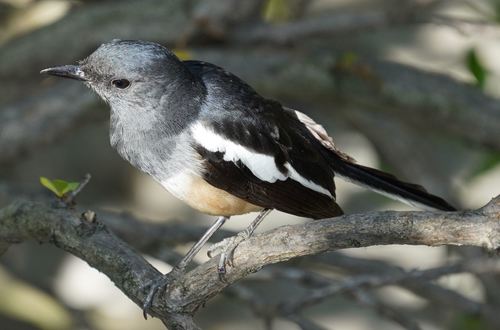
Oriental Magpie-Robin (Copsychus saularis) Oriental Magpie-Robin

Media

Loading…

In short

The most reliable field mark between Indian Pied Starling and Oriental Magpie-Robin is the starling's bold black-and-white plumage with a reddish bare eye patch and yellowish bill, versus the magpie-robin's more streamlined black-and-white pattern, upright-cocked tail, and lack of facial bare skin. Juvenile birds of both species can look duller, but the starling always shows a contrasting white cheek and wing panel, while the magpie-robin's tail shape and behavior are distinctive. In flight, the starling appears broad-winged and slow, while the magpie-robin is more slender and often flicks its long tail. Size, structure, and social behavior also help: the starling is heavier and often in small groups, while the magpie-robin is lighter and more solitary or in pairs.

Identification tips

  1. Facial skin and bill color: Indian Pied Starling shows a reddish bare patch around the eye and a yellowish bill with a reddish base in all ages; Oriental Magpie-Robin lacks bare facial skin and has a dark, slender bill.
  2. Cheek and lores: Starling has a bold white cheek and lores, contrasting with black upperparts; magpie-robin has a plain face with no white cheek or lores.
  3. Wing coverts and flight pattern: Starling's white wing coverts form a strong panel visible at rest and in flight, present in all ages; magpie-robin has a white shoulder patch but not the same panel effect.
  4. Tail shape and behavior: Magpie-robin's tail is long, black with white sides, and often cocked upright when perched or foraging; starling's tail is shorter, never cocked, and lacks strong white sides.
  5. Juvenile plumage: Juvenile starlings are brownish-black but retain the white cheek and wing panel; juvenile magpie-robins are scaly brown above and lack facial contrast.
  6. Body size and structure: Starling is much heavier and bulkier (83g vs 36g), with a thicker bill and rounder wings; magpie-robin is slender and light.
  7. Group size: Starlings are often in small flocks, especially outside breeding season; magpie-robins are usually solitary or in pairs.
  8. Flight style: Starling has a slow, rounded, butterfly-like flight; magpie-robin is more direct and agile.
  9. Perching posture: Magpie-robin perches upright with tail cocked; starling perches more horizontally, tail down.
  10. Habitat context: Starling prefers open areas near water, fields, or grazing land; magpie-robin is more common in gardens, parks, and forest edges.
  11. Breeding season: Both breed March–July in India, but magpie-robin males may be more conspicuous, singing from high perches.
  12. Sex differences: Starling sexes are similar; magpie-robin males are glossy black and white, females are greyer above and below (except in some southern races where females resemble males).
  13. Bill use: Starling often seen gaping/prying in grass or soil; magpie-robin hops and flicks tail while foraging.
  14. Eye color: Starling's reddish bare skin around the eye is unique; magpie-robin's eye is dark and unadorned.
  15. Overlap: In urban settings, check for the starling's facial pattern and group behavior versus the magpie-robin's solitary, upright-tailed stance.

Size

Indian Pied Starling is substantially heavier (83g vs 36g) and appears bulkier in the field. The starling has a stouter body and a thicker, yellowish bill with a reddish base, while the magpie-robin is more slender, with a finer bill. The magpie-robin's long tail adds to its length impression, but it is much lighter and more delicate overall. This size difference is usually apparent when both are seen together or compared to common urban birds.

Plumage

Juvenile and immature Indian Pied Starlings have dark brown replacing black, but retain the strong black-and-white contrast, especially the white cheek and wing coverts, and a reddish bare patch around the eye. The Oriental Magpie-Robin juvenile is scaly brown above and on the head, lacking the starling's facial bare skin and white cheek. Adult starlings are strikingly black above with white cheek, lores, wing coverts, and rump, and a reddish bare eye patch; their bill is yellowish with a reddish base. Magpie-robin males are glossy black above with a white shoulder patch, white underparts, and white outer tail feathers; females are greyer above and below, lacking the starling's facial pattern. The magpie-robin's tail is always long and often cocked upright, while the starling's is shorter and not held up. In flight, the starling's wings look rounded and broad, with a slow, 'butterfly-like' action, while the magpie-robin's flight is more direct and less showy.

Behaviour

Indian Pied Starlings are usually seen in small, loose groups, often foraging on the ground near cattle or in open fields, and are less bold than the common myna. They use a prying/gaping feeding technique, often in communal settings. Oriental Magpie-Robins are more solitary or in pairs, foraging close to the ground or in low branches, frequently flicking and cocking their long tails. Males often sing from exposed perches. The starling's flight is slow and rounded, while the magpie-robin moves with more agility and perches conspicuously.

Habitat

Both species are common near human habitation, but Indian Pied Starlings are most often found in lowland open areas with scattered trees near water, including villages, cities, and refuse tips, often in the plains and low foothills. Oriental Magpie-Robins are widespread in urban gardens, parks, and forests, and are more likely to be seen in a wider range of wooded habitats, including forest edges and gardens. Both can overlap in cities, but the starling is more tied to open, wet, or agricultural areas.

Submit a better description

Use the same sections as the comparison. Your text is published immediately.

The most reliable field mark between Indian Pied Starling and Oriental Magpie-Robin is the starling's bold black-and-white plumage with a reddish bare eye patch and yellowish bill, versus the magpie-robin's more streamlined black-and-white pattern, upright-cocked tail, and lack of facial bare skin. Juvenile birds of both species can look duller, but the starling always shows a contrasting white cheek and wing panel, while the magpie-robin's tail shape and behavior are distinctive. In flight, the starling appears broad-winged and slow, while the magpie-robin is more slender and often flicks its long tail. Size, structure, and social behavior also help: the starling is heavier and often in small groups, while the magpie-robin is lighter and more solitary or in pairs.

  1. Facial skin and bill color: Indian Pied Starling shows a reddish bare patch around the eye and a yellowish bill with a reddish base in all ages; Oriental Magpie-Robin lacks bare facial skin and has a dark, slender bill.
  2. Cheek and lores: Starling has a bold white cheek and lores, contrasting with black upperparts; magpie-robin has a plain face with no white cheek or lores.
  3. Wing coverts and flight pattern: Starling's white wing coverts form a strong panel visible at rest and in flight, present in all ages; magpie-robin has a white shoulder patch but not the same panel effect.
  4. Tail shape and behavior: Magpie-robin's tail is long, black with white sides, and often cocked upright when perched or foraging; starling's tail is shorter, never cocked, and lacks strong white sides.
  5. Juvenile plumage: Juvenile starlings are brownish-black but retain the white cheek and wing panel; juvenile magpie-robins are scaly brown above and lack facial contrast.
  6. Body size and structure: Starling is much heavier and bulkier (83g vs 36g), with a thicker bill and rounder wings; magpie-robin is slender and light.
  7. Group size: Starlings are often in small flocks, especially outside breeding season; magpie-robins are usually solitary or in pairs.
  8. Flight style: Starling has a slow, rounded, butterfly-like flight; magpie-robin is more direct and agile.
  9. Perching posture: Magpie-robin perches upright with tail cocked; starling perches more horizontally, tail down.
  10. Habitat context: Starling prefers open areas near water, fields, or grazing land; magpie-robin is more common in gardens, parks, and forest edges.
  11. Breeding season: Both breed March–July in India, but magpie-robin males may be more conspicuous, singing from high perches.
  12. Sex differences: Starling sexes are similar; magpie-robin males are glossy black and white, females are greyer above and below (except in some southern races where females resemble males).
  13. Bill use: Starling often seen gaping/prying in grass or soil; magpie-robin hops and flicks tail while foraging.
  14. Eye color: Starling's reddish bare skin around the eye is unique; magpie-robin's eye is dark and unadorned.
  15. Overlap: In urban settings, check for the starling's facial pattern and group behavior versus the magpie-robin's solitary, upright-tailed stance.

Indian Pied Starling is substantially heavier (83g vs 36g) and appears bulkier in the field. The starling has a stouter body and a thicker, yellowish bill with a reddish base, while the magpie-robin is more slender, with a finer bill. The magpie-robin's long tail adds to its length impression, but it is much lighter and more delicate overall. This size difference is usually apparent when both are seen together or compared to common urban birds.

Juvenile and immature Indian Pied Starlings have dark brown replacing black, but retain the strong black-and-white contrast, especially the white cheek and wing coverts, and a reddish bare patch around the eye. The Oriental Magpie-Robin juvenile is scaly brown above and on the head, lacking the starling's facial bare skin and white cheek. Adult starlings are strikingly black above with white cheek, lores, wing coverts, and rump, and a reddish bare eye patch; their bill is yellowish with a reddish base. Magpie-robin males are glossy black above with a white shoulder patch, white underparts, and white outer tail feathers; females are greyer above and below, lacking the starling's facial pattern. The magpie-robin's tail is always long and often cocked upright, while the starling's is shorter and not held up. In flight, the starling's wings look rounded and broad, with a slow, 'butterfly-like' action, while the magpie-robin's flight is more direct and less showy.

Indian Pied Starlings are usually seen in small, loose groups, often foraging on the ground near cattle or in open fields, and are less bold than the common myna. They use a prying/gaping feeding technique, often in communal settings. Oriental Magpie-Robins are more solitary or in pairs, foraging close to the ground or in low branches, frequently flicking and cocking their long tails. Males often sing from exposed perches. The starling's flight is slow and rounded, while the magpie-robin moves with more agility and perches conspicuously.

Both species are common near human habitation, but Indian Pied Starlings are most often found in lowland open areas with scattered trees near water, including villages, cities, and refuse tips, often in the plains and low foothills. Oriental Magpie-Robins are widespread in urban gardens, parks, and forests, and are more likely to be seen in a wider range of wooded habitats, including forest edges and gardens. Both can overlap in cities, but the starling is more tied to open, wet, or agricultural areas.

Discard your changes?

You have unsaved edits. If you leave now, those changes will be lost.

Indian Pied Starling · Oriental Magpie-Robin · My Tricky Birds