

Motmot

House Sparrow vs Spanish Sparrow

Passer domesticus versus Passer hispaniolensis

Play a quiz with House Sparrow and Spanish Sparrow
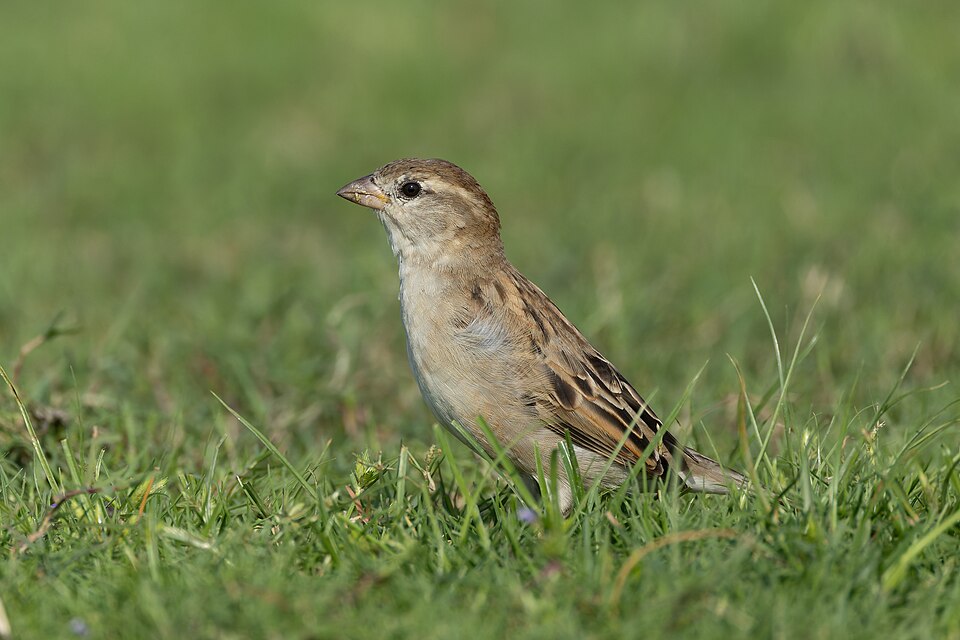
House Sparrow (Passer domesticus) House Sparrow
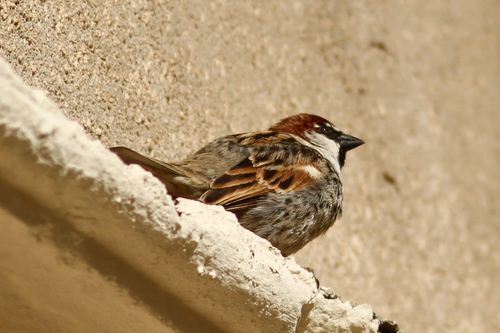
Spanish Sparrow (Passer hispaniolensis) Spanish Sparrow

Media

Loading…

In short

The most reliable field mark for separating House Sparrow and Spanish Sparrow males is the underpart pattern: Spanish Sparrow males always show bold black streaks on the flanks and belly, while House Sparrow males have plain grey or whitish underparts. In addition, Spanish Sparrow males have a rich chestnut crown and white cheeks, whereas House Sparrow males show a grey crown and grey cheeks. Females and juveniles are much trickier, as they are nearly identical in both species and can be inseparable in the field. Structure and size offer only subtle clues, with Spanish Sparrow being slightly larger and heavier, but this is rarely useful without direct comparison. Habitat and context may help, as Spanish Sparrow is more likely in open farmland and moister habitats in its range, while House Sparrow dominates urban areas.

Identification tips

  1. Male underparts: Spanish Sparrow males always show bold black streaking on the flanks and belly; House Sparrow males have plain grey or whitish underparts. This is the single most reliable field mark in adult males.
  2. Crown color (male): Spanish Sparrow males have a rich chestnut crown extending from the bill to the nape. House Sparrow males have a grey crown with chestnut only on the sides of the head.
  3. Cheek color (male): Spanish Sparrow males have white cheeks; House Sparrow males have grey cheeks. This is best seen in good light.
  4. Bill structure: Spanish Sparrow has a slightly longer and stouter bill than House Sparrow, but this is subtle and rarely diagnostic without direct comparison.
  5. Female and juvenile plumage: Females and juveniles of both species are extremely similar—grey-brown overall with pale underparts and a pale supercilium. Spanish Sparrow females may show slightly more pronounced streaking on the sides and back, but this is not reliable for field identification.
  6. Juvenile confusion: Juvenile House Sparrows can be scruffier with broader buff feather edges, but this is not a consistent separation from Spanish Sparrow juveniles. Both are best left unidentified to species unless seen with adults.
  7. Hybrid zones: In Mediterranean regions, hybridization can occur, producing birds with intermediate features. Be cautious with any bird showing a mix of streaked underparts and grey crown.
  8. Habitat context: House Sparrow is more likely in urban settings; Spanish Sparrow prefers open farmland and moister habitats. However, both can overlap, and Spanish Sparrow can be urban where House Sparrow is absent.
  9. Vocalizations: Calls are very similar; only the Spanish Sparrow's louder, higher-pitched display call is distinctive, and even this is subtle.
  10. Size: Spanish Sparrow is marginally larger and heavier, but this is not a practical field mark unless birds are side by side.
  11. Seasonal variation: In fresh winter plumage, some Spanish Sparrow subspecies (e.g., P. h. transcaspicus) can appear paler with less chestnut, but the main field marks (streaked underparts, chestnut crown, white cheeks) remain.
  12. Flock composition: Mixed flocks can occur in overlap zones; check each male carefully, as females and juveniles are not safely separated.
  13. Do not rely on single marks: Always use a combination of underpart streaking, crown, and cheek color in adult males. Females and juveniles are best left unidentified unless with known adults.
  14. Flight views: No distinctive upperwing or flight pattern differences are described for any age or sex; separation relies on plumage and structure.
  15. Geographic context: If outside the Mediterranean, southwest, or central Asia, Spanish Sparrow is unlikely; House Sparrow is nearly worldwide.

Size

Spanish Sparrow is slightly larger and heavier than House Sparrow, with a length of 15–16 cm and mass of 22–36 g, compared to House Sparrow's typical 16 cm length and 30.5 g average mass. The difference is subtle and not usually apparent in the field unless birds are side by side. Spanish Sparrow also has a slightly longer and stouter bill, but this is not a strong field mark unless you have excellent views.

Plumage

For adult males, plumage differences are striking: Spanish Sparrow males have bold black streaks on the underparts, a chestnut (not grey) crown, and white (not grey) cheeks. House Sparrow males have plain grey or whitish underparts, a grey crown, and grey cheeks. For females and juveniles, both species are very similar: overall grey-brown with pale underparts and a pale supercilium. Spanish Sparrow females may show slightly bolder streaking on the sides and back, but this is subtle and unreliable. Juveniles of both species resemble adult females, and there are no reliable field marks to separate them. No distinctive age-specific upperwing or flight marks are described for either species.

Behaviour

Both species behave similarly, often seen in flocks and feeding on the ground. Spanish Sparrow tends to be more associated with open farmland and moist habitats, while House Sparrow is more urban and synanthropic. In areas of overlap, both may be found together, sometimes forming mixed flocks. No major behavioral differences are noted that aid field separation.

Habitat

House Sparrow is cosmopolitan and strongly associated with human settlements, towns, and cities. Spanish Sparrow is found mainly in the Mediterranean, southwest and central Asia, and prefers open farmland, cultivated areas, and moister habitats. In regions where both occur, Spanish Sparrow is less urban and more rural, but in the absence of House Sparrow (such as on some islands), it can also be found in towns. Habitat can provide a clue, but is not definitive in areas of overlap.

Voice

The calls and songs of both species are very similar, with only subtle differences. Spanish Sparrow males give a louder, higher-pitched disyllabic call ("chweeng-chweeng" or "cheela-cheeli") when displaying at the nest, but their other calls closely resemble the House Sparrow's familiar "tschilp." In practice, vocal differences are slight and not reliable for separation unless you are very familiar with both species.

Submit a better description

Use the same sections as the comparison. Your text is published immediately.

The most reliable field mark for separating House Sparrow and Spanish Sparrow males is the underpart pattern: Spanish Sparrow males always show bold black streaks on the flanks and belly, while House Sparrow males have plain grey or whitish underparts. In addition, Spanish Sparrow males have a rich chestnut crown and white cheeks, whereas House Sparrow males show a grey crown and grey cheeks. Females and juveniles are much trickier, as they are nearly identical in both species and can be inseparable in the field. Structure and size offer only subtle clues, with Spanish Sparrow being slightly larger and heavier, but this is rarely useful without direct comparison. Habitat and context may help, as Spanish Sparrow is more likely in open farmland and moister habitats in its range, while House Sparrow dominates urban areas.

  1. Male underparts: Spanish Sparrow males always show bold black streaking on the flanks and belly; House Sparrow males have plain grey or whitish underparts. This is the single most reliable field mark in adult males.
  2. Crown color (male): Spanish Sparrow males have a rich chestnut crown extending from the bill to the nape. House Sparrow males have a grey crown with chestnut only on the sides of the head.
  3. Cheek color (male): Spanish Sparrow males have white cheeks; House Sparrow males have grey cheeks. This is best seen in good light.
  4. Bill structure: Spanish Sparrow has a slightly longer and stouter bill than House Sparrow, but this is subtle and rarely diagnostic without direct comparison.
  5. Female and juvenile plumage: Females and juveniles of both species are extremely similar—grey-brown overall with pale underparts and a pale supercilium. Spanish Sparrow females may show slightly more pronounced streaking on the sides and back, but this is not reliable for field identification.
  6. Juvenile confusion: Juvenile House Sparrows can be scruffier with broader buff feather edges, but this is not a consistent separation from Spanish Sparrow juveniles. Both are best left unidentified to species unless seen with adults.
  7. Hybrid zones: In Mediterranean regions, hybridization can occur, producing birds with intermediate features. Be cautious with any bird showing a mix of streaked underparts and grey crown.
  8. Habitat context: House Sparrow is more likely in urban settings; Spanish Sparrow prefers open farmland and moister habitats. However, both can overlap, and Spanish Sparrow can be urban where House Sparrow is absent.
  9. Vocalizations: Calls are very similar; only the Spanish Sparrow's louder, higher-pitched display call is distinctive, and even this is subtle.
  10. Size: Spanish Sparrow is marginally larger and heavier, but this is not a practical field mark unless birds are side by side.
  11. Seasonal variation: In fresh winter plumage, some Spanish Sparrow subspecies (e.g., P. h. transcaspicus) can appear paler with less chestnut, but the main field marks (streaked underparts, chestnut crown, white cheeks) remain.
  12. Flock composition: Mixed flocks can occur in overlap zones; check each male carefully, as females and juveniles are not safely separated.
  13. Do not rely on single marks: Always use a combination of underpart streaking, crown, and cheek color in adult males. Females and juveniles are best left unidentified unless with known adults.
  14. Flight views: No distinctive upperwing or flight pattern differences are described for any age or sex; separation relies on plumage and structure.
  15. Geographic context: If outside the Mediterranean, southwest, or central Asia, Spanish Sparrow is unlikely; House Sparrow is nearly worldwide.

Spanish Sparrow is slightly larger and heavier than House Sparrow, with a length of 15–16 cm and mass of 22–36 g, compared to House Sparrow's typical 16 cm length and 30.5 g average mass. The difference is subtle and not usually apparent in the field unless birds are side by side. Spanish Sparrow also has a slightly longer and stouter bill, but this is not a strong field mark unless you have excellent views.

For adult males, plumage differences are striking: Spanish Sparrow males have bold black streaks on the underparts, a chestnut (not grey) crown, and white (not grey) cheeks. House Sparrow males have plain grey or whitish underparts, a grey crown, and grey cheeks. For females and juveniles, both species are very similar: overall grey-brown with pale underparts and a pale supercilium. Spanish Sparrow females may show slightly bolder streaking on the sides and back, but this is subtle and unreliable. Juveniles of both species resemble adult females, and there are no reliable field marks to separate them. No distinctive age-specific upperwing or flight marks are described for either species.

Both species behave similarly, often seen in flocks and feeding on the ground. Spanish Sparrow tends to be more associated with open farmland and moist habitats, while House Sparrow is more urban and synanthropic. In areas of overlap, both may be found together, sometimes forming mixed flocks. No major behavioral differences are noted that aid field separation.

House Sparrow is cosmopolitan and strongly associated with human settlements, towns, and cities. Spanish Sparrow is found mainly in the Mediterranean, southwest and central Asia, and prefers open farmland, cultivated areas, and moister habitats. In regions where both occur, Spanish Sparrow is less urban and more rural, but in the absence of House Sparrow (such as on some islands), it can also be found in towns. Habitat can provide a clue, but is not definitive in areas of overlap.

The calls and songs of both species are very similar, with only subtle differences. Spanish Sparrow males give a louder, higher-pitched disyllabic call ("chweeng-chweeng" or "cheela-cheeli") when displaying at the nest, but their other calls closely resemble the House Sparrow's familiar "tschilp." In practice, vocal differences are slight and not reliable for separation unless you are very familiar with both species.

Discard your changes?

You have unsaved edits. If you leave now, those changes will be lost.

House Sparrow · Spanish Sparrow · My Tricky Birds