
Herring Gull vs Lesser Black-backed Gull
Larus argentatus versus Larus fuscus
Play a quiz with Herring Gull and Lesser Black-backed Gull
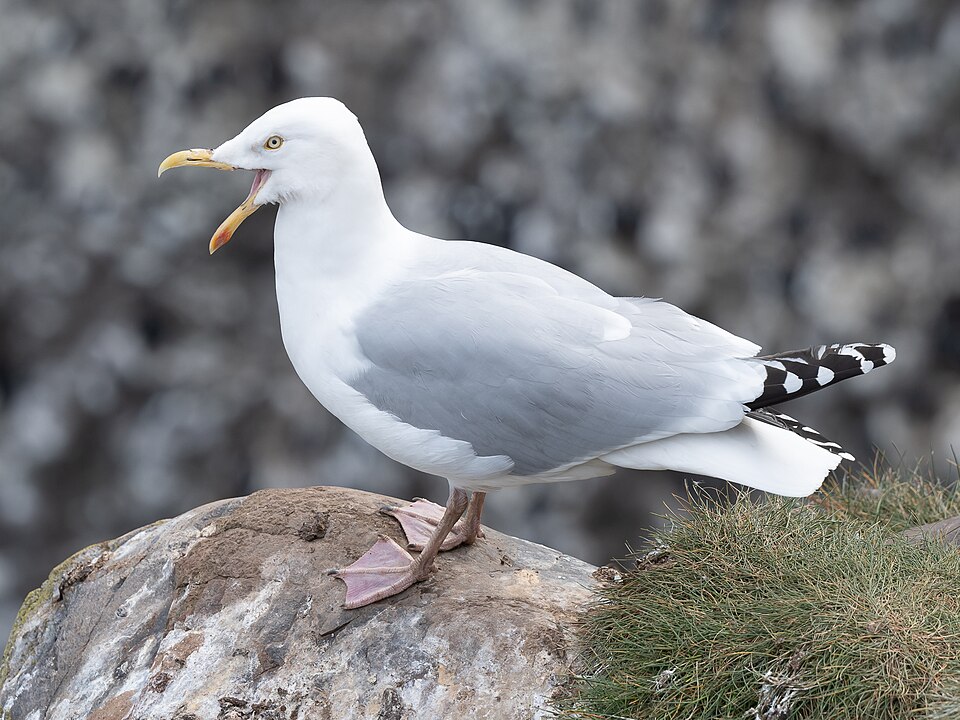 Herring Gull
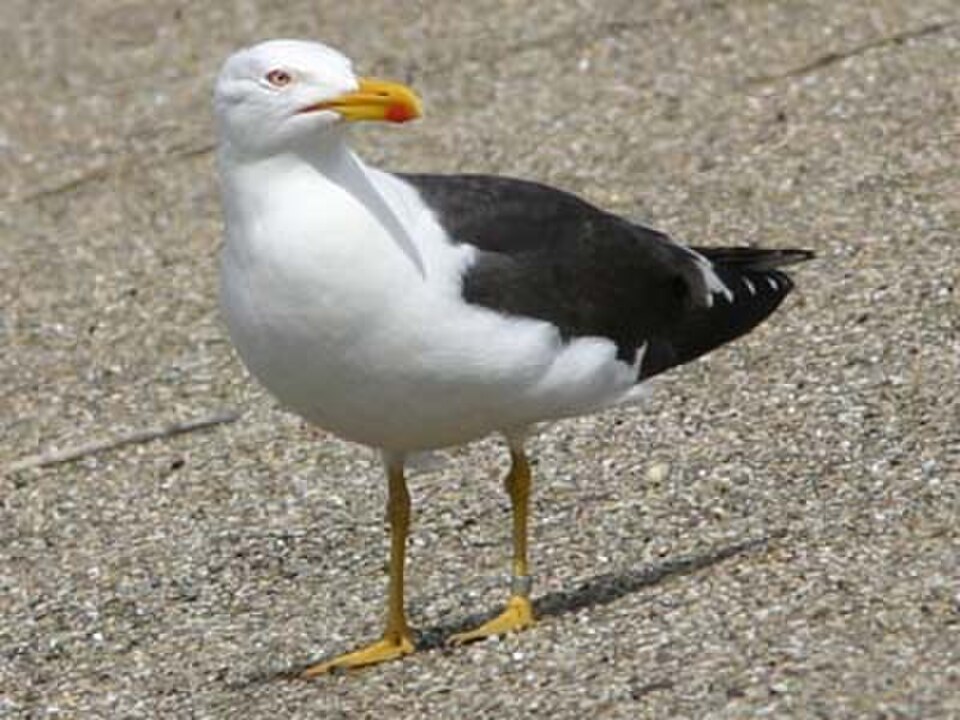 Lesser Black-backed Gull
In short
The most reliable field mark for separating Herring Gull from Lesser Black-backed Gull is the color of the upperparts in adults: Herring Gull has a pale grey back and wings, while Lesser Black-backed Gull shows a distinctly darker slate-grey to blackish back and wings. Leg color is also critical—Herring Gulls usually have pink legs, while Lesser Black-backed Gulls have yellow legs. For juveniles and immatures, check the tertial pattern: Lesser Black-backed shows more solidly dark (unbarred) tertials, while Herring Gull juveniles are more streaked and patterned overall. Both species can be similar in size and structure, but Herring Gull is generally bulkier. These differences are visible both when birds are perched and in flight, but are especially helpful when viewing mixed flocks.
Identification tips
- Adult upperpart color: Herring Gull has pale grey upperparts; Lesser Black-backed Gull is distinctly darker (slate-grey to blackish). This is the single most reliable mark for adults in all seasons.
- Leg color: Herring Gull usually has pink legs (can be yellowish in some Baltic birds), while Lesser Black-backed Gull has yellow legs. Always check leg color in good light, but beware of mud-stained or shadowed legs.
- Juvenile tertials: Juvenile Lesser Black-backed Gulls have solidly dark, unbarred tertials; Herring Gulls are more streaked and patterned. This is most useful in first-year birds.
- Head and underpart streaking (juveniles/immatures): Herring Gulls are more heavily streaked and mottled overall; Lesser Black-backed Gulls look cleaner and more scaly above.
- Bill structure: Both have yellow bills with a red spot as adults, but Herring Gull's bill is often stouter and longer, especially in males. Not always reliable unless birds are side by side.
- Wingtip 'mirrors': Both species have white spots at the wingtips, but these are smaller in Lesser Black-backed Gull. This is subtle and best used in close views of adults.
- Winter head pattern: Non-breeding Herring Gulls show brown streaks on the head and neck; Lesser Black-backed Gulls have a greyer, less streaked head.
- Size and structure: Herring Gull is bulkier and heavier, with a broader chest and thicker neck. Lesser Black-backed Gull is slimmer and more graceful, but size overlap is considerable.
- Eye color: Both species have pale eyes as adults, but Herring Gull's pale eye is often more obvious due to the contrasting bare yellow orbital ring. Not always visible in the field.
- Primary projection: Not specifically described in the notes, but Lesser Black-backed Gulls often show longer primary projection beyond the tail, giving a more attenuated look in flight and at rest.
- Flight jizz: Herring Gulls appear heavier and more ponderous in flight; Lesser Black-backed Gulls are more agile and buoyant. Useful with experience, but not a primary separator.
- Habitat context: Where both occur, Herring Gulls may be more common inland and at refuse sites; Lesser Black-backed Gulls are more migratory and often found in coastal or open habitats during migration.
- Age progression: Both species take four years to reach adult plumage. Use the combination of upperpart color, tertial pattern, and leg color at each age for best results.
- Mixed flocks: Always compare multiple individuals in a group—relative differences in mantle shade and leg color are most obvious when both species are together.
- Baltic Herring Gulls: Some Herring Gulls in the Baltic have yellowish legs, which can cause confusion. In these cases, rely more on mantle color and structure.
Size
Both species are large gulls, but Herring Gull is generally larger and heavier. Adult Herring Gulls reach up to 66 cm in length and can weigh over 1,000 g, while Lesser Black-backed Gulls average around 817 g (with a range up to 1,100 g) and are slightly shorter at up to 64 cm. Herring Gulls have a broader, bulkier build, especially noticeable in direct comparison. Wing chord, bill, and tarsus measurements overlap but tend to be slightly longer in Herring Gull. In the field, size alone is unreliable unless birds are side by side.
Plumage
Juvenile and first-winter birds are best separated by the tertials: Lesser Black-backed Gulls have more solidly dark, unbarred tertials, while Herring Gulls are more streaked and patterned overall. Both species are brownish in juvenile plumage, but Herring Gull is more heavily streaked and mottled, especially on the head and underparts. By second winter, Herring Gulls develop a paler head and underparts with less streaking, and the back becomes grey; Lesser Black-backed Gulls also become greyer but retain a darker mantle. Adults are straightforward: Herring Gulls have pale grey upperparts, pink legs (sometimes yellowish in Baltic birds), and a yellow bill with a red spot; Lesser Black-backed Gulls have dark slate-grey to blackish upperparts, yellow legs, and a yellow bill with a red spot. Both have white 'mirrors' on the wingtips, but these are smaller in Lesser Black-backed Gull. In winter, Herring Gulls show more head and neck streaking, while Lesser Black-backed Gulls have a greyer head.
Behaviour
Both species are omnivorous and opportunistic, often seen scavenging at landfills, coasts, and urban areas. Herring Gulls are particularly noted for their bulkier, more assertive behavior, and are more likely to be seen stealing food from other birds or humans. Lesser Black-backed Gulls are agile and may appear more graceful in flight, but both species overlap in feeding habits and general behavior. Behavioral differences are subtle and rarely diagnostic without supporting plumage or structural clues.
Habitat
Both species breed and forage along coasts, estuaries, and increasingly in urban environments. Herring Gulls are more likely to be permanent residents in northern and western Europe, while Lesser Black-backed Gulls are more migratory, wintering further south into Africa. In mixed flocks, both can be found together, but Herring Gulls may be more common inland or at refuse sites in some regions. Habitat alone is not a reliable separator where ranges overlap.