

Motmot

Hen Harrier vs Northern Harrier

Circus cyaneus versus Circus hudsonius

Play a quiz with Hen Harrier and Northern Harrier
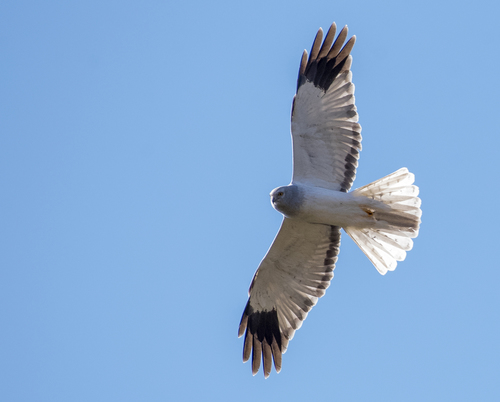
Hen Harrier (Circus cyaneus) Hen Harrier
Northern Harrier (Circus hudsonius) Northern Harrier

Media

Loading…

In short

The most reliable field separation between Hen Harrier and Northern Harrier is in adult male plumage: Northern Harrier males are a darker, more uniformly slate-grey above and below, while Hen Harrier males are paler grey above with extensive white below and a contrasting grey breast. Females and immatures ("ringtails") are extremely similar, but Northern Harrier females and juveniles tend to be darker and more rufous, especially below, compared to the paler, buffier Hen Harrier. Both species show a white rump and similar structure in flight, and age/sex confusion is common. Subtle differences in underpart color, upperpart tone, and vocalizations can help, but field separation of ringtails is very challenging and often not possible without range or vocal clues.

Identification tips

  1. Adult male plumage is the best separator: Northern Harrier males are darker, more uniformly slate-grey above and below, while Hen Harrier males are paler grey above, white below, with a grey breast and black wingtips. This works only for adult males.
  2. Females and juveniles (ringtails) are extremely similar: Both are brown above, buff below, with brown barring and a white rump. Northern Harrier ringtails are generally darker and more rufous below, while Hen Harrier ringtails are paler and more buffy. This is subtle and often not reliable in poor light or at distance.
  3. Juvenile underparts: Juvenile Hen Harriers have less distinct barring and a less rufous belly than juvenile Northern Harriers, but this is a minor difference and hard to judge without direct comparison.
  4. White rump patch: Both species show a prominent white rump in all ages and sexes—this is not a separator between them, but helps rule out other raptors.
  5. Wing and tail pattern: No distinctive differences in upperwing or tail pattern are noted between the two species at any age; both have long wings and tails, with similar flight profiles.
  6. Structure and jizz: Both are long-winged, long-tailed, and slim, with a buoyant, low flight style. Northern Harrier is said to have the relatively longest wings and tail among North American raptors, but this is not useful for distinguishing from Hen Harrier.
  7. Vocalizations: Hen Harrier males give "chek-chek-chek" and display calls; Northern Harrier gives "kek" notes and, in breeding season, females scream. Calls are rarely heard away from nests or display, so are not practical for most field IDs.
  8. Habitat and range: Use range as a clue—Hen Harrier in Eurasia, Northern Harrier in North America. In areas of vagrancy or overlap, field separation is extremely difficult for ringtails.
  9. Sexual dimorphism: Both species are strongly dimorphic; only adult males are reliably separable in the field. Females and juveniles are best left unidentified to species unless range or vocal clues are available.
  10. Contextual clues: If you are in North America, assume Northern Harrier; in Eurasia, Hen Harrier. In rare cases of vagrancy, document all features carefully.
  11. Behavior: Both species hunt with low, slow, quartering flight and use their facial disc to locate prey. This is not a separator.
  12. Size: Both species are virtually identical in size and proportions; do not use size for separation.
  13. Pitfalls: The term "ringtail" covers females and juveniles of both species, reflecting their near-identical appearance. Most quiz mix-ups involve these ages and cannot be reliably resolved by plumage alone.
  14. When in doubt: If you cannot see clear adult male plumage or are outside the normal range, it is safest to leave ringtails unidentified to species.
  15. No reliable flight pattern differences: Both species share the same flight style and lack distinctive upperwing or tail pattern differences in any age or sex.

Size

Both species are nearly identical in size and proportions, with overlapping measurements for length (41–52 cm), wingspan (97–122 cm), and mass (males averaging 350 g, females 530 g). Structure—long wings, long tail, and slim build—is shared. In the field, size is not a reliable separator. If anything, Northern Harrier is described as having the relatively longest wings and tail among North American raptors, but this is not a practical distinction when comparing directly to Hen Harrier.

Plumage

Adult males are the most separable: Hen Harrier males are pale grey above with white underparts and a grey breast, plus black wingtips; Northern Harrier males are darker, more uniformly slate-grey above and below, sometimes called the "Grey Ghost." Females and juveniles of both species ("ringtails") are brown above with a white rump and buffy underparts with brown barring, but Northern Harrier ringtails are generally darker and more rufous, especially on the underparts, while Hen Harrier ringtails are paler and more buff. Juvenile Hen Harriers have less distinct barring and a less rufous belly than Northern Harrier juveniles. Both species show the white rump in all ages and sexes. No distinctive upperwing or flight pattern differences are noted for immatures—both have similar wing and tail patterns, so confusion is frequent.

Behaviour

Both species hunt with a similar low, buoyant flight, wings held in a shallow V, quartering open ground and using their facial disc to locate prey by sound. They are both highly vocal while hunting and display similar hunting techniques, including circling and listening for prey. There are no behavioral differences noted that are diagnostic in the field.

Habitat

Hen Harrier breeds in open habitats—marshes, grasslands, moorland—across Eurasia, while Northern Harrier occupies similar open habitats (marshes, grasslands, prairies) in North America. Both migrate south in winter and are found in open country. Habitat alone is not diagnostic unless you are outside the known range of one species.

Voice

Hen Harrier males give a "chek-chek-chek" and a bouncing "chuk-uk-uk-uk" in display; females give a whistled "piih-eh" for food and a rapid "chit-it-it-it-it-et-it" alarm. Northern Harrier is mostly silent but both sexes give fast "kek" notes, sometimes higher-pitched when agitated, and females emit a loud scream in the breeding season. In practice, calls are rarely heard in the field except near nests or during display, and are not a reliable separator for most birders.

Submit a better description

Use the same sections as the comparison. Your text is published immediately.

The most reliable field separation between Hen Harrier and Northern Harrier is in adult male plumage: Northern Harrier males are a darker, more uniformly slate-grey above and below, while Hen Harrier males are paler grey above with extensive white below and a contrasting grey breast. Females and immatures ("ringtails") are extremely similar, but Northern Harrier females and juveniles tend to be darker and more rufous, especially below, compared to the paler, buffier Hen Harrier. Both species show a white rump and similar structure in flight, and age/sex confusion is common. Subtle differences in underpart color, upperpart tone, and vocalizations can help, but field separation of ringtails is very challenging and often not possible without range or vocal clues.

  1. Adult male plumage is the best separator: Northern Harrier males are darker, more uniformly slate-grey above and below, while Hen Harrier males are paler grey above, white below, with a grey breast and black wingtips. This works only for adult males.
  2. Females and juveniles (ringtails) are extremely similar: Both are brown above, buff below, with brown barring and a white rump. Northern Harrier ringtails are generally darker and more rufous below, while Hen Harrier ringtails are paler and more buffy. This is subtle and often not reliable in poor light or at distance.
  3. Juvenile underparts: Juvenile Hen Harriers have less distinct barring and a less rufous belly than juvenile Northern Harriers, but this is a minor difference and hard to judge without direct comparison.
  4. White rump patch: Both species show a prominent white rump in all ages and sexes—this is not a separator between them, but helps rule out other raptors.
  5. Wing and tail pattern: No distinctive differences in upperwing or tail pattern are noted between the two species at any age; both have long wings and tails, with similar flight profiles.
  6. Structure and jizz: Both are long-winged, long-tailed, and slim, with a buoyant, low flight style. Northern Harrier is said to have the relatively longest wings and tail among North American raptors, but this is not useful for distinguishing from Hen Harrier.
  7. Vocalizations: Hen Harrier males give "chek-chek-chek" and display calls; Northern Harrier gives "kek" notes and, in breeding season, females scream. Calls are rarely heard away from nests or display, so are not practical for most field IDs.
  8. Habitat and range: Use range as a clue—Hen Harrier in Eurasia, Northern Harrier in North America. In areas of vagrancy or overlap, field separation is extremely difficult for ringtails.
  9. Sexual dimorphism: Both species are strongly dimorphic; only adult males are reliably separable in the field. Females and juveniles are best left unidentified to species unless range or vocal clues are available.
  10. Contextual clues: If you are in North America, assume Northern Harrier; in Eurasia, Hen Harrier. In rare cases of vagrancy, document all features carefully.
  11. Behavior: Both species hunt with low, slow, quartering flight and use their facial disc to locate prey. This is not a separator.
  12. Size: Both species are virtually identical in size and proportions; do not use size for separation.
  13. Pitfalls: The term "ringtail" covers females and juveniles of both species, reflecting their near-identical appearance. Most quiz mix-ups involve these ages and cannot be reliably resolved by plumage alone.
  14. When in doubt: If you cannot see clear adult male plumage or are outside the normal range, it is safest to leave ringtails unidentified to species.
  15. No reliable flight pattern differences: Both species share the same flight style and lack distinctive upperwing or tail pattern differences in any age or sex.

Both species are nearly identical in size and proportions, with overlapping measurements for length (41–52 cm), wingspan (97–122 cm), and mass (males averaging 350 g, females 530 g). Structure—long wings, long tail, and slim build—is shared. In the field, size is not a reliable separator. If anything, Northern Harrier is described as having the relatively longest wings and tail among North American raptors, but this is not a practical distinction when comparing directly to Hen Harrier.

Adult males are the most separable: Hen Harrier males are pale grey above with white underparts and a grey breast, plus black wingtips; Northern Harrier males are darker, more uniformly slate-grey above and below, sometimes called the "Grey Ghost." Females and juveniles of both species ("ringtails") are brown above with a white rump and buffy underparts with brown barring, but Northern Harrier ringtails are generally darker and more rufous, especially on the underparts, while Hen Harrier ringtails are paler and more buff. Juvenile Hen Harriers have less distinct barring and a less rufous belly than Northern Harrier juveniles. Both species show the white rump in all ages and sexes. No distinctive upperwing or flight pattern differences are noted for immatures—both have similar wing and tail patterns, so confusion is frequent.

Both species hunt with a similar low, buoyant flight, wings held in a shallow V, quartering open ground and using their facial disc to locate prey by sound. They are both highly vocal while hunting and display similar hunting techniques, including circling and listening for prey. There are no behavioral differences noted that are diagnostic in the field.

Hen Harrier breeds in open habitats—marshes, grasslands, moorland—across Eurasia, while Northern Harrier occupies similar open habitats (marshes, grasslands, prairies) in North America. Both migrate south in winter and are found in open country. Habitat alone is not diagnostic unless you are outside the known range of one species.

Hen Harrier males give a "chek-chek-chek" and a bouncing "chuk-uk-uk-uk" in display; females give a whistled "piih-eh" for food and a rapid "chit-it-it-it-it-et-it" alarm. Northern Harrier is mostly silent but both sexes give fast "kek" notes, sometimes higher-pitched when agitated, and females emit a loud scream in the breeding season. In practice, calls are rarely heard in the field except near nests or during display, and are not a reliable separator for most birders.

Discard your changes?

You have unsaved edits. If you leave now, those changes will be lost.

Hen Harrier · Northern Harrier · My Tricky Birds