

Motmot

ハイイロチュウヒ 対 アメリカハイイロチュウヒ

Circus cyaneus 対 Circus hudsonius

ハイイロチュウヒとアメリカハイイロチュウヒのクイズ
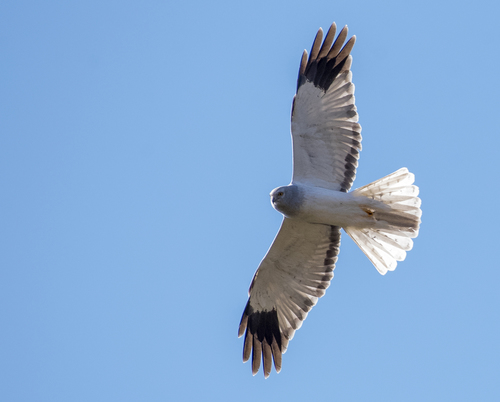
ハイイロチュウヒ (Circus cyaneus) ハイイロチュウヒ
アメリカハイイロチュウヒ (Circus hudsonius) アメリカハイイロチュウヒ

メディア

読み込み中…

要点

ハイイロチュウヒとアメリカハイイロチュウヒの最も信頼できるフィールドでの識別は、成鳥のオスの羽色にあります:アメリカハイイロチュウヒのオスは、上面と下面がより暗く、均一なスレートグレーですが、ハイイロチュウヒのオスは、上面がより淡いグレーで、下面に広範な白色があり、対照的なグレーの胸を持っています。雌と幼鳥(「リングテイル」)は非常に似ていますが、アメリカハイイロチュウヒの雌と幼鳥は、特に下面がより暗く、より赤褐色になる傾向があります。両種は白い尾羽を示し、飛行中の構造も似ており、年齢や性別の混同が一般的です。下部の色、上部のトーン、声の微妙な違いが役立つことがありますが、リングテイルのフィールドでの識別は非常に難しく、範囲や声の手がかりがないとしばしば不可能です。

識別のコツ

  1. 成鳥のオスの羽色が最も良い識別点です: アメリカハイイロチュウヒのオスは、上面と下面がより暗く、均一なスレートグレーですが、ハイイロチュウヒのオスは、上面がより淡いグレーで、下面が白、胸がグレー、翼先端が黒です。これは成鳥のオスにのみ適用されます。
  2. 雌と幼鳥(リングテイル)は非常に似ています: 両者は上面が茶色、下面がバフ色で、茶色の斑点と白い尾羽を持っています。アメリカハイイロチュウヒのリングテイルは、一般的に下面がより暗く、より赤褐色ですが、ハイイロチュウヒのリングテイルは、より淡く、よりバフ色です。これは微妙で、悪い光や距離では信頼できないことが多いです。
  3. 幼鳥の下部: 幼鳥のハイイロチュウヒは、幼鳥のアメリカハイイロチュウヒよりも斑点が少なく、腹部があまり赤褐色ではありませんが、これは小さな違いであり、直接比較なしでは判断が難しいです。
  4. 白い尾羽の斑点: 両種はすべての年齢と性別で目立つ白い尾羽を示します—これは両者の識別点ではありませんが、他の猛禽類を除外するのに役立ちます。
  5. 翼と尾の模様: どの年齢においても、両種の上翼や尾の模様に顕著な違いは見られません;両者は長い翼と尾を持ち、飛行プロファイルも似ています。
  6. 構造とジズ: 両者は長い翼、長い尾、スリムな体型を持ち、浮遊感のある低い飛行スタイルです。アメリカハイイロチュウヒは北米の猛禽類の中で比較的最も長い翼と尾を持つと言われていますが、これはハイイロチュウヒとの識別には役立ちません。
  7. 声: ハイイロチュウヒのオスは「チェク・チェク・チェク」と鳴き、ディスプレイコールを出します;アメリカハイイロチュウヒは「ケク」と鳴き、繁殖期には雌が叫びます。コールは巣やディスプレイから離れた場所ではほとんど聞かれないため、ほとんどのフィールドIDには実用的ではありません。
  8. 生息地と範囲: 範囲を手がかりとして使用します—ハイイロチュウヒはユーラシアに、アメリカハイイロチュウヒは北アメリカにいます。漂流や重複のある地域では、リングテイルのフィールドでの識別は非常に難しいです。
  9. 性的二形性: 両種は強い二形性を持ち、成鳥のオスのみがフィールドで信頼できる識別が可能です。雌と幼鳥は、範囲や声の手がかりがない限り、種の特定を避けるのが最良です。
  10. 文脈的手がかり: 北アメリカにいる場合はアメリカハイイロチュウヒを想定し、ユーラシアではハイイロチュウヒを想定します。漂流の稀なケースでは、すべての特徴を注意深く記録してください。
  11. 行動: 両種は低く、遅い、四分の一の飛行で狩りを行い、顔の円盤を使って獲物を見つけます。これは識別点ではありません。
  12. サイズ: 両種はサイズと比率がほぼ同じで、識別にはサイズを使用しないでください。
  13. 落とし穴: 「リングテイル」という用語は、両種の雌と幼鳥を含み、彼らのほぼ同一の外見を反映しています。ほとんどのクイズの混乱はこれらの年齢に関するもので、羽色だけでは信頼できない解決策を見つけることができません。
  14. 疑わしい場合: 明確な成鳥のオスの羽色が見えない場合や、通常の範囲外にいる場合は、リングテイルを種として特定しないのが最も安全です。
  15. 信頼できる飛行パターンの違いはありません: 両種は同じ飛行スタイルを共有し、どの年齢や性別においても顕著な上翼や尾のパターンの違いはありません。

大きさ

両種はサイズと比率がほぼ同じで、長さ(41–52 cm)、翼幅(97–122 cm)、質量(オスは平均350 g、雌は530 g)の測定値が重なっています。構造—長い翼、長い尾、スリムな体型—は共通しています。フィールドでは、サイズは信頼できる識別点ではありません。もし何かあれば、アメリカハイイロチュウヒは北米の猛禽類の中で比較的最も長い翼と尾を持つとされていますが、これはハイイロチュウヒと直接比較する際には実用的な区別ではありません。

羽色

成鳥のオスは最も識別可能です:ハイイロチュウヒのオスは上面が淡いグレーで、下面が白、胸がグレー、翼先端が黒です;アメリカハイイロチュウヒのオスは、上面と下面がより暗く、均一なスレートグレーで、時には「グレーゴースト」と呼ばれます。両種の雌と幼鳥(「リングテイル」)は、上面が茶色で、白い尾羽とバフ色の下面に茶色の斑点を持っていますが、アメリカハイイロチュウヒのリングテイルは一般的により暗く、より赤褐色で、特に下面において、ハイイロチュウヒのリングテイルはより淡く、よりバフ色です。幼鳥のハイイロチュウヒは、アメリカハイイロチュウヒの幼鳥よりも斑点が少なく、腹部があまり赤褐色ではありません。両種はすべての年齢と性別で白い尾羽を示します。幼鳥に関しては、顕著な上翼や飛行パターンの違いは見られず、両者は似たような翼と尾のパターンを持っているため、混乱が頻繁に発生します。

行動

両種は似たような低く、浮遊感のある飛行で狩りを行い、翼を浅いVの形で保持し、開けた地面を四分の一にし、顔の円盤を使って音で獲物を見つけます。彼らは狩りの際に非常に声を出し、獲物を探すために円を描いたり、聞き耳を立てたりするなど、似たような狩りの技術を示します。フィールドでの診断に役立つ行動の違いは見られません。

生息環境

ハイイロチュウヒはユーラシア全体の開けた生息地—湿地、草原、荒地—で繁殖し、アメリカハイイロチュウヒは北アメリカの同様の開けた生息地(湿地、草原、プレーリー)に生息しています。両者は冬に南に移動し、開けた国に見られます。生息地だけでは、片方の種の知られている範囲外でない限り、診断にはなりません。

声

ハイイロチュウヒのオスはディスプレイで「チェク・チェク・チェク」と鳴き、跳ねるように「チュク・ウク・ウク・ウク」と鳴きます;雌は食べ物のために「ピーヘ」と笛のように鳴き、急速に「チット・イット・イット・イット・イット・エット・イット」と警報音を出します。アメリカハイイロチュウヒはほとんど静かですが、両性ともに速い「ケク」と鳴き、時には興奮すると高い音になります。繁殖期には雌が大きな叫び声を発します。実際には、コールはフィールドでは巣の近くやディスプレイ中にしか聞かれず、ほとんどのバーダーにとって信頼できる識別点ではありません。

より良い説明を送る

比較と同じ項目を使ってください。文章はすぐに公開されます。

The most reliable field separation between Hen Harrier and Northern Harrier is in adult male plumage: Northern Harrier males are a darker, more uniformly slate-grey above and below, while Hen Harrier males are paler grey above with extensive white below and a contrasting grey breast. Females and immatures ("ringtails") are extremely similar, but Northern Harrier females and juveniles tend to be darker and more rufous, especially below, compared to the paler, buffier Hen Harrier. Both species show a white rump and similar structure in flight, and age/sex confusion is common. Subtle differences in underpart color, upperpart tone, and vocalizations can help, but field separation of ringtails is very challenging and often not possible without range or vocal clues.

  1. Adult male plumage is the best separator: Northern Harrier males are darker, more uniformly slate-grey above and below, while Hen Harrier males are paler grey above, white below, with a grey breast and black wingtips. This works only for adult males.
  2. Females and juveniles (ringtails) are extremely similar: Both are brown above, buff below, with brown barring and a white rump. Northern Harrier ringtails are generally darker and more rufous below, while Hen Harrier ringtails are paler and more buffy. This is subtle and often not reliable in poor light or at distance.
  3. Juvenile underparts: Juvenile Hen Harriers have less distinct barring and a less rufous belly than juvenile Northern Harriers, but this is a minor difference and hard to judge without direct comparison.
  4. White rump patch: Both species show a prominent white rump in all ages and sexes—this is not a separator between them, but helps rule out other raptors.
  5. Wing and tail pattern: No distinctive differences in upperwing or tail pattern are noted between the two species at any age; both have long wings and tails, with similar flight profiles.
  6. Structure and jizz: Both are long-winged, long-tailed, and slim, with a buoyant, low flight style. Northern Harrier is said to have the relatively longest wings and tail among North American raptors, but this is not useful for distinguishing from Hen Harrier.
  7. Vocalizations: Hen Harrier males give "chek-chek-chek" and display calls; Northern Harrier gives "kek" notes and, in breeding season, females scream. Calls are rarely heard away from nests or display, so are not practical for most field IDs.
  8. Habitat and range: Use range as a clue—Hen Harrier in Eurasia, Northern Harrier in North America. In areas of vagrancy or overlap, field separation is extremely difficult for ringtails.
  9. Sexual dimorphism: Both species are strongly dimorphic; only adult males are reliably separable in the field. Females and juveniles are best left unidentified to species unless range or vocal clues are available.
  10. Contextual clues: If you are in North America, assume Northern Harrier; in Eurasia, Hen Harrier. In rare cases of vagrancy, document all features carefully.
  11. Behavior: Both species hunt with low, slow, quartering flight and use their facial disc to locate prey. This is not a separator.
  12. Size: Both species are virtually identical in size and proportions; do not use size for separation.
  13. Pitfalls: The term "ringtail" covers females and juveniles of both species, reflecting their near-identical appearance. Most quiz mix-ups involve these ages and cannot be reliably resolved by plumage alone.
  14. When in doubt: If you cannot see clear adult male plumage or are outside the normal range, it is safest to leave ringtails unidentified to species.
  15. No reliable flight pattern differences: Both species share the same flight style and lack distinctive upperwing or tail pattern differences in any age or sex.

Both species are nearly identical in size and proportions, with overlapping measurements for length (41–52 cm), wingspan (97–122 cm), and mass (males averaging 350 g, females 530 g). Structure—long wings, long tail, and slim build—is shared. In the field, size is not a reliable separator. If anything, Northern Harrier is described as having the relatively longest wings and tail among North American raptors, but this is not a practical distinction when comparing directly to Hen Harrier.

Adult males are the most separable: Hen Harrier males are pale grey above with white underparts and a grey breast, plus black wingtips; Northern Harrier males are darker, more uniformly slate-grey above and below, sometimes called the "Grey Ghost." Females and juveniles of both species ("ringtails") are brown above with a white rump and buffy underparts with brown barring, but Northern Harrier ringtails are generally darker and more rufous, especially on the underparts, while Hen Harrier ringtails are paler and more buff. Juvenile Hen Harriers have less distinct barring and a less rufous belly than Northern Harrier juveniles. Both species show the white rump in all ages and sexes. No distinctive upperwing or flight pattern differences are noted for immatures—both have similar wing and tail patterns, so confusion is frequent.

Both species hunt with a similar low, buoyant flight, wings held in a shallow V, quartering open ground and using their facial disc to locate prey by sound. They are both highly vocal while hunting and display similar hunting techniques, including circling and listening for prey. There are no behavioral differences noted that are diagnostic in the field.

Hen Harrier breeds in open habitats—marshes, grasslands, moorland—across Eurasia, while Northern Harrier occupies similar open habitats (marshes, grasslands, prairies) in North America. Both migrate south in winter and are found in open country. Habitat alone is not diagnostic unless you are outside the known range of one species.

Hen Harrier males give a "chek-chek-chek" and a bouncing "chuk-uk-uk-uk" in display; females give a whistled "piih-eh" for food and a rapid "chit-it-it-it-it-et-it" alarm. Northern Harrier is mostly silent but both sexes give fast "kek" notes, sometimes higher-pitched when agitated, and females emit a loud scream in the breeding season. In practice, calls are rarely heard in the field except near nests or during display, and are not a reliable separator for most birders.

変更を破棄しますか?

保存していない編集があります。今離れると失われます。

ハイイロチュウヒ · アメリカハイイロチュウヒ · 苦手な鳥