

Motmot

Helmeted Guineafowl vs Northern Bobwhite

Numida meleagris versus Colinus virginianus

Play a quiz with Helmeted Guineafowl and Northern Bobwhite
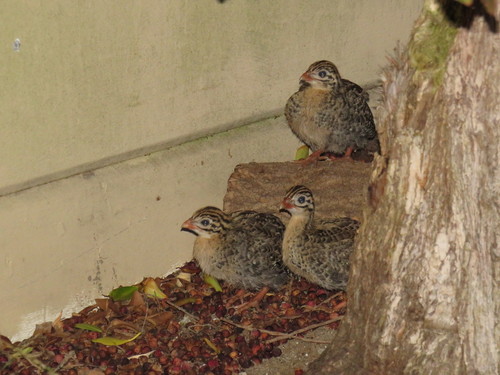
Helmeted Guineafowl (Numida meleagris) Helmeted Guineafowl
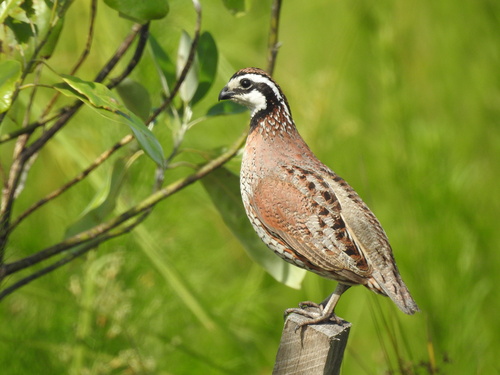
Northern Bobwhite (Colinus virginianus) Northern Bobwhite

Media

Loading…

In short

The most reliable field mark to separate Helmeted Guineafowl from Northern Bobwhite is sheer size and structure: guineafowl are much larger, with a round, heavy body, small bare head topped by a bony casque, and unfeathered, colorful facial skin, while bobwhites are small, compact quail with a feathered head and patterned face. In flight or on the ground, guineafowl show a dark, white-speckled body and short, rounded wings, whereas bobwhites are rufous and gray with a distinctive white throat and brow stripe (in males). If you see a flock of large, chicken-sized birds running rather than flying, with naked heads, it's guineafowl; a covey of small, cryptic, round quail with facial stripes signals bobwhite. Voice is also distinctive: guineafowl are harsh and loud, bobwhites have a clear, rising whistle.

Identification tips

  1. Size is the fastest check: Helmeted Guineafowl are massive compared to Northern Bobwhite—think chicken versus sparrow. If the bird looks chicken-sized, it's not a bobwhite.
  2. Head structure: Guineafowl have a small, bare head with a prominent bony casque (knob) and colorful bare skin; bobwhites have a fully feathered head with no casque or bare skin.
  3. Facial pattern: Male bobwhites have a bold white throat and brow stripe bordered by black; females show a buffy version. Guineafowl lack any facial stripes, instead showing bare, colored skin.
  4. Body plumage: Guineafowl are dark gray-black with dense white speckling all over; bobwhites are rufous and gray with scalloped flanks and underparts, never speckled.
  5. Wing and tail: Both species have short, rounded wings and tails, but guineafowl's are proportionally even shorter and the tail is almost hidden. Bobwhite tails are gray and more visible in flight.
  6. Bare skin: Only guineafowl have extensive bare skin on the head and face, often blue, red, or black. Bobwhites are feathered everywhere except the bill.
  7. Bill: Guineafowl have a relatively small, pale bill; bobwhites have a short, curved, dark bill.
  8. Behavior when flushed: Guineafowl prefer to run and only fly explosively as a last resort; bobwhites flush readily with a rapid, whirring flight.
  9. Flock size: Guineafowl often form large flocks (20+), while bobwhites are in smaller coveys (typically 10–15).
  10. Aggression displays: Only guineafowl males engage in conspicuous aggressive displays, raising wings and bristling feathers.
  11. Habitat context: In North America, a small quail in grassland or field is a bobwhite; a large, speckled, bare-headed bird is likely a guineafowl (usually only where introduced or on farms).
  12. Voice: Guineafowl are harsh and noisy; bobwhites give a clear, rising 'bob-WHITE' whistle.
  13. Juvenile birds: Even young guineafowl have a bare head; young bobwhites are cryptic but always feather-faced.
  14. Roosting: Guineafowl roost communally in large groups; bobwhites may roost in coveys but less conspicuously.
  15. Seasonal context: Both species are present year-round in their respective ranges, but only guineafowl show the casque and bare skin at all ages and seasons.

Size

Helmeted Guineafowl are dramatically larger than Northern Bobwhite. Guineafowl average about 1587 g in mass and measure 53–58 cm in length, making them chicken-sized birds. In contrast, Northern Bobwhites weigh only about 171 g and measure 24–28 cm long—less than half the length and less than one-eighth the mass of a guineafowl. In the field, guineafowl appear bulky and imposing, while bobwhites are small, compact, and easily overlooked among grass or brush. This size gap is the most immediate and reliable separation, even at a distance or in mixed flocks.

Plumage

No age-specific upperwing pattern is described for either species, so focus on overall body and head plumage. Helmeted Guineafowl of all ages show gray-black plumage densely speckled with white, a naked head with a prominent bony casque (knob), and bare skin in red, blue, or black. The wings and tail are short and rounded, and the bird lacks any facial pattern. Northern Bobwhite, by contrast, are rufous with gray mottling on the wings, white scalloped stripes on the flanks, and black scallops on the whitish underparts. Males have a bold white throat and brow stripe bordered by black, giving a striking facial pattern; females have a buffy version of this. The head is fully feathered, and the tail is gray. In flight, bobwhites show a compact, rounded shape with no white speckling or bare skin. Juveniles of both species are cryptically colored, but even young guineafowl have a bare head, while young bobwhites retain a feathered face.

Behaviour

Helmeted Guineafowl are highly terrestrial, preferring to run rather than fly when alarmed, and can cover long distances on foot (up to 10 km per day). They are gregarious, often seen in flocks of 25 or more, and roost communally. When threatened, they may burst into a short, explosive flight but quickly return to the ground. Guineafowl also display aggression among males, especially during the breeding season. Northern Bobwhite are also ground-dwelling and form coveys outside the breeding season, but their movements are more limited and they flush with a rapid, whirring flight when startled, usually settling again quickly. Bobwhites are less likely to be seen running long distances and do not display the same communal roosting or aggressive behaviors as guineafowl.

Habitat

Helmeted Guineafowl are native to sub-Saharan Africa but have been widely introduced elsewhere; they favor open country, savannas, and agricultural areas, often near human habitation. Northern Bobwhite are native to North America and inhabit agricultural fields, grasslands, open woodlands, roadsides, and woodland edges. While both species can be found in open or semi-open habitats, guineafowl are more likely in African or introduced contexts, and bobwhites are restricted to the Americas. If you are in eastern North America, a small, ground-dwelling quail is almost certainly a bobwhite; in Africa or on farms with introduced birds, guineafowl are more likely.

Voice

Helmeted Guineafowl produce loud, harsh calls when disturbed—noisy, grating, and unmelodic. Northern Bobwhite, on the other hand, are famous for their clear, whistled 'bob-WHITE' or 'bob-bob-WHITE' call, which is slow, widely spaced, and rises in pitch. Other bobwhite calls include lisps, peeps, and rapid warning whistles. The difference is stark: guineafowl are raucous and unmusical, while bobwhites are musical and easily recognized by their namesake call.

Submit a better description

Use the same sections as the comparison. Your text is published immediately.

The most reliable field mark to separate Helmeted Guineafowl from Northern Bobwhite is sheer size and structure: guineafowl are much larger, with a round, heavy body, small bare head topped by a bony casque, and unfeathered, colorful facial skin, while bobwhites are small, compact quail with a feathered head and patterned face. In flight or on the ground, guineafowl show a dark, white-speckled body and short, rounded wings, whereas bobwhites are rufous and gray with a distinctive white throat and brow stripe (in males). If you see a flock of large, chicken-sized birds running rather than flying, with naked heads, it's guineafowl; a covey of small, cryptic, round quail with facial stripes signals bobwhite. Voice is also distinctive: guineafowl are harsh and loud, bobwhites have a clear, rising whistle.

  1. Size is the fastest check: Helmeted Guineafowl are massive compared to Northern Bobwhite—think chicken versus sparrow. If the bird looks chicken-sized, it's not a bobwhite.
  2. Head structure: Guineafowl have a small, bare head with a prominent bony casque (knob) and colorful bare skin; bobwhites have a fully feathered head with no casque or bare skin.
  3. Facial pattern: Male bobwhites have a bold white throat and brow stripe bordered by black; females show a buffy version. Guineafowl lack any facial stripes, instead showing bare, colored skin.
  4. Body plumage: Guineafowl are dark gray-black with dense white speckling all over; bobwhites are rufous and gray with scalloped flanks and underparts, never speckled.
  5. Wing and tail: Both species have short, rounded wings and tails, but guineafowl's are proportionally even shorter and the tail is almost hidden. Bobwhite tails are gray and more visible in flight.
  6. Bare skin: Only guineafowl have extensive bare skin on the head and face, often blue, red, or black. Bobwhites are feathered everywhere except the bill.
  7. Bill: Guineafowl have a relatively small, pale bill; bobwhites have a short, curved, dark bill.
  8. Behavior when flushed: Guineafowl prefer to run and only fly explosively as a last resort; bobwhites flush readily with a rapid, whirring flight.
  9. Flock size: Guineafowl often form large flocks (20+), while bobwhites are in smaller coveys (typically 10–15).
  10. Aggression displays: Only guineafowl males engage in conspicuous aggressive displays, raising wings and bristling feathers.
  11. Habitat context: In North America, a small quail in grassland or field is a bobwhite; a large, speckled, bare-headed bird is likely a guineafowl (usually only where introduced or on farms).
  12. Voice: Guineafowl are harsh and noisy; bobwhites give a clear, rising 'bob-WHITE' whistle.
  13. Juvenile birds: Even young guineafowl have a bare head; young bobwhites are cryptic but always feather-faced.
  14. Roosting: Guineafowl roost communally in large groups; bobwhites may roost in coveys but less conspicuously.
  15. Seasonal context: Both species are present year-round in their respective ranges, but only guineafowl show the casque and bare skin at all ages and seasons.

Helmeted Guineafowl are dramatically larger than Northern Bobwhite. Guineafowl average about 1587 g in mass and measure 53–58 cm in length, making them chicken-sized birds. In contrast, Northern Bobwhites weigh only about 171 g and measure 24–28 cm long—less than half the length and less than one-eighth the mass of a guineafowl. In the field, guineafowl appear bulky and imposing, while bobwhites are small, compact, and easily overlooked among grass or brush. This size gap is the most immediate and reliable separation, even at a distance or in mixed flocks.

No age-specific upperwing pattern is described for either species, so focus on overall body and head plumage. Helmeted Guineafowl of all ages show gray-black plumage densely speckled with white, a naked head with a prominent bony casque (knob), and bare skin in red, blue, or black. The wings and tail are short and rounded, and the bird lacks any facial pattern. Northern Bobwhite, by contrast, are rufous with gray mottling on the wings, white scalloped stripes on the flanks, and black scallops on the whitish underparts. Males have a bold white throat and brow stripe bordered by black, giving a striking facial pattern; females have a buffy version of this. The head is fully feathered, and the tail is gray. In flight, bobwhites show a compact, rounded shape with no white speckling or bare skin. Juveniles of both species are cryptically colored, but even young guineafowl have a bare head, while young bobwhites retain a feathered face.

Helmeted Guineafowl are highly terrestrial, preferring to run rather than fly when alarmed, and can cover long distances on foot (up to 10 km per day). They are gregarious, often seen in flocks of 25 or more, and roost communally. When threatened, they may burst into a short, explosive flight but quickly return to the ground. Guineafowl also display aggression among males, especially during the breeding season. Northern Bobwhite are also ground-dwelling and form coveys outside the breeding season, but their movements are more limited and they flush with a rapid, whirring flight when startled, usually settling again quickly. Bobwhites are less likely to be seen running long distances and do not display the same communal roosting or aggressive behaviors as guineafowl.

Helmeted Guineafowl are native to sub-Saharan Africa but have been widely introduced elsewhere; they favor open country, savannas, and agricultural areas, often near human habitation. Northern Bobwhite are native to North America and inhabit agricultural fields, grasslands, open woodlands, roadsides, and woodland edges. While both species can be found in open or semi-open habitats, guineafowl are more likely in African or introduced contexts, and bobwhites are restricted to the Americas. If you are in eastern North America, a small, ground-dwelling quail is almost certainly a bobwhite; in Africa or on farms with introduced birds, guineafowl are more likely.

Helmeted Guineafowl produce loud, harsh calls when disturbed—noisy, grating, and unmelodic. Northern Bobwhite, on the other hand, are famous for their clear, whistled 'bob-WHITE' or 'bob-bob-WHITE' call, which is slow, widely spaced, and rises in pitch. Other bobwhite calls include lisps, peeps, and rapid warning whistles. The difference is stark: guineafowl are raucous and unmusical, while bobwhites are musical and easily recognized by their namesake call.

Discard your changes?

You have unsaved edits. If you leave now, those changes will be lost.

Helmeted Guineafowl · Northern Bobwhite · My Tricky Birds