
Gull-billed Tern vs Whiskered Tern
Gelochelidon nilotica versus Chlidonias hybrida
Play a quiz with Gull-billed Tern and Whiskered Tern
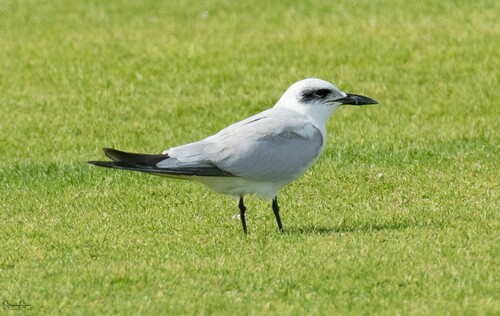 Gull-billed Tern
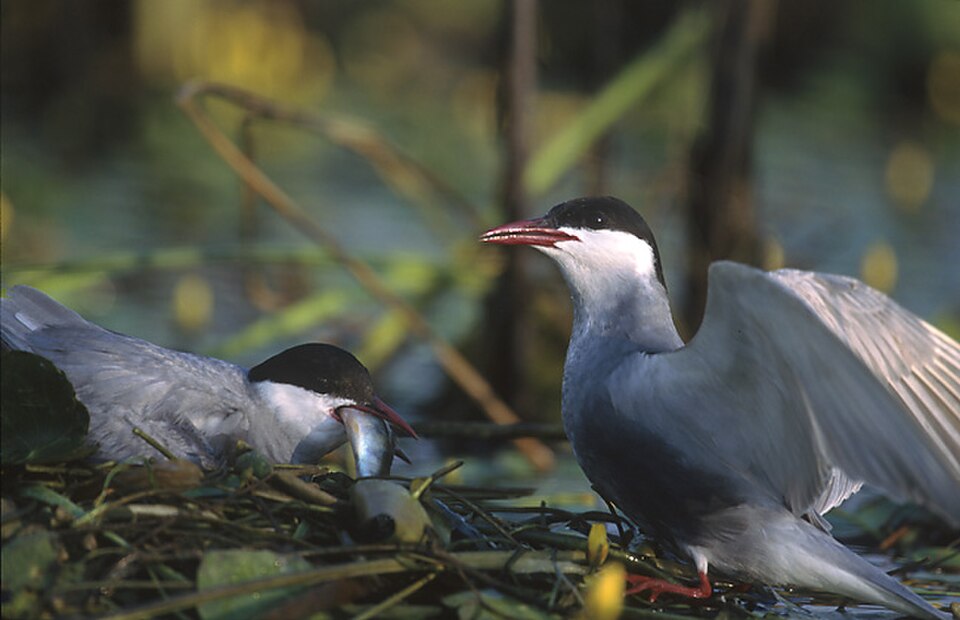 Whiskered Tern
In short
The most reliable field mark to separate Gull-billed Tern from Whiskered Tern is the bill: Gull-billed Tern has a thick, short, black, gull-like bill, while Whiskered Tern has a slimmer, pointed, red bill (in breeding plumage). Juvenile and winter birds can be confusing, but structure and leg color remain helpful. Gull-billed Tern is bulkier, with longer legs and a robust body, while Whiskered Tern is more delicate, with a shorter, forked tail and a distinctive dark, scaly juvenile back. In flight, Whiskered Tern shows a more marsh-tern jizz, while Gull-billed Tern appears heavier and broader-winged.
Identification tips
- Bill shape and color: Gull-billed Tern has a thick, short, black, gull-like bill in all plumages; Whiskered Tern has a slimmer, pointed, red bill in breeding plumage (shorter and stubbier in females), and a dark bill in non-breeding and juvenile plumages.
- Leg color: Gull-billed Tern always has black legs; Whiskered Tern has red legs in breeding plumage, which may dull in winter but rarely appear black.
- Size and structure: Gull-billed Tern is much larger, bulkier, and more robust, with longer legs and broader wings; Whiskered Tern is more delicate, with a shorter, forked tail and a swallow-like jizz.
- Tail shape: Whiskered Tern has a short, shallowly forked tail; Gull-billed Tern's tail is less forked and appears more squared-off in flight.
- Juvenile upperparts: Juvenile Whiskered Tern shows a distinctive ginger or scaly pattern on the back and scapulars, with broad buff edges and bars; Gull-billed Tern juveniles lack this, appearing plainer grey above with only a faint mask.
- Winter head pattern: In winter, Gull-billed Tern loses its black cap and shows a dark eye-stripe; Whiskered Tern develops a white forehead and a C-shaped black mark around the ear-coverts and hindcrown, with mottled white above the ear-coverts.
- Cheek and face pattern: Breeding Whiskered Tern has white cheeks contrasting with a black cap; Gull-billed Tern's black cap is more solid and extends lower, with less contrast.
- Mantle and back: Adult Whiskered Tern has a silvery-grey mantle; Gull-billed Tern is plainer grey above.
- Flight style: Gull-billed Tern appears heavier and more powerful in flight, with broad wings and a slower, more direct flight; Whiskered Tern is agile, buoyant, and more swallow-like.
- Feeding behavior: Gull-billed Tern often hunts over dry fields and picks prey from the ground; Whiskered Tern is more likely to be seen foraging over marshes and water.
- Habitat: Gull-billed Tern can be found in coastal, lake, and even dry field habitats; Whiskered Tern is more strictly tied to freshwater marshes.
- Voice: Listen for the 'ker-wik' of Gull-billed Tern versus the 'krekk' of Whiskered Tern, but beware overlap and distance effects.
- Seasonal confusion: Juvenile and winter birds are most often confused; focus on bill shape, leg color, and juvenile back pattern for best separation.
- Geographical context: Where one species is rare, check all field marks carefully, as juvenile Sandwich Tern can also be confused with Gull-billed Tern in some regions.
- Colony associates: Whiskered Tern often nests among Black-headed Gulls; Gull-billed Tern is less likely to do so.
Size
Gull-billed Tern is substantially larger and heavier than Whiskered Tern. Gull-billed Tern measures 33–42 cm in length and 76–91 cm in wingspan, with a body mass of 150–292 g [wikipedia]. Whiskered Tern is much lighter, with an average body mass of 84 g [wikidata]. In the field, Gull-billed Tern looks bulkier, with a more robust build and longer legs, while Whiskered Tern is more slender and agile.
Plumage
Juvenile and first-winter birds are often confused. Juvenile Whiskered Tern shows a distinctive 'ginger scaly' or variegated back, with brown feathers edged and barred buff, and a patchy appearance as new gray feathers appear in fall. Juvenile Gull-billed Tern lacks this scaly pattern: it looks like a winter adult but with a fainter dark mask. In winter, Gull-billed Tern loses its black cap and shows a dark eye-stripe, while Whiskered Tern develops a white forehead and paler grey plumage, with a C-shaped black mark around the ear-coverts and hindcrown. Breeding adult Gull-billed Tern has a full black cap, white underparts, grey upperparts, black bill and legs. Breeding Whiskered Tern has a black cap, white cheeks, red bill and legs, and dark grey plumage above and below. The mantle of adult Whiskered Tern is silvery-grey, while Gull-billed Tern is plainer grey above.
Behaviour
Gull-billed Tern feeds more like a marsh tern, often hawking insects over fields or picking prey from the ground, but is heavier and less agile in flight than Whiskered Tern. Whiskered Tern is agile, with a more buoyant, swallow-like flight, and is more likely to be seen foraging over marshes and water. Gull-billed Tern does not plunge-dive for fish like typical Sterna terns, and often hunts over dry land. Whiskered Tern is more strictly associated with marshes and aquatic habitats.
Habitat
Gull-billed Tern breeds in scattered colonies near lakes, marshes, and coasts, often in warmer regions and sometimes over dry fields. In North America, it is mostly coastal. Whiskered Tern breeds in colonies on inland marshes, often among Black-headed Gulls, and is rarely found far from freshwater wetlands. Both species are migratory in northern parts of their range, but Whiskered Tern is more strictly tied to marshy, freshwater habitats.
Voice
Gull-billed Tern gives a characteristic 'ker-wik' call, while Whiskered Tern has a 'krekk' call. Both are somewhat similar, but Whiskered Tern's call is more nasal and rapid, while Gull-billed Tern's is harsher and more gull-like. Calls may be difficult to separate at a distance or in mixed colonies.