

trinta-réis-de-bico-preto vs gaivina-dos-pauis
Gelochelidon nilotica versus Chlidonias hybrida
Jogue um quiz com trinta-réis-de-bico-preto e gaivina-dos-pauis
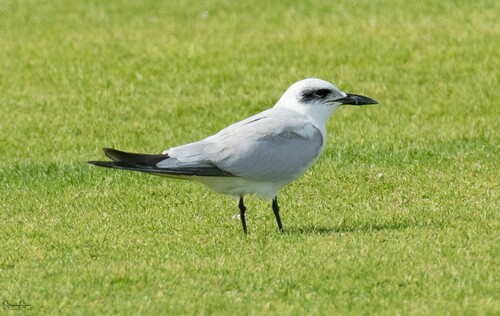 trinta-réis-de-bico-preto
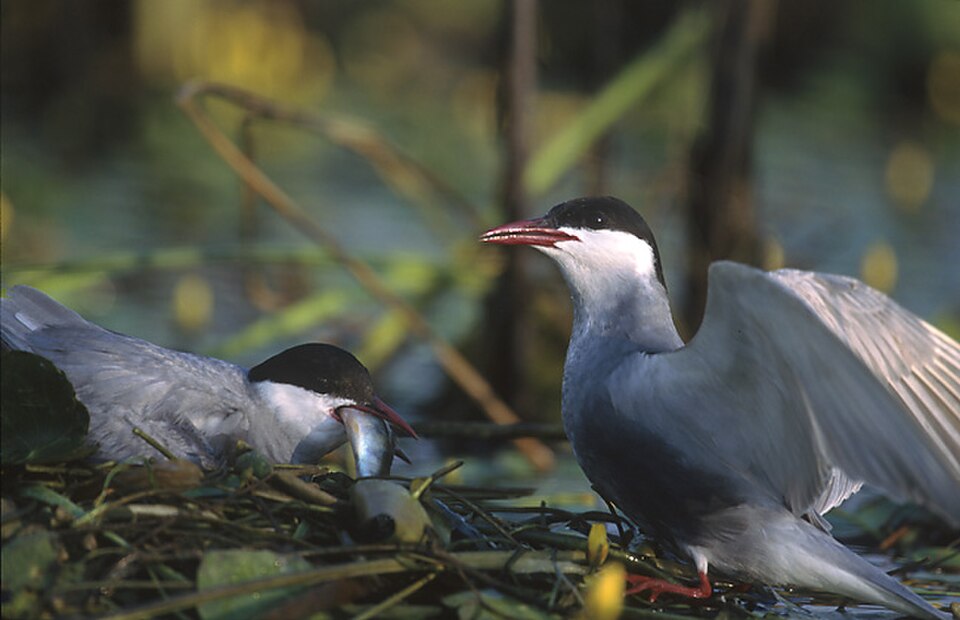 gaivina-dos-pauis
Em resumo
A marca de campo mais confiável para separar a trinta-réis-de-bico-preto da gaivina-dos-pauis é o bico: a trinta-réis-de-bico-preto tem um bico grosso, curto, preto, semelhante ao de uma gaivota, enquanto a gaivina-dos-pauis tem um bico mais fino, pontudo e vermelho (na plumagem de reprodução). As aves juvenis e de inverno podem ser confusas, mas a estrutura e a cor das pernas continuam sendo úteis. A trinta-réis-de-bico-preto é mais robusta, com pernas mais longas e um corpo robusto, enquanto a gaivina-dos-pauis é mais delicada, com uma cauda mais curta e bifurcada e um dorso juvenil escamoso e escuro distinto. Em voo, a gaivina-dos-pauis mostra uma aparência mais típica de trinta-réis de pântano, enquanto a trinta-réis-de-bico-preto parece mais pesada e com asas mais largas.
Dicas de identificação
- Formato e cor do bico: A trinta-réis-de-bico-preto tem um bico grosso, curto, preto, semelhante ao de uma gaivota em todas as plumagens; a gaivina-dos-pauis tem um bico mais fino, pontudo e vermelho na plumagem de reprodução (mais curto e mais robusto nas fêmeas), e um bico escuro nas plumagens não reprodutivas e juvenis.
- Cor das pernas: A trinta-réis-de-bico-preto sempre tem pernas pretas; a gaivina-dos-pauis tem pernas vermelhas na plumagem de reprodução, que podem escurecer no inverno, mas raramente aparecem pretas.
- Tamanho e estrutura: A trinta-réis-de-bico-preto é muito maior, mais robusta e mais robusta, com pernas mais longas e asas mais largas; a gaivina-dos-pauis é mais delicada, com uma cauda mais curta e bifurcada e uma aparência semelhante à de uma andorinha.
- Formato da cauda: A gaivina-dos-pauis tem uma cauda curta e pouco bifurcada; a cauda da trinta-réis-de-bico-preto é menos bifurcada e parece mais quadrada em voo.
- Partes superiores juvenis: A gaivina-dos-pauis juvenil mostra um padrão distinto de gengibre ou escamoso nas costas e escapulares, com bordas e barras de buff largas; os juvenis da trinta-réis-de-bico-preto não têm isso, aparecendo mais simples em cinza acima com apenas uma máscara fraca.
- Padrão da cabeça no inverno: No inverno, a trinta-réis-de-bico-preto perde seu capuz preto e mostra uma faixa ocular escura; a gaivina-dos-pauis desenvolve uma testa branca e uma marca preta em forma de C ao redor das coberturas auriculares e da coroa posterior, com manchas brancas acima das coberturas auriculares.
- Padrão da bochecha e do rosto: A gaivina-dos-pauis em reprodução tem bochechas brancas que contrastam com um capuz preto; o capuz preto da trinta-réis-de-bico-preto é mais sólido e se estende mais para baixo, com menos contraste.
- Manto e costas: A gaivina-dos-pauis adulta tem um manto cinza-prateado; a trinta-réis-de-bico-preto é mais simples em cinza acima.
- Estilo de voo: A trinta-réis-de-bico-preto parece mais pesada e mais poderosa em voo, com asas largas e um voo mais lento e direto; a gaivina-dos-pauis é ágil, leve e mais semelhante a uma andorinha.
- Comportamento alimentar: A trinta-réis-de-bico-preto frequentemente caça sobre campos secos e pega presas do chão; a gaivina-dos-pauis é mais propensa a ser vista forrageando sobre pântanos e água.
- Habitat: A trinta-réis-de-bico-preto pode ser encontrada em habitats costeiros, lacustres e até mesmo em campos secos; a gaivina-dos-pauis está mais estritamente ligada a pântanos de água doce.
- Voz: Ouça o 'ker-wik' da trinta-réis-de-bico-preto em comparação com o 'krekk' da gaivina-dos-pauis, mas tenha cuidado com sobreposições e efeitos de distância.
- Confusão sazonal: As aves juvenis e de inverno são frequentemente confundidas; concentre-se na forma do bico, na cor das pernas e no padrão das costas juvenis para melhor separação.
- Contexto geográfico: Onde uma espécie é rara, verifique todas as marcas de campo cuidadosamente, pois juvenis da trinta-réis-de-bando também podem ser confundidos com a trinta-réis-de-bico-preto em algumas regiões.
- Associados de colônia: A gaivina-dos-pauis frequentemente nidifica entre gaivotas-de-capuz-escuro; a trinta-réis-de-bico-preto é menos propensa a fazer isso.
Tamanho
A trinta-réis-de-bico-preto é substancialmente maior e mais pesada que a gaivina-dos-pauis. A trinta-réis-de-bico-preto mede de 33 a 42 cm de comprimento e de 76 a 91 cm de envergadura, com uma massa corporal de 150 a 292 g [wikipedia]. A gaivina-dos-pauis é muito mais leve, com uma massa corporal média de 84 g [wikidata]. No campo, a trinta-réis-de-bico-preto parece mais robusta, com uma construção mais robusta e pernas mais longas, enquanto a gaivina-dos-pauis é mais esbelta e ágil.
Plumagem
As aves juvenis e de primeiro inverno são frequentemente confundidas. A gaivina-dos-pauis juvenil mostra um padrão distinto de 'escamas de gengibre' ou variegado nas costas, com penas marrons com bordas e barras de buff, e uma aparência manchada à medida que novas penas cinzas aparecem no outono. A trinta-réis-de-bico-preto juvenil não tem esse padrão escamoso: parece um adulto de inverno, mas com uma máscara escura mais fraca. No inverno, a trinta-réis-de-bico-preto perde seu capuz preto e mostra uma faixa ocular escura, enquanto a gaivina-dos-pauis desenvolve uma testa branca e plumagem cinza mais clara, com uma marca preta em forma de C ao redor das coberturas auriculares e da coroa posterior. O adulto da trinta-réis-de-bico-preto tem um capuz preto completo, partes inferiores brancas, partes superiores cinzas, bico e pernas pretas. O adulto da gaivina-dos-pauis em reprodução tem um capuz preto, bochechas brancas, bico e pernas vermelhas, e plumagem cinza escura acima e abaixo. O manto da gaivina-dos-pauis adulta é cinza-prateado, enquanto a trinta-réis-de-bico-preto é mais simples em cinza acima.
Comportamento
A trinta-réis-de-bico-preto se alimenta mais como uma trinta-réis de pântano, frequentemente caçando insetos sobre campos ou pegando presas do chão, mas é mais pesada e menos ágil em voo do que a gaivina-dos-pauis. A gaivina-dos-pauis é ágil, com um voo mais leve e semelhante ao de uma andorinha, e é mais propensa a ser vista forrageando sobre pântanos e água. A trinta-réis-de-bico-preto não mergulha para pescar como as trinta-réis típicas do gênero Sterna, e frequentemente caça sobre terras secas. A gaivina-dos-pauis está mais estritamente associada a pântanos e habitats aquáticos.
Habitat
A trinta-réis-de-bico-preto nidifica em colônias dispersas perto de lagos, pântanos e costas, frequentemente em regiões mais quentes e às vezes sobre campos secos. Na América do Norte, é principalmente costeira. A gaivina-dos-pauis nidifica em colônias em pântanos interiores, frequentemente entre gaivotas-de-capuz-escuro, e raramente é encontrada longe de zonas úmidas de água doce. Ambas as espécies são migratórias nas partes mais ao norte de sua distribuição, mas a gaivina-dos-pauis está mais estritamente ligada a habitats de pântano de água doce.
Voz
A trinta-réis-de-bico-preto emite um chamado característico 'ker-wik', enquanto a gaivina-dos-pauis tem um chamado 'krekk'. Ambos são um tanto semelhantes, mas o chamado da gaivina-dos-pauis é mais nasal e rápido, enquanto o da trinta-réis-de-bico-preto é mais áspero e mais semelhante ao de uma gaivota. Os chamados podem ser difíceis de separar à distância ou em colônias mistas.
trinta-réis-de-bico-preto · gaivina-dos-pauis · Minhas aves difíceis