

Motmot

Greylag Goose vs Tundra Bean Goose

Anser anser versus Anser serrirostris

Play a quiz with Greylag Goose and Tundra Bean Goose
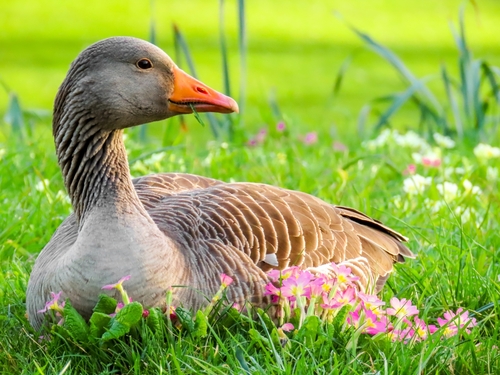
Greylag Goose (Anser anser) Greylag Goose
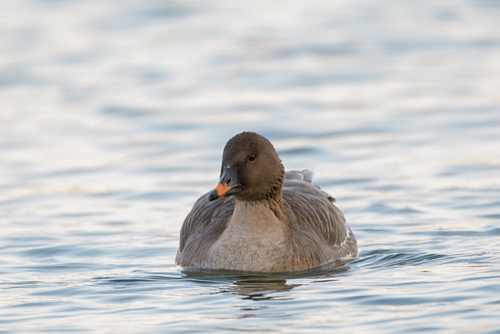
Tundra Bean Goose (Anser serrirostris) Tundra Bean Goose

Media

Loading…

In short

The most reliable field mark to separate Greylag Goose from Tundra Bean Goose is the bill: Greylag shows a uniformly orange bill, while Tundra Bean Goose has a mostly black bill with a distinct orange band across the middle. In flight or at rest, Greylag’s pale grey forewing and rump contrast with Tundra Bean’s darker upperwing coverts. Leg color also helps: Greylag has pink legs, Tundra Bean’s are bright orange. Size is similar, but Greylag averages slightly heavier. Juvenile Greylags lack black belly spots and have greyer legs, but the bill and wing pattern remain the best field clues.

Identification tips

  1. Bill color and pattern: Greylag Goose has a uniformly orange bill; Tundra Bean Goose’s bill is mostly black with a distinct orange band across the middle. This is the most consistent and visible field mark at all ages and seasons.
  2. Leg color: Greylag shows pink legs, while Tundra Bean Goose has bright orange legs and feet. This is especially helpful when birds are standing or walking.
  3. Upperwing pattern in flight: Greylag displays a pale grey forewing and rump, contrasting with darker flight feathers and pale wing coverts. Tundra Bean Goose’s upperwing coverts are dark brown with narrow white fringes, giving a much darker impression in flight. This is visible in both adults and immatures.
  4. Plumage tone: Greylag is generally paler and greyer overall, with a paler breast and belly (often with black spots in adults). Tundra Bean Goose is browner and darker, lacking the pale upperparts of Greylag.
  5. Flank and rump: Greylag has a white line bordering the upper flanks and a pale rump, both visible when the bird is stretching or in flight. Tundra Bean lacks these pale highlights.
  6. Neck pattern: Adult Greylag Geese often show a 'concertina' pattern of feather folds on the neck, which is less obvious or absent in Tundra Bean.
  7. Juvenile marks: Juvenile Greylags lack black belly spots and have greyish legs, but still show the orange bill and pale wing pattern. Use bill and wing for young birds.
  8. Size and structure: Greylag is slightly bulkier and heavier on average, but this is only useful in direct comparison and is not reliable alone.
  9. Voice: Listen for the loud, cackling, domestic-goose-like calls of Greylag, especially in flight. Tundra Bean’s calls are less distinctive and more nasal.
  10. Habitat and context: Both species may occur together in winter in open wetlands and fields; do not rely on habitat alone for separation.
  11. Beware of hybrids and domestic geese: Some domestic geese are derived from Greylag and may show variable bill and leg colors. Always check for wild-type structure and field marks.
  12. Seasonal variation: Both species undergo molt and may look scruffier in late summer; bill and wing pattern remain reliable.
  13. Sex and age: There is little sexual dimorphism in either species; use structural and plumage marks for all individuals.
  14. Flock composition: Mixed flocks are possible in winter; check each bird individually, as both can occur together.
  15. Lighting pitfalls: In poor light, bill and leg color may be hard to judge; use wing pattern and overall tone as backup.

Size

Both species are large geese and overlap in size, but Greylag Goose averages slightly heavier (mean body mass ~3465g [wikidata]) than Tundra Bean Goose (males average 3200g, females 2840g [wikipedia]). Length is similar: Greylag 74–91 cm, Tundra Bean 68–90 cm. In the field, size alone is not a reliable separator unless birds are side by side, and even then, overlap is considerable.

Plumage

Juveniles: Greylag juveniles lack the black speckling on breast and belly seen in adults and have greyer legs, but their overall structure and bill remain diagnostic. Tundra Bean Goose juveniles are not specifically described, but the dark upperwing coverts with narrow white fringes are consistent across ages.

Adults: Greylag Goose shows a mottled and barred grey and white plumage, with a paler breast and belly variably marked with black spots, a pale grey forewing and rump (especially noticeable in flight), and a white line bordering the upper flanks. The wing coverts are pale, contrasting with darker flight feathers. Tundra Bean Goose is browner overall, with dark brown upperwing coverts edged narrowly in white, and lacks the pale grey forewing and rump of Greylag. The bill pattern is strikingly different: Greylag’s is all orange, Tundra Bean’s is mostly black with an orange band. Leg color is pink in Greylag, bright orange in Tundra Bean.

In flight, Greylag’s pale forewing and rump stand out, while Tundra Bean’s wings look darker and more uniform.

Behaviour

Both species are social and often seen in flocks, especially outside the breeding season. Greylag Goose is known for loud cackling calls and can be quite vocal in flight and on the ground. Both species graze in open fields and wetlands. There are no major behavioral differences noted that are useful for field separation.

Habitat

Greylag Goose breeds and winters in a wide range of wetland habitats across Europe and western Asia, often in lowland lakes, marshes, and agricultural fields. Tundra Bean Goose breeds in northern Siberian tundra and winters further south in Asia, but in overlapping regions (e.g., Europe in winter), both may be found together in open wetlands and fields. Habitat is not a reliable separator where ranges overlap.

Voice

Greylag Goose has a loud, cackling 'aahng-ung-ung' call, reminiscent of domestic geese and often described as baying like hounds. Tundra Bean Goose vocalizations are not detailed in the notes, but are generally less honking and more nasal or grating compared to Greylag. In mixed flocks, Greylag’s call is usually deeper and more resonant.

Submit a better description

Use the same sections as the comparison. Your text is published immediately.

The most reliable field mark to separate Greylag Goose from Tundra Bean Goose is the bill: Greylag shows a uniformly orange bill, while Tundra Bean Goose has a mostly black bill with a distinct orange band across the middle. In flight or at rest, Greylag’s pale grey forewing and rump contrast with Tundra Bean’s darker upperwing coverts. Leg color also helps: Greylag has pink legs, Tundra Bean’s are bright orange. Size is similar, but Greylag averages slightly heavier. Juvenile Greylags lack black belly spots and have greyer legs, but the bill and wing pattern remain the best field clues.

  1. Bill color and pattern: Greylag Goose has a uniformly orange bill; Tundra Bean Goose’s bill is mostly black with a distinct orange band across the middle. This is the most consistent and visible field mark at all ages and seasons.
  2. Leg color: Greylag shows pink legs, while Tundra Bean Goose has bright orange legs and feet. This is especially helpful when birds are standing or walking.
  3. Upperwing pattern in flight: Greylag displays a pale grey forewing and rump, contrasting with darker flight feathers and pale wing coverts. Tundra Bean Goose’s upperwing coverts are dark brown with narrow white fringes, giving a much darker impression in flight. This is visible in both adults and immatures.
  4. Plumage tone: Greylag is generally paler and greyer overall, with a paler breast and belly (often with black spots in adults). Tundra Bean Goose is browner and darker, lacking the pale upperparts of Greylag.
  5. Flank and rump: Greylag has a white line bordering the upper flanks and a pale rump, both visible when the bird is stretching or in flight. Tundra Bean lacks these pale highlights.
  6. Neck pattern: Adult Greylag Geese often show a 'concertina' pattern of feather folds on the neck, which is less obvious or absent in Tundra Bean.
  7. Juvenile marks: Juvenile Greylags lack black belly spots and have greyish legs, but still show the orange bill and pale wing pattern. Use bill and wing for young birds.
  8. Size and structure: Greylag is slightly bulkier and heavier on average, but this is only useful in direct comparison and is not reliable alone.
  9. Voice: Listen for the loud, cackling, domestic-goose-like calls of Greylag, especially in flight. Tundra Bean’s calls are less distinctive and more nasal.
  10. Habitat and context: Both species may occur together in winter in open wetlands and fields; do not rely on habitat alone for separation.
  11. Beware of hybrids and domestic geese: Some domestic geese are derived from Greylag and may show variable bill and leg colors. Always check for wild-type structure and field marks.
  12. Seasonal variation: Both species undergo molt and may look scruffier in late summer; bill and wing pattern remain reliable.
  13. Sex and age: There is little sexual dimorphism in either species; use structural and plumage marks for all individuals.
  14. Flock composition: Mixed flocks are possible in winter; check each bird individually, as both can occur together.
  15. Lighting pitfalls: In poor light, bill and leg color may be hard to judge; use wing pattern and overall tone as backup.

Both species are large geese and overlap in size, but Greylag Goose averages slightly heavier (mean body mass ~3465g [wikidata]) than Tundra Bean Goose (males average 3200g, females 2840g [wikipedia]). Length is similar: Greylag 74–91 cm, Tundra Bean 68–90 cm. In the field, size alone is not a reliable separator unless birds are side by side, and even then, overlap is considerable.

Juveniles: Greylag juveniles lack the black speckling on breast and belly seen in adults and have greyer legs, but their overall structure and bill remain diagnostic. Tundra Bean Goose juveniles are not specifically described, but the dark upperwing coverts with narrow white fringes are consistent across ages.

Adults: Greylag Goose shows a mottled and barred grey and white plumage, with a paler breast and belly variably marked with black spots, a pale grey forewing and rump (especially noticeable in flight), and a white line bordering the upper flanks. The wing coverts are pale, contrasting with darker flight feathers. Tundra Bean Goose is browner overall, with dark brown upperwing coverts edged narrowly in white, and lacks the pale grey forewing and rump of Greylag. The bill pattern is strikingly different: Greylag’s is all orange, Tundra Bean’s is mostly black with an orange band. Leg color is pink in Greylag, bright orange in Tundra Bean.

In flight, Greylag’s pale forewing and rump stand out, while Tundra Bean’s wings look darker and more uniform.

Both species are social and often seen in flocks, especially outside the breeding season. Greylag Goose is known for loud cackling calls and can be quite vocal in flight and on the ground. Both species graze in open fields and wetlands. There are no major behavioral differences noted that are useful for field separation.

Greylag Goose breeds and winters in a wide range of wetland habitats across Europe and western Asia, often in lowland lakes, marshes, and agricultural fields. Tundra Bean Goose breeds in northern Siberian tundra and winters further south in Asia, but in overlapping regions (e.g., Europe in winter), both may be found together in open wetlands and fields. Habitat is not a reliable separator where ranges overlap.

Greylag Goose has a loud, cackling 'aahng-ung-ung' call, reminiscent of domestic geese and often described as baying like hounds. Tundra Bean Goose vocalizations are not detailed in the notes, but are generally less honking and more nasal or grating compared to Greylag. In mixed flocks, Greylag’s call is usually deeper and more resonant.

Discard your changes?

You have unsaved edits. If you leave now, those changes will be lost.

Greylag Goose · Tundra Bean Goose · My Tricky Birds