

Grey Wagtail vs Western Yellow Wagtail
Motacilla cinerea versus Motacilla flava
Play a quiz with Grey Wagtail and Western Yellow Wagtail
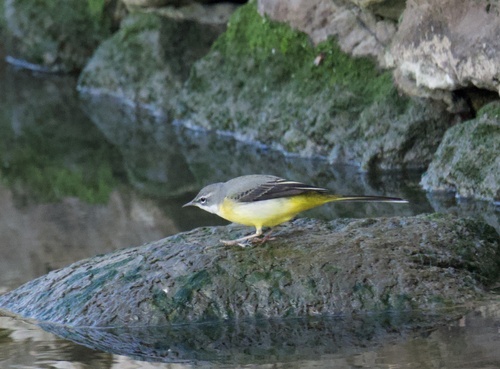 Grey Wagtail
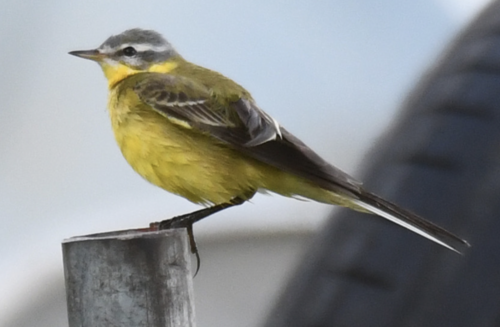 Western Yellow Wagtail
In short
The most reliable way to separate Grey Wagtail from Western Yellow Wagtail is by the distribution and intensity of yellow on the underparts: Grey Wagtail shows yellow limited to the vent and (in breeding males) the throat, with otherwise whitish underparts, while Western Yellow Wagtail is yellow below throughout, especially in adults. Grey Wagtail also has a noticeably longer tail and grey upperparts, whereas Western Yellow Wagtail is shorter-tailed and olive above. In flight or at rest, look for the Grey Wagtail’s narrow white supercilium and black throat patch in breeding males, versus the more variable head patterns of Western Yellow Wagtail. Juveniles of both can be confusingly pale, but the structural differences and extent of yellow remain key. Both species wag their tails, but their preferred habitats and overall jizz differ.
Identification tips
- Yellow distribution: Grey Wagtail has yellow limited to the vent and (in breeding males) the throat; Western Yellow Wagtail is yellow below throughout (all ages, but especially adults).
- Tail length: Grey Wagtail’s tail is much longer and more prominent, often extending well beyond the wingtips when perched. Western Yellow Wagtail is the shortest-tailed European wagtail (all ages).
- Upperparts color: Grey Wagtail is always grey above; Western Yellow Wagtail is olive-green above (all ages).
- Supercilium: Grey Wagtail has a narrow, crisp white supercilium; Western Yellow Wagtail’s supercilium varies with subspecies and is usually less defined.
- Throat color (breeding males): Grey Wagtail shows a black throat bordered by white; Western Yellow Wagtail’s throat is yellow or white, never black.
- Head pattern: Western Yellow Wagtail males can show a variety of head colors (blue, black, greenish, or white supercilium), depending on subspecies; Grey Wagtail never shows these head patterns.
- Underpart color (juveniles): Juvenile Western Yellow Wagtail may appear whitish below but still lacks the yellow vent of Grey Wagtail. Juvenile Grey Wagtail always has a yellow vent and grey upperparts.
- Habitat: Grey Wagtail is almost always near running water, even in urban settings; Western Yellow Wagtail prefers open, wet meadows and is rarely found along streams.
- Behavior: Grey Wagtail often forages alone or in pairs, sometimes perching on rocks or trees by water; Western Yellow Wagtail is more likely to be seen in flocks in open fields.
- Flight style: Grey Wagtail’s long tail gives a more elongated, undulating flight; Western Yellow Wagtail appears more compact and agile.
- Call: Listen for the sharp 'chi-cheep' of Grey Wagtail versus the high 'jeet' of Western Yellow Wagtail, but beware of overlap in poor conditions.
- Seasonal context: In Europe, both species are present in spring and summer, but Western Yellow Wagtail is more likely in open country, Grey Wagtail along streams.
- Perched jizz: Grey Wagtail appears longer and sleeker, with a low, horizontal posture; Western Yellow Wagtail is more upright and compact.
- Flock size: Western Yellow Wagtail often gathers in larger groups, especially on migration; Grey Wagtail is usually solitary or in pairs.
- Pitfalls: Juvenile and non-breeding birds of both species can look pale and confusing, but focus on tail length, upperpart color, and the presence or absence of yellow on the vent.
Size
Grey Wagtail is slightly larger and distinctly longer-tailed, measuring about 18–19 cm in length and weighing around 17.4 g [wikidata]. Western Yellow Wagtail is more compact, at 15–16 cm, and is the shortest-tailed European wagtail [wikipedia]. In the field, Grey Wagtail’s elongated body and tail are obvious, especially when perched or in flight, while Western Yellow Wagtail appears daintier and more compact.
Plumage
- Juveniles/immatures: Both species can appear pale below, but juvenile Western Yellow Wagtail often shows whitish or diluted yellow underparts, while Grey Wagtail juveniles retain the yellow vent and grey upperparts. Neither species is described as having a distinctive upperwing pattern in flight at this age in the provided notes.
- Adult breeding males: Grey Wagtail has a black throat bordered by whitish moustachial stripes, grey upperparts, and yellow restricted to the vent and throat. Western Yellow Wagtail males are olive above and bright yellow below, with head color and pattern varying by subspecies (from blue-grey to black or greenish, sometimes with a white supercilium).
- Females/non-breeding: Both species are duller, but Grey Wagtail still shows a yellow vent and grey upperparts, while Western Yellow Wagtail females remain yellowish below (though sometimes paler) and olive above. The supercilium is always narrower and more defined in Grey Wagtail.
- Key contrast: The extent and location of yellow is diagnostic: Grey Wagtail’s yellow is restricted, Western Yellow Wagtail’s is extensive.
Behaviour
Both species wag their tails constantly, but Grey Wagtail is more likely to be seen singly or in pairs, often along running water, and sometimes perches on rocks or trees near streams. In winter, Grey Wagtails may forage along roadsides, flushing ahead and returning to the same spot. Western Yellow Wagtail is more often found in open country, especially wet meadows, and is less tied to running water. Both species are insectivorous and forage on the ground, but the Grey Wagtail’s association with water and its habit of returning to a perch are distinctive.
Habitat
Grey Wagtail is strongly associated with running water—streams, rivers, and sometimes urban watercourses—especially in the breeding season. It may use man-made structures near water for nesting. Western Yellow Wagtail prefers open, damp habitats such as wet meadows and marshy fields, usually away from fast-flowing water. If you see a wagtail in a meadow or pasture, especially in a flock, it is much more likely to be a Western Yellow Wagtail; if it is along a stream or riverbank, especially alone or in a pair, Grey Wagtail is favored.
Voice
Grey Wagtail gives a sharp, clear 'chi-cheep' call, especially when flushed. Its song is a series of trills and high notes, often delivered during display flights. Western Yellow Wagtail’s call is a high-pitched 'jeet.' While both are high-pitched, the Grey Wagtail’s call is sharper and more metallic, and the song is more elaborate. In practice, calls are helpful but can be confused if not heard well.