

Motmot

Grey Wagtail vs Eastern Yellow Wagtail

Motacilla cinerea versus Motacilla tschutschensis

Play a quiz with Grey Wagtail and Eastern Yellow Wagtail
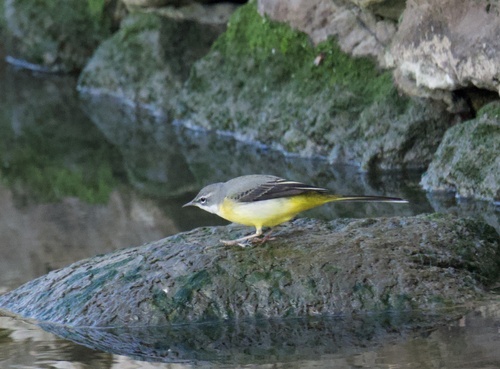
Grey Wagtail (Motacilla cinerea) Grey Wagtail
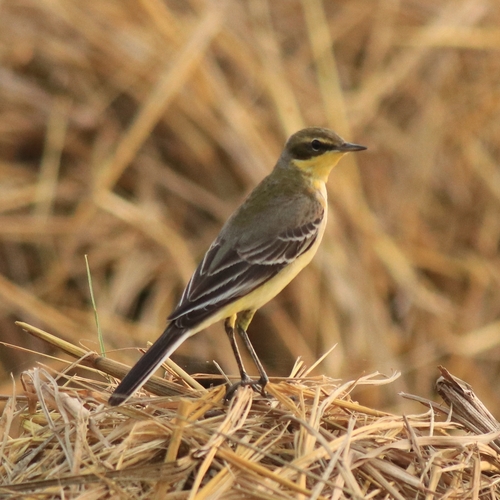
Eastern Yellow Wagtail (Motacilla tschutschensis) Eastern Yellow Wagtail

Media

Loading…

In short

The most reliable field mark to separate Grey Wagtail from Eastern Yellow Wagtail is the combination of the Grey Wagtail’s grey upperparts and its sharply demarcated yellow vent, with only limited yellow on the underparts, versus the Eastern Yellow Wagtail’s overall olive-green upperparts and much more extensive yellow below. Breeding male Grey Wagtails show a distinctive black throat bordered by white moustachial stripes, which is never present in Eastern Yellow Wagtail. Both species are slim, long-tailed birds, but Grey Wagtail is longer overall and appears even more elongated due to its very long tail. In non-breeding plumages and among immatures, the extent and placement of yellow, as well as the presence or absence of grey on the upperparts, are key. Habitat and behavior can help: Grey Wagtail is closely tied to running water, while Eastern Yellow Wagtail is more often found in open grassy areas.

Identification tips

  1. Upperparts color: Grey Wagtail always has grey upperparts (all ages), while Eastern Yellow Wagtail is olive-green above. This is the most consistent separation in all plumages.
  2. Underpart yellow: Grey Wagtail has yellow restricted to the vent and sometimes throat; the rest of the underparts are whitish. Eastern Yellow Wagtail is yellow on the entire underparts (though females/immatures can be paler).
  3. Breeding male throat: Only Grey Wagtail breeding males have a black throat bordered by white moustachial stripes. Eastern Yellow Wagtail males never have a black throat.
  4. Supercilium and eye ring: Grey Wagtail has a narrow white supercilium and a broken eye ring; Eastern Yellow Wagtail’s head pattern is variable but lacks this precise combination.
  5. Tail length: Grey Wagtail’s tail is noticeably longer and accentuates its slim, stretched look. Eastern Yellow Wagtail’s tail is long but not as exaggerated.
  6. Size: Grey Wagtail is longer (18–19 cm vs. 15–16 cm) and heavier, but this is subtle unless seen side by side.
  7. Habitat: If the bird is foraging along fast-flowing water or perched on rocks in a stream, it is almost certainly a Grey Wagtail. In open grassland or marsh, especially in a flock, Eastern Yellow Wagtail is more likely.
  8. Behavior: Grey Wagtail is more solitary or in pairs, especially near water; Eastern Yellow Wagtail is more gregarious, especially on migration.
  9. Flight style: Both have undulating flight, but Grey Wagtail may return to the same spot after being flushed along a watercourse.
  10. Calls: Grey Wagtail’s 'chi-cheep' is clear and sharp; Eastern Yellow Wagtail’s 'zrri' or 'jeet' is shriller and more rasping. Use with caution if unfamiliar.
  11. Seasonal context: In Europe, a yellow wagtail seen in late autumn or winter is more likely to be a Grey Wagtail, as Eastern Yellow Wagtail is a scarce vagrant in that season.
  12. Plumage pitfalls: Immature/female Eastern Yellow Wagtails can be quite pale below, but still show more yellow than Grey Wagtail and lack the grey upperparts.
  13. Head pattern: Eastern Yellow Wagtail males may have white, yellow, or greenish heads depending on subspecies, but never the black-throated look of male Grey Wagtail.
  14. Perching behavior: Grey Wagtail often perches on rocks in water or low branches over streams; Eastern Yellow Wagtail is more likely to be seen on the ground in open areas.
  15. Flock size: Grey Wagtail is rarely in flocks, especially outside of winter roosts, while Eastern Yellow Wagtail often gathers in large groups during migration.

Size

Grey Wagtail is slightly larger, measuring about 18–19 cm in length and weighing around 17.4 g [wikidata], while Eastern Yellow Wagtail is smaller at 15–16 cm (no mass given, but typically lighter). Grey Wagtail’s longer tail accentuates its slim, stretched appearance, making it look even longer than the actual size difference suggests. Both are slender, but Grey Wagtail’s tail is proportionally longer.

Plumage

Juvenile and first-winter birds of both species can be confusing, but Grey Wagtail always shows grey upperparts and a yellow vent, with the rest of the underparts mostly whitish. Eastern Yellow Wagtail juveniles and first-winters are olive-green above and have more extensive yellow on the underparts, though this can be diluted by white, especially in females and immatures. Breeding male Grey Wagtail is unique among these two in having a black throat bordered by white moustachial stripes, while Eastern Yellow Wagtail males have variable head patterns (never a black throat) and are bright yellow below. In flight, neither species is noted for distinctive upperwing panels or contrasting flight feathers that would separate them at a distance, so focus on body and underpart color. The Grey Wagtail’s narrow white supercilium and broken eye ring are subtle but consistent, while Eastern Yellow Wagtail’s head pattern is more variable and may include white, yellow, or greenish tones depending on subspecies and age.

Behaviour

Grey Wagtail is strongly associated with running water, often seen foraging singly or in pairs along streams, rivers, or even urban watercourses. They frequently perch on rocks in water or low branches, and their tail is constantly wagged up and down. In winter, they may forage along roadsides and are known to return to the same wintering sites. Eastern Yellow Wagtail is more often found in open grassy areas, meadows, or marshes, and is less tied to water. It is more likely to be seen in flocks, especially during migration, and is less likely to perch on rocks in water. Both species walk and wag their tails, but Grey Wagtail’s tail-wagging is particularly pronounced.

Habitat

Grey Wagtail breeds and forages almost exclusively near running water—streams, rivers, and sometimes man-made watercourses—while Eastern Yellow Wagtail prefers open grassy habitats, meadows, and marshes, often away from water. During migration and winter, Grey Wagtail may be found in urban gardens or along roadsides but still seeks water, whereas Eastern Yellow Wagtail is more likely in open fields or grasslands. If you see a wagtail far from water, especially in a flock, Eastern Yellow Wagtail is more likely.

Voice

Grey Wagtail gives a sharp, clear 'chi-cheep' call, often heard as it flushes along watercourses. Its song is a series of trills. Eastern Yellow Wagtail’s call is a high-pitched 'zrri' or 'jeet', which is shriller and more rasping than that of the Grey Wagtail. Calls are useful if you are familiar with them, but both can be high-pitched and may overlap in tone for the inexperienced ear.

Submit a better description

Use the same sections as the comparison. Your text is published immediately.

The most reliable field mark to separate Grey Wagtail from Eastern Yellow Wagtail is the combination of the Grey Wagtail’s grey upperparts and its sharply demarcated yellow vent, with only limited yellow on the underparts, versus the Eastern Yellow Wagtail’s overall olive-green upperparts and much more extensive yellow below. Breeding male Grey Wagtails show a distinctive black throat bordered by white moustachial stripes, which is never present in Eastern Yellow Wagtail. Both species are slim, long-tailed birds, but Grey Wagtail is longer overall and appears even more elongated due to its very long tail. In non-breeding plumages and among immatures, the extent and placement of yellow, as well as the presence or absence of grey on the upperparts, are key. Habitat and behavior can help: Grey Wagtail is closely tied to running water, while Eastern Yellow Wagtail is more often found in open grassy areas.

  1. Upperparts color: Grey Wagtail always has grey upperparts (all ages), while Eastern Yellow Wagtail is olive-green above. This is the most consistent separation in all plumages.
  2. Underpart yellow: Grey Wagtail has yellow restricted to the vent and sometimes throat; the rest of the underparts are whitish. Eastern Yellow Wagtail is yellow on the entire underparts (though females/immatures can be paler).
  3. Breeding male throat: Only Grey Wagtail breeding males have a black throat bordered by white moustachial stripes. Eastern Yellow Wagtail males never have a black throat.
  4. Supercilium and eye ring: Grey Wagtail has a narrow white supercilium and a broken eye ring; Eastern Yellow Wagtail’s head pattern is variable but lacks this precise combination.
  5. Tail length: Grey Wagtail’s tail is noticeably longer and accentuates its slim, stretched look. Eastern Yellow Wagtail’s tail is long but not as exaggerated.
  6. Size: Grey Wagtail is longer (18–19 cm vs. 15–16 cm) and heavier, but this is subtle unless seen side by side.
  7. Habitat: If the bird is foraging along fast-flowing water or perched on rocks in a stream, it is almost certainly a Grey Wagtail. In open grassland or marsh, especially in a flock, Eastern Yellow Wagtail is more likely.
  8. Behavior: Grey Wagtail is more solitary or in pairs, especially near water; Eastern Yellow Wagtail is more gregarious, especially on migration.
  9. Flight style: Both have undulating flight, but Grey Wagtail may return to the same spot after being flushed along a watercourse.
  10. Calls: Grey Wagtail’s 'chi-cheep' is clear and sharp; Eastern Yellow Wagtail’s 'zrri' or 'jeet' is shriller and more rasping. Use with caution if unfamiliar.
  11. Seasonal context: In Europe, a yellow wagtail seen in late autumn or winter is more likely to be a Grey Wagtail, as Eastern Yellow Wagtail is a scarce vagrant in that season.
  12. Plumage pitfalls: Immature/female Eastern Yellow Wagtails can be quite pale below, but still show more yellow than Grey Wagtail and lack the grey upperparts.
  13. Head pattern: Eastern Yellow Wagtail males may have white, yellow, or greenish heads depending on subspecies, but never the black-throated look of male Grey Wagtail.
  14. Perching behavior: Grey Wagtail often perches on rocks in water or low branches over streams; Eastern Yellow Wagtail is more likely to be seen on the ground in open areas.
  15. Flock size: Grey Wagtail is rarely in flocks, especially outside of winter roosts, while Eastern Yellow Wagtail often gathers in large groups during migration.

Grey Wagtail is slightly larger, measuring about 18–19 cm in length and weighing around 17.4 g [wikidata], while Eastern Yellow Wagtail is smaller at 15–16 cm (no mass given, but typically lighter). Grey Wagtail’s longer tail accentuates its slim, stretched appearance, making it look even longer than the actual size difference suggests. Both are slender, but Grey Wagtail’s tail is proportionally longer.

Juvenile and first-winter birds of both species can be confusing, but Grey Wagtail always shows grey upperparts and a yellow vent, with the rest of the underparts mostly whitish. Eastern Yellow Wagtail juveniles and first-winters are olive-green above and have more extensive yellow on the underparts, though this can be diluted by white, especially in females and immatures. Breeding male Grey Wagtail is unique among these two in having a black throat bordered by white moustachial stripes, while Eastern Yellow Wagtail males have variable head patterns (never a black throat) and are bright yellow below. In flight, neither species is noted for distinctive upperwing panels or contrasting flight feathers that would separate them at a distance, so focus on body and underpart color. The Grey Wagtail’s narrow white supercilium and broken eye ring are subtle but consistent, while Eastern Yellow Wagtail’s head pattern is more variable and may include white, yellow, or greenish tones depending on subspecies and age.

Grey Wagtail is strongly associated with running water, often seen foraging singly or in pairs along streams, rivers, or even urban watercourses. They frequently perch on rocks in water or low branches, and their tail is constantly wagged up and down. In winter, they may forage along roadsides and are known to return to the same wintering sites. Eastern Yellow Wagtail is more often found in open grassy areas, meadows, or marshes, and is less tied to water. It is more likely to be seen in flocks, especially during migration, and is less likely to perch on rocks in water. Both species walk and wag their tails, but Grey Wagtail’s tail-wagging is particularly pronounced.

Grey Wagtail breeds and forages almost exclusively near running water—streams, rivers, and sometimes man-made watercourses—while Eastern Yellow Wagtail prefers open grassy habitats, meadows, and marshes, often away from water. During migration and winter, Grey Wagtail may be found in urban gardens or along roadsides but still seeks water, whereas Eastern Yellow Wagtail is more likely in open fields or grasslands. If you see a wagtail far from water, especially in a flock, Eastern Yellow Wagtail is more likely.

Grey Wagtail gives a sharp, clear 'chi-cheep' call, often heard as it flushes along watercourses. Its song is a series of trills. Eastern Yellow Wagtail’s call is a high-pitched 'zrri' or 'jeet', which is shriller and more rasping than that of the Grey Wagtail. Calls are useful if you are familiar with them, but both can be high-pitched and may overlap in tone for the inexperienced ear.

Discard your changes?

You have unsaved edits. If you leave now, those changes will be lost.

Grey Wagtail · Eastern Yellow Wagtail · My Tricky Birds