

Grey Wagtail vs Citrine Wagtail
Motacilla cinerea versus Motacilla citreola
Play a quiz with Grey Wagtail and Citrine Wagtail
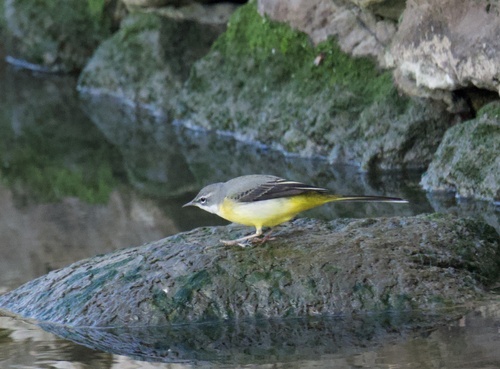 Grey Wagtail
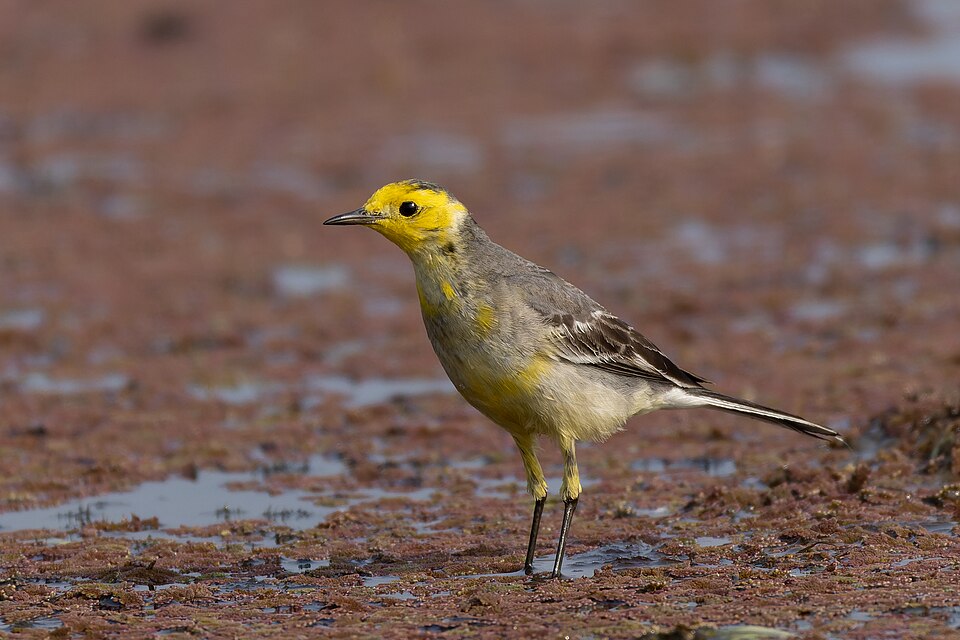 Citrine Wagtail
In short
The most reliable field mark to separate Grey Wagtail from Citrine Wagtail is the distribution of yellow and the head pattern: Grey Wagtail shows a grey back, a narrow white supercilium, and yellow only on the vent and (in breeding males) throat, while Citrine Wagtail in breeding plumage has a bright yellow head and underparts, with grey or black upperparts. In winter, Citrine Wagtail's yellow is paler and the head becomes brownish with a yellowish supercilium, but it still lacks the Grey Wagtail's distinctive grey back and white supercilium combination. Structure is similar, but Grey Wagtail is slightly longer and slimmer. Both species wag their tails and can occur near water, but Grey Wagtail is more strictly tied to running streams, especially in the breeding season.
Identification tips
- Head pattern is key: Grey Wagtail has a narrow white supercilium and a broken eye ring, with a grey crown and nape. Citrine Wagtail in breeding plumage has a bright yellow head (except for a black nape in males), which is never shown by Grey Wagtail.
- Yellow distribution: Grey Wagtail's yellow is mostly confined to the vent and, in breeding males, the throat. Citrine Wagtail shows yellow across the entire underparts and head in breeding plumage.
- Back color: Grey Wagtail always has grey upperparts, while Citrine Wagtail has grey or black upperparts but the yellow head and underparts dominate the impression, especially in breeding males.
- Throat color: Breeding male Grey Wagtail has a black throat bordered by white moustachial stripes; Citrine Wagtail lacks this pattern, instead showing a yellow throat and head (breeding male) or a brownish/yellowish head (winter/female).
- Supercilium: Grey Wagtail's supercilium is narrow, white, and contrasts with the grey head; Citrine Wagtail's supercilium is yellowish in winter and less sharply defined.
- Underpart contrast: Grey Wagtail has whitish underparts with a sharply contrasting yellow vent; Citrine Wagtail's underparts are more uniformly yellow in breeding plumage, fading in winter.
- Sex and season: Female and winter Citrine Wagtails are paler, with a brownish head and yellowish supercilium, but still lack the crisp grey-and-white head of Grey Wagtail. Female Grey Wagtail remains grey-backed with a white supercilium and little yellow.
- Size and structure: Grey Wagtail is slightly longer and slimmer, but this is not a strong field mark unless both species are together.
- Tail wagging: Both species wag their tails, so this behavior is not diagnostic.
- Habitat context: In the breeding season, Grey Wagtail is almost always near fast-flowing streams or rivers, while Citrine Wagtail prefers wet meadows and tundra. Out of breeding season, Grey Wagtail may be found in urban gardens but still near water.
- Flight behavior: Grey Wagtail often flushes ahead along roads or streams and then returns to its original spot; this behavior is less described for Citrine Wagtail.
- Voice: Grey Wagtail's sharp 'chi-cheep' call may help if heard, but Citrine Wagtail's call is not described in the notes, so use with caution.
- Pitfalls: In winter, both species become paler, but Grey Wagtail always keeps its grey back and white supercilium, while Citrine Wagtail's head becomes brownish with a yellowish supercilium.
- No strong wing pattern cues: There are no detailed notes on distinctive juvenile or immature upperwing patterns for either species, so rely on head and body coloration.
- Always check multiple features: Especially in non-breeding plumage, use a combination of head pattern, yellow distribution, and habitat for confident separation.
Size
Grey Wagtail is marginally larger, measuring about 18–19 cm in length and weighing around 17.4 g [wikipedia][wikidata]. Citrine Wagtail is slightly smaller at 15.5–17 cm in length [wikipedia]. In the field, this difference is subtle and not usually diagnostic unless both are seen side by side.
Plumage
- Juvenile and non-breeding birds: There are no detailed wing pattern notes for juveniles or immatures in the sources, so separation relies on overall coloration and head pattern rather than upperwing marks.
- Adult breeding plumage: Grey Wagtail males have a grey back, narrow white supercilium, and a black throat bordered by whitish moustachial stripes. The yellow is limited to the vent and throat. Citrine Wagtail breeding males have a bright yellow head and underparts, with grey or black upperparts and white on the remiges. The entire head is yellow except for a black nape.
- Adult non-breeding/winter plumage: Grey Wagtail retains the grey back and white supercilium, with yellow mostly on the vent and some on the throat. Citrine Wagtail becomes paler, with yellow underparts diluted by white, and the head turns brownish with a yellowish supercilium. Females are similar to washed-out males.
- Females: Female Citrine Wagtail resembles a faded version of the male in winter, while female Grey Wagtail keeps the grey back and white supercilium with less yellow overall.
Behaviour
Both species wag their tails constantly and forage along water edges. Grey Wagtail often forages singly or in pairs, sometimes along roadsides in winter, and is known for its habit of flushing ahead and then returning to the original spot. Citrine Wagtail's behavior is less specifically described, but it is also a ground forager in wet meadows and tundra. Both species may perch on rocks or low branches near water.
Habitat
Grey Wagtail is strongly associated with fast-running streams and rivers, especially for breeding, and often nests on embankments or man-made structures near water [wikipedia]. In winter, it may use urban gardens but remains near water. Citrine Wagtail breeds in wet meadows and tundra, often in the central Palearctic, and winters in South Asia, sometimes at high elevations. It is less strictly tied to running water than Grey Wagtail and can be found in a wider range of wetland habitats.
Voice
Grey Wagtail gives a sharp 'chi-cheep' call, especially when flushed, and its song is a series of trills [wikipedia]. There are no specific vocalization details for Citrine Wagtail in the provided notes, so voice is not a reliable separator based on current sources.