

Grey Tit vs African Penduline Tit
Melaniparus afer versus Anthoscopus caroli
Play a quiz with Grey Tit and African Penduline Tit
 Grey Tit
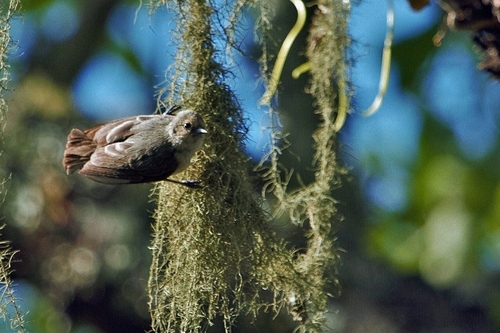 African Penduline Tit
In short
The most reliable way to separate Grey Tit from African Penduline Tit is by overall size and structure: Grey Tit is noticeably larger and more robust, with a heavier bill and a typical tit-like stance, while African Penduline Tit is tiny, delicate, and more warbler-like. Both can appear greyish above, but the Grey Tit is a true member of the tit family and shows a more substantial, blocky build, whereas the African Penduline Tit is much smaller and more active. In overlapping areas of southern Africa, habitat and jizz are also helpful: Grey Tit favors drier shrubland and Mediterranean-type vegetation, while African Penduline Tit is more often in dry or moist savanna and open woodland. If you see a very small, restless bird in acacia or open woodland, it's likely the penduline tit; a larger, more solid bird in shrubby terrain is likely the Grey Tit.
Identification tips
- Size is the quickest separator: Grey Tit is much larger and chunkier than African Penduline Tit. If the bird looks tiny, it's almost certainly the penduline tit.
- Bill shape: Grey Tit has a strong, conical tit bill; African Penduline Tit has a fine, needle-like bill. This is especially obvious at close range or in good light.
- General structure: Grey Tit is robust with a broad chest and a typical tit stance. African Penduline Tit is dainty, with a small head and a more horizontal, warbler-like posture.
- Behavior: Watch for movement style. Grey Tit moves deliberately and often pauses; African Penduline Tit is hyperactive, often hanging upside down or flicking through foliage.
- Plumage contrast: Grey Tit usually shows a clear division between grey upperparts and paler underparts, sometimes with a darker head or bib. African Penduline Tit is more uniformly pale grey or buff, lacking bold facial markings.
- Tail and wing shape: Grey Tit has a longer tail and broader wings; Penduline Tit's tail is short, and wings are rounded, giving a fluttery flight.
- Habitat: In dry shrubland or fynbos, expect Grey Tit; in open woodland or savanna, especially with acacias, expect African Penduline Tit.
- Range: If outside Lesotho or South Africa, it's almost certainly African Penduline Tit; Grey Tit is much more range-restricted.
- Group size: Grey Tit is often in pairs or small groups; African Penduline Tit may be solitary or in tiny family parties.
- Nest clues: If you see a finely woven, hanging nest, that's a penduline tit (not a quick field mark, but useful context).
- No strong age-specific wing pattern differences: Both species lack bold juvenile or immature upperwing marks based on available sources, so don't rely on this for separation.
- Facial pattern: Grey Tit may show a darker face or bib, especially in adults; African Penduline Tit's face is plain or only subtly marked.
- Voice: Not diagnostic from the sources provided; both can give high-pitched calls, but don't rely on this for separation.
- Season and sex: No strong seasonal or sexual differences in field marks for either species based on available notes.
- Pitfalls: Don't be fooled by overall grey coloration—focus on size, bill, and behavior for the most reliable ID in the field.
Size
Grey Tit is significantly larger and bulkier than African Penduline Tit. The Grey Tit is a typical tit in size and shape, with a robust body and strong bill. In contrast, African Penduline Tit is one of the smallest African passerines, appearing tiny and delicate even at a distance. This size gap is obvious in the field, especially when both species are seen in the same region. If you get a good look at the bill, the Grey Tit's is thicker and more conical, while the penduline tit's is fine and pointed.
Plumage
There are no detailed age-specific wing pattern notes in the sources, so rely on overall coloration and pattern. Grey Tit is mostly grey above with paler underparts, sometimes with a darker head or bib depending on subspecies and age, always with a tit-like contrast between upperparts and underparts. African Penduline Tit is also greyish above but often paler, with a less contrasting face and a more uniform look; it lacks the bold facial markings or bib of many true tits. Juvenile and immature plumages for both are not described in detail in the sources, so focus on structure and jizz for young birds. In flight, Grey Tit appears more robust and broad-winged, while African Penduline Tit is fluttery and light, with shorter, rounder wings and a shorter tail.
Behaviour
Grey Tit tends to move methodically through shrubs and low trees, often in pairs or small groups, and may pause to scan surroundings. African Penduline Tit is much more restless and acrobatic, often hanging upside down or darting rapidly through foliage, reminiscent of a tiny warbler or goldcrest. Penduline Tits are also known for their intricate, hanging nests (not a field mark for quick ID, but a clue if you find one).
Habitat
Grey Tit is mostly found in dry shrubland and Mediterranean-type vegetation in Lesotho and South Africa. African Penduline Tit has a much wider range across sub-Saharan Africa and is found in dry forests, dry and moist savanna, and open woodland. In southern Africa, if you are in dense, shrubby fynbos or karoo, Grey Tit is more likely; in open acacia woodland or savanna, African Penduline Tit is the default. Both can overlap in South Africa, but context helps.