

Motmot

Grey Tinamou vs Black-capped Tinamou

Tinamus tao versus Crypturellus atrocapillus

Play a quiz with Grey Tinamou and Black-capped Tinamou
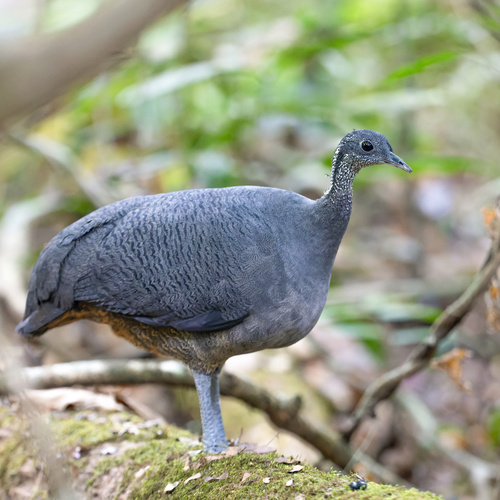
Grey Tinamou (Tinamus tao) Grey Tinamou
Black-capped Tinamou (Crypturellus atrocapillus) Black-capped Tinamou

Media

Loading…

In short

The most reliable way to separate Grey Tinamou from Black-capped Tinamou in the field is by overall size and structure: Grey Tinamou is much larger and bulkier, while Black-capped Tinamou is distinctly smaller and more compact. If seen together, Grey Tinamou will appear as a heavy, ground-dwelling bird, whereas Black-capped Tinamou is more delicate and likely to be overlooked in dense lowland forest. Plumage differences are subtle and can be hard to judge at a distance, but structural cues and habitat context are strong aids. Neither species has distinctive age-specific wing or flight patterns described in the available sources, so focus on size, jizz, and context.

Identification tips

  1. Size is the most reliable field mark: Grey Tinamou is much larger and heavier than Black-capped Tinamou. Use this when you have a good sense of scale or see the bird on open ground.
  2. Structure and jizz: Grey Tinamou appears robust and heavyset, with a broad body and slow, deliberate movements. Black-capped Tinamou is smaller, more compact, and may move more quickly or nimbly.
  3. Plumage is not a strong separator: Both species are cryptically colored for camouflage. Grey Tinamou is generally more uniformly grey, while Black-capped Tinamou may have a darker cap, but this is not a highly contrasting or always visible feature.
  4. No distinctive juvenile or immature wing patterns are described: Do not rely on flight or upperwing pattern for separation, as sources do not mention age-specific marks for either species.
  5. Habitat context: In lowland moist tropical forest, Black-capped Tinamou is more likely. If you are in a broader range of forested habitats, consider Grey Tinamou, especially if the bird appears large.
  6. Behavior: Both species are shy and ground-dwelling, but Grey Tinamou may appear slower and less likely to flush quickly due to its size. Black-capped Tinamou may be more elusive and quick through dense cover.
  7. Group context: If you see multiple tinamous together and one is notably larger, it is likely Grey Tinamou. Black-capped Tinamou will not match the bulk of Grey Tinamou.
  8. Vocalizations are not described in the sources: Do not rely on voice for separation unless you have local knowledge.
  9. Sex and season: No sexual dimorphism or seasonal plumage changes are described for either species; identification is the same year-round and for both sexes.
  10. Lighting and distance: In poor light or at a distance, rely on size and structure rather than subtle plumage differences.
  11. Confusion risk: If you are uncertain, always note the bird's apparent size and habitat first, as these are the most consistent separators between these two species.

Size

Grey Tinamou is significantly larger and heavier than Black-capped Tinamou, which averages about 453 grams [wikidata]. The Grey Tinamou is among the largest tinamous, with a robust, heavyset build, while Black-capped Tinamou is much smaller and lighter, with a more compact, rounded appearance. If you see a tinamou that looks notably large and hefty, it is likely Grey Tinamou; a smaller, more delicate bird fits Black-capped Tinamou.

Plumage

No age-specific or upperwing flight pattern differences are described for these species in the available sources. Both species are generally cryptic and earth-toned, adapted for camouflage on the forest floor. Grey Tinamou tends to have a more uniform greyish coloration, while Black-capped Tinamou's name hints at a darker cap, but this is not described as a bold or highly contrasting feature. Subtle differences in head pattern may exist, but are not detailed in the sources. In poor light or at a distance, plumage alone is unreliable for separation.

Behaviour

Both species are ground-dwelling and secretive, preferring to walk or run rather than fly. Grey Tinamou, being larger, may appear more ponderous and less likely to flush quickly, while Black-capped Tinamou, as a smaller bird, may move more nimbly through dense undergrowth. Both are difficult to observe for long periods, often freezing or slipping away into cover.

Habitat

Grey Tinamou is native to South America and is found in a variety of forested habitats, while Black-capped Tinamou is specifically noted as common in moist forest lowlands of subtropical and tropical regions [wikipedia]. If you are in lowland tropical moist forest, Black-capped Tinamou is more likely; Grey Tinamou may occur in a broader range of forest types. Local abundance may also differ, with Black-capped Tinamou being the expected tinamou in its preferred habitat.

Submit a better description

Use the same sections as the comparison. Your text is published immediately.

The most reliable way to separate Grey Tinamou from Black-capped Tinamou in the field is by overall size and structure: Grey Tinamou is much larger and bulkier, while Black-capped Tinamou is distinctly smaller and more compact. If seen together, Grey Tinamou will appear as a heavy, ground-dwelling bird, whereas Black-capped Tinamou is more delicate and likely to be overlooked in dense lowland forest. Plumage differences are subtle and can be hard to judge at a distance, but structural cues and habitat context are strong aids. Neither species has distinctive age-specific wing or flight patterns described in the available sources, so focus on size, jizz, and context.

  1. Size is the most reliable field mark: Grey Tinamou is much larger and heavier than Black-capped Tinamou. Use this when you have a good sense of scale or see the bird on open ground.
  2. Structure and jizz: Grey Tinamou appears robust and heavyset, with a broad body and slow, deliberate movements. Black-capped Tinamou is smaller, more compact, and may move more quickly or nimbly.
  3. Plumage is not a strong separator: Both species are cryptically colored for camouflage. Grey Tinamou is generally more uniformly grey, while Black-capped Tinamou may have a darker cap, but this is not a highly contrasting or always visible feature.
  4. No distinctive juvenile or immature wing patterns are described: Do not rely on flight or upperwing pattern for separation, as sources do not mention age-specific marks for either species.
  5. Habitat context: In lowland moist tropical forest, Black-capped Tinamou is more likely. If you are in a broader range of forested habitats, consider Grey Tinamou, especially if the bird appears large.
  6. Behavior: Both species are shy and ground-dwelling, but Grey Tinamou may appear slower and less likely to flush quickly due to its size. Black-capped Tinamou may be more elusive and quick through dense cover.
  7. Group context: If you see multiple tinamous together and one is notably larger, it is likely Grey Tinamou. Black-capped Tinamou will not match the bulk of Grey Tinamou.
  8. Vocalizations are not described in the sources: Do not rely on voice for separation unless you have local knowledge.
  9. Sex and season: No sexual dimorphism or seasonal plumage changes are described for either species; identification is the same year-round and for both sexes.
  10. Lighting and distance: In poor light or at a distance, rely on size and structure rather than subtle plumage differences.
  11. Confusion risk: If you are uncertain, always note the bird's apparent size and habitat first, as these are the most consistent separators between these two species.

Grey Tinamou is significantly larger and heavier than Black-capped Tinamou, which averages about 453 grams [wikidata]. The Grey Tinamou is among the largest tinamous, with a robust, heavyset build, while Black-capped Tinamou is much smaller and lighter, with a more compact, rounded appearance. If you see a tinamou that looks notably large and hefty, it is likely Grey Tinamou; a smaller, more delicate bird fits Black-capped Tinamou.

No age-specific or upperwing flight pattern differences are described for these species in the available sources. Both species are generally cryptic and earth-toned, adapted for camouflage on the forest floor. Grey Tinamou tends to have a more uniform greyish coloration, while Black-capped Tinamou's name hints at a darker cap, but this is not described as a bold or highly contrasting feature. Subtle differences in head pattern may exist, but are not detailed in the sources. In poor light or at a distance, plumage alone is unreliable for separation.

Both species are ground-dwelling and secretive, preferring to walk or run rather than fly. Grey Tinamou, being larger, may appear more ponderous and less likely to flush quickly, while Black-capped Tinamou, as a smaller bird, may move more nimbly through dense undergrowth. Both are difficult to observe for long periods, often freezing or slipping away into cover.

Grey Tinamou is native to South America and is found in a variety of forested habitats, while Black-capped Tinamou is specifically noted as common in moist forest lowlands of subtropical and tropical regions [wikipedia]. If you are in lowland tropical moist forest, Black-capped Tinamou is more likely; Grey Tinamou may occur in a broader range of forest types. Local abundance may also differ, with Black-capped Tinamou being the expected tinamou in its preferred habitat.

Discard your changes?

You have unsaved edits. If you leave now, those changes will be lost.

Grey Tinamou · Black-capped Tinamou · My Tricky Birds