
Motmot

Grey Partridge vs Common Quail

Perdix perdix versus Coturnix coturnix

Play a quiz with Grey Partridge and Common Quail
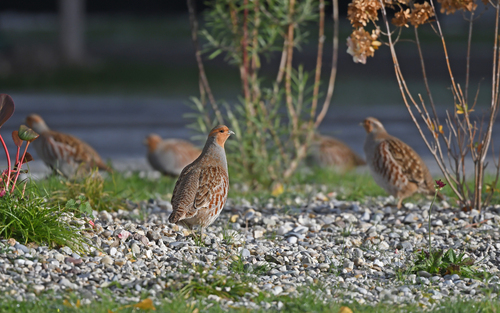
Grey Partridge (Perdix perdix) Grey Partridge
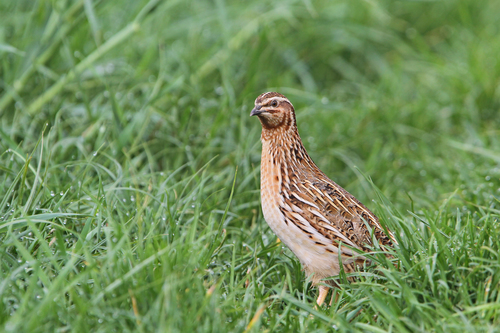
Common Quail (Coturnix coturnix) Common Quail

Media

Loading…

In short

The most reliable field mark to separate Grey Partridge from Common Quail is size and structure: Grey Partridge is much larger and bulkier, with a rotund body and short, rounded wings, while Common Quail is notably smaller, more compact, and has proportionally longer, pointed wings. In flight, Grey Partridge shows a heavier, slower wingbeat and a short, rounded tail, whereas Common Quail is quick, with rapid wingbeats and a more streamlined look. Juvenile Grey Partridges lack the adult's distinctive face and belly markings, but are still much bigger than any quail. Voice is also diagnostic: Grey Partridge gives a harsh 'kieerr-ik' or 'rick rick rick', while Common Quail utters a distinctive, rhythmic three-note 'wet-my-lips' call. If you see a small, streaky gamebird flush with a whirring, direct flight, check the size and wing shape first.

Identification tips

  1. Size is the fastest check: Grey Partridge is nearly twice the length and several times the weight of Common Quail. If the bird looks pigeon-sized or larger, it's a partridge; if it's sparrow- to starling-sized, it's a quail. This works for all ages and sexes.
  2. Wing shape in flight: Grey Partridge has short, rounded wings and a heavy, fluttering flight; Common Quail has longer, pointed wings and a rapid, direct flight. This is especially useful for flushed birds.
  3. Tail shape and length: Partridge shows a short, rounded tail; quail's tail is even shorter and less obvious, but the overall body is more streamlined.
  4. Plumage (adults): Grey Partridge adults have a grey body, chestnut face, and dark belly patch (smaller in females). Common Quail is streaked brown with a white eyestripe and, in males, a white chin. No bold belly patch or face color in quail.
  5. Plumage (juveniles/immatures): Juvenile Grey Partridges are yellow-brown and lack the adult's face and belly marks, but remain much larger and bulkier than any quail. Quail juveniles are similar to adults but slightly duller.
  6. Face pattern: Look for the white eyestripe (quail) versus the chestnut face (partridge). This is visible at close range or in good light.
  7. Flight behavior: Partridge flushes with a heavy, noisy flight, often calling; quail flushes only when nearly stepped on, flying low and fast, usually silently.
  8. Vocalizations: Partridge gives a harsh 'kieerr-ik' or 'rick rick rick'; quail gives a rhythmic, musical three-note call ('wet-my-lips'). If you hear the call, identification is straightforward.
  9. Seasonal context: In winter in Europe, only Grey Partridge is present; Common Quail is absent, being migratory.
  10. Group size: Partridges are often in coveys or pairs; quail are usually solitary or in loose groups.
  11. Habitat: Both can be in fields, but partridges are more likely in cereal fields and grassy margins year-round; quail prefer grasslands and are more seasonal.
  12. Sex differences: Female partridges are slightly duller and have a smaller belly patch, but this is subtle and not usually diagnostic in the field. Female quail are slightly heavier but otherwise similar to males in plumage.
  13. Hand marks (not field marks): The 'cross of Lorraine' on partridge tertials is not visible in the field, but is a sexing feature in the hand.
  14. Mistaken identity risk: The main pitfall is confusing a juvenile partridge for a quail due to lack of bold markings; always check size and structure first.
  15. Abundance: Both species can be scarce locally, but partridges are more likely to be seen in open farmland, while quail are more often heard than seen.

Size

Grey Partridge is significantly larger, measuring 29–31 cm in length with a 45–48 cm wingspan and weighing 320–600 g depending on subspecies. Common Quail is much smaller at 16–18 cm long, with a 32–35 cm wingspan and weighing only 70–140 g. Even at a distance, the partridge appears bulkier and more rounded, while the quail is compact and almost half the size. If seen together, the size difference is immediately obvious; even singly, a Grey Partridge looks pigeon-sized, while a Common Quail is closer to a sparrow or starling in bulk.

Plumage

Juvenile Grey Partridges are mostly yellow-brown and lack the adult's bold face and underpart markings, which could cause confusion with Common Quail, but they are still much larger and bulkier. Adult Grey Partridges have a grey body, chestnut face, and a dark belly patch (smaller or duller in females). The 'cross of Lorraine' (two transverse bars on the tertiary coverts) is a subtle mark visible in the hand, not in the field. Common Quail, by contrast, is streaked brown overall with a clear white eyestripe and, in males, a white chin. Its plumage is more cryptic and finely patterned, lacking the bold face and belly markings of adult partridges. In flight, Grey Partridge shows rounded wings and a short tail, while Common Quail's wings are longer and more pointed, reflecting its migratory habits. No distinctive age-specific upperwing pattern is described for either species beyond these general contrasts.

Behaviour

Grey Partridge tends to flush with a heavy, whirring flight, flying only a short distance before dropping back into cover, often calling as it rises. It is usually seen in small coveys or pairs, especially outside the breeding season. Common Quail is much more secretive and rarely seen; it flushes only when almost stepped on, flying low and fast with rapid wingbeats, and often drops quickly back into cover. Quail are typically solitary or in loose groups and are more likely to be detected by voice than by sight.

Habitat

Both species are ground-dwelling and favor open country, but Grey Partridge is more often found in farmland, grassy margins, and cereal fields, especially in temperate Europe. It is a resident species. Common Quail is migratory and favors similar open habitats but is more likely in grasslands, meadows, and fields during the breeding season, and is absent in winter in much of Europe. The presence of either species depends on season: Grey Partridge is present year-round, while Common Quail is only present during the breeding season.

Voice

Grey Partridge gives a harsh, high-pitched 'kieerr-ik' and, when flushed, a repeated 'rick rick rick'. Common Quail's call is a distinctive, rhythmic three-note phrase, often described as 'wet-my-lips', repeated three times in quick succession. The quail's call is more musical and regular, while the partridge's is harsher and less rhythmic. Quail are often detected only by voice, as they are very secretive.

Submit a better description

Use the same sections as the comparison. Your text is published immediately.

The most reliable field mark to separate Grey Partridge from Common Quail is size and structure: Grey Partridge is much larger and bulkier, with a rotund body and short, rounded wings, while Common Quail is notably smaller, more compact, and has proportionally longer, pointed wings. In flight, Grey Partridge shows a heavier, slower wingbeat and a short, rounded tail, whereas Common Quail is quick, with rapid wingbeats and a more streamlined look. Juvenile Grey Partridges lack the adult's distinctive face and belly markings, but are still much bigger than any quail. Voice is also diagnostic: Grey Partridge gives a harsh 'kieerr-ik' or 'rick rick rick', while Common Quail utters a distinctive, rhythmic three-note 'wet-my-lips' call. If you see a small, streaky gamebird flush with a whirring, direct flight, check the size and wing shape first.

  1. Size is the fastest check: Grey Partridge is nearly twice the length and several times the weight of Common Quail. If the bird looks pigeon-sized or larger, it's a partridge; if it's sparrow- to starling-sized, it's a quail. This works for all ages and sexes.
  2. Wing shape in flight: Grey Partridge has short, rounded wings and a heavy, fluttering flight; Common Quail has longer, pointed wings and a rapid, direct flight. This is especially useful for flushed birds.
  3. Tail shape and length: Partridge shows a short, rounded tail; quail's tail is even shorter and less obvious, but the overall body is more streamlined.
  4. Plumage (adults): Grey Partridge adults have a grey body, chestnut face, and dark belly patch (smaller in females). Common Quail is streaked brown with a white eyestripe and, in males, a white chin. No bold belly patch or face color in quail.
  5. Plumage (juveniles/immatures): Juvenile Grey Partridges are yellow-brown and lack the adult's face and belly marks, but remain much larger and bulkier than any quail. Quail juveniles are similar to adults but slightly duller.
  6. Face pattern: Look for the white eyestripe (quail) versus the chestnut face (partridge). This is visible at close range or in good light.
  7. Flight behavior: Partridge flushes with a heavy, noisy flight, often calling; quail flushes only when nearly stepped on, flying low and fast, usually silently.
  8. Vocalizations: Partridge gives a harsh 'kieerr-ik' or 'rick rick rick'; quail gives a rhythmic, musical three-note call ('wet-my-lips'). If you hear the call, identification is straightforward.
  9. Seasonal context: In winter in Europe, only Grey Partridge is present; Common Quail is absent, being migratory.
  10. Group size: Partridges are often in coveys or pairs; quail are usually solitary or in loose groups.
  11. Habitat: Both can be in fields, but partridges are more likely in cereal fields and grassy margins year-round; quail prefer grasslands and are more seasonal.
  12. Sex differences: Female partridges are slightly duller and have a smaller belly patch, but this is subtle and not usually diagnostic in the field. Female quail are slightly heavier but otherwise similar to males in plumage.
  13. Hand marks (not field marks): The 'cross of Lorraine' on partridge tertials is not visible in the field, but is a sexing feature in the hand.
  14. Mistaken identity risk: The main pitfall is confusing a juvenile partridge for a quail due to lack of bold markings; always check size and structure first.
  15. Abundance: Both species can be scarce locally, but partridges are more likely to be seen in open farmland, while quail are more often heard than seen.

Grey Partridge is significantly larger, measuring 29–31 cm in length with a 45–48 cm wingspan and weighing 320–600 g depending on subspecies. Common Quail is much smaller at 16–18 cm long, with a 32–35 cm wingspan and weighing only 70–140 g. Even at a distance, the partridge appears bulkier and more rounded, while the quail is compact and almost half the size. If seen together, the size difference is immediately obvious; even singly, a Grey Partridge looks pigeon-sized, while a Common Quail is closer to a sparrow or starling in bulk.

Juvenile Grey Partridges are mostly yellow-brown and lack the adult's bold face and underpart markings, which could cause confusion with Common Quail, but they are still much larger and bulkier. Adult Grey Partridges have a grey body, chestnut face, and a dark belly patch (smaller or duller in females). The 'cross of Lorraine' (two transverse bars on the tertiary coverts) is a subtle mark visible in the hand, not in the field. Common Quail, by contrast, is streaked brown overall with a clear white eyestripe and, in males, a white chin. Its plumage is more cryptic and finely patterned, lacking the bold face and belly markings of adult partridges. In flight, Grey Partridge shows rounded wings and a short tail, while Common Quail's wings are longer and more pointed, reflecting its migratory habits. No distinctive age-specific upperwing pattern is described for either species beyond these general contrasts.

Grey Partridge tends to flush with a heavy, whirring flight, flying only a short distance before dropping back into cover, often calling as it rises. It is usually seen in small coveys or pairs, especially outside the breeding season. Common Quail is much more secretive and rarely seen; it flushes only when almost stepped on, flying low and fast with rapid wingbeats, and often drops quickly back into cover. Quail are typically solitary or in loose groups and are more likely to be detected by voice than by sight.

Both species are ground-dwelling and favor open country, but Grey Partridge is more often found in farmland, grassy margins, and cereal fields, especially in temperate Europe. It is a resident species. Common Quail is migratory and favors similar open habitats but is more likely in grasslands, meadows, and fields during the breeding season, and is absent in winter in much of Europe. The presence of either species depends on season: Grey Partridge is present year-round, while Common Quail is only present during the breeding season.

Grey Partridge gives a harsh, high-pitched 'kieerr-ik' and, when flushed, a repeated 'rick rick rick'. Common Quail's call is a distinctive, rhythmic three-note phrase, often described as 'wet-my-lips', repeated three times in quick succession. The quail's call is more musical and regular, while the partridge's is harsher and less rhythmic. Quail are often detected only by voice, as they are very secretive.

Discard your changes?

You have unsaved edits. If you leave now, those changes will be lost.

Grey Partridge · Common Quail · My Tricky Birds