

Grey-cheeked Thrush vs Wood Thrush
Catharus minimus versus Hylocichla mustelina
Play a quiz with Grey-cheeked Thrush and Wood Thrush
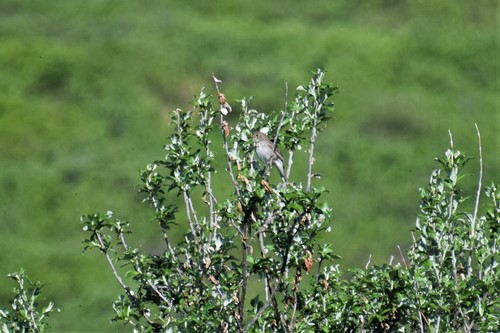 Grey-cheeked Thrush
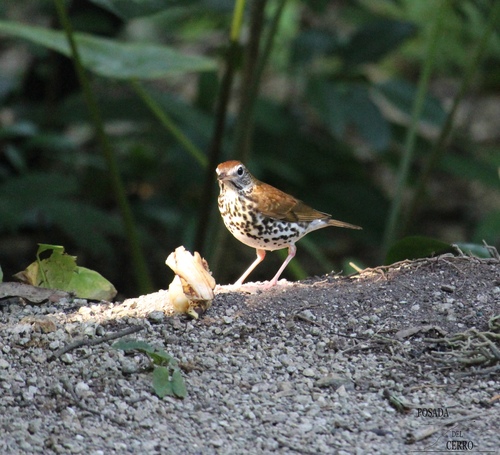 Wood Thrush
In short
The most reliable field mark for separating Grey-cheeked Thrush from Wood Thrush is the bold, large dark spots on the Wood Thrush’s white underparts, compared to the Grey-cheeked Thrush’s much finer, less contrasting spotting and generally drabber appearance. Wood Thrush is distinctly larger and more robust, with a warm cinnamon-brown crown and nape, while Grey-cheeked Thrush is smaller, slimmer, and has a plainer grayish face and upperparts. In flight, both show the typical Catharus white-dark-white underwing pattern, but Wood Thrush’s size and richer coloration are evident even then. Juvenile Wood Thrushes have additional spots on the back and wing coverts, which never appear on Grey-cheeked Thrush. Voice is also a strong separator: Wood Thrush’s song is famously melodic, while Grey-cheeked’s is a more burry, flute-like series.
Identification tips
- Juvenile spotting: Juvenile Wood Thrushes have extra dark spots on the back, neck, and wing coverts—never present on Grey-cheeked Thrush. If you see dorsal spotting, it’s Wood Thrush.
- Underpart spotting: Wood Thrush (all ages) shows bold, large, round dark spots on a white breast, sides, and flanks. Grey-cheeked Thrush has much finer, less distinct spots, often limited to the upper breast, with dusky (not white) flanks.
- Facial pattern: Grey-cheeked Thrush has a plain grayish face, partial pale eyering, and a grayish area between the eye and bill. Wood Thrush has a strong white eyering and a warmer, more contrasting face.
- Crown and nape color: Wood Thrush’s crown and nape are rich cinnamon-brown, contrasting with the back. Grey-cheeked is uniformly gray-brown above, lacking any rufous tones.
- Size and structure: Wood Thrush is distinctly larger and bulkier, with a heavier bill and longer legs. Grey-cheeked is slimmer and more delicate overall.
- Leg color: Wood Thrush has pink legs, which can be obvious in good light. Grey-cheeked’s legs are duller and less colorful.
- Underwing pattern: Both show the Catharus white-dark-white underwing in flight, so this is not useful for separating these two.
- Flank color: Grey-cheeked Thrush has extensively dusky flanks, blending with the breast. Wood Thrush’s flanks are white with bold spots.
- Perched jizz: Wood Thrush often appears upright and robust, sometimes cocking its tail. Grey-cheeked is more horizontal and tends to skulk low in dense cover.
- Song: If singing, Wood Thrush’s song is rich, melodic, and flute-like; Grey-cheeked’s is burry, descending, and less musical. Voice is diagnostic if heard well.
- Habitat context: In mature, moist deciduous forest in the eastern US, Wood Thrush is likely. In dense, shrubby boreal or subarctic thickets, especially far north, Grey-cheeked is much more likely.
- Migration timing: Wood Thrush arrives earlier in spring in the US and is present farther south in summer. Grey-cheeked is a later migrant and breeds much farther north.
- Foraging behavior: Wood Thrush is often seen hopping on the forest floor in leaf litter; Grey-cheeked is more secretive and often stays in dense understory or low shrubs.
- Vagrancy: Wood Thrush is a rare vagrant to Europe; Grey-cheeked is not mentioned as such.
- Pitfalls: Beware of confusing Wood Thrush with other Catharus thrushes (e.g., Swainson’s, Hermit), but its size and bold spotting are unique. Grey-cheeked is most easily confused with Bicknell’s Thrush, not Wood Thrush.
Size
Wood Thrush is significantly larger: 18–21.5 cm in length and 48–72 g in mass, with a wingspan of 30–40 cm. Grey-cheeked Thrush is smaller and lighter, at 15–17 cm long and 26–30 g, with a wingspan of 32–34 cm. In the field, Wood Thrush appears bulkier and more robust, especially when seen side-by-side with Catharus thrushes like Grey-cheeked. Wood Thrush’s bill and legs are also proportionally stouter and longer.
Plumage
- Juvenile/immature birds: Juvenile Wood Thrushes are distinctive, with extra spotting on the back, neck, and wing coverts—these extra dorsal spots are never present on Grey-cheeked Thrush of any age. Both species have spotted underparts, but Wood Thrush’s spots are much larger, rounder, and more sharply defined, covering the breast, sides, and flanks. Grey-cheeked Thrush has finer, less contrasting spots, often limited to the upper breast, with dusky flanks and a generally drabber, gray-brown tone overall.
- Adults: Wood Thrush has a rich cinnamon-brown crown and nape, contrasting with a duller brown back and wings. Its bold white eyering and pink legs are prominent. Grey-cheeked Thrush is plainer, with a grayish face, partial pale eyering, and a grayish area between the eye and bill. The upperparts are drab gray-brown, and the flanks are extensively dusky. Both species have white underparts, but only Wood Thrush shows the heavy, well-marked spotting. In flight, both show the Catharus white-dark-white underwing pattern, but this is not diagnostic between them.
Behaviour
Wood Thrush is typically solitary and forages mainly on the forest floor, flipping leaves to find insects, and is often seen hopping in leaf litter. It may join mixed-species flocks in winter. Grey-cheeked Thrush is secretive during breeding, often low in dense shrubs or on the ground, and is less likely to be seen in open spaces. Both species can be shy, but Wood Thrush is more likely to be heard singing from a perch, while Grey-cheeked is more skulking and less vocal outside migration or breeding.
Habitat
Wood Thrush breeds in mature deciduous and mixed forests across eastern North America, preferring areas with a closed canopy and moist, shady understory. It winters in Central America and southern Mexico. Grey-cheeked Thrush breeds much farther north, in boreal forests from Newfoundland to Alaska and into eastern Siberia, favoring dense coniferous or mixed shrub thickets, often near or above the treeline. During migration, Grey-cheeked can appear in a range of wooded habitats, but is generally less common and more northern than Wood Thrush.
Voice
Wood Thrush’s song is famously beautiful: a clear, flute-like series of phrases with rich, melodic overtones, often described as the most beautiful of North American birds. Its call notes are sharp and metallic. Grey-cheeked Thrush’s song is also flute-like but more burry and less melodic, usually descending in pitch at the end. The difference is striking to experienced listeners: Wood Thrush’s song is more musical and complex, while Grey-cheeked’s is simpler and more nasal.