
Motmot

Grey-backed Tern vs Gull-billed Tern

Onychoprion lunatus versus Gelochelidon nilotica

Play a quiz with Grey-backed Tern and Gull-billed Tern
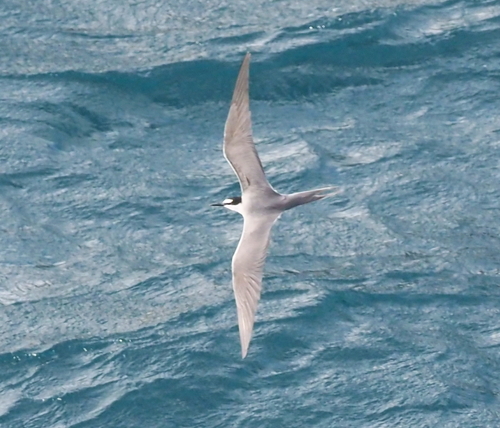
Grey-backed Tern (Onychoprion lunatus) Grey-backed Tern
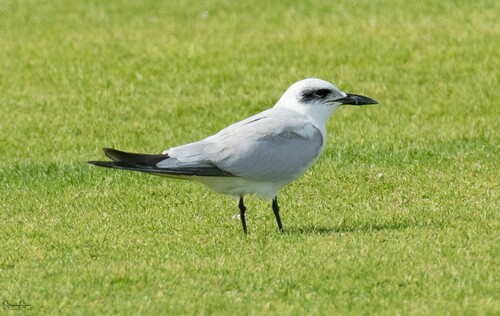
Gull-billed Tern (Gelochelidon nilotica) Gull-billed Tern

Media

Loading…

In short

The most reliable field mark between Grey-backed Tern and Gull-billed Tern is structural: Gull-billed Tern has a notably short, thick, gull-like bill and a robust, broad-winged body, while Grey-backed Tern is slimmer and more graceful, with a fine, pointed tern bill. In all plumages, Grey-backed Tern shows a distinctive dark eye-line on a white face and a pale grey back, while Gull-billed Tern has a black cap in summer but loses it in winter, developing a dark eye patch instead. Juvenile and nonbreeding birds of both species can be confusing, but the overall structure and bill shape remain key. In flight, Gull-billed Tern appears heavier and broader-winged, while Grey-backed Tern is more delicate and buoyant.

Identification tips

  1. Bill shape is the single best field mark: Gull-billed Tern has a short, thick, blunt, gull-like bill in all ages and seasons; Grey-backed Tern has a slender, pointed, typical tern bill. This is visible even at a distance and in flight.
  2. Overall structure: Gull-billed Tern is bulkier, with a robust body, broad wings, and long legs; Grey-backed Tern is slim, graceful, and long-winged, with a more delicate appearance.
  3. Facial pattern: Grey-backed Tern always shows a sharp black eye-line from bill to nape on a white face, giving a 'spectacled' look. Gull-billed Tern has a full black cap in summer, but in winter and juvenile plumage only a dark patch through the eye, never a crisp line extending to the nape.
  4. Back color: Grey-backed Tern has a distinctly grey back in all plumages, contrasting with white underparts. Gull-billed Tern's upperparts are pale grey, but lack the sharp contrast and are not as distinctly colored as Grey-backed Tern.
  5. Leg length: Gull-billed Tern has noticeably long legs, often visible when perched or walking on the ground. Grey-backed Tern has typical short tern legs and is rarely seen walking.
  6. Flight style: Gull-billed Tern flies with strong, direct wingbeats and often appears heavier and broader-winged. Grey-backed Tern is more buoyant and agile, typical of pelagic terns.
  7. Habitat: If the bird is seen inland, over fields, marshes, or freshwater, it is almost certainly Gull-billed Tern. Grey-backed Tern is strictly marine and pelagic.
  8. Voice: A loud, harsh 'ker-wik' call is diagnostic for Gull-billed Tern. Grey-backed Tern is not known for this call.
  9. Juvenile confusion: Juvenile Gull-billed Tern lacks strong upperwing patterning and looks like a pale, thick-billed tern with a faint mask; Grey-backed Tern juveniles are not described in detail but are expected to show the same grey back and eye-line as adults.
  10. Perched posture: Gull-billed Tern often stands upright with long legs visible; Grey-backed Tern is rarely seen perched except on remote islands.
  11. Cap pattern in nonbreeding: In winter, Gull-billed Tern loses its black cap, showing only a dark eye patch. Grey-backed Tern's facial pattern remains consistent year-round.
  12. Direct comparison: If both species are present, the size, bill, and structure differences are immediately obvious; Gull-billed Tern will always look larger and heavier.
  13. Mistaken identity: Grey-backed Tern is more likely to be confused with Sooty or Bridled Tern due to similar structure and marine habits; Gull-billed Tern is unique among terns for its bill and robust build.
  14. Geographical context: Grey-backed Tern is less common and strictly oceanic; Gull-billed Tern is widespread and often found in human-altered landscapes.
  15. When in doubt: Focus first on bill shape and facial pattern, then on size and habitat. These marks are reliable in all ages and seasons.

Size

Gull-billed Tern is substantially larger and heavier than Grey-backed Tern. Gull-billed Tern measures 33–42 cm in length with a wingspan of 76–91 cm and a body mass of 150–292 g [wikipedia]. Grey-backed Tern is smaller and lighter, with a more streamlined build (precise measurements not provided in the notes, but it is closely related to Sooty and Bridled Terns, both of which are smaller than Gull-billed). In the field, Gull-billed Tern’s size and bulk are immediately apparent, especially in direct comparison.

Plumage

Juvenile and nonbreeding plumages are the most challenging. Juvenile Gull-billed Terns look much like winter adults, with a faint mask rather than a full cap, and lack strong patterning on the upperwing; their main confusion risk is with other pale-faced terns with short bills. Grey-backed Tern, in all plumages, shows a pale grey back (not black as in Sooty Tern) and a sharp black eye-line running from bill to nape, giving a 'spectacled' look. Adult breeding Gull-billed Tern has a solid black cap, but in winter this recedes to a dark eye patch, which can look similar to the eye-line of Grey-backed Tern at a distance, but lacks the crispness and extent. Underparts are white in both species, but the back color is diagnostic: grey in Grey-backed Tern, pale grey (upperparts) in Gull-billed Tern, but without the sharp contrast or the black eye-line. Juvenile Grey-backed Tern is not described in detail, but the species is noted for its consistent facial pattern and back color across ages.

Behaviour

Gull-billed Tern is a powerful, robust flier, often seen hunting over fields, marshes, and even roadsides, using a more direct, gull-like flight style. It frequently lands on the ground and walks with long legs. Grey-backed Tern is more pelagic and graceful, with buoyant, agile flight typical of oceanic terns, and is rarely seen far from marine environments. It seldom lands on the ground except at nesting colonies.

Habitat

Gull-billed Tern is highly adaptable, breeding and feeding in a wide range of habitats including inland lakes, marshes, coastal bays, and even agricultural fields. In North America, it is mostly coastal but can be found inland elsewhere. Grey-backed Tern is strictly marine, nesting on remote islands and foraging far offshore; it is rarely seen away from oceanic environments. Thus, a tern seen over farmland or freshwater marsh is almost certainly not a Grey-backed Tern.

Voice

Gull-billed Tern has a distinctive 'ker-wik' call, which is loud and gull-like. No specific vocalization is described for Grey-backed Tern in the provided notes, but it is not noted for a similar call. If you hear a loud, harsh 'ker-wik,' especially from a robust tern, it supports Gull-billed Tern.

Submit a better description

Use the same sections as the comparison. Your text is published immediately.

The most reliable field mark between Grey-backed Tern and Gull-billed Tern is structural: Gull-billed Tern has a notably short, thick, gull-like bill and a robust, broad-winged body, while Grey-backed Tern is slimmer and more graceful, with a fine, pointed tern bill. In all plumages, Grey-backed Tern shows a distinctive dark eye-line on a white face and a pale grey back, while Gull-billed Tern has a black cap in summer but loses it in winter, developing a dark eye patch instead. Juvenile and nonbreeding birds of both species can be confusing, but the overall structure and bill shape remain key. In flight, Gull-billed Tern appears heavier and broader-winged, while Grey-backed Tern is more delicate and buoyant.

  1. Bill shape is the single best field mark: Gull-billed Tern has a short, thick, blunt, gull-like bill in all ages and seasons; Grey-backed Tern has a slender, pointed, typical tern bill. This is visible even at a distance and in flight.
  2. Overall structure: Gull-billed Tern is bulkier, with a robust body, broad wings, and long legs; Grey-backed Tern is slim, graceful, and long-winged, with a more delicate appearance.
  3. Facial pattern: Grey-backed Tern always shows a sharp black eye-line from bill to nape on a white face, giving a 'spectacled' look. Gull-billed Tern has a full black cap in summer, but in winter and juvenile plumage only a dark patch through the eye, never a crisp line extending to the nape.
  4. Back color: Grey-backed Tern has a distinctly grey back in all plumages, contrasting with white underparts. Gull-billed Tern's upperparts are pale grey, but lack the sharp contrast and are not as distinctly colored as Grey-backed Tern.
  5. Leg length: Gull-billed Tern has noticeably long legs, often visible when perched or walking on the ground. Grey-backed Tern has typical short tern legs and is rarely seen walking.
  6. Flight style: Gull-billed Tern flies with strong, direct wingbeats and often appears heavier and broader-winged. Grey-backed Tern is more buoyant and agile, typical of pelagic terns.
  7. Habitat: If the bird is seen inland, over fields, marshes, or freshwater, it is almost certainly Gull-billed Tern. Grey-backed Tern is strictly marine and pelagic.
  8. Voice: A loud, harsh 'ker-wik' call is diagnostic for Gull-billed Tern. Grey-backed Tern is not known for this call.
  9. Juvenile confusion: Juvenile Gull-billed Tern lacks strong upperwing patterning and looks like a pale, thick-billed tern with a faint mask; Grey-backed Tern juveniles are not described in detail but are expected to show the same grey back and eye-line as adults.
  10. Perched posture: Gull-billed Tern often stands upright with long legs visible; Grey-backed Tern is rarely seen perched except on remote islands.
  11. Cap pattern in nonbreeding: In winter, Gull-billed Tern loses its black cap, showing only a dark eye patch. Grey-backed Tern's facial pattern remains consistent year-round.
  12. Direct comparison: If both species are present, the size, bill, and structure differences are immediately obvious; Gull-billed Tern will always look larger and heavier.
  13. Mistaken identity: Grey-backed Tern is more likely to be confused with Sooty or Bridled Tern due to similar structure and marine habits; Gull-billed Tern is unique among terns for its bill and robust build.
  14. Geographical context: Grey-backed Tern is less common and strictly oceanic; Gull-billed Tern is widespread and often found in human-altered landscapes.
  15. When in doubt: Focus first on bill shape and facial pattern, then on size and habitat. These marks are reliable in all ages and seasons.

Gull-billed Tern is substantially larger and heavier than Grey-backed Tern. Gull-billed Tern measures 33–42 cm in length with a wingspan of 76–91 cm and a body mass of 150–292 g [wikipedia]. Grey-backed Tern is smaller and lighter, with a more streamlined build (precise measurements not provided in the notes, but it is closely related to Sooty and Bridled Terns, both of which are smaller than Gull-billed). In the field, Gull-billed Tern’s size and bulk are immediately apparent, especially in direct comparison.

Juvenile and nonbreeding plumages are the most challenging. Juvenile Gull-billed Terns look much like winter adults, with a faint mask rather than a full cap, and lack strong patterning on the upperwing; their main confusion risk is with other pale-faced terns with short bills. Grey-backed Tern, in all plumages, shows a pale grey back (not black as in Sooty Tern) and a sharp black eye-line running from bill to nape, giving a 'spectacled' look. Adult breeding Gull-billed Tern has a solid black cap, but in winter this recedes to a dark eye patch, which can look similar to the eye-line of Grey-backed Tern at a distance, but lacks the crispness and extent. Underparts are white in both species, but the back color is diagnostic: grey in Grey-backed Tern, pale grey (upperparts) in Gull-billed Tern, but without the sharp contrast or the black eye-line. Juvenile Grey-backed Tern is not described in detail, but the species is noted for its consistent facial pattern and back color across ages.

Gull-billed Tern is a powerful, robust flier, often seen hunting over fields, marshes, and even roadsides, using a more direct, gull-like flight style. It frequently lands on the ground and walks with long legs. Grey-backed Tern is more pelagic and graceful, with buoyant, agile flight typical of oceanic terns, and is rarely seen far from marine environments. It seldom lands on the ground except at nesting colonies.

Gull-billed Tern is highly adaptable, breeding and feeding in a wide range of habitats including inland lakes, marshes, coastal bays, and even agricultural fields. In North America, it is mostly coastal but can be found inland elsewhere. Grey-backed Tern is strictly marine, nesting on remote islands and foraging far offshore; it is rarely seen away from oceanic environments. Thus, a tern seen over farmland or freshwater marsh is almost certainly not a Grey-backed Tern.

Gull-billed Tern has a distinctive 'ker-wik' call, which is loud and gull-like. No specific vocalization is described for Grey-backed Tern in the provided notes, but it is not noted for a similar call. If you hear a loud, harsh 'ker-wik,' especially from a robust tern, it supports Gull-billed Tern.

Discard your changes?

You have unsaved edits. If you leave now, those changes will be lost.

Grey-backed Tern · Gull-billed Tern · My Tricky Birds