
Green Warbler vs Two-barred Warbler
Phylloscopus nitidus versus Phylloscopus plumbeitarsus
Play a quiz with Green Warbler and Two-barred Warbler
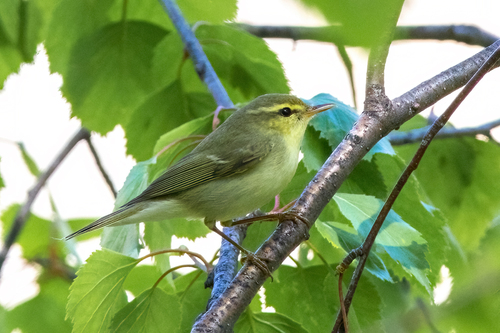 Green Warbler
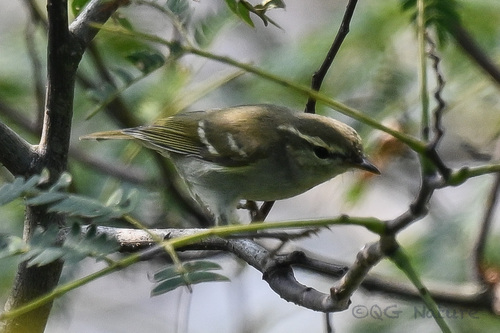 Two-barred Warbler
In short
The most reliable field mark between Green Warbler and Two-barred Warbler is the overall brightness and yellow tone of the underparts: Green Warbler is distinctly brighter and much more yellow below, especially obvious in fresh plumage and on young birds. Green Warbler also shows a strong and a faint wing bar (most prominent in juveniles), while Two-barred Warbler typically has two clear wing bars. Both are small leaf warblers, but their ranges do not overlap, and habitat can be a clue. If you see a very yellowish bird with a strong and faint wing bar, especially in the Caucasus, it's likely Green Warbler; a bird with two crisp wing bars and less yellow below in Siberia/Mongolia is Two-barred Warbler.
Identification tips
- Wing bars in juveniles and adults: Green Warbler shows one strong and one faint wing bar, with the faint bar best seen in fresh juvenile plumage or good light. Two-barred Warbler always shows two crisp, equally prominent wing bars at all ages. If both bars are obvious and sharp, favor Two-barred.
- Underpart color: Green Warbler is much more yellow below, especially on the belly and vent, at all ages and seasons. Two-barred Warbler is paler, with whitish or only faintly yellowish underparts.
- Overall brightness: Green Warbler is brighter and greener overall, especially in fresh plumage. Two-barred Warbler appears duller and less vivid.
- Geographic range: If you are in the Caucasus Mountains, Green Warbler is the likely species; in Siberia, Mongolia, or Manchuria, expect Two-barred Warbler. Vagrancy is rare for both.
- Wing bar shape and contrast: In Green Warbler, the second (faint) wing bar may be hard to see, especially in worn plumage or poor light. In Two-barred Warbler, both wing bars are usually clear and contrasting even in worn birds.
- Molting timing: Both species molt before autumn migration, so fresh plumage is possible in both adults and juveniles in late summer. Use underpart color and wing bar pattern rather than molt state.
- Perched vs. in flight: Wing bars are easiest to see on perched birds with wings closed, but can be glimpsed in flight. Look for the number and clarity of bars.
- No reliable size or structure difference: Bill, tail, and wing shape are not noted as different in the sources; do not use these features for separation.
- No sex differences: Both species show similar plumage in males and females; sex is not a useful field mark.
- No diagnostic vocal differences in sources: If you hear a song or call, do not rely on it unless you have expert knowledge or a recording for comparison.
- Habitat context: Both species favor wooded areas, but the broader landscape (Caucasus vs. Siberia/Mongolia) is a strong clue.
- Pitfall – faint second wing bar: Do not mistake a faint second bar on Green Warbler for the crisp double bar of Two-barred; check for brightness and underpart color as well.
- Pitfall – worn plumage: In late summer, worn Green Warblers may have an even fainter second bar, making them look more like Two-barred. Use underpart color and overall brightness to confirm.
- Pitfall – lighting: Poor light can make Green Warbler look less yellow and the faint wing bar less obvious. Try to view the bird in good light and from multiple angles.
- Summary tip: If you see a very yellow, bright warbler with a strong and a faint wing bar, think Green Warbler; if both bars are equally strong and the bird is paler below, think Two-barred.
Size
No size differences are noted between these two species in the available sources; both are typical small Phylloscopus warblers, and size is not a reliable field mark for separation.
Plumage
Juvenile and first-year Green Warblers show one strong and one faint wing bar, with the faint bar sometimes hard to see except in fresh plumage or good light. Their underparts are much more yellow than Two-barred Warbler at all ages, giving a brighter, greener impression. Two-barred Warbler, as the name suggests, shows two distinct wing bars in both adults and juveniles, which are usually equally prominent and crisp. The underparts of Two-barred Warbler are less yellow, tending towards whitish or pale, and the overall coloration is less vivid than Green Warbler. Both species molt before autumn migration, so adults and juveniles can look fresh in late summer, but the yellow of Green Warbler remains a key difference.
Behaviour
No behavioral differences are described in the sources that would reliably separate these two species in the field. Both are typical active leaf warblers, foraging in foliage and showing similar movements.
Habitat
Green Warbler is found in the Caucasus Mountains of southeastern Europe, while Two-barred Warbler breeds in northern Mongolia, Manchuria, and southern Siberia. If you are birding in the Caucasus, Green Warbler is the expected species; in Siberia or northern Mongolia, Two-barred Warbler is far more likely. Both species use wooded habitats, but range is the best habitat clue.