

Green Warbler vs Greenish Warbler
Phylloscopus nitidus versus Phylloscopus trochiloides
Play a quiz with Green Warbler and Greenish Warbler
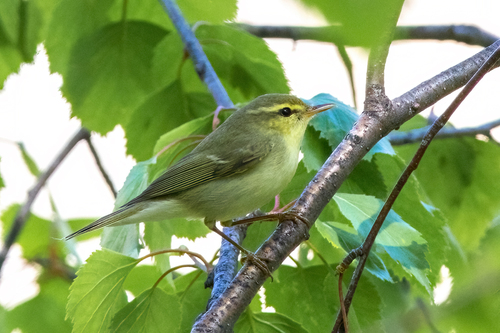 Green Warbler
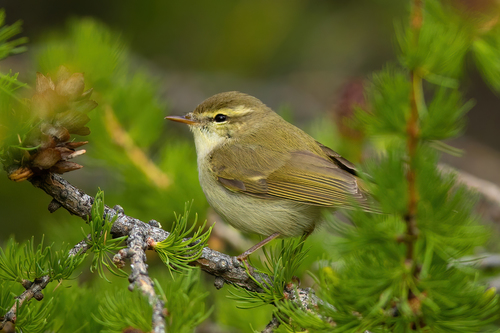 Greenish Warbler
In short
The most reliable field mark for separating Green Warbler from Greenish Warbler is the presence of two wing bars (one strong, one faint) on Green Warbler, especially obvious in young birds, versus a single wing bar (sometimes faint or absent) on most Greenish Warblers. Green Warbler is also noticeably brighter overall, with a much yellower underside, while Greenish Warbler is duller and more grayish-green above with off-white below. Structure and size are very similar, so focus on wing pattern and underpart color, especially in perched or close flight views. Habitat and range can help: Green Warbler is restricted to the Caucasus, while Greenish Warbler is widespread across Eurasia.
Identification tips
- Count the wing bars: Green Warbler shows two wing bars (one strong, one faint), especially in juveniles and immatures; Greenish Warbler usually has only one, and a second is rarely present or obvious. This is the single most reliable field mark in all ages, especially in flight or when the bird is flicking its wings.
- Check underpart color: Green Warbler is much yellower below, while Greenish Warbler is off-white or only faintly yellowish. This difference is consistent in adults and immatures.
- Assess overall brightness: Green Warbler is brighter green above and generally more vivid; Greenish Warbler is duller, grayish-green above.
- Look for yellow in the face: Green Warbler often shows a brighter, yellower face and supercilium, while Greenish Warbler's face is paler and less saturated.
- Habitat context: In the Caucasus Mountains, Green Warbler is expected; in lowland forests or across much of Eurasia, Greenish Warbler is far more likely.
- Range: Green Warbler is a local mountain breeder; Greenish Warbler is widespread and migratory, often appearing as a vagrant in Western Europe.
- Juvenile/immature birds: The double wing bar of Green Warbler is especially prominent in young birds; Greenish Warbler immatures rarely show more than one.
- Perched vs. flight views: Wing bars are easiest to see when the bird is perched and flicking its wings or in close flight views. In poor light or distant views, rely on underpart color and overall brightness.
- Ignore size and structure: Both species are very similar in size, shape, and jizz; do not rely on these features for separation.
- Voice is not helpful: No clear vocal differences are described for field separation between these two.
- Seasonal context: Both species are insectivorous and behave similarly throughout the year; plumage marks are more reliable than behavior or season.
- Avoid confusion with other Phylloscopus: These tips are specific to separating Green and Greenish Warbler; other similar species (e.g., Arctic, Two-barred) may show different wing patterns or bill shapes.
- Beware of faint wing bars: Some Greenish Warblers (especially eastern populations) may show a trace of a second wing bar, but it is rarely as strong or clear as in Green Warbler. Always compare the strength and clarity of both bars.
- Supercilium is not diagnostic: Both species have a pale supercilium; use wing bars and underpart color as your main clues.
- If in doubt, prioritize wing bars and underpart color: These two features, especially in combination, are the most reliable for separating these two species in the field.
Size
Both species are very similar in size and structure, typical of small Phylloscopus warblers. No reliable size or proportion differences are noted in the available sources. Bill shape and length are not highlighted as separating features between these two (differences with Arctic Warbler are mentioned, but not between Green and Greenish).
Plumage
- Juvenile/immature birds: Green Warbler shows two wing bars (one strong, one faint), which is most pronounced in young birds. Greenish Warbler typically shows only a single wing bar, though some eastern populations may show traces of a second, but it is rarely as clear as in Green Warbler.
- Adults: Green Warbler remains brighter green above and much more yellow below than Greenish Warbler, which is grayish-green above and off-white below. The strong yellow wash on the underparts of Green Warbler is distinctive at all ages.
- Wing pattern: The double wing bar of Green Warbler is a key mark, especially in flight or when the bird is flicking its wings. Greenish Warbler's single wing bar may be faint or missing, especially in some populations.
- Supercilium and face: Both show a pale supercilium, but Green Warbler's overall brighter and yellower face can stand out compared to the duller Greenish.
Behaviour
Both species behave as typical leaf warblers: active, restless, and often foraging in foliage. No diagnostic behavioral differences are noted in the sources provided. Both may flick wings and tails, and both are insectivorous.
Habitat
Green Warbler is a mountain specialist, found in the Caucasus Mountains of southeastern Europe. Greenish Warbler is much more widespread, breeding from northeastern Europe across temperate and subtropical Asia, and wintering in India. If seen in the Caucasus, Green Warbler is more likely; elsewhere in Eurasia, especially in lowland or mixed forests, Greenish Warbler is the default. Greenish Warbler can also appear as a vagrant in Western Europe.
Voice
No diagnostic vocal differences are described in the sources for separating these two species. Both have typical Phylloscopus songs, but the notes only detail differences with Arctic and Two-barred Warbler, not between Green and Greenish.