

Green Sandpiper vs Common Redshank
Tringa ochropus versus Tringa totanus
Play a quiz with Green Sandpiper and Common Redshank
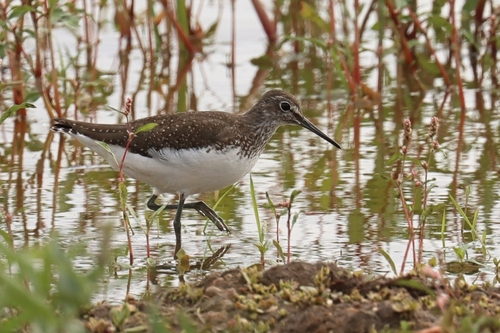 Green Sandpiper
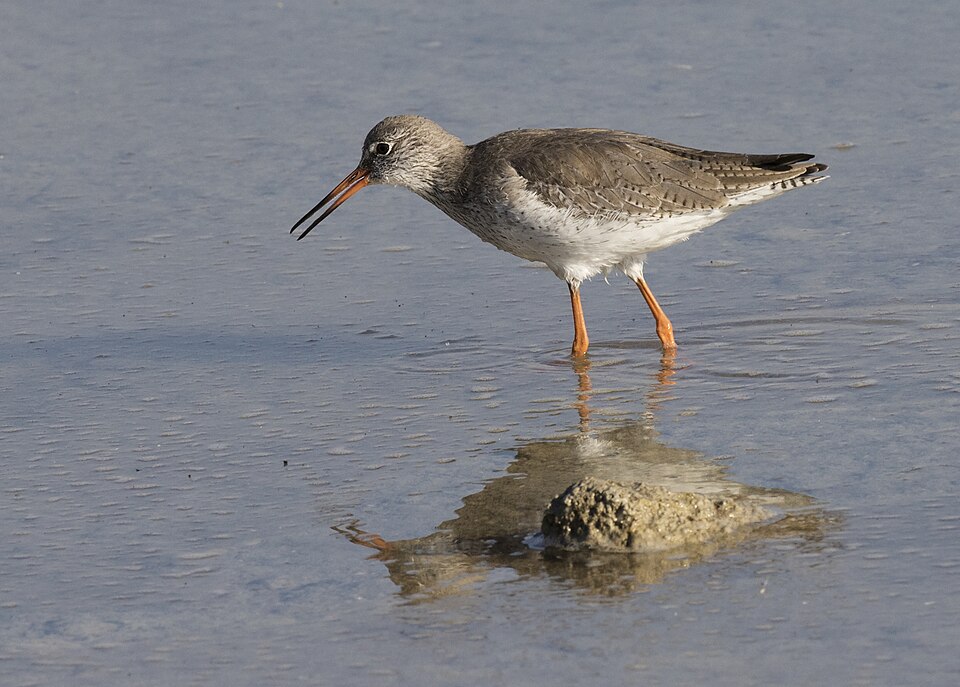 Common Redshank
In short
The most reliable field mark to separate Green Sandpiper from Common Redshank is leg color: Green Sandpiper always has dark green legs, while Common Redshank shows bright red legs and a red-based bill. In flight, Green Sandpiper flashes a brilliant white rump and dark wings above and below, whereas Common Redshank shows white up the back and on the wings but lacks the striking white rump. Green Sandpiper is smaller and more compact, with a shorter bill and darker, more contrasting upperparts. Redshank is bulkier, with a longer, red-tipped bill and paler, less patterned plumage, especially in winter. These differences hold across all ages, but are most obvious in flight or when birds are standing in open view.
Identification tips
- Leg color is the quickest check: Green Sandpiper always shows dark green legs, while Common Redshank has vivid red legs. This works in all plumages and ages.
- Bill color and shape: Green Sandpiper's bill is short and dark green, never red-based. Redshank's bill is longer, with a red base and black tip—very obvious at close range.
- Flight pattern—white rump: In any age or season, Green Sandpiper flashes a brilliant white rump and dark wings above and below in flight. Redshank lacks this; instead, it shows white up the back and on the wings, but the rump is not a solid white patch.
- Upperwing and underwing in flight: Green Sandpiper's wings are dark both above and below, making the white rump stand out. Redshank's wings show a broad white trailing edge and white up the back, but the wings themselves are paler and less contrasting.
- Body shape and size: Green Sandpiper is smaller, rounder, and more compact, with a shorter neck and bill. Redshank is larger, longer-legged, and has a more elongated look.
- Breast and back pattern: Green Sandpiper has a dark, spotted back (most in adults, less in young/winter birds) and a sharply defined breast. Redshank's back is marbled brown in breeding, plainer greyish-brown in winter, with diffuse or minimal breast spotting.
- Leg length and stance: Redshank's long, bright red legs give it a taller, more upright stance. Green Sandpiper's legs are shorter and less obvious.
- Habitat context: If the bird is in a small, wooded pool or ditch, Green Sandpiper is more likely. On open mudflats or estuaries, expect Redshank.
- Behavior when flushed: Green Sandpiper often flushes early and flies in a zigzag with rapid wingbeats, calling a three-note whistle. Redshank is more likely to call loudly and persistently, with a piercing 'teu-teu-teu' as it flies off.
- Group size: Green Sandpiper is usually alone or in pairs; Redshank often gathers in flocks, especially in migration or winter.
- Bill length and color at distance: If the bill looks long and red-based, it's Redshank. If short and all dark, it's Green Sandpiper.
- Plumage seasonality: In winter, Redshank becomes plainer and greyer above, but the leg and bill color remain diagnostic. Green Sandpiper's back spots reduce in winter, but the white rump and dark wings persist.
- Juvenile confusion: Even young Green Sandpipers show the white rump in flight and dark legs. Juvenile Redshanks have paler legs and more diffuse spotting, but never the white rump.
- Alarm calls: Redshank's call is louder, more persistent, and carries further than Green Sandpiper's softer whistle.
- When in doubt: Always try to see the bird in flight and check for the white rump (Green Sandpiper) versus white up the back and wings (Redshank), and confirm leg color if possible.
Size
Green Sandpiper is distinctly smaller and more compact, averaging 80g in body mass, compared to the Common Redshank's 129g. Redshank appears longer-legged and bulkier, with a longer bill and a generally lankier profile. When seen side by side, the size and build difference is clear, but at a distance, structure is less reliable than leg color or flight pattern.
Plumage
Juvenile and non-breeding Green Sandpipers have a dark greenish-brown back with white spots (most extensive in breeding adults, reduced in winter and young birds), a greyish head and breast, and white underparts. Their wings are always dark above and below, and in flight, they show a brilliant white rump and dark wings—this white rump is diagnostic at all ages. Common Redshank, in contrast, is marbled brown above in breeding plumage, with lighter, plainer greyish-brown upperparts and whitish below in winter. Redshank's flight reveals white up the back and on the wings, but not a solid white rump. Both species have some breast spotting, but Green Sandpiper's is more sharply defined, especially in adults. Redshank's underparts are more diffusely spotted or plain, depending on season. Leg and bill color are always diagnostic: Green Sandpiper has dark green legs and bill, Redshank has red legs and a red-based bill with a black tip.
Behaviour
Green Sandpiper is often solitary and favors small, wooded pools or muddy edges, frequently bobbing its rear end. It tends to flush early and flies with rapid, flickering wingbeats, showing its white rump. Common Redshank is more likely to be found in loose flocks, especially outside the breeding season, and prefers open wetlands, estuaries, and mudflats. Redshank is more confiding, often calling loudly when flushed, and its flight is less erratic, with more level, direct wingbeats.
Habitat
Green Sandpiper prefers wooded or bushy freshwater habitats, such as small ponds, ditches, and forest pools, often away from the open mudflats and estuaries favored by Common Redshank. Redshank is more likely in open, coastal, or large inland wetland settings, especially outside the breeding season. Overlap can occur at migration stopovers, but habitat preference is a useful clue.
Voice
Green Sandpiper gives a sharp, three-note whistle in flight, which is distinctive if heard well. Common Redshank is much more vocal, especially when alarmed, with a loud, ringing 'teu-teu-teu' or 'chew-chew-chew' call, often repeated and more piercing than Green Sandpiper's. If you hear a persistent, loud call, suspect Redshank.