

Motmot

Green Ibis vs Plumbeous Ibis

Mesembrinibis cayennensis versus Theristicus caerulescens

Play a quiz with Green Ibis and Plumbeous Ibis
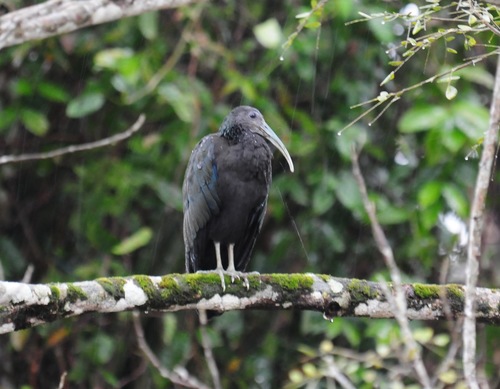
Green Ibis (Mesembrinibis cayennensis) Green Ibis
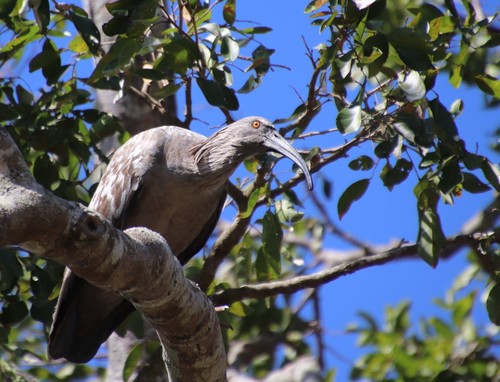
Plumbeous Ibis (Theristicus caerulescens) Plumbeous Ibis

Media

Loading…

In short

The most reliable field mark between Green Ibis and Plumbeous Ibis is overall color and structure: Green Ibis appears compact and dark glossy greenish-black, while Plumbeous Ibis is much larger, pale silvery-grey, and long-legged with a strikingly different jizz. Juvenile Green Ibis are duller but still bulkier and darker than any Plumbeous Ibis. In flight, Green Ibis looks heavy and dark with broad wings, while Plumbeous Ibis shows lighter underparts and a longer, more stretched silhouette. Bill color and leg color are also helpful at close range. Mistaking these two is most likely in poor light or with distant, perched birds, but size and color differences are usually decisive.

Identification tips

  1. Size: Plumbeous Ibis is much larger and bulkier than Green Ibis; if you see two ibises together and one is clearly bigger, it's likely Plumbeous.
  2. Overall Color: Green Ibis is glossy greenish-black (adults) or dull dark (juveniles), while Plumbeous Ibis is pale silvery-grey to bluish-grey with a lighter belly and mottled upperparts.
  3. Bill Color and Shape: Green Ibis has a pale green, long, slender, decurved bill; Plumbeous Ibis has a longer, black, downward-curved bill with serrated edges. Bill color is a strong mark at close range.
  4. Leg Color: Green Ibis shows pale green legs; Plumbeous Ibis has pinkish-orange legs, which darken in the breeding season.
  5. Bare Facial Skin: Green Ibis has grey bare facial skin patches; Plumbeous Ibis has bare skin of the lores and throat that is black or dark grey.
  6. Flight Silhouette: Green Ibis is compact with broad wings and a heavy, direct flight; Plumbeous Ibis looks longer-necked and longer-legged, with a more stretched appearance in flight.
  7. Flight Plumage: Green Ibis is uniformly dark in flight (all ages); Plumbeous Ibis shows pale underparts and a strong contrast with darker wings and tail.
  8. Perched Posture: Green Ibis often perches in trees and appears short-legged and hunched; Plumbeous Ibis stands taller and more upright, often in open wetlands.
  9. Juvenile Plumage: Juvenile Green Ibis is dull but still bulkier and darker than any Plumbeous Ibis; no age of Plumbeous Ibis is as dark overall as Green Ibis.
  10. Habitat Context: Green Ibis is more likely in forested wetlands or along wooded watercourses; Plumbeous Ibis prefers open marshes and flooded grasslands.
  11. Behavior: Green Ibis is less social, usually alone or in pairs, and stays on the edge of mixed flocks; Plumbeous Ibis may join loose flocks in winter.
  12. Vocalization: Green Ibis gives a mellow, accelerating hoot at dawn/dusk; Plumbeous Ibis screams loudly and aggressively when disturbed, especially at the nest.
  13. Iris Color: Plumbeous Ibis has a deep orange iris (sometimes brownish yellow), a subtle but potentially useful mark at close range; Green Ibis's iris color is not distinctive.
  14. Confusion in Poor Light: In dim conditions, Green Ibis may look less glossy and could be confused with other dark ibises, but remains bulkier and shorter-legged than Plumbeous.
  15. Seasonal Changes: Plumbeous Ibis's leg color darkens in breeding season, but overall plumage remains pale compared to Green Ibis year-round.

Size

Green Ibis is a medium-sized ibis, measuring 45–60 cm in length and weighing 700–890 g. Plumbeous Ibis is much larger, at 71–77 cm in length, with males having a wing length of 397–450 mm and females 360–406 mm. The bill of Plumbeous Ibis is also significantly longer (up to 167 mm in males) compared to Green Ibis. In the field, Plumbeous Ibis will appear much bulkier, taller, and longer-necked than Green Ibis, which is relatively compact and short-legged.

Plumage

Juvenile Green Ibis are duller than adults but still bulkier and darker than Plumbeous Ibis of any age; they lack the pale silvery tones and mottling of Plumbeous. Adult Green Ibis are glossy greenish-black all over, with pale green legs and bill, and grey bare facial skin. In good light, this gloss is distinctive; in poor light, they may appear simply dark. Plumbeous Ibis adults are pale grey to bluish or greenish-grey, with lighter underparts and mottled greyish-brown dorsal feathers. Their flight and tail feathers are dark brown or black with a greenish bronze gloss, but the overall impression is much paler than Green Ibis. The head of Plumbeous Ibis is dark brown with a greenish tinge, and the throat and neck can show light brown or pinkish hues. In flight, Green Ibis is uniformly dark, while Plumbeous Ibis shows a strong contrast between pale body and darker wings and tail.

Behaviour

Green Ibis is less gregarious, often seen alone or in pairs, and regularly perches in trees. Its flight is heavy and direct, with neck outstretched and jerkier wingbeats, and it glides less than other ibises. Plumbeous Ibis also often forages alone or in pairs but may join loose flocks in winter. It forages by walking slowly through shallow water, probing rapidly with its bill, and is aggressive in nest defense. Both species may be seen in mixed-species flocks, but Green Ibis tends to stay on the fringes.

Habitat

Green Ibis prefers forested wetlands, swamps, and river or lake edges, often perching in trees and found up to 500 m elevation from Costa Rica south to northern Argentina. Plumbeous Ibis is endemic to central South America and is typically found in open wetlands, marshes, and flooded grasslands. While both may be seen in wetland habitats, Green Ibis is more associated with forested or wooded areas, whereas Plumbeous Ibis favors open country.

Voice

Green Ibis gives a hollow, hooting, accelerating call, transcribed as 'kro kro' or 'koro koro,' described as mellow and most often heard at dawn and dusk. Plumbeous Ibis is highly vocal when disturbed, screaming loudly and jabbing its bill, especially near the nest. The vocalizations are quite different in tone and context, with Green Ibis being more subdued and Plumbeous Ibis more aggressive and raucous.

Submit a better description

Use the same sections as the comparison. Your text is published immediately.

The most reliable field mark between Green Ibis and Plumbeous Ibis is overall color and structure: Green Ibis appears compact and dark glossy greenish-black, while Plumbeous Ibis is much larger, pale silvery-grey, and long-legged with a strikingly different jizz. Juvenile Green Ibis are duller but still bulkier and darker than any Plumbeous Ibis. In flight, Green Ibis looks heavy and dark with broad wings, while Plumbeous Ibis shows lighter underparts and a longer, more stretched silhouette. Bill color and leg color are also helpful at close range. Mistaking these two is most likely in poor light or with distant, perched birds, but size and color differences are usually decisive.

  1. Size: Plumbeous Ibis is much larger and bulkier than Green Ibis; if you see two ibises together and one is clearly bigger, it's likely Plumbeous.
  2. Overall Color: Green Ibis is glossy greenish-black (adults) or dull dark (juveniles), while Plumbeous Ibis is pale silvery-grey to bluish-grey with a lighter belly and mottled upperparts.
  3. Bill Color and Shape: Green Ibis has a pale green, long, slender, decurved bill; Plumbeous Ibis has a longer, black, downward-curved bill with serrated edges. Bill color is a strong mark at close range.
  4. Leg Color: Green Ibis shows pale green legs; Plumbeous Ibis has pinkish-orange legs, which darken in the breeding season.
  5. Bare Facial Skin: Green Ibis has grey bare facial skin patches; Plumbeous Ibis has bare skin of the lores and throat that is black or dark grey.
  6. Flight Silhouette: Green Ibis is compact with broad wings and a heavy, direct flight; Plumbeous Ibis looks longer-necked and longer-legged, with a more stretched appearance in flight.
  7. Flight Plumage: Green Ibis is uniformly dark in flight (all ages); Plumbeous Ibis shows pale underparts and a strong contrast with darker wings and tail.
  8. Perched Posture: Green Ibis often perches in trees and appears short-legged and hunched; Plumbeous Ibis stands taller and more upright, often in open wetlands.
  9. Juvenile Plumage: Juvenile Green Ibis is dull but still bulkier and darker than any Plumbeous Ibis; no age of Plumbeous Ibis is as dark overall as Green Ibis.
  10. Habitat Context: Green Ibis is more likely in forested wetlands or along wooded watercourses; Plumbeous Ibis prefers open marshes and flooded grasslands.
  11. Behavior: Green Ibis is less social, usually alone or in pairs, and stays on the edge of mixed flocks; Plumbeous Ibis may join loose flocks in winter.
  12. Vocalization: Green Ibis gives a mellow, accelerating hoot at dawn/dusk; Plumbeous Ibis screams loudly and aggressively when disturbed, especially at the nest.
  13. Iris Color: Plumbeous Ibis has a deep orange iris (sometimes brownish yellow), a subtle but potentially useful mark at close range; Green Ibis's iris color is not distinctive.
  14. Confusion in Poor Light: In dim conditions, Green Ibis may look less glossy and could be confused with other dark ibises, but remains bulkier and shorter-legged than Plumbeous.
  15. Seasonal Changes: Plumbeous Ibis's leg color darkens in breeding season, but overall plumage remains pale compared to Green Ibis year-round.

Green Ibis is a medium-sized ibis, measuring 45–60 cm in length and weighing 700–890 g. Plumbeous Ibis is much larger, at 71–77 cm in length, with males having a wing length of 397–450 mm and females 360–406 mm. The bill of Plumbeous Ibis is also significantly longer (up to 167 mm in males) compared to Green Ibis. In the field, Plumbeous Ibis will appear much bulkier, taller, and longer-necked than Green Ibis, which is relatively compact and short-legged.

Juvenile Green Ibis are duller than adults but still bulkier and darker than Plumbeous Ibis of any age; they lack the pale silvery tones and mottling of Plumbeous. Adult Green Ibis are glossy greenish-black all over, with pale green legs and bill, and grey bare facial skin. In good light, this gloss is distinctive; in poor light, they may appear simply dark. Plumbeous Ibis adults are pale grey to bluish or greenish-grey, with lighter underparts and mottled greyish-brown dorsal feathers. Their flight and tail feathers are dark brown or black with a greenish bronze gloss, but the overall impression is much paler than Green Ibis. The head of Plumbeous Ibis is dark brown with a greenish tinge, and the throat and neck can show light brown or pinkish hues. In flight, Green Ibis is uniformly dark, while Plumbeous Ibis shows a strong contrast between pale body and darker wings and tail.

Green Ibis is less gregarious, often seen alone or in pairs, and regularly perches in trees. Its flight is heavy and direct, with neck outstretched and jerkier wingbeats, and it glides less than other ibises. Plumbeous Ibis also often forages alone or in pairs but may join loose flocks in winter. It forages by walking slowly through shallow water, probing rapidly with its bill, and is aggressive in nest defense. Both species may be seen in mixed-species flocks, but Green Ibis tends to stay on the fringes.

Green Ibis prefers forested wetlands, swamps, and river or lake edges, often perching in trees and found up to 500 m elevation from Costa Rica south to northern Argentina. Plumbeous Ibis is endemic to central South America and is typically found in open wetlands, marshes, and flooded grasslands. While both may be seen in wetland habitats, Green Ibis is more associated with forested or wooded areas, whereas Plumbeous Ibis favors open country.

Green Ibis gives a hollow, hooting, accelerating call, transcribed as 'kro kro' or 'koro koro,' described as mellow and most often heard at dawn and dusk. Plumbeous Ibis is highly vocal when disturbed, screaming loudly and jabbing its bill, especially near the nest. The vocalizations are quite different in tone and context, with Green Ibis being more subdued and Plumbeous Ibis more aggressive and raucous.

Discard your changes?

You have unsaved edits. If you leave now, those changes will be lost.

Green Ibis · Plumbeous Ibis · My Tricky Birds