

Motmot

Greater Scaup vs Common Goldeneye

Aythya marila versus Bucephala clangula

Play a quiz with Greater Scaup and Common Goldeneye
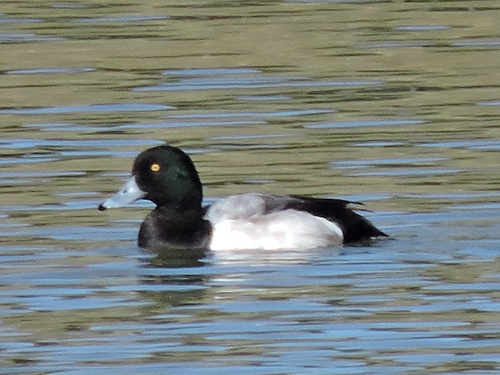
Greater Scaup (Aythya marila) Greater Scaup

Common Goldeneye (Bucephala clangula) Common Goldeneye

Media

Loading…

In short

The most reliable field mark between Greater Scaup and Common Goldeneye is the upperwing pattern in flight: Greater Scaup of all ages show a strong white wing stripe that extends from the secondaries well out onto the primaries, while Common Goldeneye show a white patch on the inner wing but dark outer primaries. At rest, Greater Scaup have a rounded head and blue bill, while Common Goldeneye males have a distinctive round white patch at the base of a dark, steep forehead. Females of both species are brown-headed, but goldeneye females have orange-yellow legs and a more compact, bull-headed look. In mixed flocks or distant views, focus first on the wing stripe in flight, then head shape and bill color when perched.

Identification tips

  1. Wing stripe in flight: Greater Scaup of all ages show a white stripe that runs from the secondaries out through the primaries to the wingtip; in Common Goldeneye, the white is restricted to the inner wing and the primaries are dark. This is the single most reliable mark in flight for both adults and immatures.
  2. Head shape: Greater Scaup have a smoothly rounded head profile, especially noticeable in males, while Common Goldeneye have a steep forehead and a more 'bull-headed' look. This is best seen in profile views.
  3. Bill color and shape: Greater Scaup have a light blue bill with a small black nail at the tip; Common Goldeneye have a dark bill, and the North American subspecies has a thicker, longer bill. Bill color is especially useful at close range.
  4. Male plumage (resting): Male Greater Scaup have a dark head with greenish or purplish sheen (depending on light), black breast, white flanks and belly, and pale grey back. Male Common Goldeneye have a dark green-glossed head with a distinctive round white patch below the eye, white neck and belly, and dark back.
  5. Female plumage: Female Greater Scaup are brown with a white patch at the base of the bill; female Common Goldeneye have a brown head, mostly grey body, and orange-yellow legs and feet. The goldeneye's bill is dark, lacking the scaup's pale base patch.
  6. Juvenile/immature birds: Juvenile Greater Scaup resemble adult females but are duller; juvenile Common Goldeneye are similar to females but lack a bill patch and have a more compact, bull-headed appearance. In flight, the wing pattern remains diagnostic for both.
  7. Leg color: Common Goldeneye (especially females) have orange-yellow legs and feet, which can be visible when birds are preening or in flight; Greater Scaup have grey legs and feet.
  8. Group size and behavior: Greater Scaup often form massive, tight rafts on open water; Common Goldeneye are more often found in small groups or pairs and are more active divers.
  9. Habitat context: Large, dense flocks on open saltwater bays favor Greater Scaup; smaller groups on rivers or forested lakes are more likely to be Common Goldeneye, but both can overlap on large lakes.
  10. Head gloss color: In good light, Greater Scaup males show a green or purple sheen to the head, while Common Goldeneye males have a greenish gloss; this is subtle and not always visible.
  11. Bill nail: The black nail at the tip of the bill is slightly larger and more obvious in Greater Scaup, but this is a minor mark and best used in combination with others.
  12. Posture on water: Common Goldeneye often appear more upright and compact, while Greater Scaup sit lower and look broader.
  13. Face pattern: Only male Common Goldeneye have a round white patch below the eye; Greater Scaup never show this mark.
  14. White on wing at rest: Both species show white in the wing when at rest, but in scaup the white is more extensive and brighter, especially in males.
  15. Mistaken identity pitfalls: Female and juvenile Greater Scaup can be confused with female Common Goldeneye at a distance; always check for the white bill patch (scaup) versus the plain dark bill and orange-yellow legs (goldeneye), and use wing pattern in flight whenever possible.

Size

Both species are medium-sized diving ducks, but Common Goldeneye averages slightly heavier (about 900 g) than most Greater Scaup, though there is overlap. Greater Scaup males are typically 39–56 cm long with a 71–84 cm wingspan, while Common Goldeneye males are 45–51 cm long with a 77–83 cm wingspan. In the field, size alone is not a reliable separator due to overlap and variation by sex and age.

Plumage

The most diagnostic difference is in the wing pattern during flight, especially for immature and adult birds of both sexes. Greater Scaup show a broad, bright white wing stripe that runs from the secondaries through the primaries to the wingtip, visible on both males and females, adults and juveniles. Common Goldeneye, by contrast, have a white patch on the inner wing (secondaries) but the primaries are dark, so the white does not extend to the wingtip. On the water, adult male Greater Scaup have a dark head with a green to purple sheen, black breast, white flanks and belly, and a pale grey back; females are brown with a white patch at the base of the bill. Male Common Goldeneye have a dark green-glossed head with a round white patch below the eye, white neck and belly, and dark back; females have a brown head, greyish body, and orange-yellow legs. Juvenile Greater Scaup resemble adult females but with duller markings, while juvenile goldeneye are similar to females but lack the scaup's bill patch.

Behaviour

Both are diving ducks, often seen feeding by diving underwater for aquatic prey. Greater Scaup often form large, dense rafts on open water, sometimes numbering in the thousands, while Common Goldeneye are more likely to be seen in smaller groups or pairs. Goldeneye tend to be more active and alert, often diving frequently and showing a more upright, compact posture when swimming. Scaup usually appear more relaxed and lower in the water.

Habitat

Both species winter on large lakes, rivers, and coastal waters, but Greater Scaup are more likely to be found in very large flocks on open, often saltwater, bays and estuaries. Common Goldeneye are more frequently seen on smaller lakes, rivers, and sheltered coastal areas, and are less likely to form massive rafts. During breeding season, Greater Scaup nest in tundra and boreal wetlands, while Common Goldeneye prefer forested lakes and rivers.

Submit a better description

Use the same sections as the comparison. Your text is published immediately.

The most reliable field mark between Greater Scaup and Common Goldeneye is the upperwing pattern in flight: Greater Scaup of all ages show a strong white wing stripe that extends from the secondaries well out onto the primaries, while Common Goldeneye show a white patch on the inner wing but dark outer primaries. At rest, Greater Scaup have a rounded head and blue bill, while Common Goldeneye males have a distinctive round white patch at the base of a dark, steep forehead. Females of both species are brown-headed, but goldeneye females have orange-yellow legs and a more compact, bull-headed look. In mixed flocks or distant views, focus first on the wing stripe in flight, then head shape and bill color when perched.

  1. Wing stripe in flight: Greater Scaup of all ages show a white stripe that runs from the secondaries out through the primaries to the wingtip; in Common Goldeneye, the white is restricted to the inner wing and the primaries are dark. This is the single most reliable mark in flight for both adults and immatures.
  2. Head shape: Greater Scaup have a smoothly rounded head profile, especially noticeable in males, while Common Goldeneye have a steep forehead and a more 'bull-headed' look. This is best seen in profile views.
  3. Bill color and shape: Greater Scaup have a light blue bill with a small black nail at the tip; Common Goldeneye have a dark bill, and the North American subspecies has a thicker, longer bill. Bill color is especially useful at close range.
  4. Male plumage (resting): Male Greater Scaup have a dark head with greenish or purplish sheen (depending on light), black breast, white flanks and belly, and pale grey back. Male Common Goldeneye have a dark green-glossed head with a distinctive round white patch below the eye, white neck and belly, and dark back.
  5. Female plumage: Female Greater Scaup are brown with a white patch at the base of the bill; female Common Goldeneye have a brown head, mostly grey body, and orange-yellow legs and feet. The goldeneye's bill is dark, lacking the scaup's pale base patch.
  6. Juvenile/immature birds: Juvenile Greater Scaup resemble adult females but are duller; juvenile Common Goldeneye are similar to females but lack a bill patch and have a more compact, bull-headed appearance. In flight, the wing pattern remains diagnostic for both.
  7. Leg color: Common Goldeneye (especially females) have orange-yellow legs and feet, which can be visible when birds are preening or in flight; Greater Scaup have grey legs and feet.
  8. Group size and behavior: Greater Scaup often form massive, tight rafts on open water; Common Goldeneye are more often found in small groups or pairs and are more active divers.
  9. Habitat context: Large, dense flocks on open saltwater bays favor Greater Scaup; smaller groups on rivers or forested lakes are more likely to be Common Goldeneye, but both can overlap on large lakes.
  10. Head gloss color: In good light, Greater Scaup males show a green or purple sheen to the head, while Common Goldeneye males have a greenish gloss; this is subtle and not always visible.
  11. Bill nail: The black nail at the tip of the bill is slightly larger and more obvious in Greater Scaup, but this is a minor mark and best used in combination with others.
  12. Posture on water: Common Goldeneye often appear more upright and compact, while Greater Scaup sit lower and look broader.
  13. Face pattern: Only male Common Goldeneye have a round white patch below the eye; Greater Scaup never show this mark.
  14. White on wing at rest: Both species show white in the wing when at rest, but in scaup the white is more extensive and brighter, especially in males.
  15. Mistaken identity pitfalls: Female and juvenile Greater Scaup can be confused with female Common Goldeneye at a distance; always check for the white bill patch (scaup) versus the plain dark bill and orange-yellow legs (goldeneye), and use wing pattern in flight whenever possible.

Both species are medium-sized diving ducks, but Common Goldeneye averages slightly heavier (about 900 g) than most Greater Scaup, though there is overlap. Greater Scaup males are typically 39–56 cm long with a 71–84 cm wingspan, while Common Goldeneye males are 45–51 cm long with a 77–83 cm wingspan. In the field, size alone is not a reliable separator due to overlap and variation by sex and age.

The most diagnostic difference is in the wing pattern during flight, especially for immature and adult birds of both sexes. Greater Scaup show a broad, bright white wing stripe that runs from the secondaries through the primaries to the wingtip, visible on both males and females, adults and juveniles. Common Goldeneye, by contrast, have a white patch on the inner wing (secondaries) but the primaries are dark, so the white does not extend to the wingtip. On the water, adult male Greater Scaup have a dark head with a green to purple sheen, black breast, white flanks and belly, and a pale grey back; females are brown with a white patch at the base of the bill. Male Common Goldeneye have a dark green-glossed head with a round white patch below the eye, white neck and belly, and dark back; females have a brown head, greyish body, and orange-yellow legs. Juvenile Greater Scaup resemble adult females but with duller markings, while juvenile goldeneye are similar to females but lack the scaup's bill patch.

Both are diving ducks, often seen feeding by diving underwater for aquatic prey. Greater Scaup often form large, dense rafts on open water, sometimes numbering in the thousands, while Common Goldeneye are more likely to be seen in smaller groups or pairs. Goldeneye tend to be more active and alert, often diving frequently and showing a more upright, compact posture when swimming. Scaup usually appear more relaxed and lower in the water.

Both species winter on large lakes, rivers, and coastal waters, but Greater Scaup are more likely to be found in very large flocks on open, often saltwater, bays and estuaries. Common Goldeneye are more frequently seen on smaller lakes, rivers, and sheltered coastal areas, and are less likely to form massive rafts. During breeding season, Greater Scaup nest in tundra and boreal wetlands, while Common Goldeneye prefer forested lakes and rivers.

Discard your changes?

You have unsaved edits. If you leave now, those changes will be lost.

Greater Scaup · Common Goldeneye · My Tricky Birds