

Motmot

Greater Flamingo vs Little Grebe

Phoenicopterus roseus versus Tachybaptus ruficollis

Play a quiz with Greater Flamingo and Little Grebe
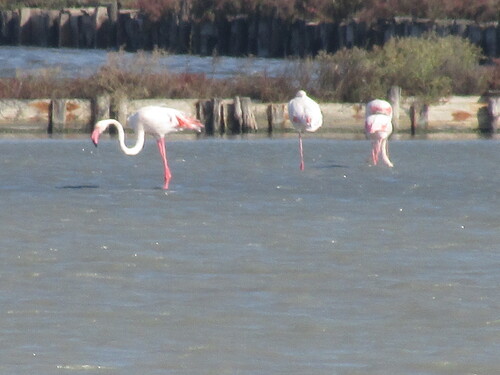
Greater Flamingo (Phoenicopterus roseus) Greater Flamingo
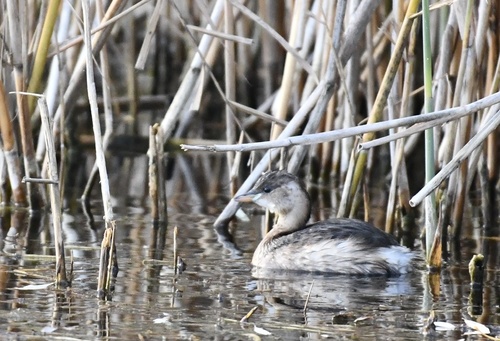
Little Grebe (Tachybaptus ruficollis) Little Grebe

Media

Loading…

In short

The most reliable field mark is overall structure and size: Greater Flamingo is an exceptionally large, long-legged, long-necked bird, while Little Grebe is a tiny, compact waterbird with a short neck and tail. In flight or on water, Greater Flamingo shows striking pinkish-white plumage with red and black in the wings, and long pink legs trailing far behind. Little Grebe, even as a juvenile, is much darker, with a short, pointed bill and no pink tones. Juvenile Little Grebes show black-and-white facial streaks and a yellowish bill, while young Greater Flamingos are pale with dark legs. The two species differ so dramatically in shape, size, and coloration that confusion is rare except in very poor viewing conditions or with distant silhouettes.

Identification tips

  1. Size and structure: Greater Flamingo is over ten times the length of Little Grebe; if you see a bird with a long neck and legs, it's a flamingo. Little Grebe is tiny, round-bodied, with a short neck and tail.
  2. Legs: Flamingo's long, pink legs are visible both when standing and in flight, trailing well beyond the tail. Little Grebe's legs are short and never visible beyond the tail in the field.
  3. Neck: Flamingos have extremely long, S-shaped necks, often held upright or outstretched. Grebes have short, straight necks, giving a compact appearance.
  4. Bill shape and color: Flamingo's bill is large, downcurved, mostly pink with a black tip (adults), or duller in juveniles. Little Grebe's bill is short, pointed, and yellowish with a black tip in juveniles, turning black in adults.
  5. Juvenile facial pattern: Juvenile Little Grebes have black-and-white streaks on the cheeks and neck, never seen in flamingos. Juvenile flamingos are plain-faced.
  6. Adult plumage: Adult flamingos are pinkish-white with red wing coverts and black primaries/secondaries. Adult Little Grebes in breeding plumage have a rich rufous neck and cheeks, dark upperparts, and a yellow gape; in winter, they are dull brownish-grey but still much darker than flamingos.
  7. Wing pattern in flight: Flamingos show bold black and red in the wings, especially obvious in flight. Little Grebes have plain, short wings with no bold pattern.
  8. Tail and rear: Little Grebe has a distinctive 'powder puff' rear end, often fluffed up. Flamingo's tail is short and not prominent.
  9. Posture and movement: Flamingos walk and stand upright, often on one leg, and feed by sweeping their bills in water. Grebes swim low, dive frequently, and rarely walk.
  10. Flocking: Flamingos are gregarious, often in large, conspicuous flocks. Little Grebes are usually solitary or in small groups.
  11. Habitat: If the waterbody is a large, open, saline lagoon or mudflat, flamingo is likely. Small, reedy freshwater ponds are Little Grebe territory.
  12. Voice: Honking calls indicate flamingo; trilled, whinnying calls point to Little Grebe.
  13. Flight silhouette: Flamingos fly with neck and legs fully outstretched, forming a long, straight profile. Grebes have a short, stubby profile and rarely fly except when flushed.
  14. Leg color: Adult flamingos have entirely pink legs; subadults may have darker legs. Grebes' legs are not visible in normal views.
  15. Bill color in young: Juvenile flamingos have a mostly pale bill with a black tip; juvenile grebes have a yellowish bill with a black tip.

Size

Greater Flamingo is enormous: body length averages around 1325 mm (132.5 cm), making it one of the tallest wading birds [wikidata]. Little Grebe is much smaller, with a compact, rounded body and short neck (exact length not given, but it is among the smallest grebes). The sheer difference in size is diagnostic at any range where both can be seen together or compared to familiar waterbirds. Flamingo's legs and neck are extremely elongated, while Little Grebe is squat and low-slung.

Plumage

Juvenile and immature plumages are key for separation if adults are not present. Young Greater Flamingos are pale greyish or pinkish-white overall, with dark legs and a mostly pink bill tipped with black; their wings already show black primaries and secondaries with red coverts, especially in flight. By contrast, juvenile Little Grebes have a yellow bill with a small black tip, and distinctive black-and-white streaks on the cheeks and neck. Adult Little Grebes in breeding plumage are dark above with rich rufous neck, cheeks, and flanks, and a bright yellow gape; in non-breeding and juvenile birds, the rufous is replaced by dirty brownish-grey, but the bird remains much darker than any flamingo. Flamingos never show the facial streaks or yellow bill of young grebes, nor the compact, powder-puff rear end. In flight, flamingos show extensive black in the wings and bright pink legs trailing behind, while Little Grebes have short wings and lack any bold wing pattern.

Behaviour

Greater Flamingos are usually seen wading in shallow water, often in large, noisy flocks, feeding with their heads down and sweeping their bills side to side. They stand and walk upright, often on one leg, and fly with neck and legs fully outstretched. Little Grebes are solitary or in small groups, rarely forming large flocks. They spend most of their time swimming low in the water, often diving or skulking among vegetation. Their flight is weak and low, and they rarely walk on land. The contrast in posture, feeding style, and flocking behavior is stark.

Habitat

Greater Flamingos inhabit large, open mudflats and shallow coastal lagoons with saline or brackish water, often in exposed, open areas [wikipedia]. Little Grebes prefer smaller, more vegetated freshwater ponds, lakes, and slow rivers, often with dense marginal vegetation. While both are aquatic, flamingos are associated with open, sometimes coastal habitats, and grebes with enclosed, reedy freshwater bodies.

Voice

Greater Flamingo gives a loud, goose-like honking, especially in flight or during displays. Little Grebe's call is a trilled, repeated 'weet-weet-weet' or 'wee-wee-wee', reminiscent of a horse whinnying. The calls are completely different and diagnostic if heard well.

Submit a better description

Use the same sections as the comparison. Your text is published immediately.

The most reliable field mark is overall structure and size: Greater Flamingo is an exceptionally large, long-legged, long-necked bird, while Little Grebe is a tiny, compact waterbird with a short neck and tail. In flight or on water, Greater Flamingo shows striking pinkish-white plumage with red and black in the wings, and long pink legs trailing far behind. Little Grebe, even as a juvenile, is much darker, with a short, pointed bill and no pink tones. Juvenile Little Grebes show black-and-white facial streaks and a yellowish bill, while young Greater Flamingos are pale with dark legs. The two species differ so dramatically in shape, size, and coloration that confusion is rare except in very poor viewing conditions or with distant silhouettes.

  1. Size and structure: Greater Flamingo is over ten times the length of Little Grebe; if you see a bird with a long neck and legs, it's a flamingo. Little Grebe is tiny, round-bodied, with a short neck and tail.
  2. Legs: Flamingo's long, pink legs are visible both when standing and in flight, trailing well beyond the tail. Little Grebe's legs are short and never visible beyond the tail in the field.
  3. Neck: Flamingos have extremely long, S-shaped necks, often held upright or outstretched. Grebes have short, straight necks, giving a compact appearance.
  4. Bill shape and color: Flamingo's bill is large, downcurved, mostly pink with a black tip (adults), or duller in juveniles. Little Grebe's bill is short, pointed, and yellowish with a black tip in juveniles, turning black in adults.
  5. Juvenile facial pattern: Juvenile Little Grebes have black-and-white streaks on the cheeks and neck, never seen in flamingos. Juvenile flamingos are plain-faced.
  6. Adult plumage: Adult flamingos are pinkish-white with red wing coverts and black primaries/secondaries. Adult Little Grebes in breeding plumage have a rich rufous neck and cheeks, dark upperparts, and a yellow gape; in winter, they are dull brownish-grey but still much darker than flamingos.
  7. Wing pattern in flight: Flamingos show bold black and red in the wings, especially obvious in flight. Little Grebes have plain, short wings with no bold pattern.
  8. Tail and rear: Little Grebe has a distinctive 'powder puff' rear end, often fluffed up. Flamingo's tail is short and not prominent.
  9. Posture and movement: Flamingos walk and stand upright, often on one leg, and feed by sweeping their bills in water. Grebes swim low, dive frequently, and rarely walk.
  10. Flocking: Flamingos are gregarious, often in large, conspicuous flocks. Little Grebes are usually solitary or in small groups.
  11. Habitat: If the waterbody is a large, open, saline lagoon or mudflat, flamingo is likely. Small, reedy freshwater ponds are Little Grebe territory.
  12. Voice: Honking calls indicate flamingo; trilled, whinnying calls point to Little Grebe.
  13. Flight silhouette: Flamingos fly with neck and legs fully outstretched, forming a long, straight profile. Grebes have a short, stubby profile and rarely fly except when flushed.
  14. Leg color: Adult flamingos have entirely pink legs; subadults may have darker legs. Grebes' legs are not visible in normal views.
  15. Bill color in young: Juvenile flamingos have a mostly pale bill with a black tip; juvenile grebes have a yellowish bill with a black tip.

Greater Flamingo is enormous: body length averages around 1325 mm (132.5 cm), making it one of the tallest wading birds [wikidata]. Little Grebe is much smaller, with a compact, rounded body and short neck (exact length not given, but it is among the smallest grebes). The sheer difference in size is diagnostic at any range where both can be seen together or compared to familiar waterbirds. Flamingo's legs and neck are extremely elongated, while Little Grebe is squat and low-slung.

Juvenile and immature plumages are key for separation if adults are not present. Young Greater Flamingos are pale greyish or pinkish-white overall, with dark legs and a mostly pink bill tipped with black; their wings already show black primaries and secondaries with red coverts, especially in flight. By contrast, juvenile Little Grebes have a yellow bill with a small black tip, and distinctive black-and-white streaks on the cheeks and neck. Adult Little Grebes in breeding plumage are dark above with rich rufous neck, cheeks, and flanks, and a bright yellow gape; in non-breeding and juvenile birds, the rufous is replaced by dirty brownish-grey, but the bird remains much darker than any flamingo. Flamingos never show the facial streaks or yellow bill of young grebes, nor the compact, powder-puff rear end. In flight, flamingos show extensive black in the wings and bright pink legs trailing behind, while Little Grebes have short wings and lack any bold wing pattern.

Greater Flamingos are usually seen wading in shallow water, often in large, noisy flocks, feeding with their heads down and sweeping their bills side to side. They stand and walk upright, often on one leg, and fly with neck and legs fully outstretched. Little Grebes are solitary or in small groups, rarely forming large flocks. They spend most of their time swimming low in the water, often diving or skulking among vegetation. Their flight is weak and low, and they rarely walk on land. The contrast in posture, feeding style, and flocking behavior is stark.

Greater Flamingos inhabit large, open mudflats and shallow coastal lagoons with saline or brackish water, often in exposed, open areas [wikipedia]. Little Grebes prefer smaller, more vegetated freshwater ponds, lakes, and slow rivers, often with dense marginal vegetation. While both are aquatic, flamingos are associated with open, sometimes coastal habitats, and grebes with enclosed, reedy freshwater bodies.

Greater Flamingo gives a loud, goose-like honking, especially in flight or during displays. Little Grebe's call is a trilled, repeated 'weet-weet-weet' or 'wee-wee-wee', reminiscent of a horse whinnying. The calls are completely different and diagnostic if heard well.

Discard your changes?

You have unsaved edits. If you leave now, those changes will be lost.

Greater Flamingo · Little Grebe · My Tricky Birds