

Greater Flamingo vs Great Crested Grebe
Phoenicopterus roseus versus Podiceps cristatus
Play a quiz with Greater Flamingo and Great Crested Grebe
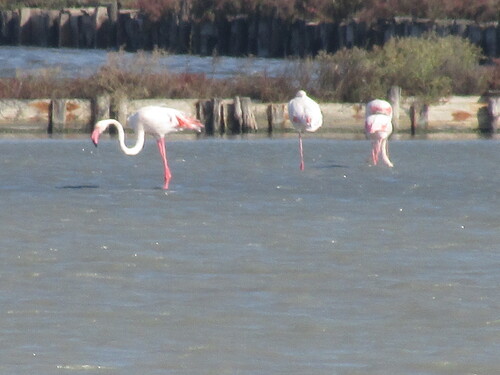 Greater Flamingo
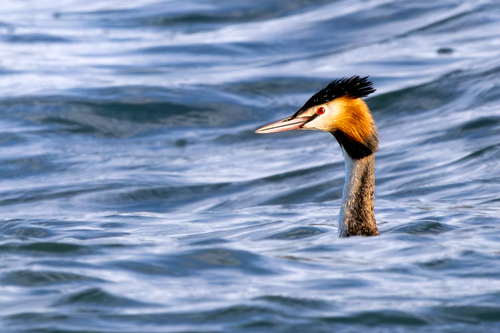 Great Crested Grebe
In short
The most reliable field mark to separate Greater Flamingo from Great Crested Grebe is overall structure and size: Greater Flamingo is a giant, long-legged, long-necked wader with pinkish-white plumage and a downcurved bill, while Great Crested Grebe is a much smaller, low-slung waterbird with a sharp, straight bill and elaborate head plumes in breeding season. In flight, flamingos show striking black flight feathers contrasting with pale wings, while grebes have much shorter wings and lack such contrast. Juvenile flamingos are grey and lack the pink tones, but still show the same long-legged, long-necked silhouette, while juvenile grebes have boldly striped heads. Both species may be seen on large water bodies, but their posture, shape, and behavior are unmistakably different.
Identification tips
- Size and shape: Greater Flamingo is enormous and stilt-legged, with a long neck and legs; Great Crested Grebe is much smaller, compact, and sits low in the water. This is the most immediate and reliable difference at any distance.
- Bill shape: Flamingo has a thick, strongly downcurved pink bill with a black tip; grebe has a straight, sharp, dagger-like bill, pinkish in winter, darker in breeding season.
- Legs: Flamingo's legs are long and entirely pink in adults (dark in subadults); grebe's legs are short, set far back on the body, and never visible as long extensions.
- Neck: Flamingo's neck is extremely long and often held in an S-shape; grebe's neck is much shorter and straight.
- Flight pattern: Flamingos fly with neck and legs fully outstretched, showing black flight feathers contrasting with pale wings; grebes have short, rounded wings and fly low, with rapid wingbeats and no strong color contrast.
- Juvenile plumage: Juvenile flamingos are grey and fluffy, never striped on the head; juvenile grebes have bold black-and-white head stripes ('humbug' pattern) until their first winter.
- Breeding plumage: Adult flamingos intensify pink coloration, especially on legs and wing coverts; grebes develop ornate black and orange-brown head plumes and ruffs, absent in flamingos.
- Non-breeding plumage: Flamingos may become paler but retain pink legs and black-tipped bill; grebes lose head plumes, showing a white face and pink bill.
- Courtship displays: Flamingos display in large synchronized groups; grebes perform elaborate pair dances, often with head-shaking and weed-offering.
- Feeding behavior: Flamingos feed by wading and filtering mud with their bills held upside-down; grebes dive underwater to catch fish.
- Habitat context: Flamingos prefer saline or brackish shallow lagoons and mudflats; grebes are on freshwater lakes and reservoirs, rarely in saline habitats.
- Posture: Flamingos stand upright on long legs, often in groups; grebes float low, rarely stand or walk, and are usually solitary or in pairs.
- Chick appearance: Flamingo chicks are grey and fluffy; grebe chicks are boldly striped and ride on parents' backs.
- Vocalizations: Flamingo gives loud, goose-like honks; grebe is quieter, with trills and growls.
- Pitfalls: A distant, pale flamingo might be mistaken for a swimming grebe if only the body is seen, but the long neck and legs will always give it away. Juvenile flamingos are never striped on the head, and grebes never show pink legs or a downcurved bill.
Size
Greater Flamingo is vastly larger, with a body length of about 132.5 cm (over 4 feet), towering over the Great Crested Grebe, which measures only 46–51 cm long. The flamingo is also much heavier (2–4 kg vs. 0.9–1.5 kg for the grebe). Even at a distance, the flamingo's long legs and neck make it appear stilt-like and elegant, while the grebe is compact and sits low in the water. There is no overlap in size or silhouette between these two species.
Plumage
- Juveniles/Immatures: Juvenile Greater Flamingos are grey and fluffy, lacking the pink tones of adults, but still have long legs and neck. Subadults are paler and may have dark legs. Juvenile Great Crested Grebes have striking black-and-white striped heads ('humbug' pattern), which they lose after their first winter. No flamingo ever shows this head pattern.
- Adults in flight: Flamingos show pale pinkish wings with a bold contrast between red coverts and black primary/secondary flight feathers; this is visible in all ages once fledged. Grebes have much shorter, rounded wings without such contrast and do not show black flight feathers.
- Breeding adults: Flamingos intensify their pink coloration in the breeding season, especially on the legs and wing coverts, sometimes using uropygial secretions as 'make-up.' Grebes develop ornate black and orange-brown head plumes and ruffs in the breeding season, which are completely absent in flamingos.
- Non-breeding adults: Flamingos may become paler but retain pink legs and black-tipped bill. Grebes lose their head plumes in winter (except in some tropical populations), showing a white face with a pink bill and no ruff.
Behaviour
Greater Flamingos feed by wading in shallow water, often in large flocks, stirring up mud with their feet and filtering food with their specialized bills held upside-down. They stand and walk on long legs, and their feeding posture is very distinctive. Great Crested Grebes are expert divers, swimming low in the water and often disappearing beneath the surface to chase fish. Grebes rarely walk on land and never wade. Flamingos are highly social, performing synchronized courtship displays; grebes also have elaborate pair dances but do these in pairs or small groups. Grebe chicks ride on their parents' backs, a behavior not seen in flamingos.
Habitat
Greater Flamingos are found in shallow coastal lagoons, salt pans, and mudflats, often in saline or brackish environments. Great Crested Grebes prefer freshwater lakes and reservoirs with abundant vegetation, but may winter on larger water bodies, including coastal areas. While both may be seen on large water bodies, flamingos are almost always in open, shallow, saline habitats and grebes in deeper, freshwater habitats. Overlap is possible in some large wetlands, but their microhabitat preferences and behaviors are distinct.
Voice
Greater Flamingo gives a loud, goose-like honking call, especially in flight or during social displays. Great Crested Grebe is generally quieter, with a range of trilling, growling, or barking calls, but nothing as loud or honking as a flamingo. Voice is rarely needed for separation, but the flamingo's call is much more conspicuous.