

Great Spotted Woodpecker vs Eurasian Green Woodpecker
Dendrocopos major versus Picus viridis
Play a quiz with Great Spotted Woodpecker and Eurasian Green Woodpecker
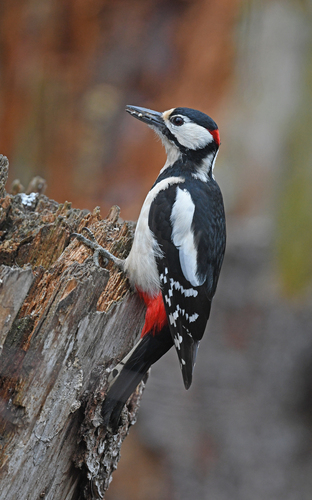 Great Spotted Woodpecker
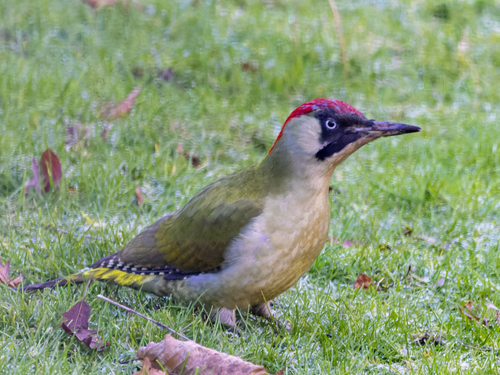 Eurasian Green Woodpecker
In short
The most reliable distinction between Great Spotted Woodpecker and Eurasian Green Woodpecker is overall color: Great Spotted is boldly black-and-white above with a red vent, while Eurasian Green is green above, yellowish below, with a bright red crown and nape. Juvenile Great Spotted Woodpeckers can be confusing due to their less crisp markings and red crown, but they never show the green upperparts or yellow rump of the Green Woodpecker. In flight, Green Woodpecker looks larger, with a slower, undulating flight and a yellow rump that flashes distinctly. Vocalizations are also very different: Great Spotted drums and gives sharp 'kick' calls, while Green Woodpecker is famous for its loud, laughing 'yaffle.'
Identification tips
- Overall color: Great Spotted is black-and-white above with a red vent; Green Woodpecker is green above, yellowish below, with a yellow rump and red crown/nape. This is the single most reliable field mark for all ages.
- Juvenile confusion: Juvenile Great Spotted has a red crown and duller, less crisp markings, but still shows black-and-white upperparts and a pinkish vent. Juvenile Green Woodpecker is streaked/spotted all over, green above, and never shows bold white patches or black-and-white barring.
- Wing pattern in flight: Great Spotted flashes white shoulder patches and black-and-white barred wings; Green Woodpecker shows green wings and a bright yellow rump, with no white patches.
- Red on head: Both species can show red on the head (crown in Green, nape in male Great Spotted, crown in juvenile Great Spotted), but the distribution differs: Green Woodpecker's red is always on the crown/nape, never just the nape, and is much more extensive and brighter.
- Face pattern: Great Spotted has a white face with a black cheek bar (sometimes incomplete in juveniles); Green Woodpecker has a black mask around the white eye and a black moustache (red-centred in males). The face of Green Woodpecker is never as white as Great Spotted.
- Ventral color: Great Spotted has clean white underparts with a red vent; Green Woodpecker is yellowish-green below with no red on the belly.
- Size and shape: Green Woodpecker is much larger and bulkier, with a longer tail and neck. Great Spotted is compact and agile.
- Behavior: Great Spotted is often seen climbing trunks and branches, drumming, and visiting feeders. Green Woodpecker is more often on the ground, feeding on ants, and flushes with an undulating flight.
- Flight style: Green Woodpecker's flight is slower and more undulating, with a pronounced yellow rump flash. Great Spotted's flight is more direct and agile, with white wing patches visible.
- Drumming: Great Spotted drums frequently and loudly; Green Woodpecker drums rarely and softly.
- Calls: Great Spotted gives sharp 'kick' calls; Green Woodpecker gives a loud, laughing 'yaffle' and noisy 'kyü-kyü-kyück' in flight.
- Sex differences: Male Great Spotted has a red nape, absent in females. Male Green Woodpecker has a red-centred moustache, solid black in females. These are useful for sexing but not for separating the species.
- Habitat clues: In dense woodland, Great Spotted is more likely; in open grassy areas with scattered trees, Green Woodpecker is more likely.
- Pitfall: Juvenile Great Spotted with red crown and dull markings can be mistaken for Green Woodpecker, but always check for green/yellow tones and yellow rump (absent in Great Spotted).
- Pitfall: Both can show red on the head, but only Green Woodpecker is green/yellow overall with a yellow rump. Great Spotted never shows this coloration.
Size
Eurasian Green Woodpecker is much larger and heavier than Great Spotted Woodpecker. Green Woodpecker measures 30–36 cm in length with a wingspan of 45–51 cm and weighs around 193 g [wikidata]. Great Spotted Woodpecker is noticeably smaller at 20–24 cm long, 34–39 cm wingspan, and about 89 g [wikidata]. In the field, Green Woodpecker appears bulkier and longer-necked, with a larger, more rounded head and a longer tail. Great Spotted is compact and more agile, often seen clinging to trunks and branches.
Plumage
-
Juveniles: Juvenile Great Spotted Woodpecker is duller, with a brownish tinge to black areas, dirty white underparts, and a red crown (less extensive in young females). Markings are less crisp than adults, but the bird is still black-and-white above with a pinkish (not red) vent. Juvenile Green Woodpecker is streaked and spotted all over, with a duller green above and yellowish below, and a dark moustache; young males may start to show some red in the moustache by mid-summer. The overall green/yellow coloration and lack of bold black-and-white pattern is distinctive even in young birds.
-
Adults: Great Spotted Woodpecker has glossy blue-black upperparts with large white shoulder patches, white face and neck sides, and a red vent/undertail. Males have a red nape patch, females do not. Green Woodpecker adults are green above, pale yellowish-green below, with a bright yellow rump and a red crown/nape. Both sexes have a black (male: red-centred) moustache, and a black mask around the white eye. The Green Woodpecker never shows the bold white wing patches or barred black-and-white flight feathers of Great Spotted.
-
In flight: Great Spotted shows black-and-white barred wings and a white shoulder patch; Green Woodpecker flashes a yellow rump and green wings, with no white patches.
Behaviour
Great Spotted Woodpecker is often seen climbing tree trunks and branches, moving with short hops and using its tail for support. It drums frequently and is agile, sometimes visiting feeders. Eurasian Green Woodpecker spends much more time on the ground, feeding on ants, and is shy and wary. Its flight is undulating, with several wingbeats followed by a glide, and it rarely drums. Green Woodpecker is more likely to flush from the ground with a loud call than to be seen working up a trunk.
Habitat
Both species can be found in woodlands, parks, and gardens, but Great Spotted Woodpecker is more versatile, using a wider range of wooded habitats, including coniferous and mixed forests. Eurasian Green Woodpecker prefers open woodlands, edges, orchards, and grassy areas with scattered trees, as it feeds mainly on ants on the ground. In dense forests, Great Spotted is more likely; in open areas with lawns or meadows, Green Woodpecker is more expected.
Voice
Great Spotted Woodpecker gives sharp, metallic 'kick' or 'chick' calls and drums rapidly on wood. Its drumming is a short, fast burst. Eurasian Green Woodpecker rarely drums; instead, it is famous for its loud, laughing 'yaffle' (a series of 'klü' notes) and a noisy 'kyü-kyü-kyück' in flight. The Green Woodpecker's calls are much more far-carrying and distinctive than Great Spotted's.
Great Spotted Woodpecker · Eurasian Green Woodpecker · My Tricky Birds