

Motmot

Great Crested Flycatcher vs Western Kingbird

Myiarchus crinitus versus Tyrannus verticalis

Play a quiz with Great Crested Flycatcher and Western Kingbird
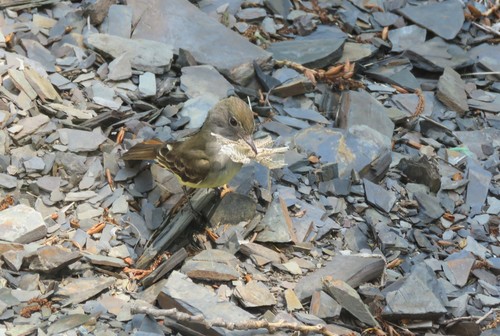
Great Crested Flycatcher (Myiarchus crinitus) Great Crested Flycatcher
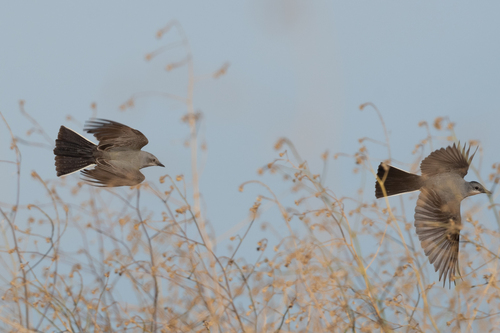
Western Kingbird (Tyrannus verticalis) Western Kingbird

Media

Loading…

In short

The most reliable field mark to separate Great Crested Flycatcher from Western Kingbird is the tail: Great Crested Flycatcher shows a long, rich rufous tail, while Western Kingbird has a black, squared tail with crisp white edges. Both species have yellow underparts and grayish heads, but the kingbird is paler above and lacks the flycatcher's bushy crest and rusty tail. In flight or perched, the tail and wing patterns are key, especially for immatures. Voice and habitat can help, but focus on tail color and edge pattern for a confident ID.

Identification tips

  1. Tail color and pattern: Great Crested Flycatcher always shows a long, rich rufous tail (all ages), while Western Kingbird's tail is black, squared, and edged with crisp white (all ages). This is the single most reliable field mark.
  2. Tail shape: Western Kingbird's tail is squared off at the tip, with obvious white outer edges; Great Crested's tail is more rounded and lacks white edges, instead showing uniform rusty tones.
  3. Upperparts color: Great Crested Flycatcher is brownish above, especially on the back and wings, with a bushy crest. Western Kingbird is pale gray above, lacking any brown or rufous tones, and never shows a crest.
  4. Underparts: Both have yellow bellies, but Great Crested's yellow is brighter and extends up the belly, with a contrasting gray throat and breast. Western Kingbird's yellow is paler and the gray breast is less sharply demarcated.
  5. Head and crest: Great Crested Flycatcher has a noticeable bushy crest, often raised when alert. Western Kingbird's head is smoothly rounded, with no crest.
  6. Hidden crown patch: Western Kingbird has concealed crimson feathers on the crown, but these are rarely visible except in aggressive or courtship displays. Do not rely on this in the field.
  7. Perching behavior: Western Kingbird often perches on wires, fences, or exposed branches in open country. Great Crested Flycatcher stays higher in the canopy, rarely on wires or in open fields.
  8. Flight jizz: Both sally for insects, but Western Kingbird is more likely to be seen making aggressive flights from exposed perches. Great Crested is more secretive and less likely to chase large birds.
  9. Voice: If you hear a loud, ringing 'whee-eep,' it's Great Crested Flycatcher. Kingbirds give sharper, chattering calls, but this is less reliable than tail pattern.
  10. Habitat context: In deep woods or mature forest, expect Great Crested Flycatcher. In open country, farmlands, or urban edges, Western Kingbird is much more likely.
  11. Bill structure: Not described in these notes, but both have broad-based flycatcher bills; not a reliable separator here.
  12. Season/age: No age-specific upperwing or juvenile pattern differences are noted for these species, so rely on tail and overall coloration for all ages.
  13. Sex: No sexual dimorphism in either species—males and females look alike.
  14. Size: Both are similar in size and mass; do not use size alone for separation.
  15. Common pitfalls: Do not confuse the flycatcher's rufous tail for a shadow or lighting effect; it is always present. Do not expect to see the kingbird's crimson crown patch except in rare display situations.

Size

Both species are large flycatchers, but their masses overlap. The Western Kingbird averages 37 g [wikidata], while Great Crested Flycatcher ranges from 27–40 g [wikipedia]. In the field, size alone is not a reliable separator, as both appear similarly robust and long-tailed.

Plumage

For all ages, Great Crested Flycatcher stands out with a long, rusty brown tail and brownish upperparts, plus a bushy crest. Its underparts are bright yellow, with a gray throat and breast. Western Kingbird, by contrast, has a black, squared tail with clean white edges (visible in all ages), a pale gray head and breast, and yellow belly. The kingbird's back is paler gray, lacking the warm brown tones of the flycatcher. Immature/juvenile-specific upperwing patterns are not described for either species in these notes, so focus on tail and overall coloration. The kingbird also has hidden crimson crown feathers, but these are rarely visible except in display or agitation.

Behaviour

Great Crested Flycatcher is a canopy-dweller, often remaining high in trees and rarely coming to the ground. It tends to perch upright, often with a slightly raised crest. Western Kingbird is more conspicuous and aggressive, often perching on exposed wires or fence lines and sallying out to catch insects. Kingbirds are notably territorial, sometimes attacking much larger birds near their nest. Both species sally for insects, but the kingbird is more likely to be seen in open, human-altered landscapes.

Habitat

Great Crested Flycatcher prefers mature deciduous forests and wooded edges, typically staying high in the canopy. Western Kingbird is found in open country—prairies, farmlands, grasslands, and urban edges—favoring scattered trees, wires, and fencelines. If you see a large yellow-bellied flycatcher in a treetop in deep woods, Great Crested is more likely; in open country or on a wire, Western Kingbird is expected.

Voice

Great Crested Flycatcher gives a loud, ringing 'whee-eep' call, often repeated, and a series of fast 'huit, huit, huit' notes in excitement. Its dawn song is a three-part whistle, but this is rarely heard except early in the day. Western Kingbird's calls are not described in these notes, but kingbirds generally give sharp, chattering calls and are less likely to produce the flycatcher's distinctive 'whee-eep.' Voice can help, but the tail pattern is more reliable.

Submit a better description

Use the same sections as the comparison. Your text is published immediately.

The most reliable field mark to separate Great Crested Flycatcher from Western Kingbird is the tail: Great Crested Flycatcher shows a long, rich rufous tail, while Western Kingbird has a black, squared tail with crisp white edges. Both species have yellow underparts and grayish heads, but the kingbird is paler above and lacks the flycatcher's bushy crest and rusty tail. In flight or perched, the tail and wing patterns are key, especially for immatures. Voice and habitat can help, but focus on tail color and edge pattern for a confident ID.

  1. Tail color and pattern: Great Crested Flycatcher always shows a long, rich rufous tail (all ages), while Western Kingbird's tail is black, squared, and edged with crisp white (all ages). This is the single most reliable field mark.
  2. Tail shape: Western Kingbird's tail is squared off at the tip, with obvious white outer edges; Great Crested's tail is more rounded and lacks white edges, instead showing uniform rusty tones.
  3. Upperparts color: Great Crested Flycatcher is brownish above, especially on the back and wings, with a bushy crest. Western Kingbird is pale gray above, lacking any brown or rufous tones, and never shows a crest.
  4. Underparts: Both have yellow bellies, but Great Crested's yellow is brighter and extends up the belly, with a contrasting gray throat and breast. Western Kingbird's yellow is paler and the gray breast is less sharply demarcated.
  5. Head and crest: Great Crested Flycatcher has a noticeable bushy crest, often raised when alert. Western Kingbird's head is smoothly rounded, with no crest.
  6. Hidden crown patch: Western Kingbird has concealed crimson feathers on the crown, but these are rarely visible except in aggressive or courtship displays. Do not rely on this in the field.
  7. Perching behavior: Western Kingbird often perches on wires, fences, or exposed branches in open country. Great Crested Flycatcher stays higher in the canopy, rarely on wires or in open fields.
  8. Flight jizz: Both sally for insects, but Western Kingbird is more likely to be seen making aggressive flights from exposed perches. Great Crested is more secretive and less likely to chase large birds.
  9. Voice: If you hear a loud, ringing 'whee-eep,' it's Great Crested Flycatcher. Kingbirds give sharper, chattering calls, but this is less reliable than tail pattern.
  10. Habitat context: In deep woods or mature forest, expect Great Crested Flycatcher. In open country, farmlands, or urban edges, Western Kingbird is much more likely.
  11. Bill structure: Not described in these notes, but both have broad-based flycatcher bills; not a reliable separator here.
  12. Season/age: No age-specific upperwing or juvenile pattern differences are noted for these species, so rely on tail and overall coloration for all ages.
  13. Sex: No sexual dimorphism in either species—males and females look alike.
  14. Size: Both are similar in size and mass; do not use size alone for separation.
  15. Common pitfalls: Do not confuse the flycatcher's rufous tail for a shadow or lighting effect; it is always present. Do not expect to see the kingbird's crimson crown patch except in rare display situations.

Both species are large flycatchers, but their masses overlap. The Western Kingbird averages 37 g [wikidata], while Great Crested Flycatcher ranges from 27–40 g [wikipedia]. In the field, size alone is not a reliable separator, as both appear similarly robust and long-tailed.

For all ages, Great Crested Flycatcher stands out with a long, rusty brown tail and brownish upperparts, plus a bushy crest. Its underparts are bright yellow, with a gray throat and breast. Western Kingbird, by contrast, has a black, squared tail with clean white edges (visible in all ages), a pale gray head and breast, and yellow belly. The kingbird's back is paler gray, lacking the warm brown tones of the flycatcher. Immature/juvenile-specific upperwing patterns are not described for either species in these notes, so focus on tail and overall coloration. The kingbird also has hidden crimson crown feathers, but these are rarely visible except in display or agitation.

Great Crested Flycatcher is a canopy-dweller, often remaining high in trees and rarely coming to the ground. It tends to perch upright, often with a slightly raised crest. Western Kingbird is more conspicuous and aggressive, often perching on exposed wires or fence lines and sallying out to catch insects. Kingbirds are notably territorial, sometimes attacking much larger birds near their nest. Both species sally for insects, but the kingbird is more likely to be seen in open, human-altered landscapes.

Great Crested Flycatcher prefers mature deciduous forests and wooded edges, typically staying high in the canopy. Western Kingbird is found in open country—prairies, farmlands, grasslands, and urban edges—favoring scattered trees, wires, and fencelines. If you see a large yellow-bellied flycatcher in a treetop in deep woods, Great Crested is more likely; in open country or on a wire, Western Kingbird is expected.

Great Crested Flycatcher gives a loud, ringing 'whee-eep' call, often repeated, and a series of fast 'huit, huit, huit' notes in excitement. Its dawn song is a three-part whistle, but this is rarely heard except early in the day. Western Kingbird's calls are not described in these notes, but kingbirds generally give sharp, chattering calls and are less likely to produce the flycatcher's distinctive 'whee-eep.' Voice can help, but the tail pattern is more reliable.

Discard your changes?

You have unsaved edits. If you leave now, those changes will be lost.

Great Crested Flycatcher · Western Kingbird · My Tricky Birds