

Motmot

オオヒタキモドキ 対 ニシタイランチョウ

Myiarchus crinitus 対 Tyrannus verticalis

オオヒタキモドキとニシタイランチョウのクイズ
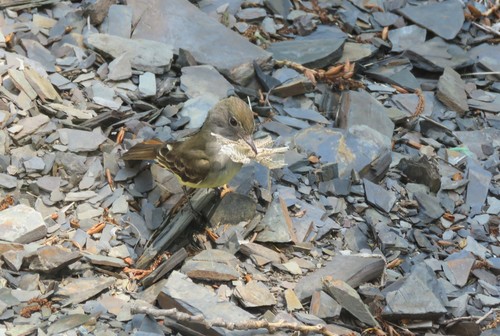
オオヒタキモドキ (Myiarchus crinitus) オオヒタキモドキ
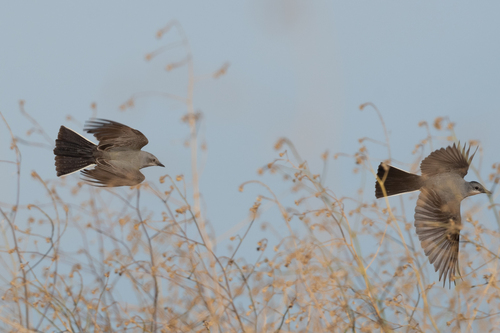
ニシタイランチョウ (Tyrannus verticalis) ニシタイランチョウ

メディア

読み込み中…

要点

オオヒタキモドキとニシタイランチョウを区別する最も信頼できるフィールドマークは尾です:オオヒタキモドキは長くて豊かな赤褐色の尾を示し、ニシタイランチョウは黒くて四角い尾を持ち、鮮明な白い縁があります。両種は黄色い腹部と灰色がかった頭を持っていますが、ニシタイランチョウは上面がより淡く、ヒタキモドキのふさふさした冠と赤褐色の尾がありません。飛んでいるときや止まっているとき、尾と翼の模様が重要で、特に幼鳥にとっては特に重要です。声や生息地も役立ちますが、自信を持って識別するためには尾の色と縁の模様に焦点を当ててください。

識別のコツ

  1. 尾の色と模様:オオヒタキモドキは常に長くて豊かな赤褐色の尾を示します(すべての年齢)、一方、ニシタイランチョウの尾は黒く、四角く、鮮明な白い縁があります(すべての年齢)。これは最も信頼できるフィールドマークです。
  2. 尾の形:ニシタイランチョウの尾は先端が四角く、明らかな白い外縁があります;オオヒタキモドキの尾はより丸みを帯びており、白い縁がなく、均一な赤褐色のトーンを示します。
  3. 上面の色:オオヒタキモドキは上面が茶色がかっており、特に背中と翼において、ふさふさした冠を持っています。ニシタイランチョウは上面が淡い灰色で、茶色や赤褐色のトーンがなく、冠を示しません。
  4. 腹部:両種は黄色い腹部を持っていますが、オオヒタキモドキの黄色はより明るく、腹部を上に伸びており、対照的な灰色の喉と胸があります。ニシタイランチョウの黄色はより淡く、灰色の胸はあまりはっきりと区別されていません。
  5. 頭と冠:オオヒタキモドキは目立つふさふさした冠を持ち、警戒しているときにしばしば立ち上がります。ニシタイランチョウの頭は滑らかに丸く、冠はありません。
  6. 隠れた冠の斑点:ニシタイランチョウは冠に隠れた深紅の羽毛を持っていますが、これらは攻撃的または求愛のディスプレイのとき以外はほとんど見えません。フィールドではこれに頼らないでください。
  7. 止まり方:ニシタイランチョウはしばしば開けた国の電線、フェンス、または露出した枝に止まります。オオヒタキモドキは樹冠の高い位置に留まり、電線や開けた野原にはめったに止まりません。
  8. 飛行の特徴:両種は昆虫を捕まえるために飛び出しますが、ニシタイランチョウは露出した止まり木から攻撃的に飛び出すのがより一般的です。オオヒタキモドキはより秘密主義で、大きな鳥を追いかけることはあまりありません。
  9. 声:大きく、響く「ウィーイープ」という声が聞こえたら、それはオオヒタキモドキです。ニシタイランチョウは鋭く、おしゃべりのような鳴き声を出しますが、これは尾の模様よりも信頼性が低いです。
  10. 生息地の文脈:深い森や成熟した森林では、オオヒタキモドキを期待してください。開けた国、農地、または都市の端では、ニシタイランチョウがはるかに多く見られます。
  11. くちばしの構造:これらのメモでは説明されていませんが、両種は広い基部のヒタキモドキのくちばしを持っています;ここでは信頼できる区別にはなりません。
  12. 季節/年齢:これらの種に特有の上翼や幼鳥のパターンの違いは記載されていないため、すべての年齢に対して尾と全体の色合いに頼ってください。
  13. 性別:どちらの種にも性的二形性はなく、オスとメスは似ています。
  14. サイズ:両種はサイズと質量が似ています;区別にはサイズだけを使用しないでください。
  15. 一般的な落とし穴:ヒタキモドキの赤褐色の尾を影や光の効果と混同しないでください;常に存在します。ニシタイランチョウの深紅の冠の斑点は、稀なディスプレイの状況でしか見られないことを期待しないでください。

大きさ

両種は大型のヒタキモドキですが、質量は重なっています。ニシタイランチョウの平均は37g [wikidata]、オオヒタキモドキは27〜40g [wikipedia]の範囲です。フィールドでは、サイズだけでは信頼できる区別にはならず、両者は似たように頑丈で長い尾を持っているように見えます。

羽色

すべての年齢において、オオヒタキモドキは長い赤褐色の尾と茶色がかった上面、さらにふさふさした冠で際立っています。腹部は明るい黄色で、灰色の喉と胸があります。対照的に、ニシタイランチョウは黒くて四角い尾を持ち、清潔な白い縁があります(すべての年齢で見える)、淡い灰色の頭と胸、そして黄色い腹部があります。ニシタイランチョウの背中はより淡い灰色で、ヒタキモドキの温かみのある茶色のトーンがありません。幼鳥/若鳥特有の上翼のパターンはこれらのメモでは記載されていないため、尾と全体の色合いに焦点を当ててください。ニシタイランチョウは隠れた深紅の冠の羽毛も持っていますが、これらはディスプレイや興奮時以外はほとんど見えません。

行動

オオヒタキモドキは樹冠に生息し、高い木に留まり、地面に降りることはほとんどありません。直立して止まる傾向があり、しばしば少し立ち上がった冠を持っています。ニシタイランチョウはより目立ち、攻撃的で、しばしば露出した電線やフェンスの上に止まり、昆虫を捕まえるために飛び出します。ニシタイランチョウは特に縄張り意識が強く、巣の近くでずっと大きな鳥を攻撃することがあります。両種は昆虫を捕まえるために飛び出しますが、ニシタイランチョウは開けた人間の手が加えられた風景で見られることがより一般的です。

生息環境

オオヒタキモドキは成熟した広葉樹の森や林縁を好み、通常は樹冠の高い位置に留まります。ニシタイランチョウは開けた国—草原、農地、草地、都市の端—に見られ、散在する木々、電線、フェンスラインを好みます。深い森の樹上で大きなキバラメジロハエトリを見た場合、オオヒタキモドキの可能性が高いです;開けた国や電線では、ニシタイランチョウが期待されます。

声

オオヒタキモドキは大きく、響く「ウィーイープ」という鳴き声を出し、しばしば繰り返され、興奮時には速い「ウイット、ウイット、ウイット」という音を出します。夜明けの歌は三部の口笛ですが、これは早朝以外はほとんど聞かれません。ニシタイランチョウの鳴き声はこれらのメモでは記載されていませんが、一般的に鋭くおしゃべりのような鳴き声を出し、ヒタキモドキの特徴的な「ウィーイープ」を出す可能性は低いです。声は役立ちますが、尾の模様の方がより信頼性があります。

より良い説明を送る

比較と同じ項目を使ってください。文章はすぐに公開されます。

The most reliable field mark to separate Great Crested Flycatcher from Western Kingbird is the tail: Great Crested Flycatcher shows a long, rich rufous tail, while Western Kingbird has a black, squared tail with crisp white edges. Both species have yellow underparts and grayish heads, but the kingbird is paler above and lacks the flycatcher's bushy crest and rusty tail. In flight or perched, the tail and wing patterns are key, especially for immatures. Voice and habitat can help, but focus on tail color and edge pattern for a confident ID.

  1. Tail color and pattern: Great Crested Flycatcher always shows a long, rich rufous tail (all ages), while Western Kingbird's tail is black, squared, and edged with crisp white (all ages). This is the single most reliable field mark.
  2. Tail shape: Western Kingbird's tail is squared off at the tip, with obvious white outer edges; Great Crested's tail is more rounded and lacks white edges, instead showing uniform rusty tones.
  3. Upperparts color: Great Crested Flycatcher is brownish above, especially on the back and wings, with a bushy crest. Western Kingbird is pale gray above, lacking any brown or rufous tones, and never shows a crest.
  4. Underparts: Both have yellow bellies, but Great Crested's yellow is brighter and extends up the belly, with a contrasting gray throat and breast. Western Kingbird's yellow is paler and the gray breast is less sharply demarcated.
  5. Head and crest: Great Crested Flycatcher has a noticeable bushy crest, often raised when alert. Western Kingbird's head is smoothly rounded, with no crest.
  6. Hidden crown patch: Western Kingbird has concealed crimson feathers on the crown, but these are rarely visible except in aggressive or courtship displays. Do not rely on this in the field.
  7. Perching behavior: Western Kingbird often perches on wires, fences, or exposed branches in open country. Great Crested Flycatcher stays higher in the canopy, rarely on wires or in open fields.
  8. Flight jizz: Both sally for insects, but Western Kingbird is more likely to be seen making aggressive flights from exposed perches. Great Crested is more secretive and less likely to chase large birds.
  9. Voice: If you hear a loud, ringing 'whee-eep,' it's Great Crested Flycatcher. Kingbirds give sharper, chattering calls, but this is less reliable than tail pattern.
  10. Habitat context: In deep woods or mature forest, expect Great Crested Flycatcher. In open country, farmlands, or urban edges, Western Kingbird is much more likely.
  11. Bill structure: Not described in these notes, but both have broad-based flycatcher bills; not a reliable separator here.
  12. Season/age: No age-specific upperwing or juvenile pattern differences are noted for these species, so rely on tail and overall coloration for all ages.
  13. Sex: No sexual dimorphism in either species—males and females look alike.
  14. Size: Both are similar in size and mass; do not use size alone for separation.
  15. Common pitfalls: Do not confuse the flycatcher's rufous tail for a shadow or lighting effect; it is always present. Do not expect to see the kingbird's crimson crown patch except in rare display situations.

Both species are large flycatchers, but their masses overlap. The Western Kingbird averages 37 g [wikidata], while Great Crested Flycatcher ranges from 27–40 g [wikipedia]. In the field, size alone is not a reliable separator, as both appear similarly robust and long-tailed.

For all ages, Great Crested Flycatcher stands out with a long, rusty brown tail and brownish upperparts, plus a bushy crest. Its underparts are bright yellow, with a gray throat and breast. Western Kingbird, by contrast, has a black, squared tail with clean white edges (visible in all ages), a pale gray head and breast, and yellow belly. The kingbird's back is paler gray, lacking the warm brown tones of the flycatcher. Immature/juvenile-specific upperwing patterns are not described for either species in these notes, so focus on tail and overall coloration. The kingbird also has hidden crimson crown feathers, but these are rarely visible except in display or agitation.

Great Crested Flycatcher is a canopy-dweller, often remaining high in trees and rarely coming to the ground. It tends to perch upright, often with a slightly raised crest. Western Kingbird is more conspicuous and aggressive, often perching on exposed wires or fence lines and sallying out to catch insects. Kingbirds are notably territorial, sometimes attacking much larger birds near their nest. Both species sally for insects, but the kingbird is more likely to be seen in open, human-altered landscapes.

Great Crested Flycatcher prefers mature deciduous forests and wooded edges, typically staying high in the canopy. Western Kingbird is found in open country—prairies, farmlands, grasslands, and urban edges—favoring scattered trees, wires, and fencelines. If you see a large yellow-bellied flycatcher in a treetop in deep woods, Great Crested is more likely; in open country or on a wire, Western Kingbird is expected.

Great Crested Flycatcher gives a loud, ringing 'whee-eep' call, often repeated, and a series of fast 'huit, huit, huit' notes in excitement. Its dawn song is a three-part whistle, but this is rarely heard except early in the day. Western Kingbird's calls are not described in these notes, but kingbirds generally give sharp, chattering calls and are less likely to produce the flycatcher's distinctive 'whee-eep.' Voice can help, but the tail pattern is more reliable.

変更を破棄しますか?

保存していない編集があります。今離れると失われます。

オオヒタキモドキ · ニシタイランチョウ · 苦手な鳥