

Motmot

Great Cormorant vs Eurasian Bittern

Phalacrocorax carbo versus Botaurus stellaris

Play a quiz with Great Cormorant and Eurasian Bittern
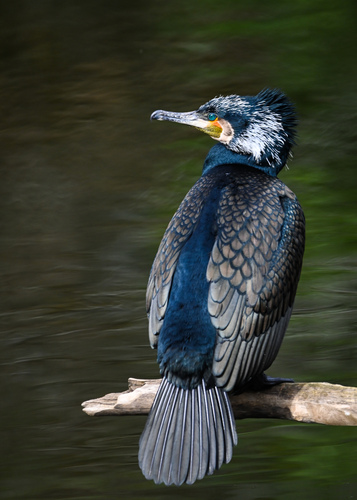
Great Cormorant (Phalacrocorax carbo) Great Cormorant
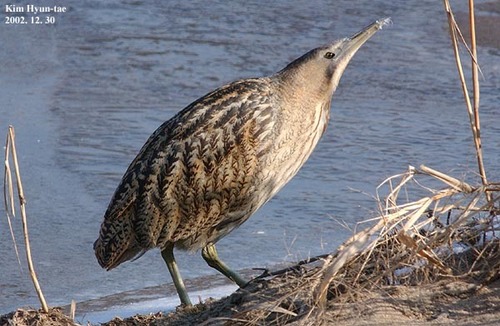
Eurasian Bittern (Botaurus stellaris) Eurasian Bittern

Media

Loading…

In short

The most reliable field mark to separate Great Cormorant from Eurasian Bittern is overall structure and posture: cormorants are heavy, long-bodied, blackish waterbirds with a thick hooked bill and swim or perch openly, while bitterns are stocky, cryptically streaked brown herons that skulk in reeds and freeze with bill pointed up when alarmed. In flight, cormorants show long, narrow wings and a long tail, while bitterns have broad, rounded wings and trail their legs. Juvenile cormorants are pale-bellied but still dark above, whereas bitterns of all ages are never blackish and always heavily streaked and barred. Habitat is also a strong clue: cormorants are usually seen on open water or exposed perches, bitterns in dense reedbeds. If you see a large blackish bird swimming or perched on rocks, it's a cormorant; a streaky brown bird melting into reeds is a bittern.

Identification tips

  1. Overall color and pattern: Great Cormorant is mostly black (adults) or dark above with pale belly (juveniles); Eurasian Bittern is never black, always buffy-brown with heavy black streaks and bars. Works for all ages.
  2. Bill shape and color: Cormorant has a thick, hooked, dark bill with a yellow or red gular patch; bittern has a long, straight, greenish-yellow bill. This is visible at moderate range.
  3. Posture and jizz: Cormorant stands upright, often with wings spread, or swims low in water; bittern is hunched, thickset, and freezes with bill pointed up when alarmed. Bittern never spreads wings to dry.
  4. Flight silhouette: Cormorant flies with long, narrow wings, neck outstretched, and long tail; bittern flies with broad, rounded wings, neck retracted after takeoff, and legs trailing. Works for all ages.
  5. Tail: Cormorant has a long tail (with 14 feathers), bittern's tail is short and rounded, not obvious in flight or at rest.
  6. Habitat: Cormorant is on open water or exposed perches; bittern is in dense reedbeds, rarely in the open. Context is a strong clue.
  7. Plumage details: Bittern has a yellowish-buff supercilium and brown-black moustachial stripe; cormorant lacks these facial marks.
  8. Underparts: Juvenile cormorants have pale underparts but upperparts are still dark and lack streaking; bitterns are streaked and barred below and above at all ages.
  9. Legs and feet: Cormorant's legs are dark grey and feet are fully webbed (totipalmate); bittern's legs are greenish with yellow tarsal joint, feet not webbed. Usually only visible at close range.
  10. Breeding marks: Adult cormorants in breeding season may show white thigh and head patches; bitterns never have white patches.
  11. Behavior: Cormorants are social and conspicuous, often in groups; bitterns are solitary and secretive.
  12. Size impression: Cormorant appears larger and more elongated due to long neck and tail, despite similar mass to bittern.
  13. Voice: Only bittern gives a deep booming call in spring; cormorant is mostly silent except for guttural colony noises.
  14. Seasonal confusion: In winter, cormorant loses white breeding patches and is more uniformly black; bittern's plumage is similar year-round but juveniles are paler and less marked.
  15. Common pitfalls: A juvenile cormorant with pale belly can look less black, but always lacks bittern's heavy streaking and cryptic pattern. Bitterns never swim or perch openly like cormorants.

Size

Both species are large waterbirds, but the Eurasian Bittern is slightly heavier on average (body mass: Bittern ~2460 g, Cormorant ~2200 g) [wikidata]. However, the Great Cormorant appears much larger and bulkier in the field due to its elongated body, long neck, and long tail, whereas the bittern is shorter-necked, more thickset, and compact. Cormorant's size is accentuated by its long, heavy bill and prominent posture when perched or swimming. Bitterns, while heavy, appear smaller due to their hunched, secretive stance and shorter tail.

Plumage

Juvenile and immature Great Cormorants have pale to whitish underparts with dark upperparts, but always appear mostly dark and lack the heavy streaking and barring of bitterns. Adult cormorants are glossy black with bronze or greenish iridescence, sometimes with white thigh and head patches in breeding season (never in bittern). Bitterns of all ages are never black: their plumage is a complex pattern of buff, tawny, and brown with heavy black streaks and bars, especially on the upperparts, breast, and flanks. In flight, bitterns show pale rusty-brown, broad, rounded wings with irregular black barring, while cormorants' wings are long, narrow, and uniformly dark. Bitterns have a yellowish-buff supercilium and a brown-black moustachial stripe, both absent in cormorant. The cormorant's bill is dark and hooked, bittern's is straight and greenish-yellow. Juvenile bitterns are paler and less distinctly marked than adults but still streaked and never blackish.

Behaviour

Great Cormorants are usually seen swimming low in the water, diving for fish, or perched openly on rocks, posts, or trees, often with wings spread to dry. They are social, often in groups, and conspicuous. Eurasian Bitterns are solitary, secretive, and almost always hidden in dense reedbeds. When disturbed, bitterns freeze with their bill pointed upwards, blending into the reeds ('bitterning'), and rarely perch in the open. Bitterns walk slowly and deliberately in vegetation, seldom swim, and only rarely stand in the open, usually at the water's edge in harsh weather. In flight, cormorants are direct and strong with neck outstretched, while bitterns fly with slow, deep wingbeats, neck retracted after takeoff, and legs trailing.

Habitat

Great Cormorants are found on open water: lakes, rivers, coasts, and reservoirs, often far from cover, and frequently perch on exposed rocks, posts, or trees. Eurasian Bitterns are restricted to dense reedbeds and marshes with tall vegetation, rarely venturing into open water or onto exposed perches. If you see a large waterbird in the middle of a lake or perched on a rock, it's almost certainly a cormorant; a large bird seen skulking or flying low over reeds is likely a bittern.

Voice

Both species are mostly silent away from breeding colonies. Great Cormorants make guttural noises at colonies but are not vocal otherwise. Eurasian Bitterns are famous for their booming call in spring, a deep foghorn-like sound that carries over long distances from reedbeds, but this is rarely heard except during the breeding season. Neither species is likely to be identified by voice in typical field encounters.

Submit a better description

Use the same sections as the comparison. Your text is published immediately.

The most reliable field mark to separate Great Cormorant from Eurasian Bittern is overall structure and posture: cormorants are heavy, long-bodied, blackish waterbirds with a thick hooked bill and swim or perch openly, while bitterns are stocky, cryptically streaked brown herons that skulk in reeds and freeze with bill pointed up when alarmed. In flight, cormorants show long, narrow wings and a long tail, while bitterns have broad, rounded wings and trail their legs. Juvenile cormorants are pale-bellied but still dark above, whereas bitterns of all ages are never blackish and always heavily streaked and barred. Habitat is also a strong clue: cormorants are usually seen on open water or exposed perches, bitterns in dense reedbeds. If you see a large blackish bird swimming or perched on rocks, it's a cormorant; a streaky brown bird melting into reeds is a bittern.

  1. Overall color and pattern: Great Cormorant is mostly black (adults) or dark above with pale belly (juveniles); Eurasian Bittern is never black, always buffy-brown with heavy black streaks and bars. Works for all ages.
  2. Bill shape and color: Cormorant has a thick, hooked, dark bill with a yellow or red gular patch; bittern has a long, straight, greenish-yellow bill. This is visible at moderate range.
  3. Posture and jizz: Cormorant stands upright, often with wings spread, or swims low in water; bittern is hunched, thickset, and freezes with bill pointed up when alarmed. Bittern never spreads wings to dry.
  4. Flight silhouette: Cormorant flies with long, narrow wings, neck outstretched, and long tail; bittern flies with broad, rounded wings, neck retracted after takeoff, and legs trailing. Works for all ages.
  5. Tail: Cormorant has a long tail (with 14 feathers), bittern's tail is short and rounded, not obvious in flight or at rest.
  6. Habitat: Cormorant is on open water or exposed perches; bittern is in dense reedbeds, rarely in the open. Context is a strong clue.
  7. Plumage details: Bittern has a yellowish-buff supercilium and brown-black moustachial stripe; cormorant lacks these facial marks.
  8. Underparts: Juvenile cormorants have pale underparts but upperparts are still dark and lack streaking; bitterns are streaked and barred below and above at all ages.
  9. Legs and feet: Cormorant's legs are dark grey and feet are fully webbed (totipalmate); bittern's legs are greenish with yellow tarsal joint, feet not webbed. Usually only visible at close range.
  10. Breeding marks: Adult cormorants in breeding season may show white thigh and head patches; bitterns never have white patches.
  11. Behavior: Cormorants are social and conspicuous, often in groups; bitterns are solitary and secretive.
  12. Size impression: Cormorant appears larger and more elongated due to long neck and tail, despite similar mass to bittern.
  13. Voice: Only bittern gives a deep booming call in spring; cormorant is mostly silent except for guttural colony noises.
  14. Seasonal confusion: In winter, cormorant loses white breeding patches and is more uniformly black; bittern's plumage is similar year-round but juveniles are paler and less marked.
  15. Common pitfalls: A juvenile cormorant with pale belly can look less black, but always lacks bittern's heavy streaking and cryptic pattern. Bitterns never swim or perch openly like cormorants.

Both species are large waterbirds, but the Eurasian Bittern is slightly heavier on average (body mass: Bittern ~2460 g, Cormorant ~2200 g) [wikidata]. However, the Great Cormorant appears much larger and bulkier in the field due to its elongated body, long neck, and long tail, whereas the bittern is shorter-necked, more thickset, and compact. Cormorant's size is accentuated by its long, heavy bill and prominent posture when perched or swimming. Bitterns, while heavy, appear smaller due to their hunched, secretive stance and shorter tail.

Juvenile and immature Great Cormorants have pale to whitish underparts with dark upperparts, but always appear mostly dark and lack the heavy streaking and barring of bitterns. Adult cormorants are glossy black with bronze or greenish iridescence, sometimes with white thigh and head patches in breeding season (never in bittern). Bitterns of all ages are never black: their plumage is a complex pattern of buff, tawny, and brown with heavy black streaks and bars, especially on the upperparts, breast, and flanks. In flight, bitterns show pale rusty-brown, broad, rounded wings with irregular black barring, while cormorants' wings are long, narrow, and uniformly dark. Bitterns have a yellowish-buff supercilium and a brown-black moustachial stripe, both absent in cormorant. The cormorant's bill is dark and hooked, bittern's is straight and greenish-yellow. Juvenile bitterns are paler and less distinctly marked than adults but still streaked and never blackish.

Great Cormorants are usually seen swimming low in the water, diving for fish, or perched openly on rocks, posts, or trees, often with wings spread to dry. They are social, often in groups, and conspicuous. Eurasian Bitterns are solitary, secretive, and almost always hidden in dense reedbeds. When disturbed, bitterns freeze with their bill pointed upwards, blending into the reeds ('bitterning'), and rarely perch in the open. Bitterns walk slowly and deliberately in vegetation, seldom swim, and only rarely stand in the open, usually at the water's edge in harsh weather. In flight, cormorants are direct and strong with neck outstretched, while bitterns fly with slow, deep wingbeats, neck retracted after takeoff, and legs trailing.

Great Cormorants are found on open water: lakes, rivers, coasts, and reservoirs, often far from cover, and frequently perch on exposed rocks, posts, or trees. Eurasian Bitterns are restricted to dense reedbeds and marshes with tall vegetation, rarely venturing into open water or onto exposed perches. If you see a large waterbird in the middle of a lake or perched on a rock, it's almost certainly a cormorant; a large bird seen skulking or flying low over reeds is likely a bittern.

Both species are mostly silent away from breeding colonies. Great Cormorants make guttural noises at colonies but are not vocal otherwise. Eurasian Bitterns are famous for their booming call in spring, a deep foghorn-like sound that carries over long distances from reedbeds, but this is rarely heard except during the breeding season. Neither species is likely to be identified by voice in typical field encounters.

Discard your changes?

You have unsaved edits. If you leave now, those changes will be lost.

Great Cormorant · Eurasian Bittern · My Tricky Birds