

Motmot

Great Bustard vs Little Bustard

Otis tarda versus Tetrax tetrax

Play a quiz with Great Bustard and Little Bustard
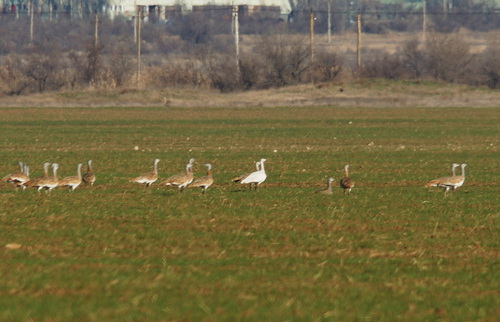
Great Bustard (Otis tarda) Great Bustard
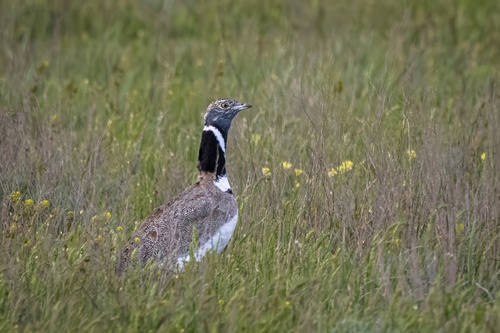
Little Bustard (Tetrax tetrax) Little Bustard

Media

Loading…

In short

The most reliable field mark between Great Bustard and Little Bustard is size: Great Bustard is vastly larger, with a heavy, almost turkey-like build, while Little Bustard is much smaller and more pheasant-like. In flight, both show extensive white in the wings, but Great Bustard’s wings are broader and show a dark brown streak along the upper edge, whereas Little Bustard’s wings are slimmer and more uniformly white. Adult male Great Bustards in breeding season have long white neck bristles and a chestnut breast, while male Little Bustards show a striking black neck bordered by white. Immature and female plumages are more similar, but Great Bustard juveniles are larger and more robust, with browner, more barred upperparts. Habitat overlap can occur, but Great Bustard prefers more open, expansive grasslands, while Little Bustard is more often found in steppe or cultivated fields.

Identification tips

  1. Size is the first and most reliable clue: Great Bustard is enormous, dwarfing any Little Bustard seen nearby or in similar habitat. If you see a bustard that looks as big as a swan or turkey, it is a Great Bustard.
  2. Flight silhouette: Great Bustard flies with broad, heavy wings, deep wingbeats, and a long, thick neck extended straight. Little Bustard is much more compact, with slimmer, pointed wings and a shorter neck.
  3. Upperwing pattern in flight (all ages): Great Bustard shows broad, mostly white wings with a dark brown streak along the upper edge and brown edging on the lower primaries/secondaries. Little Bustard’s wings are also extensively white but lack the dark upper-edge streak, appearing cleaner and slimmer.
  4. Breeding male plumage: Great Bustard males have a chestnut breast, golden-washed back, and long, white, whiskery neck bristles (up to 15 cm), especially obvious in display. Little Bustard breeding males have a black neck bordered by white and a grey head, with no bristles.
  5. Female and immature confusion: Both are brown above and paler below, but Great Bustard females are much larger, with a longer neck and heavier build. Little Bustard females and immatures are darker below and more compact.
  6. Juvenile plumage: Juvenile Great Bustard is sepia-brown with buffy streaks and already large; juvenile Little Bustard resembles the female and is much smaller.
  7. Behavior on the ground: Great Bustard often stands tall and upright, sometimes in groups, and can be seen displaying with exaggerated postures. Little Bustard is more likely to crouch, run, or flush quickly from cover.
  8. Display behavior: Great Bustard males display on leks with elaborate feather puffing and tail cocking, exposing white plumage and appearing like a 'foam-bath.' Little Bustard displays are less flamboyant and more reliant on vocalizations and short jumps.
  9. Vocalization: Only Little Bustard has a distinctive call—a 'prrt' raspberry-blowing sound—usually given by males in the breeding season. Great Bustard is essentially silent.
  10. Habitat context: If the habitat is very open, flat, and expansive, especially with little fragmentation, Great Bustard is more likely. Little Bustard tolerates more fragmented and cultivated fields.
  11. Bill and head structure: Great Bustard has a massive, thick bill and a long, heavy head and neck; Little Bustard’s bill is finer and the head is smaller in proportion to the body.
  12. Group size: Great Bustard often forms larger groups, especially outside the breeding season; Little Bustard is more often seen singly or in small groups.
  13. Seasonal cues: Breeding season (spring) is when male plumage and display behaviors are most obvious and diagnostic. Outside the breeding season, rely more on size, structure, and flight pattern.
  14. Potential pitfalls: At great distance or in poor light, a lone female Great Bustard could be mistaken for a male Little Bustard, but the size and heavy build should still be apparent. In flight, always check for the dark upperwing streak of Great Bustard.
  15. When in doubt: If you cannot judge size, focus on wing pattern in flight and any display or vocal behavior. The combination of structure, flight style, and context will usually clinch the ID.

Size

Great Bustard is one of the world’s heaviest flying birds, with males reaching up to 16 kg (35 lbs) and standing nearly a meter tall. Little Bustard is much smaller, weighing around 830 g (29 oz) and measuring 42–45 cm (17–18 in) in length. In the field, Great Bustard’s immense bulk, long legs, and massive head and neck are unmistakable when compared to the compact, slender Little Bustard. Even at a distance or in flight, the size gap is dramatic: Great Bustard appears almost swan-sized, while Little Bustard is closer to a large gamebird or small goose.

Plumage

Juvenile and immature Great Bustards are sepia-brown with paler buffy streaks, blending well with grassy backgrounds, and are already much larger and bulkier than any Little Bustard. In flight, all ages of Great Bustard show broad, mostly white wings with a dark brown streak along the upper edge, and brown along the edges of the lower primaries and secondaries. Little Bustard of all ages shows long, slim wings that are extensively white in flight but lack the dark upper-edge streak of Great Bustard. Adult male Great Bustard in breeding season has a chestnut breast, golden-washed back, and long white neck bristles, while male Little Bustard in breeding plumage has a black neck bordered by white and a grey head. Females and immatures of both species are more subdued: Great Bustard females are brown above, white below, with a buff breast and brown/pale streaked neck; Little Bustard females and non-breeding males are brown above and darker below, lacking the dramatic neck pattern. Immature Little Bustards resemble females.

Behaviour

Great Bustard males display on leks with flamboyant postures, puffing up their throats, cocking their tails, and exposing white plumage in elaborate, slow-motion walks. Little Bustard males display less dramatically, relying more on calls and short jumps. In flight, Great Bustard is ponderous and slow, with deep, labored wingbeats and a heavy, straight-necked silhouette. Little Bustard is quicker and more agile, with rapid wingbeats and a lighter, more compact jizz. On the ground, Great Bustard often stands tall and upright, while Little Bustard is more likely to crouch or run through cover.

Habitat

Great Bustard favors open grasslands and extensive farmland, often in very large, flat, treeless areas. Little Bustard also uses grasslands but is more often found in steppe, dry fields, or cultivated land with some cover. Both can overlap in agricultural landscapes, but Great Bustard typically requires more expansive, less fragmented habitats. Nesting sites for Great Bustard are often in dense grassy vegetation with good sun exposure, while Little Bustard is less tied to such specific nesting cover.

Voice

Both species are generally silent, especially females and non-breeding males. The male Little Bustard, however, has a distinctive 'raspberry-blowing' call (prrt), which can be heard during the breeding season. Great Bustard is not noted for any distinctive vocalization in the field.

Submit a better description

Use the same sections as the comparison. Your text is published immediately.

The most reliable field mark between Great Bustard and Little Bustard is size: Great Bustard is vastly larger, with a heavy, almost turkey-like build, while Little Bustard is much smaller and more pheasant-like. In flight, both show extensive white in the wings, but Great Bustard’s wings are broader and show a dark brown streak along the upper edge, whereas Little Bustard’s wings are slimmer and more uniformly white. Adult male Great Bustards in breeding season have long white neck bristles and a chestnut breast, while male Little Bustards show a striking black neck bordered by white. Immature and female plumages are more similar, but Great Bustard juveniles are larger and more robust, with browner, more barred upperparts. Habitat overlap can occur, but Great Bustard prefers more open, expansive grasslands, while Little Bustard is more often found in steppe or cultivated fields.

  1. Size is the first and most reliable clue: Great Bustard is enormous, dwarfing any Little Bustard seen nearby or in similar habitat. If you see a bustard that looks as big as a swan or turkey, it is a Great Bustard.
  2. Flight silhouette: Great Bustard flies with broad, heavy wings, deep wingbeats, and a long, thick neck extended straight. Little Bustard is much more compact, with slimmer, pointed wings and a shorter neck.
  3. Upperwing pattern in flight (all ages): Great Bustard shows broad, mostly white wings with a dark brown streak along the upper edge and brown edging on the lower primaries/secondaries. Little Bustard’s wings are also extensively white but lack the dark upper-edge streak, appearing cleaner and slimmer.
  4. Breeding male plumage: Great Bustard males have a chestnut breast, golden-washed back, and long, white, whiskery neck bristles (up to 15 cm), especially obvious in display. Little Bustard breeding males have a black neck bordered by white and a grey head, with no bristles.
  5. Female and immature confusion: Both are brown above and paler below, but Great Bustard females are much larger, with a longer neck and heavier build. Little Bustard females and immatures are darker below and more compact.
  6. Juvenile plumage: Juvenile Great Bustard is sepia-brown with buffy streaks and already large; juvenile Little Bustard resembles the female and is much smaller.
  7. Behavior on the ground: Great Bustard often stands tall and upright, sometimes in groups, and can be seen displaying with exaggerated postures. Little Bustard is more likely to crouch, run, or flush quickly from cover.
  8. Display behavior: Great Bustard males display on leks with elaborate feather puffing and tail cocking, exposing white plumage and appearing like a 'foam-bath.' Little Bustard displays are less flamboyant and more reliant on vocalizations and short jumps.
  9. Vocalization: Only Little Bustard has a distinctive call—a 'prrt' raspberry-blowing sound—usually given by males in the breeding season. Great Bustard is essentially silent.
  10. Habitat context: If the habitat is very open, flat, and expansive, especially with little fragmentation, Great Bustard is more likely. Little Bustard tolerates more fragmented and cultivated fields.
  11. Bill and head structure: Great Bustard has a massive, thick bill and a long, heavy head and neck; Little Bustard’s bill is finer and the head is smaller in proportion to the body.
  12. Group size: Great Bustard often forms larger groups, especially outside the breeding season; Little Bustard is more often seen singly or in small groups.
  13. Seasonal cues: Breeding season (spring) is when male plumage and display behaviors are most obvious and diagnostic. Outside the breeding season, rely more on size, structure, and flight pattern.
  14. Potential pitfalls: At great distance or in poor light, a lone female Great Bustard could be mistaken for a male Little Bustard, but the size and heavy build should still be apparent. In flight, always check for the dark upperwing streak of Great Bustard.
  15. When in doubt: If you cannot judge size, focus on wing pattern in flight and any display or vocal behavior. The combination of structure, flight style, and context will usually clinch the ID.

Great Bustard is one of the world’s heaviest flying birds, with males reaching up to 16 kg (35 lbs) and standing nearly a meter tall. Little Bustard is much smaller, weighing around 830 g (29 oz) and measuring 42–45 cm (17–18 in) in length. In the field, Great Bustard’s immense bulk, long legs, and massive head and neck are unmistakable when compared to the compact, slender Little Bustard. Even at a distance or in flight, the size gap is dramatic: Great Bustard appears almost swan-sized, while Little Bustard is closer to a large gamebird or small goose.

Juvenile and immature Great Bustards are sepia-brown with paler buffy streaks, blending well with grassy backgrounds, and are already much larger and bulkier than any Little Bustard. In flight, all ages of Great Bustard show broad, mostly white wings with a dark brown streak along the upper edge, and brown along the edges of the lower primaries and secondaries. Little Bustard of all ages shows long, slim wings that are extensively white in flight but lack the dark upper-edge streak of Great Bustard. Adult male Great Bustard in breeding season has a chestnut breast, golden-washed back, and long white neck bristles, while male Little Bustard in breeding plumage has a black neck bordered by white and a grey head. Females and immatures of both species are more subdued: Great Bustard females are brown above, white below, with a buff breast and brown/pale streaked neck; Little Bustard females and non-breeding males are brown above and darker below, lacking the dramatic neck pattern. Immature Little Bustards resemble females.

Great Bustard males display on leks with flamboyant postures, puffing up their throats, cocking their tails, and exposing white plumage in elaborate, slow-motion walks. Little Bustard males display less dramatically, relying more on calls and short jumps. In flight, Great Bustard is ponderous and slow, with deep, labored wingbeats and a heavy, straight-necked silhouette. Little Bustard is quicker and more agile, with rapid wingbeats and a lighter, more compact jizz. On the ground, Great Bustard often stands tall and upright, while Little Bustard is more likely to crouch or run through cover.

Great Bustard favors open grasslands and extensive farmland, often in very large, flat, treeless areas. Little Bustard also uses grasslands but is more often found in steppe, dry fields, or cultivated land with some cover. Both can overlap in agricultural landscapes, but Great Bustard typically requires more expansive, less fragmented habitats. Nesting sites for Great Bustard are often in dense grassy vegetation with good sun exposure, while Little Bustard is less tied to such specific nesting cover.

Both species are generally silent, especially females and non-breeding males. The male Little Bustard, however, has a distinctive 'raspberry-blowing' call (prrt), which can be heard during the breeding season. Great Bustard is not noted for any distinctive vocalization in the field.

Discard your changes?

You have unsaved edits. If you leave now, those changes will be lost.

Great Bustard · Little Bustard · My Tricky Birds