

Motmot

ノガン 対 ヒメノガン

Otis tarda 対 Tetrax tetrax

ノガンとヒメノガンのクイズ
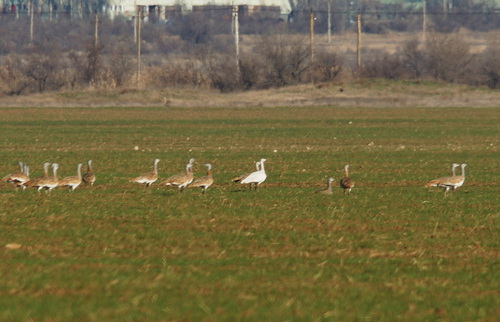
ノガン (Otis tarda) ノガン
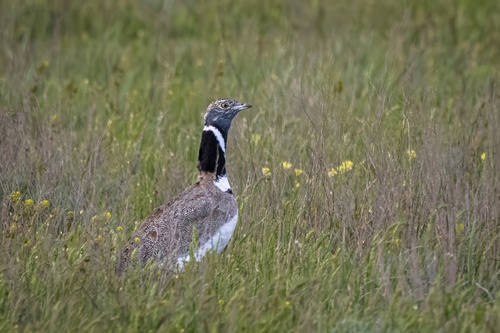
ヒメノガン (Tetrax tetrax) ヒメノガン

メディア

読み込み中…

要点

ノガンとヒメノガンの最も信頼できるフィールドマークはサイズです:ノガンは非常に大きく、重く、ほぼ七面鳥のような体型をしているのに対し、ヒメノガンははるかに小さく、よりキジのようです。飛行中、両者は翼に広範囲の白を示しますが、ノガンの翼はより広く、上縁に暗褐色の筋が見られ、ヒメノガンの翼はより細く、均一に白いです。繁殖期の成鳥オスのノガンは長い白い首の毛と栗色の胸を持ち、ヒメノガンのオスは白で縁取られた印象的な黒い首を示します。未成熟および雌の羽毛はより似ていますが、ノガンの幼鳥はより大きく、頑丈で、上面はより茶色く、より縞模様があります。生息地の重複は起こることがありますが、ノガンはより開けた広大な草原を好み、ヒメノガンはより頻繁にステップや耕作された畑に見られます。

識別のコツ

  1. サイズが最初で最も信頼できる手がかり:ノガンは巨大で、近くや同様の生息地に見られるヒメノガンを圧倒します。白鳥や七面鳥のように見えるバスタードを見たら、それはノガンです。
  2. 飛行シルエット:ノガンは広く重い翼で飛び、深い羽ばたきと長く太い首をまっすぐに伸ばして飛びます。ヒメノガンははるかにコンパクトで、細く尖った翼と短い首を持っています。
  3. 飛行中の上翼パターン(すべての年齢):ノガンは広く、主に白い翼を示し、上縁に暗褐色の筋があり、下の初級羽/二次羽の縁に茶色があります。ヒメノガンの翼も広範囲に白いですが、暗い上縁の筋がなく、よりクリーンで細く見えます。
  4. 繁殖期のオスの羽毛:ノガンのオスは栗色の胸、金色の背中、長い白い毛の首の毛(最大15 cm)を持ち、特にディスプレイで目立ちます。ヒメノガンの繁殖期のオスは白で縁取られた黒い首と灰色の頭を持ち、毛はありません。
  5. 雌と未成熟の混同:両者は上面が茶色で下面がより淡いですが、ノガンの雌ははるかに大きく、首が長く、体型が重いです。ヒメノガンの雌と未成熟は下面がより暗く、よりコンパクトです。
  6. 幼鳥の羽毛:幼鳥のノガンはセピア色の茶色で、淡い縞模様があり、すでに大きいです;幼鳥のヒメノガンは雌に似ており、はるかに小さいです。
  7. 地上での行動:ノガンはしばしば高く立ち、まっすぐに立っており、時には群れで見られ、誇張した姿勢でディスプレイすることがあります。ヒメノガンはよりしゃがんだり、走ったり、隠れ場所からすぐに飛び出す可能性が高いです。
  8. ディスプレイ行動:ノガンのオスはレクスで派手な姿勢でディスプレイし、喉を膨らませ、尾を上げ、白い羽毛を露出させ、ゆっくりとした動きで歩きます。ヒメノガンのディスプレイはあまり派手ではなく、呼び声や短いジャンプに依存しています。
  9. 鳴き声:ヒメノガンだけが特徴的な鳴き声を持っています—「プルル」というラズベリーを吹く音—通常、繁殖期にオスによって発せられます。ノガンは基本的に静かです。
  10. 生息地の文脈:生息地が非常に開けていて平坦で広大で、特に断片化が少ない場合、ノガンの可能性が高いです。ヒメノガンはより断片化された耕作された畑を許容します。
  11. くちばしと頭の構造:ノガンは巨大で厚いくちばしと長く重い頭と首を持っています;ヒメノガンのくちばしは細く、頭は体に対して小さいです。
  12. 群れのサイズ:ノガンは繁殖期以外に特に大きな群れを形成することが多いです;ヒメノガンはより頻繁に単独または小さな群れで見られます。
  13. 季節的な手がかり:繁殖期(春)はオスの羽毛とディスプレイ行動が最も明白で診断的です。繁殖期以外では、サイズ、構造、飛行パターンにもっと依存します。
  14. 潜在的な落とし穴:遠くからまたは光が悪い場合、孤独な雌のノガンはオスのヒメノガンと間違えられる可能性がありますが、サイズと重い体型は依然として明らかであるべきです。飛行中は、常にノガンの暗い上翼の筋を確認してください。
  15. 疑問がある場合:サイズを判断できない場合は、飛行中の翼のパターンとディスプレイまたは鳴き声の行動に焦点を当ててください。構造、飛行スタイル、文脈の組み合わせが通常、同定を決定づけます。

大きさ

ノガンは世界で最も重い飛ぶ鳥の一つで、オスは最大16 kg(35 lbs)に達し、ほぼ1メートルの高さに立ちます。ヒメノガンははるかに小さく、約830 g(29 oz)で、長さは42〜45 cm(17〜18 in)です。フィールドでは、ノガンの巨大な体、長い脚、巨大な頭と首は、コンパクトで細長いヒメノガンと比較すると明らかです。距離があっても、飛行中でも、サイズのギャップは劇的です:ノガンはほぼ白鳥のサイズに見え、ヒメノガンは大型のゲームバードや小さなガチョウに近いです。

羽色

幼鳥と未成熟のノガンはセピア色の茶色で、淡い縞模様があり、草の背景によく溶け込み、すでにヒメノガンよりもはるかに大きく、頑丈です。飛行中、すべての年齢のノガンは広く、主に白い翼を示し、上縁に暗褐色の筋があり、下の初級羽と二次羽の縁に茶色があります。すべての年齢のヒメノガンは、飛行中に広範囲に白い長く細い翼を示しますが、ノガンの暗い上縁の筋がありません。繁殖期の成鳥オスのノガンは栗色の胸、金色の背中、長い白い首の毛を持ち、繁殖羽毛のヒメノガンのオスは白で縁取られた黒い首と灰色の頭を持っています。両種の雌と未成熟はより控えめです:ノガンの雌は上面が茶色、下面が白で、淡い胸と茶色/淡い縞模様の首を持ち、ヒメノガンの雌と非繁殖のオスは上面が茶色で下面がより暗く、劇的な首のパターンがありません。未成熟のヒメノガンは雌に似ています。

行動

ノガンのオスはレクスで派手な姿勢でディスプレイし、喉を膨らませ、尾を上げ、白い羽毛を露出させ、華やかでスローモーションの歩き方をします。ヒメノガンのオスはあまり劇的にディスプレイせず、呼び声や短いジャンプに依存しています。飛行中、ノガンは重く遅く、深い羽ばたきと重いまっすぐな首のシルエットを持っています。ヒメノガンはより速く、より敏捷で、急速な羽ばたきと軽く、よりコンパクトな姿勢を持っています。地上では、ノガンはしばしば高く立ち、まっすぐに立っていますが、ヒメノガンはよりしゃがんだり、隠れ場所を走り抜ける可能性が高いです。

生息環境

ノガンは開けた草原と広大な農地を好み、非常に大きく、平坦で木のない地域に生息します。ヒメノガンも草原を利用しますが、より頻繁にステップ、乾燥した畑、またはいくつかの覆いのある耕作地に見られます。両者は農業風景で重複することがありますが、ノガンは通常、より広大で断片化の少ない生息地を必要とします。ノガンの巣作りの場所は、良好な日光を受ける密な草の植生の中にあることが多く、ヒメノガンはそのような特定の巣作りの覆いにあまり依存しません。

声

両種は一般的に静かで、特に雌と非繁殖のオスはそうです。しかし、ヒメノガンのオスは特徴的な「ラズベリーを吹く」鳴き声(プルル)を持ち、繁殖期に聞こえることがあります。ノガンはフィールドで特に特徴的な鳴き声はありません。

より良い説明を送る

比較と同じ項目を使ってください。文章はすぐに公開されます。

The most reliable field mark between Great Bustard and Little Bustard is size: Great Bustard is vastly larger, with a heavy, almost turkey-like build, while Little Bustard is much smaller and more pheasant-like. In flight, both show extensive white in the wings, but Great Bustard’s wings are broader and show a dark brown streak along the upper edge, whereas Little Bustard’s wings are slimmer and more uniformly white. Adult male Great Bustards in breeding season have long white neck bristles and a chestnut breast, while male Little Bustards show a striking black neck bordered by white. Immature and female plumages are more similar, but Great Bustard juveniles are larger and more robust, with browner, more barred upperparts. Habitat overlap can occur, but Great Bustard prefers more open, expansive grasslands, while Little Bustard is more often found in steppe or cultivated fields.

  1. Size is the first and most reliable clue: Great Bustard is enormous, dwarfing any Little Bustard seen nearby or in similar habitat. If you see a bustard that looks as big as a swan or turkey, it is a Great Bustard.
  2. Flight silhouette: Great Bustard flies with broad, heavy wings, deep wingbeats, and a long, thick neck extended straight. Little Bustard is much more compact, with slimmer, pointed wings and a shorter neck.
  3. Upperwing pattern in flight (all ages): Great Bustard shows broad, mostly white wings with a dark brown streak along the upper edge and brown edging on the lower primaries/secondaries. Little Bustard’s wings are also extensively white but lack the dark upper-edge streak, appearing cleaner and slimmer.
  4. Breeding male plumage: Great Bustard males have a chestnut breast, golden-washed back, and long, white, whiskery neck bristles (up to 15 cm), especially obvious in display. Little Bustard breeding males have a black neck bordered by white and a grey head, with no bristles.
  5. Female and immature confusion: Both are brown above and paler below, but Great Bustard females are much larger, with a longer neck and heavier build. Little Bustard females and immatures are darker below and more compact.
  6. Juvenile plumage: Juvenile Great Bustard is sepia-brown with buffy streaks and already large; juvenile Little Bustard resembles the female and is much smaller.
  7. Behavior on the ground: Great Bustard often stands tall and upright, sometimes in groups, and can be seen displaying with exaggerated postures. Little Bustard is more likely to crouch, run, or flush quickly from cover.
  8. Display behavior: Great Bustard males display on leks with elaborate feather puffing and tail cocking, exposing white plumage and appearing like a 'foam-bath.' Little Bustard displays are less flamboyant and more reliant on vocalizations and short jumps.
  9. Vocalization: Only Little Bustard has a distinctive call—a 'prrt' raspberry-blowing sound—usually given by males in the breeding season. Great Bustard is essentially silent.
  10. Habitat context: If the habitat is very open, flat, and expansive, especially with little fragmentation, Great Bustard is more likely. Little Bustard tolerates more fragmented and cultivated fields.
  11. Bill and head structure: Great Bustard has a massive, thick bill and a long, heavy head and neck; Little Bustard’s bill is finer and the head is smaller in proportion to the body.
  12. Group size: Great Bustard often forms larger groups, especially outside the breeding season; Little Bustard is more often seen singly or in small groups.
  13. Seasonal cues: Breeding season (spring) is when male plumage and display behaviors are most obvious and diagnostic. Outside the breeding season, rely more on size, structure, and flight pattern.
  14. Potential pitfalls: At great distance or in poor light, a lone female Great Bustard could be mistaken for a male Little Bustard, but the size and heavy build should still be apparent. In flight, always check for the dark upperwing streak of Great Bustard.
  15. When in doubt: If you cannot judge size, focus on wing pattern in flight and any display or vocal behavior. The combination of structure, flight style, and context will usually clinch the ID.

Great Bustard is one of the world’s heaviest flying birds, with males reaching up to 16 kg (35 lbs) and standing nearly a meter tall. Little Bustard is much smaller, weighing around 830 g (29 oz) and measuring 42–45 cm (17–18 in) in length. In the field, Great Bustard’s immense bulk, long legs, and massive head and neck are unmistakable when compared to the compact, slender Little Bustard. Even at a distance or in flight, the size gap is dramatic: Great Bustard appears almost swan-sized, while Little Bustard is closer to a large gamebird or small goose.

Juvenile and immature Great Bustards are sepia-brown with paler buffy streaks, blending well with grassy backgrounds, and are already much larger and bulkier than any Little Bustard. In flight, all ages of Great Bustard show broad, mostly white wings with a dark brown streak along the upper edge, and brown along the edges of the lower primaries and secondaries. Little Bustard of all ages shows long, slim wings that are extensively white in flight but lack the dark upper-edge streak of Great Bustard. Adult male Great Bustard in breeding season has a chestnut breast, golden-washed back, and long white neck bristles, while male Little Bustard in breeding plumage has a black neck bordered by white and a grey head. Females and immatures of both species are more subdued: Great Bustard females are brown above, white below, with a buff breast and brown/pale streaked neck; Little Bustard females and non-breeding males are brown above and darker below, lacking the dramatic neck pattern. Immature Little Bustards resemble females.

Great Bustard males display on leks with flamboyant postures, puffing up their throats, cocking their tails, and exposing white plumage in elaborate, slow-motion walks. Little Bustard males display less dramatically, relying more on calls and short jumps. In flight, Great Bustard is ponderous and slow, with deep, labored wingbeats and a heavy, straight-necked silhouette. Little Bustard is quicker and more agile, with rapid wingbeats and a lighter, more compact jizz. On the ground, Great Bustard often stands tall and upright, while Little Bustard is more likely to crouch or run through cover.

Great Bustard favors open grasslands and extensive farmland, often in very large, flat, treeless areas. Little Bustard also uses grasslands but is more often found in steppe, dry fields, or cultivated land with some cover. Both can overlap in agricultural landscapes, but Great Bustard typically requires more expansive, less fragmented habitats. Nesting sites for Great Bustard are often in dense grassy vegetation with good sun exposure, while Little Bustard is less tied to such specific nesting cover.

Both species are generally silent, especially females and non-breeding males. The male Little Bustard, however, has a distinctive 'raspberry-blowing' call (prrt), which can be heard during the breeding season. Great Bustard is not noted for any distinctive vocalization in the field.

変更を破棄しますか?

保存していない編集があります。今離れると失われます。

ノガン · ヒメノガン · 苦手な鳥