

Motmot

Great Black-backed Gull vs Glaucous Gull

Larus marinus versus Larus hyperboreus

Play a quiz with Great Black-backed Gull and Glaucous Gull
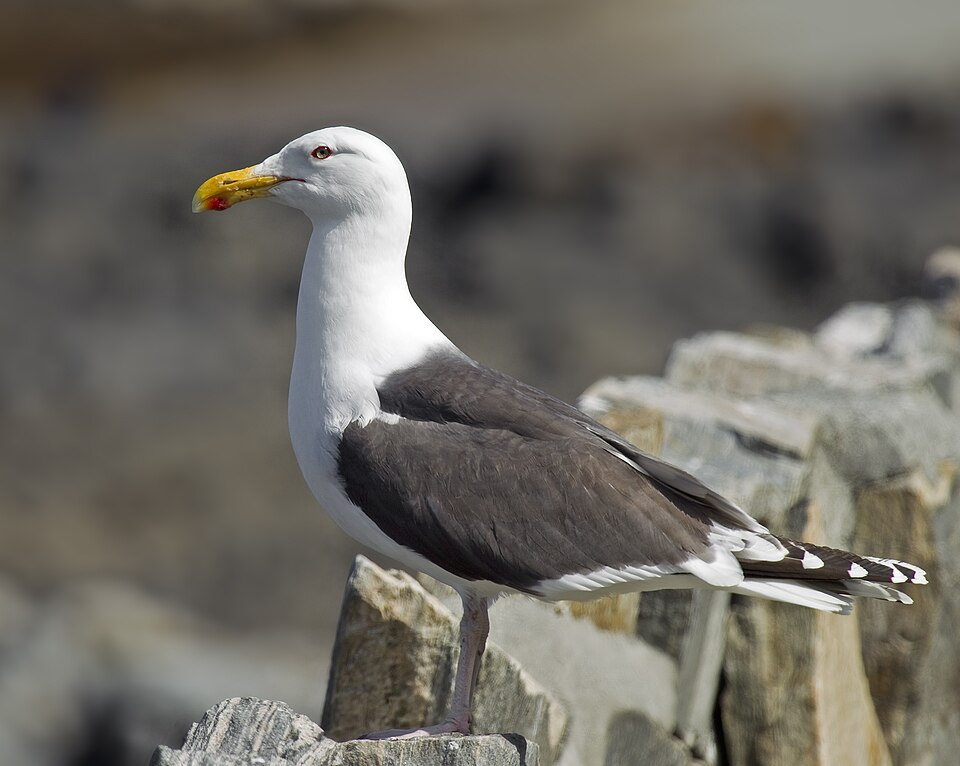
Great Black-backed Gull (Larus marinus) Great Black-backed Gull
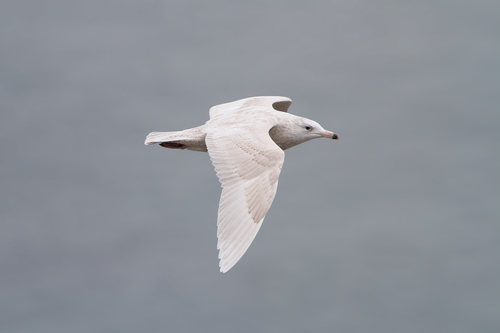
Glaucous Gull (Larus hyperboreus) Glaucous Gull

Media

Loading…

In short

The most reliable field mark between Great Black-backed Gull and Glaucous Gull, especially in immature birds, is the presence or absence of black on the wings and tail: Glaucous Gull of all ages is very pale, with no black in the wings or tail, while Great Black-backed Gull (especially juveniles and immatures) shows dark or blackish-brown flight feathers and a blackish tail band. Adults are also easily separated: Great Black-backed is strikingly black-backed and black-winged, while Glaucous is pale grey above. Structure and size overlap, but Glaucous can be even bulkier and heavier in some populations. Bill color and pattern, leg color, and overall jizz offer further clues, but beware that both species take four years to mature and show variable plumages during that time.

Identification tips

  1. Juvenile/immature wing and tail pattern: Glaucous Gull of all ages lacks black in the wings and tail; Great Black-backed Gull juveniles and immatures have blackish-brown flight feathers and a distinct blackish tail band. In flight, this is the single best mark.
  2. Overall coloration (all ages): Glaucous Gull is always pale, with a washed-out, creamy or pale grey look. Great Black-backed Gull is darker and more contrasting, especially as a juvenile.
  3. Adult plumage: Great Black-backed is unmistakable with a white head and deep black back and wings; Glaucous is pale grey above with no black anywhere.
  4. Bill pattern (juveniles): Glaucous Gull juveniles have a pink bill with a black tip; Great Black-backed juveniles have a brownish-black bill with a white tip, becoming all black as they age before paling.
  5. Leg color (juveniles): Great Black-backed juveniles have dark bluish-grey legs with pink tones; Glaucous Gull tends to have paler legs, but this is variable and not always reliable.
  6. Structure: Both are massive, but Glaucous can appear even bulkier and thicker-billed in some populations. Bill size alone is not diagnostic, but Glaucous may look especially thick-billed and heavy-headed.
  7. Behavior: If you see a gull actively hunting or attacking other birds, especially seabirds or waterfowl, Great Black-backed is more likely; Glaucous is less aggressive.
  8. Voice: Both have deep, laughing calls, but Great Black-backed is the deeper of the two. This is subtle and rarely useful in the field.
  9. Habitat: Not a strong separator where both occur, but Glaucous is more likely in high Arctic or subarctic settings, Great Black-backed more coastal North Atlantic.
  10. Aging pitfalls: Both species take four years to mature and show a range of intermediate plumages. Focus on the presence or absence of black in the wings and tail for immatures.
  11. Jizz in flight: Great Black-backed may appear longer-winged and more menacing, but both are broad-winged and powerful; use plumage first.
  12. Confusion with other gulls: Both can be confused with Herring or Iceland Gulls, but those are smaller and have different wing/tail patterns. If you see a truly massive, pale gull with no black in the wings or tail, it's Glaucous; if it's massive and black-winged, it's Great Black-backed.
  13. Seasonal context: Both species can be present in winter in northern coastal areas; do not rely on season alone for separation.
  14. Sex differences: Not diagnostic in the field for either species.
  15. Mixed flocks: When both species are present, compare directly: Glaucous will stand out as the palest, Great Black-backed as the darkest.

Size

Both species are among the largest gulls in the world, and their sizes overlap considerably. Great Black-backed Gull is often called the largest gull, but Glaucous Gull can be equally large or even heavier in some populations (mean adult mass for Glaucous: 1412.5 g [wikidata]). Both are massive, thick-billed, and broad-winged, so size alone is unreliable for separation, especially at a distance or in mixed flocks.

Plumage

Juvenile and immature plumage is the most diagnostic: Glaucous Gull of all ages is very pale, with a uniform pale grey-buff appearance and no black in the wings or tail at any stage. Juvenile Great Black-backed Gull, by contrast, is much darker and more patterned, with scaly black-brown upperparts, blackish-brown flight feathers, and a white tail with a distinct blackish band near the tip (and zigzag bars at the base). As Great Black-backed ages, it retains darker, more contrasting plumage and a darker bill for longer, while Glaucous always looks pale and washed-out. Adults are unmistakable: Great Black-backed is white-headed with a deep black back and wings, while Glaucous is pale grey above with no black anywhere. Bill color also differs: adult Great Black-backed has a yellow bill with a red spot, while Glaucous has a thick yellow bill (adults) or pink with black tip (juveniles). Leg color is variable but can help: Great Black-backed juveniles have dark bluish-grey legs with pink tones, while Glaucous tends to have pale legs.

Behaviour

Great Black-backed Gull is notably aggressive and predatory, often behaving more like a raptor—hunting, pirating, and even killing other birds, including fledged seabirds and waterfowl. Glaucous Gull is also omnivorous and opportunistic but is not described as being as aggressively predatory as Great Black-backed. Both species scavenge, but if you observe a gull actively hunting or dominating other large birds, Great Black-backed is more likely.

Habitat

Both species breed and winter along northern coasts and islands, often overlapping in range. Great Black-backed is more tied to the North Atlantic, while Glaucous Gull breeds farther north and is more associated with Arctic and subarctic regions, but both can be found along coasts, at garbage dumps, and inland waters during migration and winter. Habitat is not a strong separator where ranges overlap.

Voice

Both species give deep, laughing cries. Great Black-backed Gull's call is described as deeper than most other gulls, sometimes with a drawn-out, bovid-like first note. Glaucous Gull's call is similar to Herring Gull but deeper. Voice is not a reliable field mark for separation between these two, except perhaps that Great Black-backed is the deeper of the two.

Submit a better description

Use the same sections as the comparison. Your text is published immediately.

The most reliable field mark between Great Black-backed Gull and Glaucous Gull, especially in immature birds, is the presence or absence of black on the wings and tail: Glaucous Gull of all ages is very pale, with no black in the wings or tail, while Great Black-backed Gull (especially juveniles and immatures) shows dark or blackish-brown flight feathers and a blackish tail band. Adults are also easily separated: Great Black-backed is strikingly black-backed and black-winged, while Glaucous is pale grey above. Structure and size overlap, but Glaucous can be even bulkier and heavier in some populations. Bill color and pattern, leg color, and overall jizz offer further clues, but beware that both species take four years to mature and show variable plumages during that time.

  1. Juvenile/immature wing and tail pattern: Glaucous Gull of all ages lacks black in the wings and tail; Great Black-backed Gull juveniles and immatures have blackish-brown flight feathers and a distinct blackish tail band. In flight, this is the single best mark.
  2. Overall coloration (all ages): Glaucous Gull is always pale, with a washed-out, creamy or pale grey look. Great Black-backed Gull is darker and more contrasting, especially as a juvenile.
  3. Adult plumage: Great Black-backed is unmistakable with a white head and deep black back and wings; Glaucous is pale grey above with no black anywhere.
  4. Bill pattern (juveniles): Glaucous Gull juveniles have a pink bill with a black tip; Great Black-backed juveniles have a brownish-black bill with a white tip, becoming all black as they age before paling.
  5. Leg color (juveniles): Great Black-backed juveniles have dark bluish-grey legs with pink tones; Glaucous Gull tends to have paler legs, but this is variable and not always reliable.
  6. Structure: Both are massive, but Glaucous can appear even bulkier and thicker-billed in some populations. Bill size alone is not diagnostic, but Glaucous may look especially thick-billed and heavy-headed.
  7. Behavior: If you see a gull actively hunting or attacking other birds, especially seabirds or waterfowl, Great Black-backed is more likely; Glaucous is less aggressive.
  8. Voice: Both have deep, laughing calls, but Great Black-backed is the deeper of the two. This is subtle and rarely useful in the field.
  9. Habitat: Not a strong separator where both occur, but Glaucous is more likely in high Arctic or subarctic settings, Great Black-backed more coastal North Atlantic.
  10. Aging pitfalls: Both species take four years to mature and show a range of intermediate plumages. Focus on the presence or absence of black in the wings and tail for immatures.
  11. Jizz in flight: Great Black-backed may appear longer-winged and more menacing, but both are broad-winged and powerful; use plumage first.
  12. Confusion with other gulls: Both can be confused with Herring or Iceland Gulls, but those are smaller and have different wing/tail patterns. If you see a truly massive, pale gull with no black in the wings or tail, it's Glaucous; if it's massive and black-winged, it's Great Black-backed.
  13. Seasonal context: Both species can be present in winter in northern coastal areas; do not rely on season alone for separation.
  14. Sex differences: Not diagnostic in the field for either species.
  15. Mixed flocks: When both species are present, compare directly: Glaucous will stand out as the palest, Great Black-backed as the darkest.

Both species are among the largest gulls in the world, and their sizes overlap considerably. Great Black-backed Gull is often called the largest gull, but Glaucous Gull can be equally large or even heavier in some populations (mean adult mass for Glaucous: 1412.5 g [wikidata]). Both are massive, thick-billed, and broad-winged, so size alone is unreliable for separation, especially at a distance or in mixed flocks.

Juvenile and immature plumage is the most diagnostic: Glaucous Gull of all ages is very pale, with a uniform pale grey-buff appearance and no black in the wings or tail at any stage. Juvenile Great Black-backed Gull, by contrast, is much darker and more patterned, with scaly black-brown upperparts, blackish-brown flight feathers, and a white tail with a distinct blackish band near the tip (and zigzag bars at the base). As Great Black-backed ages, it retains darker, more contrasting plumage and a darker bill for longer, while Glaucous always looks pale and washed-out. Adults are unmistakable: Great Black-backed is white-headed with a deep black back and wings, while Glaucous is pale grey above with no black anywhere. Bill color also differs: adult Great Black-backed has a yellow bill with a red spot, while Glaucous has a thick yellow bill (adults) or pink with black tip (juveniles). Leg color is variable but can help: Great Black-backed juveniles have dark bluish-grey legs with pink tones, while Glaucous tends to have pale legs.

Great Black-backed Gull is notably aggressive and predatory, often behaving more like a raptor—hunting, pirating, and even killing other birds, including fledged seabirds and waterfowl. Glaucous Gull is also omnivorous and opportunistic but is not described as being as aggressively predatory as Great Black-backed. Both species scavenge, but if you observe a gull actively hunting or dominating other large birds, Great Black-backed is more likely.

Both species breed and winter along northern coasts and islands, often overlapping in range. Great Black-backed is more tied to the North Atlantic, while Glaucous Gull breeds farther north and is more associated with Arctic and subarctic regions, but both can be found along coasts, at garbage dumps, and inland waters during migration and winter. Habitat is not a strong separator where ranges overlap.

Both species give deep, laughing cries. Great Black-backed Gull's call is described as deeper than most other gulls, sometimes with a drawn-out, bovid-like first note. Glaucous Gull's call is similar to Herring Gull but deeper. Voice is not a reliable field mark for separation between these two, except perhaps that Great Black-backed is the deeper of the two.

Discard your changes?

You have unsaved edits. If you leave now, those changes will be lost.

Great Black-backed Gull · Glaucous Gull · My Tricky Birds