

Motmot

Grassland Yellow-Finch vs Lesser Grass-Finch

Sicalis luteola versus Emberizoides ypiranganus

Play a quiz with Grassland Yellow-Finch and Lesser Grass-Finch
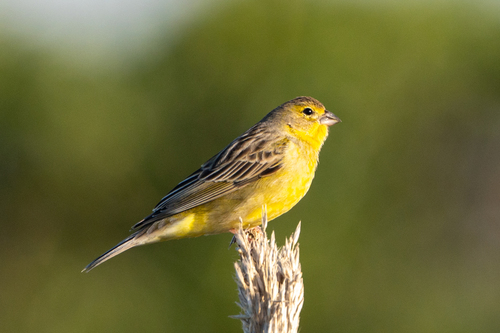
Grassland Yellow-Finch (Sicalis luteola) Grassland Yellow-Finch
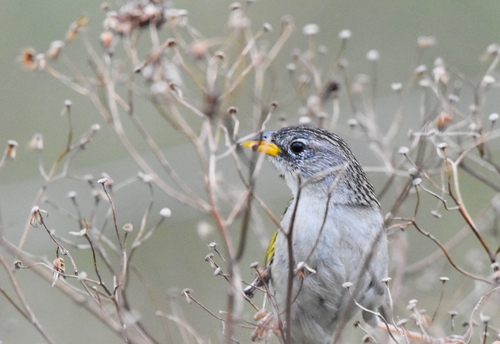
Lesser Grass-Finch (Emberizoides ypiranganus) Lesser Grass-Finch

Media

Loading…

In short

The most reliable field mark to separate Grassland Yellow-Finch from Lesser Grass-Finch is overall coloration and structure: Grassland Yellow-Finch is a compact, bright yellow bird (especially adult males), while Lesser Grass-Finch is larger, longer-tailed, and shows a streaked, greenish-brown upperpart pattern with a grayish face and pale supercilium. Juvenile Lesser Grass-Finch can show a yellowish cast, but still has streaked upperparts and a long, pointed tail. Structure and head pattern are key, especially when birds are perched or in flight at a distance.

Identification tips

  1. Upperpart streaking: Lesser Grass-Finch (all ages) shows bold blackish streaks on a greenish-brown back and crown; Grassland Yellow-Finch is plain above, lacking any streaks. This is the single most reliable mark in all plumages.
  2. Facial pattern: Lesser Grass-Finch has a grayish face with a pale supercilium and thin whitish eye-ring, plus darker lores; Grassland Yellow-Finch has a plain face without a strong supercilium or eye-ring.
  3. Tail length and shape: Lesser Grass-Finch has a long, pointed tail (often held cocked or flicked); Grassland Yellow-Finch has a much shorter tail, giving a dumpier look.
  4. Bill structure: The bill of Lesser Grass-Finch is moderately thick and yellow-orange with a blackish culmen; Grassland Yellow-Finch has a shorter, more conical bill, fitting its overall compact structure.
  5. Overall coloration: Grassland Yellow-Finch (especially adult males) is bright yellow below and above, with little contrast; Lesser Grass-Finch is much duller, with pale grayish underparts and buff flanks, and only juveniles show a faint yellowish wash.
  6. Juvenile confusion: Juvenile Lesser Grass-Finch may show a yellowish cast to the face and underparts, but always retains upperpart streaking and a long tail. Juvenile Grassland Yellow-Finch is plain and unstreaked.
  7. Wing pattern: Lesser Grass-Finch has brownish wings with wide, bright green edges, visible at rest and in flight; Grassland Yellow-Finch has uniform wings without bright green edging.
  8. Eye color: Lesser Grass-Finch has a dark brown iris; Grassland Yellow-Finch's eye color is not specified but is not a key field mark.
  9. Leg color: Lesser Grass-Finch has brownish yellow to dull pinkish legs and feet; leg color is not distinctive for Grassland Yellow-Finch.
  10. Behavior in the field: Watch for the upright, elongated posture and tail-flicking of Lesser Grass-Finch, versus the more compact, ground-foraging behavior of Grassland Yellow-Finch.
  11. Flight style: Lesser Grass-Finch's flight is more undulating and accentuates its long tail; Grassland Yellow-Finch flies more directly and appears more compact in the air.
  12. Habitat overlap: Both species can occur together in open grasslands; do not rely on habitat alone for identification.
  13. Sexes and ages: Both species are sexually monomorphic in plumage, but Grassland Yellow-Finch males are brighter yellow. Lesser Grass-Finch sexes are identical; juveniles are similar to adults but with a yellowish wash and streaks.
  14. When in doubt: Focus on upperpart streaking and tail length—these are the most consistent and visible differences at all ages and in all seasons.

Size

Grassland Yellow-Finch is smaller and more compact, with a reported body mass of 15.5 g [wikidata]. Lesser Grass-Finch is distinctly larger (18–22 g) and notably longer (18–20 cm vs. the much shorter Grassland Yellow-Finch, though exact length for the latter is not given here). The Lesser Grass-Finch also has a proportionally longer, pointed tail and a thicker bill, giving it a lankier appearance compared to the stubby, short-tailed look of Grassland Yellow-Finch.

Plumage

Juvenile and adult Lesser Grass-Finch always show streaked upperparts, with greenish-brown and black streaks on the back and crown, and a grayish face with a pale supercilium and thin whitish eye-ring. Juveniles add a buffy yellow cast to the upperparts and face, but retain the streaking and long tail. Grassland Yellow-Finch (all ages) lacks these streaks and instead appears plain and bright yellow overall, especially in males, with no strong facial pattern. Females and immatures may be duller but still lack the bold streaks and facial markings of Lesser Grass-Finch. In flight, Lesser Grass-Finch's long, pointed tail and green-edged wings contrast with the shorter-tailed, more uniform Grassland Yellow-Finch.

Behaviour

Both species are grassland birds, but Lesser Grass-Finch often appears more upright and elongated due to its long tail and larger size. It may perch higher in grasses or on exposed stems, sometimes flicking its tail. Grassland Yellow-Finch is more compact and may appear more finch-like in posture, often foraging lower in the grass. Flight of Lesser Grass-Finch is more undulating and accentuates its long tail, while Grassland Yellow-Finch appears more direct and fluttery.

Habitat

Both species occur in open grassland habitats in South America, sometimes overlapping in range (Argentina, Brazil, Paraguay, Uruguay). Habitat alone is not reliably diagnostic, but Lesser Grass-Finch may favor slightly taller or denser grass, and is sometimes found in more shrubby or rank grassland than the more open, short-grass preference of Grassland Yellow-Finch.

Submit a better description

Use the same sections as the comparison. Your text is published immediately.

The most reliable field mark to separate Grassland Yellow-Finch from Lesser Grass-Finch is overall coloration and structure: Grassland Yellow-Finch is a compact, bright yellow bird (especially adult males), while Lesser Grass-Finch is larger, longer-tailed, and shows a streaked, greenish-brown upperpart pattern with a grayish face and pale supercilium. Juvenile Lesser Grass-Finch can show a yellowish cast, but still has streaked upperparts and a long, pointed tail. Structure and head pattern are key, especially when birds are perched or in flight at a distance.

  1. Upperpart streaking: Lesser Grass-Finch (all ages) shows bold blackish streaks on a greenish-brown back and crown; Grassland Yellow-Finch is plain above, lacking any streaks. This is the single most reliable mark in all plumages.
  2. Facial pattern: Lesser Grass-Finch has a grayish face with a pale supercilium and thin whitish eye-ring, plus darker lores; Grassland Yellow-Finch has a plain face without a strong supercilium or eye-ring.
  3. Tail length and shape: Lesser Grass-Finch has a long, pointed tail (often held cocked or flicked); Grassland Yellow-Finch has a much shorter tail, giving a dumpier look.
  4. Bill structure: The bill of Lesser Grass-Finch is moderately thick and yellow-orange with a blackish culmen; Grassland Yellow-Finch has a shorter, more conical bill, fitting its overall compact structure.
  5. Overall coloration: Grassland Yellow-Finch (especially adult males) is bright yellow below and above, with little contrast; Lesser Grass-Finch is much duller, with pale grayish underparts and buff flanks, and only juveniles show a faint yellowish wash.
  6. Juvenile confusion: Juvenile Lesser Grass-Finch may show a yellowish cast to the face and underparts, but always retains upperpart streaking and a long tail. Juvenile Grassland Yellow-Finch is plain and unstreaked.
  7. Wing pattern: Lesser Grass-Finch has brownish wings with wide, bright green edges, visible at rest and in flight; Grassland Yellow-Finch has uniform wings without bright green edging.
  8. Eye color: Lesser Grass-Finch has a dark brown iris; Grassland Yellow-Finch's eye color is not specified but is not a key field mark.
  9. Leg color: Lesser Grass-Finch has brownish yellow to dull pinkish legs and feet; leg color is not distinctive for Grassland Yellow-Finch.
  10. Behavior in the field: Watch for the upright, elongated posture and tail-flicking of Lesser Grass-Finch, versus the more compact, ground-foraging behavior of Grassland Yellow-Finch.
  11. Flight style: Lesser Grass-Finch's flight is more undulating and accentuates its long tail; Grassland Yellow-Finch flies more directly and appears more compact in the air.
  12. Habitat overlap: Both species can occur together in open grasslands; do not rely on habitat alone for identification.
  13. Sexes and ages: Both species are sexually monomorphic in plumage, but Grassland Yellow-Finch males are brighter yellow. Lesser Grass-Finch sexes are identical; juveniles are similar to adults but with a yellowish wash and streaks.
  14. When in doubt: Focus on upperpart streaking and tail length—these are the most consistent and visible differences at all ages and in all seasons.

Grassland Yellow-Finch is smaller and more compact, with a reported body mass of 15.5 g [wikidata]. Lesser Grass-Finch is distinctly larger (18–22 g) and notably longer (18–20 cm vs. the much shorter Grassland Yellow-Finch, though exact length for the latter is not given here). The Lesser Grass-Finch also has a proportionally longer, pointed tail and a thicker bill, giving it a lankier appearance compared to the stubby, short-tailed look of Grassland Yellow-Finch.

Juvenile and adult Lesser Grass-Finch always show streaked upperparts, with greenish-brown and black streaks on the back and crown, and a grayish face with a pale supercilium and thin whitish eye-ring. Juveniles add a buffy yellow cast to the upperparts and face, but retain the streaking and long tail. Grassland Yellow-Finch (all ages) lacks these streaks and instead appears plain and bright yellow overall, especially in males, with no strong facial pattern. Females and immatures may be duller but still lack the bold streaks and facial markings of Lesser Grass-Finch. In flight, Lesser Grass-Finch's long, pointed tail and green-edged wings contrast with the shorter-tailed, more uniform Grassland Yellow-Finch.

Both species are grassland birds, but Lesser Grass-Finch often appears more upright and elongated due to its long tail and larger size. It may perch higher in grasses or on exposed stems, sometimes flicking its tail. Grassland Yellow-Finch is more compact and may appear more finch-like in posture, often foraging lower in the grass. Flight of Lesser Grass-Finch is more undulating and accentuates its long tail, while Grassland Yellow-Finch appears more direct and fluttery.

Both species occur in open grassland habitats in South America, sometimes overlapping in range (Argentina, Brazil, Paraguay, Uruguay). Habitat alone is not reliably diagnostic, but Lesser Grass-Finch may favor slightly taller or denser grass, and is sometimes found in more shrubby or rank grassland than the more open, short-grass preference of Grassland Yellow-Finch.

Discard your changes?

You have unsaved edits. If you leave now, those changes will be lost.

Grassland Yellow-Finch · Lesser Grass-Finch · My Tricky Birds