

Motmot

Glossy Ibis vs White-faced Ibis

Plegadis falcinellus versus Plegadis chihi

Play a quiz with Glossy Ibis and White-faced Ibis
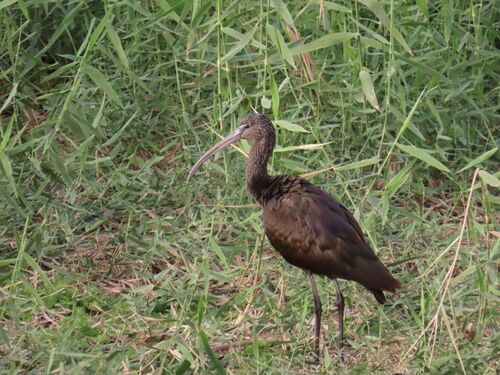
Glossy Ibis (Plegadis falcinellus) Glossy Ibis
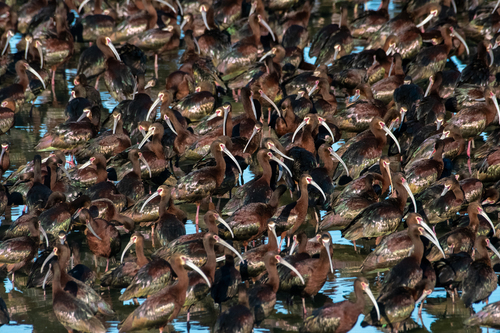
White-faced Ibis (Plegadis chihi) White-faced Ibis

Media

Loading…

In short

Glossy Ibis and White-faced Ibis are extremely similar, especially outside the breeding season and among juveniles, but breeding adults can be separated by facial pattern and eye color: White-faced Ibis shows a pink bare face with a bold white feather border and red eyes, while Glossy Ibis has a blue or blue-grey bare face without a strong white border and dark eyes. In non-breeding plumage and among immatures, field separation is very challenging and often unreliable at a distance. Subtle differences in leg color, facial skin, and overall warmth of plumage may help, but are best used in combination and with caution. Structural differences are minimal, and both species share similar size and proportions.

Identification tips

  1. Breeding adult facial pattern is the single most reliable field mark: White-faced Ibis shows a pink bare face with a sharp white feather border; Glossy Ibis has a blue or blue-grey bare face with only a faint or absent white border. This mark is only present in breeding adults.
  2. Eye color: Adult White-faced Ibis has red eyes year-round; Glossy Ibis has dark eyes. This is best seen at close range and in good light.
  3. Leg color: Breeding White-faced Ibis has brighter, redder legs than Glossy Ibis, but this is variable and overlaps outside breeding season.
  4. Bill color: White-faced Ibis in breeding plumage has a greyer bill, while Glossy Ibis is more brownish. This is subtle and not always reliable.
  5. Overall plumage warmth: White-faced Ibis may appear slightly warmer brown overall, but this is a minor and subjective difference, especially in non-breeding or immature birds.
  6. Iridescence: Glossy Ibis often shows more bottle-green or bronzed iridescence on the wings in breeding plumage, but both species are iridescent and this is not a strong separator.
  7. Juvenile and non-breeding birds: These ages are nearly indistinguishable in the field; both are dull brown with little facial contrast and similar upperwing patterns. Do not rely on plumage to separate immatures.
  8. Facial skin color (non-breeding): Glossy Ibis shows blue-grey facial skin, while White-faced Ibis is less distinctly colored; this is subtle and not always visible.
  9. Structure and size: Both species have similar proportions and size; do not use these features for identification.
  10. Flight silhouette: Both fly with necks outstretched and show similar wing and tail shapes; no reliable differences.
  11. Habitat and range: While White-faced Ibis is native to the Americas and Glossy Ibis to the Old World, both can occur as vagrants and overlap in some regions. Do not use location alone for positive ID.
  12. Behavior: Feeding and roosting behaviors are similar; not helpful for separation.
  13. Voice: No diagnostic vocal differences are noted in the sources.
  14. Pitfalls: Immature and non-breeding birds are a common source of misidentification; unless the facial pattern and eye color of a breeding adult are visible, identification is often uncertain.
  15. Best practice: Prioritize close-range views of the face and eyes in breeding season; otherwise, acknowledge the limits of field identification and consider reporting as "Plegadis sp." if uncertain.

Size

Both species are nearly identical in size and structure, with Glossy Ibis averaging slightly heavier (633 g vs. 612.5 g) and marginally longer, but this is not a reliable field mark. Both are medium-sized ibises with long, decurved bills and similar wingspans (Glossy: 80–105 cm, White-faced: 90–93 cm). Any perceived size difference in the field is subtle and easily masked by posture or distance.

Plumage

Juvenile and non-breeding Glossy and White-faced Ibises are almost indistinguishable in the field: both show dark brown bodies, duller iridescence, and lack the strong facial contrasts of breeding adults. Among breeding adults, White-faced Ibis stands out with a pink bare face bordered by a sharp white feather line and red eyes, while Glossy Ibis has a blue or blue-grey bare face with only a faint or absent white border and dark eyes. Glossy Ibis breeding adults also tend to have more bottle-green and bronzed iridescence, while White-faced may appear slightly warmer overall. Leg color is redder and brighter in breeding White-faced Ibis, but this can be variable and affected by light and age. Bill color is greyer in breeding White-faced, more brownish in Glossy. These distinctions are most reliable at close range and in good light; at a distance or with immatures, separation is often not possible.

Behaviour

Both species feed by probing in shallow water with their long, decurved bills and often forage in flocks. Flight is graceful with neck outstretched, and both may form V-shaped flocks. Roosting behavior is similar, with both species using trees or dense vegetation near wetlands, sometimes communally. No consistent behavioral differences are noted in the field.

Habitat

Habitat preferences overlap extensively: both are found in freshwater or brackish wetlands with dense emergent vegetation, such as reeds, cattails, or low trees. Both avoid open water and are less common in coastal saltmarshes. Glossy Ibis may be slightly more tolerant of urban roost sites, but this is not a reliable field mark. Geographic range is more helpful: White-faced Ibis is native to the Americas, while Glossy Ibis is widespread in the Old World, but vagrancy and range overlap (especially in the Americas) mean that habitat alone cannot be used for separation.

Submit a better description

Use the same sections as the comparison. Your text is published immediately.

Glossy Ibis and White-faced Ibis are extremely similar, especially outside the breeding season and among juveniles, but breeding adults can be separated by facial pattern and eye color: White-faced Ibis shows a pink bare face with a bold white feather border and red eyes, while Glossy Ibis has a blue or blue-grey bare face without a strong white border and dark eyes. In non-breeding plumage and among immatures, field separation is very challenging and often unreliable at a distance. Subtle differences in leg color, facial skin, and overall warmth of plumage may help, but are best used in combination and with caution. Structural differences are minimal, and both species share similar size and proportions.

  1. Breeding adult facial pattern is the single most reliable field mark: White-faced Ibis shows a pink bare face with a sharp white feather border; Glossy Ibis has a blue or blue-grey bare face with only a faint or absent white border. This mark is only present in breeding adults.
  2. Eye color: Adult White-faced Ibis has red eyes year-round; Glossy Ibis has dark eyes. This is best seen at close range and in good light.
  3. Leg color: Breeding White-faced Ibis has brighter, redder legs than Glossy Ibis, but this is variable and overlaps outside breeding season.
  4. Bill color: White-faced Ibis in breeding plumage has a greyer bill, while Glossy Ibis is more brownish. This is subtle and not always reliable.
  5. Overall plumage warmth: White-faced Ibis may appear slightly warmer brown overall, but this is a minor and subjective difference, especially in non-breeding or immature birds.
  6. Iridescence: Glossy Ibis often shows more bottle-green or bronzed iridescence on the wings in breeding plumage, but both species are iridescent and this is not a strong separator.
  7. Juvenile and non-breeding birds: These ages are nearly indistinguishable in the field; both are dull brown with little facial contrast and similar upperwing patterns. Do not rely on plumage to separate immatures.
  8. Facial skin color (non-breeding): Glossy Ibis shows blue-grey facial skin, while White-faced Ibis is less distinctly colored; this is subtle and not always visible.
  9. Structure and size: Both species have similar proportions and size; do not use these features for identification.
  10. Flight silhouette: Both fly with necks outstretched and show similar wing and tail shapes; no reliable differences.
  11. Habitat and range: While White-faced Ibis is native to the Americas and Glossy Ibis to the Old World, both can occur as vagrants and overlap in some regions. Do not use location alone for positive ID.
  12. Behavior: Feeding and roosting behaviors are similar; not helpful for separation.
  13. Voice: No diagnostic vocal differences are noted in the sources.
  14. Pitfalls: Immature and non-breeding birds are a common source of misidentification; unless the facial pattern and eye color of a breeding adult are visible, identification is often uncertain.
  15. Best practice: Prioritize close-range views of the face and eyes in breeding season; otherwise, acknowledge the limits of field identification and consider reporting as "Plegadis sp." if uncertain.

Both species are nearly identical in size and structure, with Glossy Ibis averaging slightly heavier (633 g vs. 612.5 g) and marginally longer, but this is not a reliable field mark. Both are medium-sized ibises with long, decurved bills and similar wingspans (Glossy: 80–105 cm, White-faced: 90–93 cm). Any perceived size difference in the field is subtle and easily masked by posture or distance.

Juvenile and non-breeding Glossy and White-faced Ibises are almost indistinguishable in the field: both show dark brown bodies, duller iridescence, and lack the strong facial contrasts of breeding adults. Among breeding adults, White-faced Ibis stands out with a pink bare face bordered by a sharp white feather line and red eyes, while Glossy Ibis has a blue or blue-grey bare face with only a faint or absent white border and dark eyes. Glossy Ibis breeding adults also tend to have more bottle-green and bronzed iridescence, while White-faced may appear slightly warmer overall. Leg color is redder and brighter in breeding White-faced Ibis, but this can be variable and affected by light and age. Bill color is greyer in breeding White-faced, more brownish in Glossy. These distinctions are most reliable at close range and in good light; at a distance or with immatures, separation is often not possible.

Both species feed by probing in shallow water with their long, decurved bills and often forage in flocks. Flight is graceful with neck outstretched, and both may form V-shaped flocks. Roosting behavior is similar, with both species using trees or dense vegetation near wetlands, sometimes communally. No consistent behavioral differences are noted in the field.

Habitat preferences overlap extensively: both are found in freshwater or brackish wetlands with dense emergent vegetation, such as reeds, cattails, or low trees. Both avoid open water and are less common in coastal saltmarshes. Glossy Ibis may be slightly more tolerant of urban roost sites, but this is not a reliable field mark. Geographic range is more helpful: White-faced Ibis is native to the Americas, while Glossy Ibis is widespread in the Old World, but vagrancy and range overlap (especially in the Americas) mean that habitat alone cannot be used for separation.

Discard your changes?

You have unsaved edits. If you leave now, those changes will be lost.

Glossy Ibis · White-faced Ibis · My Tricky Birds