

Motmot

Garden Warbler vs Western Orphean Warbler

Sylvia borin versus Curruca hortensis

Play a quiz with Garden Warbler and Western Orphean Warbler
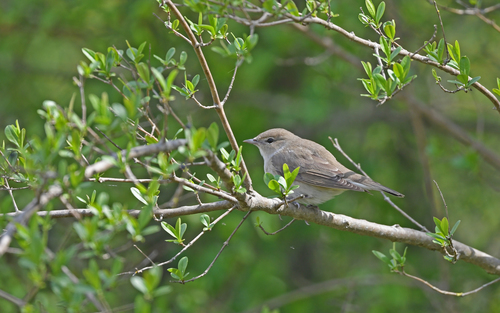
Garden Warbler (Sylvia borin) Garden Warbler
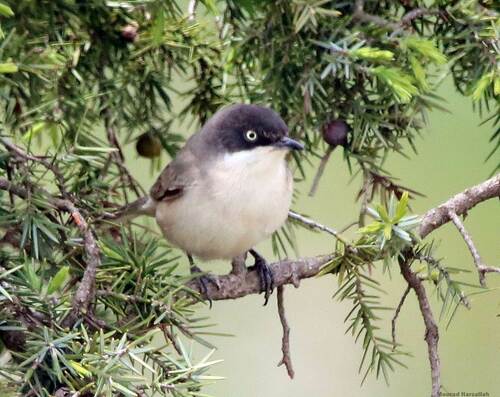
Western Orphean Warbler (Curruca hortensis) Western Orphean Warbler

Media

Loading…

In short

The most reliable field mark between Garden Warbler and Western Orphean Warbler is overall size and head pattern: Western Orphean Warbler is noticeably larger, with a longer, more pointed bill and a striking head pattern in adult males (dark grey head, black mask, white throat and pale iris), while Garden Warbler is smaller, plain-faced, and lacks any strong facial markings at all ages. Juveniles of both are plainer, but the Orphean is still bulkier and may show a paler head and buff underparts. In flight or perched, Garden Warbler always appears plain and soft-toned, while Orphean Warbler—even in immature plumage—shows a longer, heavier structure and often a contrasting throat. If you see a plain, brownish warbler with no face pattern and a gentle expression, it's likely a Garden Warbler; a larger, greyish bird with a strong bill and (in males) a masked face is Western Orphean.

Identification tips

  1. Size and structure: Western Orphean Warbler is noticeably larger and bulkier than Garden Warbler, with a longer, heavier bill and longer tail. Use this difference whenever you have a good view or a direct comparison.
  2. Head pattern (adults): Male Orphean Warbler shows a dark grey head, black eye mask, white throat, and white iris—very different from the plain-faced Garden Warbler, which never has a mask or strong contrast.
  3. Bill shape: Orphean Warbler's bill is longer and more pointed, giving a heavier-headed look. Garden Warbler's bill is shorter and more delicate.
  4. Plumage (all ages): Garden Warbler is always plain: olive-brown above, dull white below, with only a faint pale supercilium and eyering. Orphean Warbler (even immatures) is greyer above, with a paler or buffy head and often a more contrasting throat.
  5. Eye color: Adult male Orphean Warbler has a striking white iris; Garden Warbler's eye is always dark. However, immature Orphean Warblers have dark eyes, so this is not reliable in young birds.
  6. Facial markings: Garden Warbler lacks any mask or strong facial pattern at all ages; Orphean Warbler males have a black mask, and even females/immatures may show some contrast.
  7. Underparts: Garden Warbler is dull white below with a buff wash to throat and flanks; Orphean Warbler females/immatures are buffier below, sometimes with a whiter throat.
  8. Upperparts: Garden Warbler is olive-brown and plain; Orphean Warbler is greyish or grey-brown, often with a colder tone.
  9. Perched posture: Orphean Warbler often perches more upright and openly, showing off its size and head pattern, while Garden Warbler is more likely to skulk in dense cover.
  10. Flight appearance: Orphean Warbler looks longer-winged and heavier in flight; Garden Warbler is compact and less robust.
  11. Habitat: In northern/central Europe, Garden Warbler is much more likely; Orphean Warbler is a southern/Mediterranean breeder. Use range and habitat as a supporting clue.
  12. Song: Garden Warbler's song is rich and melodic, similar to Blackcap; Orphean Warbler's is less musical, more 'liroo-liroo' and scolding. Use with caution unless you know both well.
  13. Juvenile confusion: Both species' juveniles are plainer, but Garden Warbler juveniles are still plain-faced and soft-toned, while Orphean Warbler juveniles are larger, with a paler head and buffier underparts.
  14. No wingbars or strong upperwing patterns: Neither species shows distinctive wing markings in any age, so focus on structure and face.
  15. Sexes similar in Garden Warbler: Do not expect any sexual dimorphism in Garden Warbler; both sexes are alike. Orphean Warbler males are much bolder-headed than females or immatures.

Size

Western Orphean Warbler is distinctly larger: 15–16 cm in length [wikipedia], compared to Garden Warbler's 14 cm. The Orphean is also described as one of the largest typical warblers, with a longer, more pointed bill and a heavier, longer-tailed appearance. Garden Warbler is compact, with a more delicate structure and shorter bill. Weight data are not directly available for Orphean here, but the size difference is visually obvious in the field, especially if both species are familiar. In direct comparison, Orphean Warbler's size and bulk are clear, even if seen singly.

Plumage

Juvenile and immature birds of both species are plainer than adults, but key differences remain. Garden Warbler (all ages) is very plain: olive-brown upperparts, dull white underparts, a faint pale supercilium, and a whitish eyering, with no strong facial markings. Juveniles are paler and greyer above, with a buff wash below, but still lack any face pattern. Western Orphean Warbler adult males have a plain grey back, white underparts, a dark grey head, black eye mask, white throat, and a striking white iris. Females and immatures are duller, with a paler head, buff underparts, and a greyish-brown back, but even these may show some contrast on the throat and a heavier bill. The Orphean's iris is dark in young birds, so eye color is not always diagnostic in immatures. Neither species shows wingbars or strong upperwing patterns in any age, so separation relies on overall coloration and face pattern. In summary: Garden Warbler is always plain-faced and soft-toned, while Orphean Warbler (especially males) is bolder-headed and larger, and even immatures tend to look bulkier and less delicate.

Behaviour

Both species are typically found in dense vegetation and can be skulking, but Western Orphean Warbler often perches higher and more openly, befitting its larger size and heavier structure. Garden Warbler is more likely to stay low and within dense cover. In flight, Orphean Warbler's size and longer wings and tail are apparent, while Garden Warbler appears more compact and less robust. Foraging behavior is similar, with both being insectivorous, but Orphean may appear more deliberate and less restless than the smaller Garden Warbler.

Habitat

Garden Warbler breeds across most of Europe and western Siberia, preferring open woodland with dense low cover, and is rarely found in actual gardens despite its name. Western Orphean Warbler is a Mediterranean species, breeding in open deciduous woodland, often in bushy or scrubby areas, and extending into northwest Africa. Both winter in sub-Saharan Africa, but Garden Warbler avoids closed forest and treeless Sahel. In overlapping range, habitat can help: Garden Warbler is more likely in northern and central Europe, Orphean Warbler in southern, Mediterranean regions.

Voice

Garden Warbler's song is a rich, melodic warble, very similar to Blackcap, and can be confusingly alike. Western Orphean Warbler's song is described as a series of warbling 'liroo-liroo' and scolding notes, but is less musical and more abrupt than Garden Warbler. Calls are not detailed in the sources, so voice is only a supporting mark unless the full song is heard.

Submit a better description

Use the same sections as the comparison. Your text is published immediately.

The most reliable field mark between Garden Warbler and Western Orphean Warbler is overall size and head pattern: Western Orphean Warbler is noticeably larger, with a longer, more pointed bill and a striking head pattern in adult males (dark grey head, black mask, white throat and pale iris), while Garden Warbler is smaller, plain-faced, and lacks any strong facial markings at all ages. Juveniles of both are plainer, but the Orphean is still bulkier and may show a paler head and buff underparts. In flight or perched, Garden Warbler always appears plain and soft-toned, while Orphean Warbler—even in immature plumage—shows a longer, heavier structure and often a contrasting throat. If you see a plain, brownish warbler with no face pattern and a gentle expression, it's likely a Garden Warbler; a larger, greyish bird with a strong bill and (in males) a masked face is Western Orphean.

  1. Size and structure: Western Orphean Warbler is noticeably larger and bulkier than Garden Warbler, with a longer, heavier bill and longer tail. Use this difference whenever you have a good view or a direct comparison.
  2. Head pattern (adults): Male Orphean Warbler shows a dark grey head, black eye mask, white throat, and white iris—very different from the plain-faced Garden Warbler, which never has a mask or strong contrast.
  3. Bill shape: Orphean Warbler's bill is longer and more pointed, giving a heavier-headed look. Garden Warbler's bill is shorter and more delicate.
  4. Plumage (all ages): Garden Warbler is always plain: olive-brown above, dull white below, with only a faint pale supercilium and eyering. Orphean Warbler (even immatures) is greyer above, with a paler or buffy head and often a more contrasting throat.
  5. Eye color: Adult male Orphean Warbler has a striking white iris; Garden Warbler's eye is always dark. However, immature Orphean Warblers have dark eyes, so this is not reliable in young birds.
  6. Facial markings: Garden Warbler lacks any mask or strong facial pattern at all ages; Orphean Warbler males have a black mask, and even females/immatures may show some contrast.
  7. Underparts: Garden Warbler is dull white below with a buff wash to throat and flanks; Orphean Warbler females/immatures are buffier below, sometimes with a whiter throat.
  8. Upperparts: Garden Warbler is olive-brown and plain; Orphean Warbler is greyish or grey-brown, often with a colder tone.
  9. Perched posture: Orphean Warbler often perches more upright and openly, showing off its size and head pattern, while Garden Warbler is more likely to skulk in dense cover.
  10. Flight appearance: Orphean Warbler looks longer-winged and heavier in flight; Garden Warbler is compact and less robust.
  11. Habitat: In northern/central Europe, Garden Warbler is much more likely; Orphean Warbler is a southern/Mediterranean breeder. Use range and habitat as a supporting clue.
  12. Song: Garden Warbler's song is rich and melodic, similar to Blackcap; Orphean Warbler's is less musical, more 'liroo-liroo' and scolding. Use with caution unless you know both well.
  13. Juvenile confusion: Both species' juveniles are plainer, but Garden Warbler juveniles are still plain-faced and soft-toned, while Orphean Warbler juveniles are larger, with a paler head and buffier underparts.
  14. No wingbars or strong upperwing patterns: Neither species shows distinctive wing markings in any age, so focus on structure and face.
  15. Sexes similar in Garden Warbler: Do not expect any sexual dimorphism in Garden Warbler; both sexes are alike. Orphean Warbler males are much bolder-headed than females or immatures.

Western Orphean Warbler is distinctly larger: 15–16 cm in length [wikipedia], compared to Garden Warbler's 14 cm. The Orphean is also described as one of the largest typical warblers, with a longer, more pointed bill and a heavier, longer-tailed appearance. Garden Warbler is compact, with a more delicate structure and shorter bill. Weight data are not directly available for Orphean here, but the size difference is visually obvious in the field, especially if both species are familiar. In direct comparison, Orphean Warbler's size and bulk are clear, even if seen singly.

Juvenile and immature birds of both species are plainer than adults, but key differences remain. Garden Warbler (all ages) is very plain: olive-brown upperparts, dull white underparts, a faint pale supercilium, and a whitish eyering, with no strong facial markings. Juveniles are paler and greyer above, with a buff wash below, but still lack any face pattern. Western Orphean Warbler adult males have a plain grey back, white underparts, a dark grey head, black eye mask, white throat, and a striking white iris. Females and immatures are duller, with a paler head, buff underparts, and a greyish-brown back, but even these may show some contrast on the throat and a heavier bill. The Orphean's iris is dark in young birds, so eye color is not always diagnostic in immatures. Neither species shows wingbars or strong upperwing patterns in any age, so separation relies on overall coloration and face pattern. In summary: Garden Warbler is always plain-faced and soft-toned, while Orphean Warbler (especially males) is bolder-headed and larger, and even immatures tend to look bulkier and less delicate.

Both species are typically found in dense vegetation and can be skulking, but Western Orphean Warbler often perches higher and more openly, befitting its larger size and heavier structure. Garden Warbler is more likely to stay low and within dense cover. In flight, Orphean Warbler's size and longer wings and tail are apparent, while Garden Warbler appears more compact and less robust. Foraging behavior is similar, with both being insectivorous, but Orphean may appear more deliberate and less restless than the smaller Garden Warbler.

Garden Warbler breeds across most of Europe and western Siberia, preferring open woodland with dense low cover, and is rarely found in actual gardens despite its name. Western Orphean Warbler is a Mediterranean species, breeding in open deciduous woodland, often in bushy or scrubby areas, and extending into northwest Africa. Both winter in sub-Saharan Africa, but Garden Warbler avoids closed forest and treeless Sahel. In overlapping range, habitat can help: Garden Warbler is more likely in northern and central Europe, Orphean Warbler in southern, Mediterranean regions.

Garden Warbler's song is a rich, melodic warble, very similar to Blackcap, and can be confusingly alike. Western Orphean Warbler's song is described as a series of warbling 'liroo-liroo' and scolding notes, but is less musical and more abrupt than Garden Warbler. Calls are not detailed in the sources, so voice is only a supporting mark unless the full song is heard.

Discard your changes?

You have unsaved edits. If you leave now, those changes will be lost.

Garden Warbler · Western Orphean Warbler · My Tricky Birds