
Garden Warbler vs Barred Warbler
Sylvia borin versus Curruca nisoria
Play a quiz with Garden Warbler and Barred Warbler
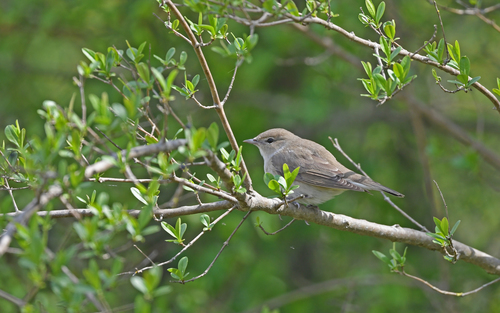 Garden Warbler
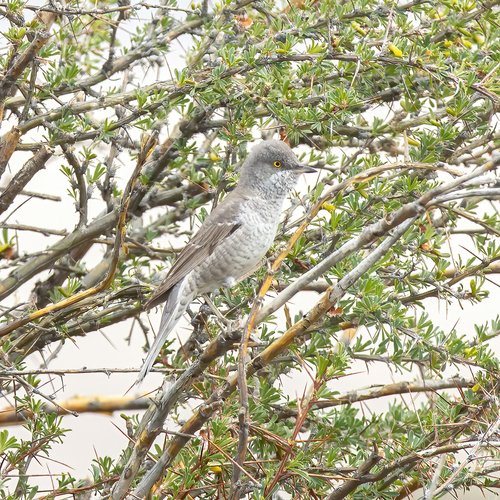 Barred Warbler
In short
Juvenile Barred Warbler and Garden Warbler are easily confused, especially in autumn, but the Barred Warbler juvenile is distinctly larger, with a bulkier build and subtle pale fringes on the wing feathers, and often shows faint barring on the tail coverts—features absent in the plainer, smaller Garden Warbler. Adult Barred Warbler is unmistakable with heavy barring below and a yellow iris, while Garden Warbler of any age is always plain and lacks wing or tail markings. In the field, size and structure (Barred Warbler is much bigger and more robust) are often the most reliable clues, especially when plumage is ambiguous. Both species are rather plain overall, but careful attention to subtle wing and tail patterns in juveniles, as well as overall jizz and iris color in adults, will usually clinch the ID.
Identification tips
- Size and Structure: Barred Warbler is much larger and bulkier than Garden Warbler, with a heavier bill and more robust build. Use this as your first check, especially if you have a sense of scale.
- Juvenile Wing and Tail Pattern: Juvenile Barred Warbler may show faint barring on the tail coverts and pale fringes on the wing feathers; Garden Warbler juveniles are completely plain and lack these features. Look for these subtle marks in autumn birds.
- Adult Barring: Adult Barred Warbler (especially males) is heavily barred below and has white tips on the wing coverts and tail feathers. Garden Warbler of any age is always plain below with no barring.
- Iris Color: Adult Barred Warbler has a yellow iris, while Garden Warbler (all ages) has a dark eye. Immature Barred Warbler also has a dark iris, so this is only diagnostic for adults.
- Bill and Legs: Barred Warbler has a stouter, blackish bill with a paler base and stout grey-brown legs; Garden Warbler's bill is strong but slimmer, with a grey upper and paler lower mandible, and bluish-grey legs. This is subtle but can help in good views.
- Face Pattern: Both species are rather plain-faced, but Garden Warbler can show a faint pale supercilium and whitish eyering, while Barred Warbler is even plainer in juveniles and immatures.
- Upperparts Color: Garden Warbler is olive-brown above; Barred Warbler is more grey (adults) or buffy grey-brown (juveniles). In poor light, this can be hard to judge.
- Underparts: Garden Warbler is dull white below with a buff wash to the throat and flanks, never barred. Barred Warbler is whitish below, with barring in adults and a pale buff tone in juveniles.
- Tail: Barred Warbler may show white tips to tail feathers (adults) or faint barring on tail coverts (juveniles); Garden Warbler's tail is plain.
- Behavior and Jizz: Barred Warbler appears heavier and slower, sometimes perching more openly, especially when feeding on berries. Garden Warbler is more active and prefers dense cover.
- Habitat: In western Europe, Barred Warbler is a scarce autumn migrant, mostly on the east coast, while Garden Warbler is common and widespread in suitable woodland and scrub.
- Song: If singing, Garden Warbler's song is richer and more melodious; Barred Warbler's is harsher, chattier, and higher-pitched.
- Seasonality: Most Barred Warblers seen in western Europe are juveniles in autumn; adults are very rare. Garden Warbler can be seen throughout the breeding season and migration.
- Pitfalls: Juvenile Barred Warbler is the most likely to be confused with Garden Warbler—always check for size, subtle barring, and pale wing/tail fringes. If the bird is plain, small, and lacks any barring or pale fringes, Garden Warbler is more likely.
- Subspecies: Garden Warbler subspecies differ slightly in tone and size, but these differences are very subtle and not useful in the field for separation from Barred Warbler.
Size
Barred Warbler is significantly larger and heavier than Garden Warbler: Barred Warbler measures 15.5–17 cm in length and weighs 22–36 g, while Garden Warbler is 14 cm long and weighs 16–22 g (occasionally up to 35.5 g in pre-migratory birds, but this is rare) [wikipedia][avonet]. Barred Warbler also appears bulkier, with a stouter bill and heavier build. In direct comparison, Garden Warbler is noticeably smaller, slimmer, and more delicate.
Plumage
Juveniles: Juvenile Barred Warbler is buffy grey-brown above and pale buff below, with very little barring, but can show faint barring on the tail coverts and pale fringes on the wing feathers. The iris is dark in immatures. Juvenile Garden Warbler is plainer, with paler and greyer upperparts and a buff tone to the underparts, but never shows barring or pale wing fringes. Both lack strong face markings, but Barred Warbler's larger size and subtle wing/tail features are key.
Adults: Adult Barred Warbler males are dark grey above, heavily barred below, with white tips on wing coverts and tail feathers, and a yellow iris. Females are paler with lighter barring. Garden Warbler adults are always plain brownish-olive above and dull white below, with a faint pale supercilium and whitish eyering, but no barring or wing/tail markings. The iris is always dark.
In all ages, Garden Warbler lacks any barring, wing panels, or pale tail tips, and is overall more featureless. Barred Warbler, even when not heavily barred, is subtly patterned and larger.
Behaviour
Both species are generally skulking and prefer dense cover, but Barred Warbler, due to its larger size and heavier build, may appear more sluggish and deliberate in movement compared to the more agile and active Garden Warbler. Barred Warbler is sometimes seen perched more openly, especially when feeding on berries in late summer and autumn, while Garden Warbler tends to remain hidden in foliage. In flight, Barred Warbler's size and broad wings are apparent, while Garden Warbler appears more compact and less robust.
Habitat
Both species use similar habitats during migration and in breeding areas, favoring open woodland, scrub, and areas with dense low cover. Barred Warbler is more associated with open country with bushes and brambles, often in the company of Red-backed Shrike, while Garden Warbler prefers woodland edges and dense undergrowth but rarely gardens despite its name. In western Europe, Barred Warbler is a scarce migrant, mostly encountered in autumn on the east coast, while Garden Warbler is common and widespread.
Voice
Both species have songs that can be reminiscent of each other: Barred Warbler's song is a chattering, harsh version of the Garden Warbler's rich, melodic warble, but is less melodious and slightly higher-pitched, with some resemblance to Common Whitethroat. Garden Warbler's song is more fluid and musical. Calls are not described in detail in the sources, so song is only a minor aid unless heard well.