

Gadwall vs Northern Pintail
Mareca strepera versus Anas acuta
Play a quiz with Gadwall and Northern Pintail
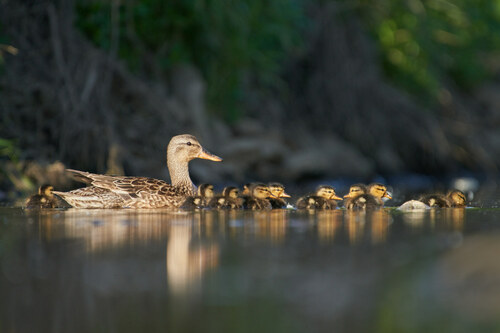 Gadwall
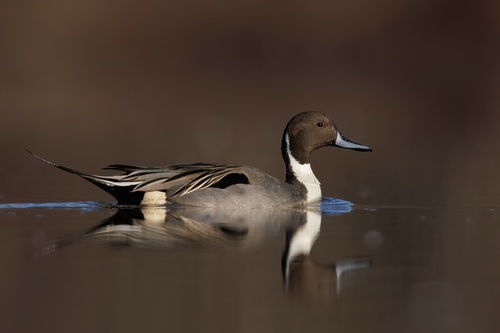 Northern Pintail
In short
The most reliable way to separate Gadwall from Northern Pintail is by their wing and tail patterns in flight: Gadwall of all ages shows a bright white speculum (wing patch), while Northern Pintail has a dark speculum with a white trailing edge, and adult males have a long, pointed tail. Juvenile and female pintails lack the long tail but still show the distinctive wing pattern. Structure is also key: pintails are more slender, with longer necks and (in males) a noticeably longer, pointed tail. On the water, Gadwall males are plain gray with a black rear and white belly, while male pintails have a chocolate-brown head and striking white neck stripe. Females of both can look similar, but Gadwall females have a darker, orange-edged bill and always show a white speculum. Voice and behavior offer additional clues, but wing pattern and shape are the most reliable in the field.
Identification tips
- White speculum (wing patch) in flight or at rest: Gadwall of all ages and sexes shows a bright white speculum bordered by chestnut (especially in males), visible both at rest and in flight. Northern Pintail never shows a white speculum; instead, look for a dark speculum with a strong white trailing edge (especially in females and juveniles), and in males, a pale rufous leading edge. This is the most reliable mark for birds in flight or with wings spread.
- Tail shape and length: Male Northern Pintail has extremely long, pointed central tail feathers (up to 10 cm), giving a sharp, pin-like look in all plumages. Gadwall tail is short and rounded. Female and juvenile pintails lack the long tail, but still have a more pointed tail than Gadwall.
- Neck length and posture: Pintails are noticeably more slender and long-necked, often holding their necks outstretched and swimming with a forward-leaning posture. Gadwall is more compact, with a shorter neck and a more horizontal, level swimming position.
- Bill color and shape: Gadwall females have a dark bill with orange edges, while female pintails have a longer, blue-grey bill. Male Gadwall bills are plain dark. Bill color is especially useful for females and eclipse males.
- Male breeding plumage: Gadwall drake is gray with a black rear and white belly, lacking any head pattern. Pintail drake is striking with a chocolate-brown head, white neck stripe, and long tail. If you see a white neck stripe or a long tail, it's a pintail.
- Female/juvenile body pattern: Both species' females are mottled brown, but Gadwall females are usually paler with a more uniform face and a white belly. Pintail females have a more uniform grey-brown head and a more pointed tail.
- Eclipse (non-breeding) males: Both become duller and more female-like, but Gadwall males remain greyer above and keep the white speculum; pintail males keep the long tail and male wing pattern.
- Flight jizz: Pintails are more slender in flight, with longer necks and tails, and slightly swept-back wings. Gadwall is chunkier with a shorter neck and tail, and more typical duck flight profile.
- Voice: If heard, Gadwall females give a higher-pitched quack, pintail females a rougher quack. Gadwall males give a short grunt or whistle, pintail males a flute-like whistle.
- Habitat: Both can occur together, but Gadwall prefers marshes with dense vegetation, while pintail is more likely in open wetlands and larger lakes. Not diagnostic, but may help in context.
- Flock size and behavior: Pintails are often in larger, more active flocks, especially on migration. Gadwall tends to form smaller groups and is less gregarious outside breeding season.
- Feeding: Gadwall may dive or steal from coots, while pintail mostly dabbles and grazes. Behavior may help if observed closely.
- Size: Pintail is generally larger and more elongated, but overlap exists; use only with direct comparison.
- Juvenile confusion: Juvenile pintails are less neatly scalloped and have a duller brown speculum with a narrower trailing edge, but never show a white speculum like Gadwall juveniles. Always check the wing patch in flight for young birds.
- When in doubt: Prioritize the wing pattern (speculum color and borders) and tail shape/length, especially in flight or when birds are preening or stretching wings.
Size
Northern Pintail is generally larger and more elongated than Gadwall, with a body mass averaging about 945.5 g for adults [wikidata]. Pintails have a longer neck and, in males, a much longer and pointed tail. Gadwall is more compact, with a shorter neck and tail. In direct comparison, pintails look more graceful and slim, while Gadwall appear chunkier and less elongated.
Plumage
- Juvenile and female plumage: Both species' juveniles and females are mottled brown, but Gadwall females and immatures always show a white speculum (the wing patch visible in flight and often at rest), while Northern Pintail females and juveniles have a dark brown speculum with a prominent white trailing edge. Pintail juveniles are less neatly scalloped than adults and have a duller brown speculum with a narrower trailing edge.
- Adult male breeding plumage: Gadwall drakes are patterned gray with a black rear end and white belly, and always show a white speculum bordered by chestnut. Pintail drakes are unmistakable with a chocolate-brown head, white breast and neck stripe, gray sides, and very long central tail feathers. Their upperwing in flight shows a black speculum with a white trailing edge and pale rufous at the front.
- Eclipse (non-breeding) males: Both species' males become duller and more female-like, but Gadwall males retain the white speculum and are generally greyer above, while Pintail males keep the male wing pattern and long shoulder feathers, and their long tail remains a clue.
- Bill color: Gadwall females have a dark bill with orange edges; Pintail females have a long, blue-grey bill.
Behaviour
Both species are dabbling ducks, but Gadwall is less gregarious outside the breeding season and tends to form smaller flocks. Pintails are more likely to be seen in larger groups, especially during migration. Gadwall often feeds by dabbling or even diving for food, sometimes stealing from coots, while pintails feed more by dabbling and grazing. In flight, pintails are fast and direct with slightly swept-back wings, while Gadwall flight is more typical of dabbling ducks, with less pronounced neck and tail extension.
Habitat
Both species use open wetlands, lakes, and marshes, but Gadwall favors areas with dense fringing vegetation and is less likely to be seen in very open water. Pintails are more widespread and can be found in a broader range of open wetlands, including larger lakes and even coastal areas during migration. Habitat overlap is common, so context alone is rarely diagnostic.
Voice
Gadwall is generally quieter, with females giving a higher-pitched quack (gag-ag-ag-ag) and males a short grunt (mep) or whistle, especially during courtship. Pintail females have a rough quack, while males give a flute-like whistle. In mixed flocks, voice may help, but is rarely the primary field mark.