

Motmot

Fork-tailed Storm-Petrel vs Black Storm-Petrel

Hydrobates furcatus versus Hydrobates melania

Play a quiz with Fork-tailed Storm-Petrel and Black Storm-Petrel
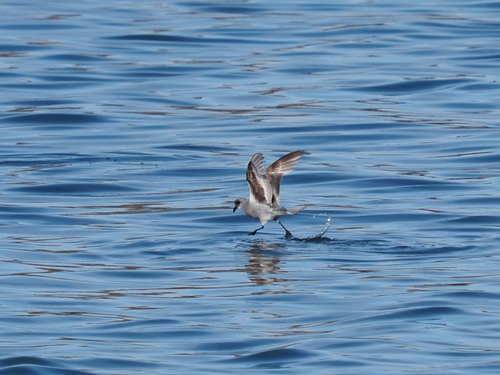
Fork-tailed Storm-Petrel (Hydrobates furcatus) Fork-tailed Storm-Petrel
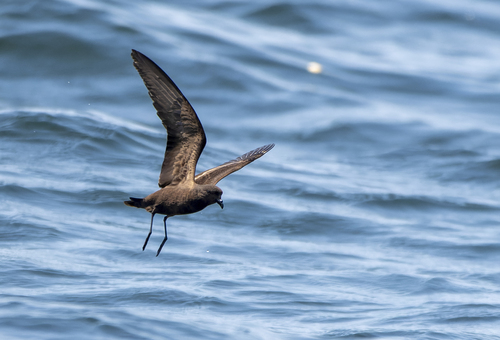
Black Storm-Petrel (Hydrobates melania) Black Storm-Petrel

Media

Loading…

In short

The most reliable field mark to separate Fork-tailed Storm-Petrel from Black Storm-Petrel is overall plumage color: Fork-tailed is uniquely bluish-gray among storm-petrels, while Black is much darker, appearing sooty or blackish-brown. Fork-tailed also shows a paler underside and contrasting underwings, whereas Black Storm-Petrel is more uniformly dark. Tail shape is less reliable, as the 'fork' in Fork-tailed is often subtle and not always visible, especially in juveniles. Both species are similar in size and structure, so focus on color and contrast, especially in flight. Habitat overlap is possible, but Fork-tailed is more northerly and pelagic, while Black is more southern.

Identification tips

  1. Plumage color is key: Fork-tailed Storm-Petrel is the only bluish-gray storm-petrel in the North Pacific; Black Storm-Petrel is uniformly dark brown to blackish. Use this mark in all ages and seasons.
  2. Underparts contrast: Fork-tailed shows a paler underside with darker underwings, creating a noticeable contrast in flight. Black Storm-Petrel is dark below and above, with little contrast.
  3. Tail shape is unreliable: Despite its name, Fork-tailed's 'fork' is often subtle and not always visible, especially in juveniles. Do not rely on tail shape alone.
  4. Head pattern: Fork-tailed has a dark gray forehead and black ear patch, but these are subtle and may not be visible at distance or in poor light.
  5. Bill: Both species have small, black bills; this is not a useful field mark.
  6. Juvenile confusion: Juvenile Fork-taileds look like adults but with a less distinct tail notch. Black Storm-Petrel juveniles are not described as differing from adults, so age is not a strong confounding factor.
  7. Structural similarity: Both are similar in size, with Black Storm-Petrel slightly heavier and longer, but this is not apparent in the field.
  8. Flight style: Both species fly with short, stiff wingbeats close to the water. Behavior is not a reliable separator.
  9. Geographic context: Fork-tailed is more likely north of California and far offshore, especially in Alaska and the Bering Sea. Black Storm-Petrel is more southern, but both can occur off the Pacific coast.
  10. Habitat overlap: Where both species are possible, rely on plumage color and underwing contrast, not habitat.
  11. Voice: Fork-tailed is mostly silent at sea; Black Storm-Petrel's calls are not described. Do not use voice for separation away from colonies.
  12. Sexes similar: Both species show little to no sexual dimorphism in plumage or size.
  13. Lighting pitfalls: In poor light, Fork-tailed may appear darker, and southern Fork-taileds are somewhat duskier, but still lack the uniform blackish tone of Black Storm-Petrel.
  14. At a distance: Use overall impression of gray (Fork-tailed) versus blackish (Black) rather than fine details.
  15. Colony context: If observed at a breeding colony, check the known range—Fork-tailed breeds much farther north than Black Storm-Petrel.

Size

Both species are small storm-petrels with similar wingspans (Fork-tailed: 46 cm; Black: 46–51 cm). Black Storm-Petrel is slightly heavier (61.5 g vs. 54.0 g) and marginally longer (23 cm vs. 20 cm), but these differences are subtle and rarely useful in the field. Structure and proportions are broadly similar, so size should not be relied upon for separation.

Plumage

Fork-tailed Storm-Petrel of all ages is unique among North Pacific storm-petrels for its overall bluish-gray coloration. This is most obvious in good light, with a paler underside and contrasting darker underwings. The forehead is dark gray, with a black ear patch and small black bill. Juveniles resemble adults but may have a less distinct tail notch, making the 'fork' less apparent. Southern populations of Fork-tailed can appear darker, but still retain a grayish cast. Black Storm-Petrel, by contrast, is uniformly dark brown to blackish, lacking any bluish or gray tones. Its underparts and underwings are also dark, with little contrast. No distinctive age-specific upperwing or tail pattern is noted for either species, so rely on overall color and contrast. Both sexes are similar in both species.

Behaviour

Both species forage with short, stiff wingbeats close to the water surface, typical of storm-petrels. Fork-tailed Storm-Petrel is often seen following ships and feeding at the surface, sometimes in dense flocks. Black Storm-Petrel's flight style is similar, and both may appear buoyant and erratic. Behavioral differences are subtle and not reliable for field separation.

Habitat

Fork-tailed Storm-Petrel is widespread and abundant in the northern Pacific, breeding from northern California through Alaska and northeast Asia. It is the most northerly distributed storm-petrel in winter and is highly pelagic, often far from land except at breeding colonies. Black Storm-Petrel is more southerly, but both can overlap off the Pacific coast. Fork-tailed prefers open ocean and breeds on islands, while Black Storm-Petrel's breeding and foraging ranges are more southern. Habitat is only weakly diagnostic where ranges overlap.

Voice

Fork-tailed Storm-Petrel is generally silent at sea, calling mainly at breeding colonies at night. Its main call is a raspy multi-note 'ana-ana-ana', with a higher-pitched single note from males. Black Storm-Petrel's vocalizations are not described in the provided notes, so voice is not a reliable field mark for separation at sea.

Submit a better description

Use the same sections as the comparison. Your text is published immediately.

The most reliable field mark to separate Fork-tailed Storm-Petrel from Black Storm-Petrel is overall plumage color: Fork-tailed is uniquely bluish-gray among storm-petrels, while Black is much darker, appearing sooty or blackish-brown. Fork-tailed also shows a paler underside and contrasting underwings, whereas Black Storm-Petrel is more uniformly dark. Tail shape is less reliable, as the 'fork' in Fork-tailed is often subtle and not always visible, especially in juveniles. Both species are similar in size and structure, so focus on color and contrast, especially in flight. Habitat overlap is possible, but Fork-tailed is more northerly and pelagic, while Black is more southern.

  1. Plumage color is key: Fork-tailed Storm-Petrel is the only bluish-gray storm-petrel in the North Pacific; Black Storm-Petrel is uniformly dark brown to blackish. Use this mark in all ages and seasons.
  2. Underparts contrast: Fork-tailed shows a paler underside with darker underwings, creating a noticeable contrast in flight. Black Storm-Petrel is dark below and above, with little contrast.
  3. Tail shape is unreliable: Despite its name, Fork-tailed's 'fork' is often subtle and not always visible, especially in juveniles. Do not rely on tail shape alone.
  4. Head pattern: Fork-tailed has a dark gray forehead and black ear patch, but these are subtle and may not be visible at distance or in poor light.
  5. Bill: Both species have small, black bills; this is not a useful field mark.
  6. Juvenile confusion: Juvenile Fork-taileds look like adults but with a less distinct tail notch. Black Storm-Petrel juveniles are not described as differing from adults, so age is not a strong confounding factor.
  7. Structural similarity: Both are similar in size, with Black Storm-Petrel slightly heavier and longer, but this is not apparent in the field.
  8. Flight style: Both species fly with short, stiff wingbeats close to the water. Behavior is not a reliable separator.
  9. Geographic context: Fork-tailed is more likely north of California and far offshore, especially in Alaska and the Bering Sea. Black Storm-Petrel is more southern, but both can occur off the Pacific coast.
  10. Habitat overlap: Where both species are possible, rely on plumage color and underwing contrast, not habitat.
  11. Voice: Fork-tailed is mostly silent at sea; Black Storm-Petrel's calls are not described. Do not use voice for separation away from colonies.
  12. Sexes similar: Both species show little to no sexual dimorphism in plumage or size.
  13. Lighting pitfalls: In poor light, Fork-tailed may appear darker, and southern Fork-taileds are somewhat duskier, but still lack the uniform blackish tone of Black Storm-Petrel.
  14. At a distance: Use overall impression of gray (Fork-tailed) versus blackish (Black) rather than fine details.
  15. Colony context: If observed at a breeding colony, check the known range—Fork-tailed breeds much farther north than Black Storm-Petrel.

Both species are small storm-petrels with similar wingspans (Fork-tailed: 46 cm; Black: 46–51 cm). Black Storm-Petrel is slightly heavier (61.5 g vs. 54.0 g) and marginally longer (23 cm vs. 20 cm), but these differences are subtle and rarely useful in the field. Structure and proportions are broadly similar, so size should not be relied upon for separation.

Fork-tailed Storm-Petrel of all ages is unique among North Pacific storm-petrels for its overall bluish-gray coloration. This is most obvious in good light, with a paler underside and contrasting darker underwings. The forehead is dark gray, with a black ear patch and small black bill. Juveniles resemble adults but may have a less distinct tail notch, making the 'fork' less apparent. Southern populations of Fork-tailed can appear darker, but still retain a grayish cast. Black Storm-Petrel, by contrast, is uniformly dark brown to blackish, lacking any bluish or gray tones. Its underparts and underwings are also dark, with little contrast. No distinctive age-specific upperwing or tail pattern is noted for either species, so rely on overall color and contrast. Both sexes are similar in both species.

Both species forage with short, stiff wingbeats close to the water surface, typical of storm-petrels. Fork-tailed Storm-Petrel is often seen following ships and feeding at the surface, sometimes in dense flocks. Black Storm-Petrel's flight style is similar, and both may appear buoyant and erratic. Behavioral differences are subtle and not reliable for field separation.

Fork-tailed Storm-Petrel is widespread and abundant in the northern Pacific, breeding from northern California through Alaska and northeast Asia. It is the most northerly distributed storm-petrel in winter and is highly pelagic, often far from land except at breeding colonies. Black Storm-Petrel is more southerly, but both can overlap off the Pacific coast. Fork-tailed prefers open ocean and breeds on islands, while Black Storm-Petrel's breeding and foraging ranges are more southern. Habitat is only weakly diagnostic where ranges overlap.

Fork-tailed Storm-Petrel is generally silent at sea, calling mainly at breeding colonies at night. Its main call is a raspy multi-note 'ana-ana-ana', with a higher-pitched single note from males. Black Storm-Petrel's vocalizations are not described in the provided notes, so voice is not a reliable field mark for separation at sea.

Discard your changes?

You have unsaved edits. If you leave now, those changes will be lost.

Fork-tailed Storm-Petrel · Black Storm-Petrel · My Tricky Birds